What Is the Future of Manufacturing Jobs?

The manufacturing landscape is undergoing a profound metamorphosis, shifting away from the traditional image of assembly lines and manual labor toward a highly digitized, automated, and data-driven sector. This evolution is not signaling the end of human involvement, but rather a drastic realignment of what that involvement entails. [1][3] While headlines often focus on automation replacing workers, the reality suggests a complex reshaping where new opportunities arise alongside the necessity for updated skill sets. [2][7] Understanding this transition requires looking past the immediate fear of job displacement and focusing instead on the nature of the jobs that are being created and sustained.
# Growth Projected
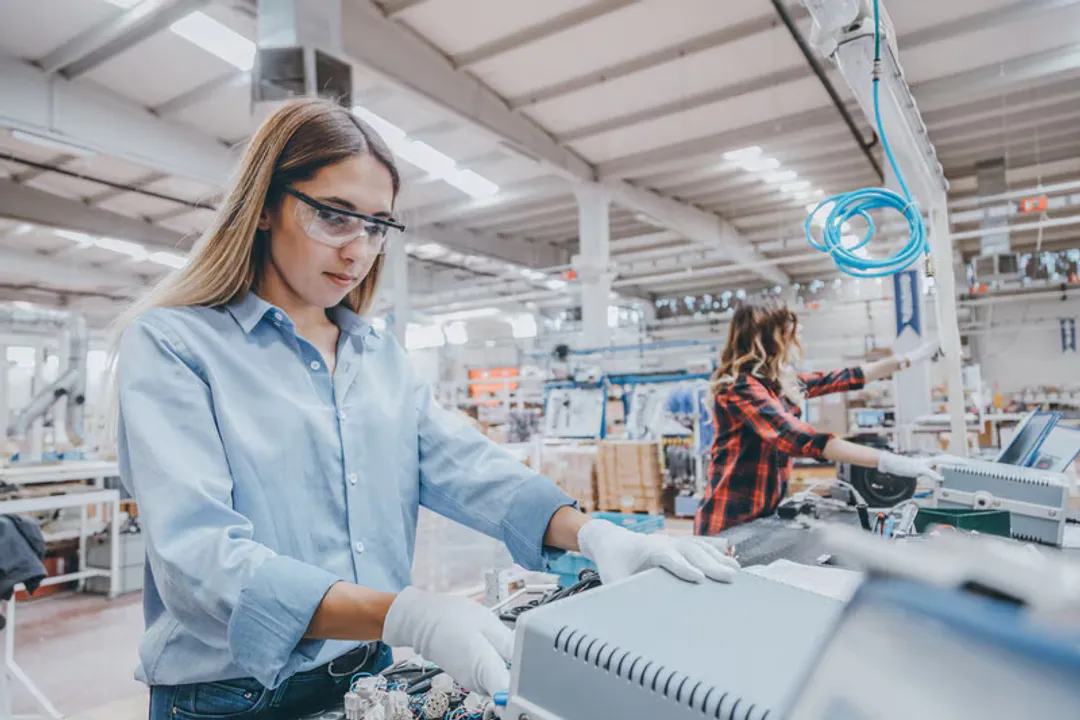
Despite the rapid adoption of advanced technologies, the overall trajectory for manufacturing employment appears surprisingly positive in several forecasts. Some projections anticipate significant job growth within the sector, with estimates pointing towards a potential thirty percent expansion in manufacturing roles. [4] This growth is often concentrated in specific, higher-value areas, suggesting a move toward quality over sheer quantity of production staff. [4] The state of the workforce is a critical concern, with industry leaders actively addressing workforce gaps and the challenges associated with attracting and retaining talent in this new environment. [2] The broader economic outlook for the US manufacturing sector shows resilience, supported by strategic investments and evolving production methods. [9]
# Automation’s Impact

The integration of Artificial Intelligence (AI) and advanced robotics is arguably the most significant driver of change in modern production facilities. [7] This is not merely about swapping a human for a machine; it’s about augmenting capabilities and streamlining processes that were previously slow or prone to error. [1] AI-powered systems can manage complex scheduling, optimize supply chains in real-time, and perform predictive maintenance on machinery, minimizing costly downtime. [7] The challenge here is transforming the role of the worker from an operator of a single machine to a supervisor, programmer, or troubleshooter of interconnected automated systems. [3] In an AI-powered era, the demand shifts toward those who can maintain, program, and integrate these intelligent tools. [7]
# Skills Required
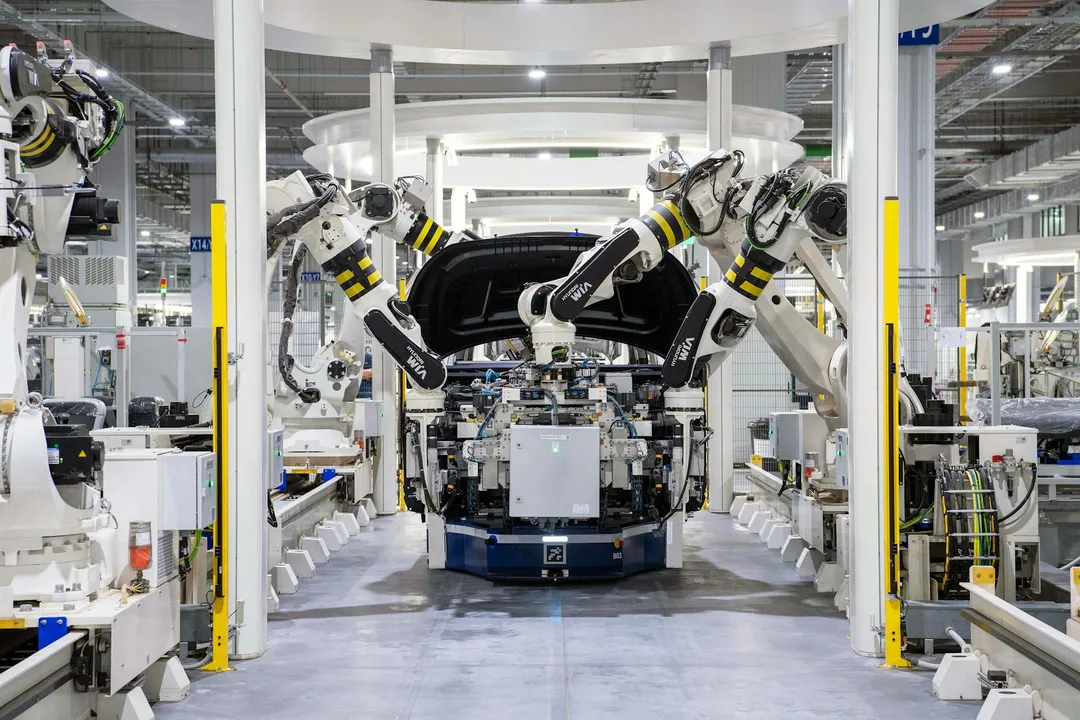
The skill profile demanded by the factory floor of tomorrow is rapidly diverging from that of the past. Where physical strength and repetitive dexterity were once paramount, digital literacy, analytical thinking, and problem-solving now take precedence. [6] Workers need to be comfortable interacting with advanced Human-Machine Interfaces (HMIs), analyzing performance data generated by sensors, and adapting quickly to new software updates that control automated equipment. [1][6]
This new requirement for digital proficiency is driving a need for specialized training that often bypasses the traditional four-year degree model. Instead, many roles favor demonstrable competence in specific technological areas. [8] For instance, a plant manager might need certification in Industrial Internet of Things (IIoT) deployment rather than just general management experience. [5]
Here is a look at how the focus is shifting, comparing general past needs versus future demands:
| Attribute | Past Focus | Future Focus |
|---|---|---|
| Core Competency | Manual dexterity, repetition | Data analysis, system integration |
| Technology Interaction | Operating basic machinery | Programming PLCs, managing AI inputs |
| Problem Solving | Immediate mechanical fix | Root cause analysis of system failure |
| Education Path | Vocational school/On-the-job training | Modular certifications, technical degrees |
An important consideration for companies facing these skill gaps is to look inward first. Before launching expensive external recruitment drives, senior manufacturing executives often find success by analyzing existing high-potential employees who possess strong critical thinking skills but lack specific software knowledge. Investing in internal training paths tailored to these individuals—perhaps granting them three months of dedicated time to earn a specific cloud computing or robotics certification relevant to the machinery they already know intimately—yields a higher return on investment because it retains institutional knowledge while building the necessary technical expertise. [5]
# New Careers Emerge
The technological shift is actively spawning entirely new categories of work, many of which command significantly higher compensation than traditional blue-collar roles. [4] The term "new-collar worker" is gaining traction to describe individuals whose expertise lies in specific, often tech-focused skills, even without a traditional college degree. [8] These roles bridge the gap between IT and traditional production. [8]
Some high-paying careers projected to see growth include:
- Robotics Engineers and Technicians: Specialists who install, maintain, and repair advanced automated systems. [4][7]
- Data Scientists for Manufacturing: Professionals who translate the massive amounts of data produced by smart factories into actionable business intelligence. [4]
- Additive Manufacturing Specialists: Experts in 3D printing technologies applied to production lines. [4]
- Digital Twin Modelers: Workers who create and manage virtual replicas of physical processes or products for simulation and testing. [7]
It is interesting to contrast the roles highlighted by various experts. While some sources emphasize the "top 5 jobs" in an AI era, focusing heavily on the technical specialists who build and service the AI systems, [7] others point toward the broader emergence of "new-collar" roles that require foundational technical literacy across the board. [8] This suggests a two-tiered workforce: a smaller group of highly specialized engineers creating the technology, and a much larger group of technicians and operators fluent enough in that technology to keep production running daily. [2]
# Education Imperative
Addressing the skills mismatch requires innovation in education and training, moving beyond the historical reliance on traditional pipelines. [5] Manufacturers themselves must step up to define the competencies needed and partner with educational institutions to create relevant curricula. [5] This partnership model is crucial; universities and community colleges cannot keep pace unless they receive direct, current input from the industry on required proficiencies. [5][6]
The concept of upskilling and reskilling existing employees is not just a nice-to-have; it is an economic necessity for maintaining operational continuity. [3] Companies that view training as an ongoing operational cost, rather than a discretionary expense, are better positioned to weather labor market volatility. [1] For the individual worker, this translates into adopting a mindset of lifelong learning, actively seeking out certifications, micro-credentials, and online courses that directly map to industry needs, as stated by numerous workforce development analysts. [6]
A secondary, but vital, educational component involves nurturing soft skills alongside technical aptitude. While programming skills get someone an interview, the ability to collaborate effectively across multidisciplinary teams—engineers, IT specialists, and production staff—is what sustains a career in a highly interconnected, automated environment. [2] If a technician can fix a robot but cannot clearly communicate the recurring failure mode to the software team, the overall production cycle suffers. Thus, clarity in technical communication becomes an unlisted, yet essential, future skill.
# Industry Outlook
The overarching direction for manufacturing points toward greater integration, digitization, and customization. [1][9] Factories are becoming more agile, capable of switching product lines or adjusting output based on demand signals received almost instantaneously from the market. [3] This agility relies entirely on the advanced technological infrastructure and the skilled people who manage it. [1] Deloitte’s outlook suggests that successful manufacturers will treat data as a critical asset, much like raw materials or energy, meaning the personnel managing that data gain significant organizational importance. [1]
For communities deeply reliant on manufacturing employment, this transition presents a clear challenge: ensuring that the local workforce has access to the correct training infrastructure. [5] If training remains centered on outdated models, these regions risk becoming disconnected from the high-value jobs being created in the very same sector. The investment in local technical colleges and apprenticeship programs that focus on additive manufacturing, industrial networking, and cybersecurity for operational technology is therefore an investment in local economic stability. [9] Manufacturing jobs are not disappearing; they are simply moving up the cognitive value chain, demanding sharper tools and sharper minds to wield them. [4] The future of this sector is one where humans and machines collaborate to produce higher quality goods more efficiently than ever before.
Related Questions
#Citations
2026 Manufacturing Industry Outlook | Deloitte Insights
The State of the Manufacturing Workforce in 2025 - NAM
How do we secure the manufacturing workforce of the future?
Manufacturing Jobs Projected To Grow By 30%: Top 7 High-Paying ...
The Future of Manufacturing Jobs: Prioritizing Education and ...
The Future of Manufacturing Jobs: What Skills Will Be Most In ...
The Future of Manufacturing: Top 5 Jobs in an AI-Powered Era
“New Collar” Workers Are the Future of Manufacturing
U.S. Manufacturing and the Future of the Labor Force - TD Economics