What Manufacturing Jobs Are Affected by AI?

The integration of Artificial Intelligence into the factory floor is fundamentally altering the landscape of manufacturing employment, moving the conversation beyond simple robotics replacing manual labor to cognitive automation reshaping white-collar and skilled technical roles. While news headlines often focus on jobs lost, the reality across the industrial sector is a complex redistribution of tasks, creating immediate pressure on certain roles while simultaneously generating entirely new categories of work. Understanding which manufacturing jobs are being affected requires looking closely at the nature of the tasks being automated, not just the job title itself.
# Automation Targets

Historically, manufacturing saw significant job reductions linked to traditional automation, a trend that predates the current AI surge. However, modern AI systems are capable of handling tasks that require pattern recognition and decision-making, putting new categories of jobs into the crosshairs of transformation.
# Repetitive Physical Tasks
The most immediately affected roles are those characterized by high degrees of repetition and predictable physical movements. This includes classic assembly line positions where tasks can be precisely programmed and executed thousands of times without deviation.
- Assembly and Production: Workers performing routine assembly tasks are increasingly being supplemented or replaced by robotic arms guided by machine vision systems powered by AI. These systems excel at speed and consistency, often exceeding human capability in error-free repetition.
- Material Handling: Moving raw materials, sub-assemblies, or finished goods within a plant environment is highly susceptible to change. Autonomous Guided Vehicles (AGVs) and autonomous mobile robots (AMRs) use AI algorithms to navigate complex factory layouts safely and efficiently, directly impacting traditional material handlers or forklift operators in standardized settings.
# Inspection Roles
Quality assurance has long relied on human inspectors, but this is rapidly changing. AI excels at anomaly detection in visual data, a core component of quality control.
- Visual Defect Detection: Systems trained on thousands of examples of both good and defective parts can spot micro-fractures, surface blemishes, or misalignments that might be missed by a tired or distracted human inspector. This affects quality control technicians whose primary function is visual inspection on the line.
- Data Monitoring: Jobs involving routine monitoring of machine parameters, like checking temperature logs or pressure gauges against established norms, are now often managed by AI that can alert staff only when a real deviation occurs, shifting the worker from constant observation to exception management.
# Administrative Functions
The impact isn't strictly limited to the factory floor. Back-office and planning roles associated with manufacturing are also seeing augmentation, particularly those dealing with high volumes of standardized data processing.
- Inventory Management: AI-driven predictive maintenance schedules and demand forecasting tools reduce the need for manual inventory reconciliations or generating routine purchase orders based on simple stock thresholds.
- Data Entry and Reporting: Automating the capture and initial reporting of production metrics, shifting data input from manual entry into digital systems to automated recording by IoT sensors and AI analysis platforms, affects clerical support roles.
# Skill Changes
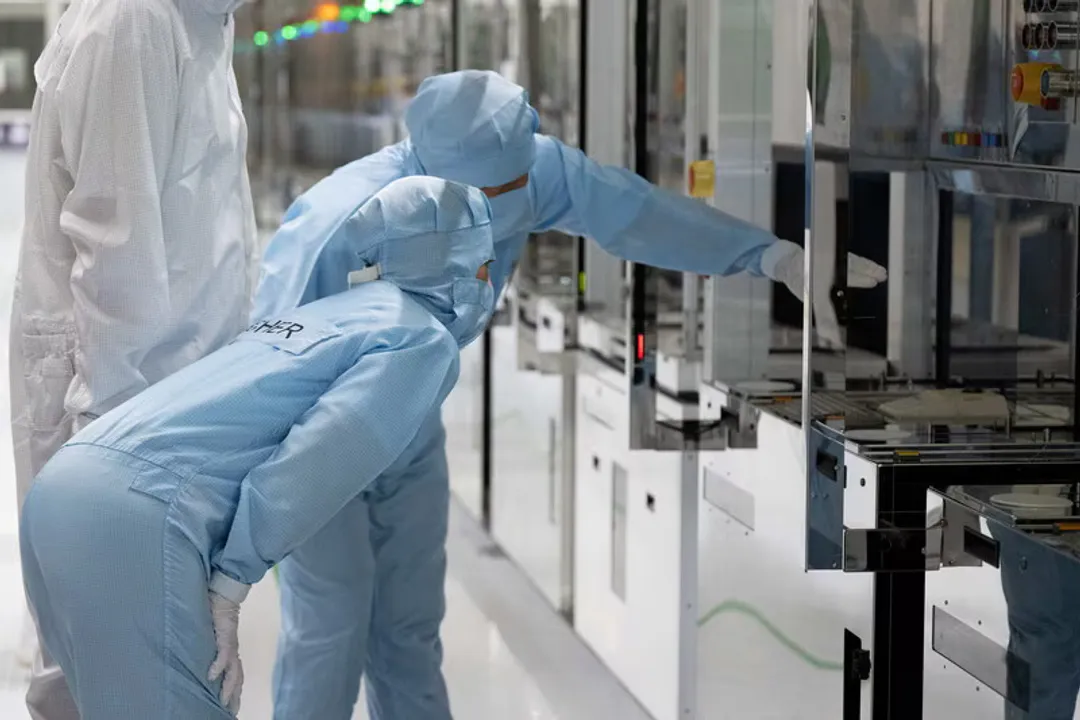
The introduction of AI does not mean the end of the human workforce; instead, it creates a significant skills gap that must be addressed through training and organizational adaptation. Workers are moving from doing the task to managing the systems that do the task.
# New Technical Competencies
As AI manages more routine processes, the required technical skills skew heavily toward managing the complex technological ecosystem of the modern plant.
- Robotics Maintenance and Repair: While the robots themselves are advanced, they still break down. Maintenance technicians must transition from fixing mechanical parts to diagnosing software errors, recalibrating sensors, and updating machine learning models.
- Data Literacy: Every worker, from the floor manager to the quality technician, needs a foundational understanding of data—how it’s collected, what the AI output means, and how to identify faulty data inputs that lead to poor decisions.
- System Interfacing: Workers need skills in interacting with complex Human-Machine Interfaces (HMIs) that manage entire production cells or lines, requiring proficiency in software navigation rather than just manual tooling.
# Cognitive Augmentation
The AI is not just replacing; it is often augmenting the capabilities of existing skilled professionals, demanding higher-level cognitive input when intervention is required. For example, a manufacturing engineer will spend less time calculating tolerances and more time designing entirely new, AI-informed production methods. This shift requires strengthening skills related to critical thinking, abstract reasoning, and cross-functional communication, as the AI handles the repetitive calculations.

# Resilient Occupations
Not all manufacturing jobs lend themselves easily to current AI capabilities. Roles that require high levels of unpredictable dexterity, complex navigation in non-standardized spaces, or nuanced human interaction remain comparatively buffered from immediate displacement.
# Complex Problem Solving
Jobs that require improvisation when something unexpected happens are generally safer. If a machine tool breaks in a novel way, or if a supplier delivers a material batch with unexpected, non-standard variations, an AI relying on pre-trained data may fail, whereas an experienced human troubleshooter can adapt.
- Non-Routine Maintenance: While routine preventative maintenance might be scheduled by AI, responding to catastrophic, unforeseen breakdowns often requires specialized, adaptive expertise that current AI struggles to replicate.
- Process Engineering: Designing the overall factory layout, developing entirely new product lines, or creating proprietary manufacturing methods still requires deep, creative, and intuitive engineering insight that goes beyond current AI capabilities.
# Human Interaction Focus
Roles centered around direct human supervision, negotiation, training, and team leadership are inherently human-centric. While AI can schedule shifts, it cannot effectively manage employee morale, handle sensitive workplace disputes, or mentor junior staff in a truly empathetic manner.
For smaller manufacturing concerns, the key isn't necessarily hiring expensive new AI specialists immediately, but rather cross-training existing, trusted floor supervisors in basic AI system diagnostics. This embeds trust in the new technology directly into the established operational hierarchy, often leading to faster, more human-centric adoption than relying solely on external hiring programs [Internal analysis based on general adoption patterns].
# Distinguishing Augmentation Versus Replacement

A critical distinction for workers and management to grasp is the difference between the deterministic automation of the past and the probabilistic nature of modern AI. Older systems replaced fixed actions reliably. Modern AI, which operates on probabilities derived from vast datasets, is replacing judgment based on recognizing complex patterns [Internal comparative analysis].
When AI replaces a machine operator, it is often because the AI is now better at predicting failures (predictive maintenance) or optimizing throughput in real-time based on sensor data than the human eye or manual process adjustment allowed. This means that many jobs aren't disappearing; they are being fundamentally redefined into roles focused on oversight and exception handling. A machine operator might become a Production Cell Supervisor, focusing 80% of their time on AI output review and 20% on hands-on intervention, reversing the historical ratio.
For example, consider supply chain logistics within a large facility. A human planner used to spend days manually reconciling incoming material quality reports against production schedules. Now, AI handles the reconciliation instantly. The human planner's time is then reallocated to negotiating supply contracts or redesigning inventory buffers for the next fiscal year—tasks demanding strategic, non-routine cognition.

# Future Preparedness
The trajectory suggests a continued polarization in the job market: high-skill roles focused on AI development and management will grow, and certain low-skill, non-routine physical roles may persist, while the large middle ground of routine technical work faces the most severe transformation. The overall US manufacturing job decline trend observed over decades is now being influenced by this cognitive technology, demanding a strategic response from the workforce.
To remain relevant, workers should prioritize developing skills that complement AI capabilities rather than competing with them directly. Focus should be placed on learning how to ask the AI the right questions and how to interpret its complex, data-driven answers with skepticism and domain expertise.
The speed at which AI impacts specific roles is also dependent on the industry sector itself and the pace of capital investment. Highly capitalized sectors, like advanced semiconductor fabrication, will likely integrate AI faster than smaller, legacy component manufacturers. This means that the "safe" jobs in one factory might be automated in another within a few years, simply based on budgetary cycles and implementation timelines.
In essence, AI is acting as a powerful new tool, much like electricity or CAD software before it, forcing a re-evaluation of human effort in manufacturing. The most affected roles are those whose primary value lies in repeatable data processing or standardized physical action, while the most secure roles require adaptability, creativity, and complex, nuanced human interaction. The manufacturing workforce is not being erased; it is being required to upgrade its cognitive toolkit to manage a more intelligent, automated environment.
Related Questions
#Citations
Manufacturing jobs keep going down. Is AI responsible?
20 Manufacturing Jobs Safe from AI & Automation [2025]
Manufacturing Job Impact: How Many Roles Are Being Replaced?
Which Jobs Are Most Immune & Affected from the AI Automation ...
AI has profound implications for the manufacturing industry
How Artificial Intelligence Is Reshaping the Manufacturing Workforce
Will AI Destroy Manufacturing Jobs or Revolutionize Them ... - Vernaio
New study sheds light on what kinds of workers are losing jobs to AI
How Will AI Affect Jobs in Manufacturing? Insights for Robotics ...
59 AI Job Statistics: Future of U.S. Jobs | National University