How many interview rejections are normal?

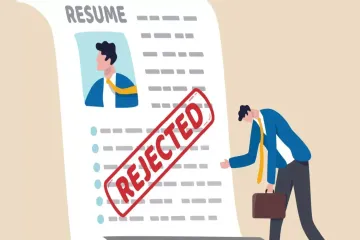
The reality of the job search often involves facing an uncomfortable string of 'no's before finally securing an offer. For many professionals wading through applications and interviews, the central, often unspoken question becomes: at what point does the sheer volume of rejections transition from being a standard part of the process to a sign that something is fundamentally wrong? Understanding what constitutes a "normal" rejection count is challenging because the answer is rarely found in official statistics; instead, it lives in the shared, often anxious, experiences of others across online communities. [2][3]
# Varied Experience

There is no universally accepted, concrete number that defines the "normal" rejection threshold because the experience is deeply personalized, influenced by industry, seniority, and even the current economic climate. [2][4] What one person experiences as a crushing sequence of failures might be standard for someone else applying to a highly competitive niche. For instance, discussions among job seekers reveal a massive spread in what people consider their stopping point. Some individuals report finding success after just a handful of attempts, [3] perhaps fewer than five, while others share stories of applying dozens or even hundreds of times before landing a role. [3]
On platforms dedicated to career discussions, this variability is starkly evident. One job seeker shared their experience after accumulating eight rejections and feeling uncertain if that number was typical, suggesting a point where doubt creeps in. [5] Contrast this with other anecdotes where job seekers mention reaching counts like fifty rejections before finding success. [3] This wide gap—from single-digit setbacks to scores of them—highlights the lack of a neat, statistical average for the individual job seeker. The sheer volume can feel disproportionate to the effort expended, leading to understandable frustration. [6]
# Confidence Erosion
While the numerical count varies, the psychological impact of rejections tends to follow similar patterns. The cumulative effect of receiving negative responses can be significant, often leading to a decline in self-assurance. [6] Data suggests this isn't just anecdotal worry; it's a widespread phenomenon. A survey indicated that nearly half of job seekers reported a loss of confidence specifically due to receiving rejection letters. [6][9] When confidence wavers, it can subtly affect interview performance, creating a difficult feedback loop where the very rejections cause the next interview to go less smoothly.
This erosion of self-belief is particularly damaging because the job search requires sustained self-advocacy. When you begin to internalize the 'no' as a reflection of your intrinsic value rather than a reflection of a market mismatch, the search becomes emotionally draining. [6] It is important to recognize that the process often involves more applicants than there are open positions, meaning that even highly qualified candidates are statistically likely to be rejected multiple times. [2] A low number of rejections does not guarantee success, and a high number does not guarantee failure.

# Contextual Factors
To better frame what one might expect, it helps to consider the variables that inflate the rejection count. The perceived 'normal' shifts based on where and what you are applying for. Entry-level roles, for example, often attract a flood of applicants, making the selection process far more competitive than a highly specialized senior role where the talent pool is smaller. [4] If you are seeking a role in a booming, high-demand sector, you might face fewer rejections overall than someone targeting a stable but highly sought-after industry like tech or finance in a saturated market. [2]
Furthermore, the stage of rejection matters immensely. Receiving a rejection email after submitting an online application is different from being told 'no' after completing three rounds of interviews. The latter stings more because more personal time and energy have been invested, making the eventual rejection feel more costly. [4] The Career Toolkit suggests that if you are getting rejected consistently after the first interview, it might signal an issue with interview skills or resume presentation, whereas getting rejected before the first interview might point toward resume optimization or alignment with job descriptions. [4]
One way to frame this is by looking at the quality of the rejection versus the quantity. A candidate applying for ten roles, securing three interviews, and getting two rejections followed by one offer has a different experience than someone applying for fifty roles, getting zero interviews, and receiving fifty automated rejections. [2] In the first scenario, the signal-to-noise ratio is healthy, suggesting the strategy is largely sound, even with setbacks. In the second, the barrier is clearly at the initial screening stage.
# Analysis of Application Efficiency
It is useful for job seekers to develop an internal metric that moves beyond the simple count of rejections. Consider calculating your Interview Conversion Rate (ICR) and your Offer Rate (OR). If you submit 20 applications and secure 4 initial screening calls (ICR of 20%), that suggests your resume is getting past the initial filters effectively for the market you are targeting. If those 4 interviews result in 1 final interview, and then 1 offer, your conversion through the pipeline is strong, even if the total rejections (15) are high. If, however, you submit 20 applications and get zero calls, the issue lies upstream from the interview stage, and focusing on the number of rejections is less productive than focusing on optimizing the application materials themselves. A healthy search often involves high application volume leading to a lower, but steady, stream of interviews, rather than low volume leading to high rejection numbers or, worse, no response at all. [4]
# Managing the Psychological Toll
Since the psychological cost is a measurable factor in the job search experience, proactively managing the 'no' is critical. [9] It is natural to feel discouraged, but viewing rejection as definitive failure is what causes confidence to drop. [6] Some advice suggests treating the process as data collection rather than personal evaluation. When a rejection arrives, the goal should be to quickly extract any possible learning point—even if it's just confirming that the role wasn't the right fit—and then immediately move on to the next application or interview. [4]
Job seekers often find perspective by realizing that a rejection is rarely about them as a person. It might mean another candidate had slightly more niche experience, better salary alignment, or simply better timing. [2] The decision is frequently made by a hiring committee based on a specific, internal need that you cannot control, not a global assessment of your capabilities.
# Tactical Shift in Mindset
Instead of setting a numerical goal for how many rejections you can withstand, try setting a goal for Feedback Attempts. For every two final-round rejections, commit to sending a polite, brief follow-up email asking for one specific piece of constructive feedback about your presentation or fit. While feedback is rarely given, the act of requesting it shifts your focus from passive receipt of a 'no' to actively attempting to improve the next outcome. This process of structured self-assessment and targeted outreach keeps you engaged in your own development rather than wallowing in the statistics of failure. If you receive zero meaningful feedback after ten such requests, you can then confidently conclude that the environment you are applying in is not conducive to constructive critique, and you can focus entirely on applying elsewhere without second-guessing your performance in those specific past interviews. [6]
# Deciphering the Silence
A major complicating factor in defining "normal" is the issue of silence. Many job seekers report receiving no response at all after an interview, which is often more anxiety-inducing than an explicit rejection letter. [3] Some sources suggest that ghosting—hearing nothing back after an interview—is increasingly common in the modern hiring landscape. [3] While an explicit 'no' hurts, the silence leaves the candidate perpetually in limbo. In forums, this ambiguity often leads people to inflate their mental tally of 'failures' because they don't know where they stand. A formal rejection, even if disheartening, at least closes a loop, allowing the applicant to redirect their energy immediately. [4]
Therefore, a "successful" search, regardless of the raw rejection count, is one where communication loops are relatively closed. A candidate who gets 10 explicit rejections but knows exactly why for 5 of them has gained more actionable insight than someone who received 20 generic rejections and 10 instances of being ghosted. Authority in the process comes not from avoiding rejections, but from effectively managing the feedback loop they create, whether explicit or implied. [4]
# Rejection as a Baseline
Ultimately, for most roles—especially those advertised online—rejections are not an anomaly; they are the statistical baseline of a high-volume activity. If you view job hunting as applying to a marketplace, you are making dozens or hundreds of micro-transactions. Most will fail. The goal is not to eliminate the failed transactions but to increase the ratio of successful ones over time through iteration and refinement of your approach. [2] Whether that means adjusting your target salary, reworking your story for behavioral questions, or simply applying more broadly, the number of 'no's serves only as a counter, not a verdict on your professional worth. The acceptance rate for most desirable positions is low; therefore, the rejection rate must necessarily be high. [2] Focusing on what you can control—your resume polish, your interview preparation, and your resilience—is the only meaningful response to the volume you encounter. [6]
Related Questions
#Citations
How many rejections until you found your job? - Reddit
How Many Job Rejections Are Normal? (And How To Respond)
How many job rejections are normal? - Quora
How Many Job Rejections Are Too Many? - The Career Toolkit
How many interview rejections did you get till you... - Fishbowl
Job Rejection Blues? 5 Ways To Turn A “No” Into Your Next Offer
This is how many rejections it takes before job seekers lose ...
Is it normal to get a ton of application rejections? Trying ... - Facebook
Almost Half of Job Seekers Lost Confidence From Receiving ...