Will hybrid work be the new normal?
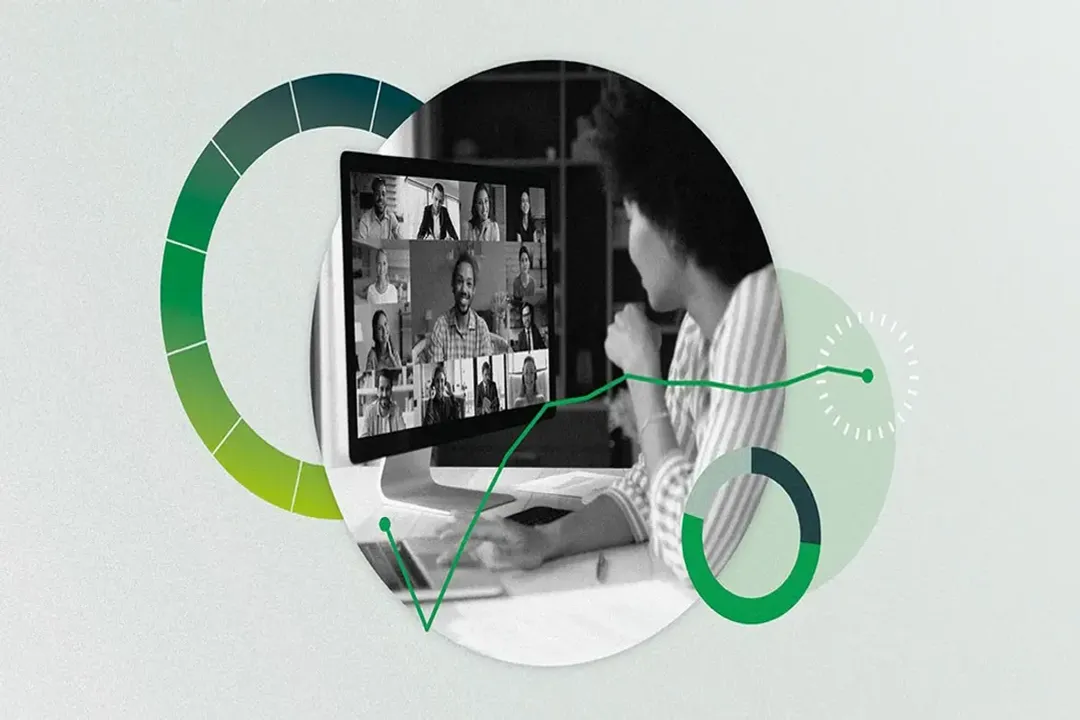
The landscape of professional employment has undergone a fundamental reshaping, moving many traditional office workers away from a mandatory five-day commute. While the initial forced experiment of mass remote work has passed, the resulting structure—hybrid work—has firmly established itself as the prevailing expectation for many roles. It is no longer a temporary contingency plan but a feature integrated into employment agreements and office strategies worldwide.
# Widespread Adoption
The data strongly suggests that hybrid work is settling in as the standard arrangement, rather than a fleeting trend. Employee preference is a significant driver in this sustained shift. Surveys indicate that a substantial majority of workers desire some form of location flexibility in their roles. For instance, Gallup research shows that while a significant portion of employees favor being fully remote, an even larger segment prefers a structure where they split time between home and the office. This widespread desire means companies implementing strict, full-time return-to-office mandates face an uphill battle in retaining top talent. For many, the flexibility gained is now viewed as a prerequisite for accepting a position, making hybrid arrangements a core component of the competitive hiring market.
The discussion is less about if remote elements will persist and more about how to optimize the model that has emerged. The consensus forming among many organizations is that a middle ground provides the best mix of collaboration opportunities and individual focus time. This reality indicates that the traditional, centralized, five-day-a-week office presence is rapidly becoming the exception rather than the rule for office-based jobs.
# Productivity Redefined
One of the most contentious points in the hybrid debate centers on productivity. Skeptics often question how output can be maintained or increased when the traditional oversight of the office floor is removed. However, the definition of productivity itself is undergoing revision in this new context. Where previously success might have been measured by presenteeism—the simple act of being at one’s desk—the hybrid model forces a shift toward measuring tangible outcomes.
Finance leaders, for example, acknowledge the challenge of adapting traditional productivity metrics but recognize the necessity of this evolution to support flexible setups. This necessitates a move from tracking activity to assessing achievements. An organizational refinement I've observed is the increased focus on output quality metrics over raw time-in-seat data. If an employee can complete high-quality, impactful work in fewer dedicated office hours because they had uninterrupted focus time at home, the model proves its worth, even if the raw office utilization numbers look lower.
It is important to note that not all work benefits equally from remote settings. Some roles or tasks thrive on spontaneous, in-person brainstorming and rapid, iterative feedback, which can sometimes be slower to arrange virtually. A successful hybrid implementation must acknowledge these differences, assigning specific days or focusing in-office time explicitly on those activities that benefit most from co-location, such as creative sessions or complex problem-solving.

# Managerial Adaptation
The success of a hybrid arrangement often rests on the shoulders of middle management, who must bridge the gap between executive mandates and employee experience. Effective managers in this environment need to do things differently than their counterparts supervising fully co-located teams.
Three key areas emerge as critical for managerial effectiveness in a hybrid setting:
- Intentional Communication: Casual check-ins that might happen organically in an office must be scheduled deliberately. This means being clear about which communication channels are used for what purpose—e.g., Slack for quick questions, email for documentation, scheduled calls for deep discussion.
- Fostering Psychological Safety: Employees need to feel comfortable voicing concerns or admitting mistakes regardless of their physical location. Managers must actively work to ensure remote staff do not feel siloed or penalized for not being physically present during informal decision-making moments.
- Building Connection: Creating a sense of team belonging requires intentional effort when face-to-face interactions are less frequent. This involves planning structured social interactions, both virtual and in-person, that are inclusive of everyone.
Another critical point for leaders is moving away from micromanagement, which is significantly harder to execute and far more detrimental to morale when employees are remote. Trust becomes the foundational currency of hybrid work.
# Office Purpose
If employees are coming in only a few days a week, the entire rationale for the existence of the expensive physical office space must be re-evaluated. The idea that the office is purely for heads-down, individual work is becoming outdated, as many can perform focused tasks efficiently from home.
The modern office is pivoting toward becoming a destination for connection and collaboration rather than a mandatory daily location for individual tasks. This shift impacts everything from office layout—favoring more flexible meeting areas over fixed cubicles—to the types of events hosted on in-office days.
Consider the difference between incidental interaction and intentional gathering. The old office structure relied heavily on incidental contact—bumping into someone near the coffee machine who happens to have the answer you need. In the hybrid model, organizations are finding success by replacing these random encounters with intentional gatherings. For example, structuring Tuesday and Wednesday as "collaboration days" where whole teams are expected in means that when people commute, they are guaranteed to interact with colleagues who are physically present, maximizing the value of the travel. If an employee's designated office day is purely for individual email catch-up, the incentive to commute plummets.

# Work-Life Redesign
One of the most celebrated aspects of the hybrid shift is the positive recalibration of work-life balance. The time, cost, and stress associated with daily commutes are reduced, freeing up time that can be reinvested in personal well-being, family, or personal projects. This enhanced autonomy over one's schedule is a major factor in employee satisfaction and retention.
However, this newfound freedom also presents a challenge: the blurring of boundaries. When the office is always accessible via a laptop, the pressure to work longer hours can creep in, negating the benefits of flexibility. A key element of establishing hybrid work as a sustainable "new normal" involves setting clear organizational and personal expectations around availability. For instance, a company might institute a policy against sending non-urgent internal communications outside of core business hours, and employees need to practice muting notifications when their workday concludes, regardless of location.
For this model to truly stick long-term, it cannot simply be a temporary concession; it must be built into the organizational DNA, recognizing that employee well-being is intrinsically linked to business success. The long-term sustainability of hybrid work depends on leaders designing structures that support this balance proactively, not reactively.
# Future Outlook
The movement toward hybrid work appears settled, not temporary, suggesting it is indeed the new normal for many professional sectors. Resistance remains in some corners, with differing perspectives on whether remote work is a permanent fixture or a passing phase fueled by recent history. Nevertheless, the momentum favors flexibility.
The defining characteristic of successful future organizations will be their adaptability—their willingness to iterate on their hybrid policies as they gather new data and observe changing employee needs. It is not a fixed state but an ongoing process of optimization. The companies that will thrive are those that treat hybrid arrangements not as a concession, but as a strategic tool for optimizing talent acquisition, employee well-being, and focused productivity. This requires constant calibration, ensuring that flexibility doesn't devolve into disconnection or inequity between those who are remote and those who are in the office.
Related Questions
#Citations
Is remote work the future, or are we all just waiting for the office grind ...
Hybrid Work is the New Normal - National Able Network
Should remote work be the new normal? - Klaxoon
Hybrid Work: The New Normal Redefining Productivity - Forbes
The Rise of Hybrid Work: Redesigning Work-Life Balance
Global Indicator: Hybrid Work - Gallup
The Old Office is Going Extinct. Here's What the New Normal of Work ...
As hybrid working becomes the new normal, what three things are ...
The Future of Remote Work: How Businesses Are Adapting to a New ...