What Construction Jobs Involve Project Management?

Project management in construction is often narrowly associated with the title "Project Manager" or "Construction Manager." However, the process of project management—the planning, coordination, budgeting, risk mitigation, and quality assurance required to transform a blueprint into a built reality—is woven into the fabric of numerous specialized roles across the entire building lifecycle. [1][3][4] From the earliest financial projections to final regulatory sign-offs, many professionals execute specific management functions that directly drive project success, even if their titles don't explicitly include "Manager" or "Project". [6] Understanding which roles carry these management responsibilities is key to navigating the industry and planning a fulfilling career trajectory.
# Defining Oversight
The terms Construction Manager (CM) and Project Manager (PM) are frequently used interchangeably, sometimes even listed as synonyms for one another by industry bodies. [5] Yet, industry analysis shows a distinct difference in practical application and scope of authority. [8] The Project Manager generally holds the administrative authority for the entire project, overseeing it from the pre-construction phase through execution, completion, and final approval. [4][8] Their focus is broad: scope, overall budget, comprehensive schedule adherence, and stakeholder reporting, making their primary work environment the office. [4][8]
Conversely, the Construction Manager’s scope often narrows its focus primarily to the physical construction stage. [8] They are responsible for managing day-to-day field operations, coordinating subcontractors, and overseeing physical processes and resource management on the job site. [1][8] While a CM must execute plans within budget and schedule parameters, they frequently act as the conduit between the PM (who holds the ultimate accountability) and the field teams. [8]
This difference in scope suggests a tactical versus strategic division. The PM manages the business of the project—contracts, high-level finances, and client interface—while the CM manages the build itself. [4][8] A top-level manager might hire other managers for specific phases, but the distinction remains one of overarching administrative control versus on-site execution control. [5]
| Aspect | Construction Manager (CM) | Project Manager (PM) |
|---|---|---|
| Primary Focus | On-site construction execution | Overall project delivery lifecycle |
| Main Responsibility | Managing day-to-day field operations | Managing scope, budget, schedule, and coordination |
| Project Phase Involvement | Mostly during the construction phase | Involved from preconstruction through closeout |
| Work Location | Primarily on the job site | Mostly office-based, with periodic site visits |
| Background | Often comes from the trades/field supervision | Often comes from management, engineering, or business |
| Authority Focus | Field activities, crews, materials, safety | Planning, contracts, stakeholders, and reporting |
| Success Measured By | Smooth site execution and productivity | Project outcomes, cost control, and delivery targets |
| [8] |
For smaller projects, one person may combine both roles, but merging these distinct responsibilities can introduce blind spots as complexity increases. [8] For the professional looking to advance, understanding this delineation is crucial, as a CM with sufficient experience and higher education (like a Master’s) might transition into the broader PM role. [8]
# Core Management Roles
The title Construction Project Manager is a recognized occupational grouping in the industry, often correlating to the senior roles that demand a blend of engineering, business, and project management skills. [3][5] According to U.S. Bureau of Labor Statistics data, this occupation is projected to see growth of 9 percent from 2024 to 2034, which is much faster than the average across all occupations. [5] This robust outlook confirms the sustained need for professionals who can plan, coordinate, and supervise projects from start to finish. [5]
The expected compensation reflects this high level of responsibility; the median annual wage for construction managers was $106,980 in May 2024. [5] Salaries often vary significantly based on the sector—heavy and civil engineering often yielding higher median wages than residential building construction. [5] Key duties common to these roles involve:
- Preparing cost estimates and work timetables. [5]
- Interpreting contracts and technical specifications for the team. [5]
- Selecting and scheduling subcontractors. [5]
- Monitoring progress and reporting budget status to the firm and clients. [5]
- Ensuring compliance with legal requirements, including building and safety codes. [5]
These roles are expected to handle pressure gracefully, especially when dealing with client expectations, as owners are quick to assign blame when issues arise. [4] Success in this realm requires strong analytical, business, communication, and decision-making skills, alongside technical knowledge of construction concepts and contracts. [5]

# Project Initiation Management
Project management functions begin long before the first shovel breaks ground. Several specialized roles focus exclusively on this initiation and planning phase, setting the constraints that the construction team must follow. [3]
# Estimators and Cost Control
The Project Estimator is responsible for the financial blueprint, analyzing plans, specifications, and timelines to calculate the costs associated with labor, materials, equipment, and overhead. [1][3] Estimators are instrumental in helping companies bid competitively and determining project profitability, often specializing in specific industry types like commercial buildings or public roadwork. [3] Their work directly informs the initial budget, a primary constraint managed by the overall Project Manager. [4] Accuracy here prevents downstream budget crises. [8]
# Preconstruction Services
The Preconstruction Services realm is inherently project management-focused, occurring before physical building begins. [3] These professionals handle design coordination, initial scheduling, financial projections, securing entitlements, and permitting. [3] By determining project scope and feasibility, assessing site conditions, and engaging with designers early, they ensure the project starts with a viable plan aligned with deadlines and budget goals. [3]
# Permitting Specialists
A dedicated Permitting Specialist navigates the bureaucratic maze of local and state permits and approvals. [1] Their management function is to ensure all regulatory hurdles are cleared before construction starts, preventing delays that can cost significant money and time later on. [1] The complexity and volume of necessary permits scale with project size, making this role a critical path item in the pre-project management schedule. [1]
# Field Execution Management
Once the project transitions to the build phase, project management shifts to intense on-site coordination, ensuring adherence to the established plan.
# Site Superintendent
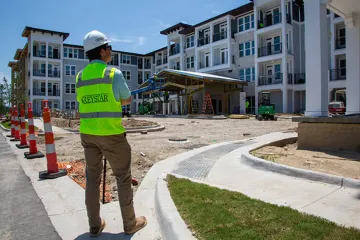
The Site Superintendent is the quintessential on-site leader, monitoring daily construction activities and supervising the workforce to ensure execution aligns with specifications and safety standards. [3] They coordinate subcontractors, manage building tasks, sequence work, and often provide cost or time updates on progress. [3] While they manage the how and when of the physical work, they report their findings and deviations up to the Construction Manager or Project Manager. [3]
# Site Engineers
Site Engineers serve as the crucial technical bridge on site. [3] Guided by the superintendent, they oversee site activities, ensuring they match the plans and drawings. [3] Their project management contribution involves resolving technical issues as they arise and monitoring compliance with safety specifications, merging core project management skills with deep technical knowledge. [3]
# Logistics and Scheduling
The Scheduler and Logistics Coordinator directs the flow of resources. [3] This involves planning, overseeing, and updating construction timelines, coordinating the delivery of materials, equipment, and manpower to maintain the project sequence. [3] A dedicated Scheduler works closely with the CM to plan milestones and ensure tasks happen on time. [1] Effective scheduling, often visualized through tools like Gantt charts, is a core PM/CM function necessary to identify and manage the critical path—tasks whose delay cascades across the entire project timeline. [8]
When assigning specific sub-tasks to various trades, the manager must not fall into the trap of micromanagement. [4] A successful PM trusts their superintendents and field managers to handle granular execution, focusing their own energy on the bigger picture strategy. [4] The ability to delegate effectively and trust team leaders to manage the details is an advanced project management skill.
# Technical Governance Roles
Modern construction relies on specialized data and compliance roles that must be managed within the overall project system. These professionals provide management oversight within their domain, feeding data back to the central PM authority. [1][3]
# Building Information Modeling (BIM)
BIM Managers coordinate with designers, architects, and contractors to create detailed 3D models containing project data. [3] This role is inherently project management-centric, as BIM is used for visualization, simulation, and analysis of the project’s design, sequencing, and logistics before and during construction. [3] A PM must understand how to integrate the insights derived from BIM experts to prevent clashes and optimize construction phasing. [4]
# Quality and Safety
The Quality Assurance/Quality Control (QA/QC) Specialist manages the quality process, inspecting materials and workmanship, documenting deficiencies, and ensuring standards are met. [1][3] Similarly, the Health and Safety Manager is responsible for enforcing protocols, conducting training, and mitigating site hazards. [1][3] Both roles require the manager to interface directly with the PM to report on critical compliance metrics, as failure in these areas directly impacts project completion and legal standing. [5] The success of the overall project depends on these functional managers maintaining their strict internal standards. [4]
# Environmental Oversight
The Sustainability Consultant provides management guidance on green building practices, ensuring the project adheres to environmental regulations and certifications like LEED. [3][1] This requires staying current on evolving compliance standards, which the main project management team must integrate into the schedule and budget. [3]
# Financial and Contract Management
The project's viability is secured by roles managing legal commitments and cash flow, often situated outside the immediate field operations.
# Contract Administration
Contract Administrators manage the legal agreements between the company, clients, subcontractors, and suppliers. [3] They interpret contractual obligations, assess risk, and handle negotiations. [3] While the PM is responsible for high-level contract review and risk management, the administrator ensures day-to-day adherence to the signed terms, a vital administrative management function. [4][8]
# Construction Finance and Accounting
These professionals manage the financial data—invoices, cost tracking, and reporting—collaborating with project managers to track expenditures against the budget plan. [3] Given that budget management is one of the Project Manager's biggest responsibilities, the close coordination with finance personnel to ensure forecasts and cost tracking remain accurate is paramount to avoiding overruns. [4][8]

# Evolving Career Paths
The nature of project management in construction is evolving, demanding adaptability and continuous upskilling. [4][5] While a bachelor’s degree in a construction-related field is increasingly the standard entry point for management roles, experience remains vital. [3][5] For many, the path involves starting as an Assistant Project Manager, Site Engineer, or Estimator to build foundational knowledge before stepping into the full PM responsibility. [4][6]
The industry offers avenues for specialization or movement into higher-level strategy. Professionals in production homebuilding, for instance, often look to transition into commercial or multi-family construction to engage with more diverse and challenging projects, which can expose them to greater responsibility and advanced project management software. [2] Furthermore, the required skillset is broadening, pushing many PMs to become systems integrators. They must now not only lead people but also orchestrate specialized knowledge bases—from BIM modeling to sustainability compliance—ensuring that all these distinct management disciplines feed into one cohesive project delivery strategy. The ability to adopt new technology, such as specialized project management platforms, is no longer optional but a core component of managerial effectiveness. [4][8]
For those seeking different fulfillment, construction management experience is highly transferable. Insights from the field suggest that construction knowledge is a significant asset in related sales or technical representative roles, as the ability to understand construction processes is often valued by the buying company, even without formal sales background. [2] Whether staying within the core PM track to aim for roles like Project Executive, or pivoting into specialized fields like high-tech construction or regulatory consulting, the fundamental project management skills—leadership, risk assessment, and detailed planning—remain the currency of career advancement in the built environment. [2][4] Mastering these management functions, regardless of the specific job title, secures a strong professional footing in a sector with excellent long-term growth projections. [5][6]
Related Questions
#Citations
What careers can I transition into as a construction project manager ...
15 Roles You Can Pursue With a Construction Management Degree
$70k-$120k Construction Project Managers Jobs in Tampa, FL
Construction Project Manager: A Career Guide - Autodesk
Construction Project Management Team Roles and Responsibilities ...
Construction Managers : Occupational Outlook Handbook
Construction Manager vs. Project Manager: What's the Main ...
Construction Project Manager Job Description & Salary - Go Construct
What Are Project Management Jobs in the Construction Industry?