What Are Common Finance Job Titles?
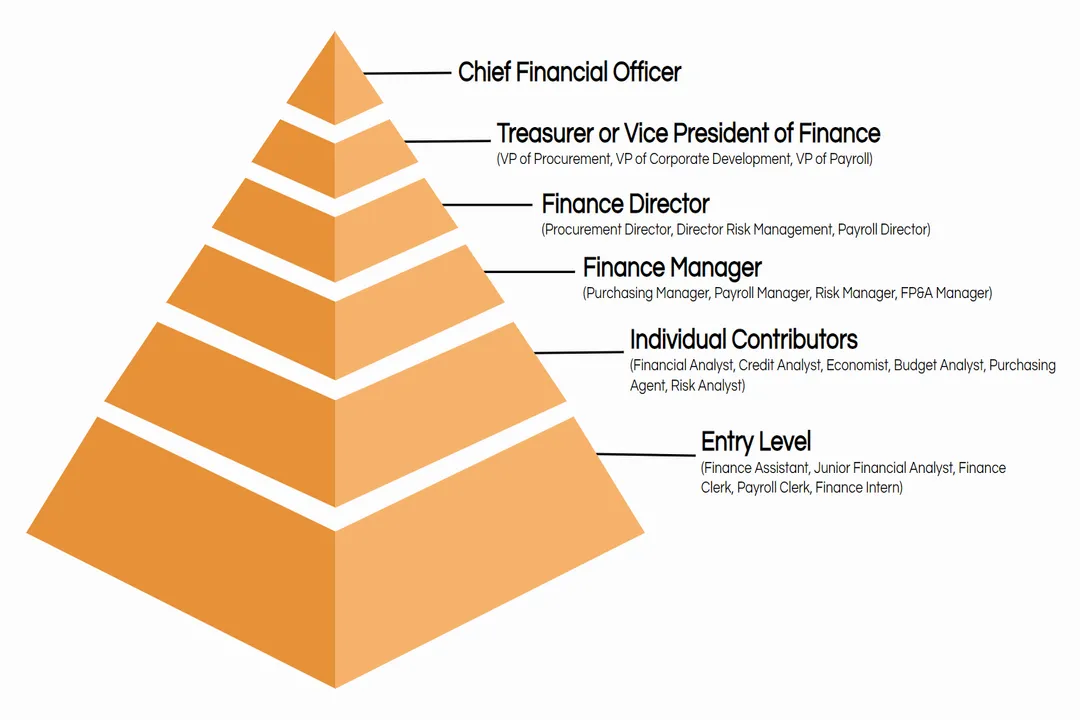
The world of finance job titles can appear complex, a dense landscape of acronyms and hierarchical markers like Analyst, Associate, Manager, and Director. Understanding these labels is the first step toward navigating a career in this broad field, which encompasses everything from ensuring historical books are accurate to projecting future capital needs. [2][7] While some titles are universal, others signal a specific focus, such as Treasury, Tax, or Financial Planning & Analysis (FP&A). [2][4] For the newcomer, differentiating a Staff Accountant from a Financial Analyst requires understanding the core function each role supports within an organization. [1][4]
# Foundational Roles
Many finance careers begin with roles centered on transactional recording, compliance, and detailed reporting—the backbone of any finance department. [1][7] The Staff Accountant is often entry-level, focusing on fundamental duties like journal entries, account reconciliation, and general ledger maintenance. [1][5] Moving up the accounting ladder, the Senior Accountant takes on more complex tasks, potentially overseeing the work of junior staff, handling month-end close procedures, and dealing with trickier accounting standards or fixed assets. [1][5] Reddit discussions often show a clear progression here, where a Senior Accountant might be the highest non-managerial individual contributor role in a smaller setup. [5]
Other foundational roles are specialization-driven from the start. The Auditor, whether internal or external, focuses intensely on verifying the accuracy and compliance of financial records. [1][6] Meanwhile, the Tax Accountant dedicates their expertise to the intricacies of tax codes, compliance filings, and planning to minimize tax liability within legal boundaries. [1][6] These roles demand rigorous technical knowledge specific to their domain. [1]
# Corporate Focus
The roles within corporate finance tend to be more forward-looking, focusing on how a company manages its money, plans its future, and maintains its day-to-day liquidity. [2][7] A key area here is Financial Planning & Analysis (FP&A), which is distinctly different from traditional accounting. While accounting tracks what has happened, FP&A analysts and managers concentrate on forecasting, budgeting, variance analysis, and creating models to guide executive decisions. [2] Titles within FP&A might range from FP&A Analyst to FP&A Manager. [4]
Another vital pillar of corporate finance is Treasury. Professionals in Treasury management ensure the company has the necessary cash flow to operate, managing banking relationships, short-term investments, and sometimes debt management. [2][7] A Treasury Analyst deals with daily cash positioning, while a Treasurer or VP of Treasury oversees the company's entire liquidity and capital structure strategy. [7]
The Controller sits at the nexus of historical reporting and internal control, often supervising the accounting department. [2][4] The Assistant Controller or Accounting Manager frequently reports to the Controller, ensuring the general ledger, accounts payable, and accounts receivable functions run smoothly and accurately before the Controller signs off on the final statements. [2] The scope here is one of meticulous oversight and policy enforcement. [4]
We can observe a pattern here where roles emphasize either historical stewardship (Accounting/Controller) or future guidance (FP&A/Treasury). [2] A helpful way to visualize this progression is to consider the main deliverable: Accounting produces the validated Report Card, while FP&A produces the Roadmap. [2] This distinction often guides promotion tracks; an accountant moving into FP&A usually requires learning significant modeling skills, demonstrating that functional shifts are common but demand new expertise. [1][2]
# Transactional Expertise
Outside the daily operational cadence, finance professionals focus on significant, non-recurring events, often involving external parties, large sums of capital, or corporate restructuring. [9] While investment banking is a known subset, corporate finance departments have parallel needs for transactional expertise. [9]
Roles related to Mergers and Acquisitions (M&A) sit within this category. These professionals might work on valuing potential targets, structuring deals, or handling the financing aspects of an acquisition. [9] In a larger organization, these might be specialized Corporate Development roles, distinct from the M&A teams in a bank, as they represent the buyer or seller side rather than an intermediary advisor. [9]
Another significant transactional area involves Capital Markets. While this can overlap with Treasury, it often focuses on securing long-term financing—issuing bonds or equity. Professionals here work on ensuring the company’s financing structure is optimized for growth and risk tolerance. [7] The common thread among these titles is a focus on transformational events that alter the company's balance sheet or ownership structure fundamentally. [9]
# Leadership Progression
As individuals gain experience, their job titles begin to reflect increasing responsibility, moving from technical execution to team management and strategic decision-making. [5][7]
The Finance Manager title often marks the first significant supervisory role, requiring the individual to manage people, set priorities for a small team (perhaps a few analysts or accountants), and act as the primary liaison between their specialized function and the wider business units. [3][7] This transition is crucial; success now depends not just on personal technical output but on the team's collective performance. [5]
Moving further up, the Director of Finance is typically responsible for a larger function or a specific region, setting the functional strategy under the guidance of a VP or CFO. [3][7] They are deeply involved in translating high-level corporate strategy into actionable financial plans for their area of ownership. [7]
The executive suite is headed by the Vice President (VP) of Finance and the Chief Financial Officer (CFO). [7] The VP often oversees several key areas, such as combining the FP&A and Treasury functions under one leader. [3] The CFO is the ultimate financial steward, responsible for all financial reporting, risk management, capital allocation, and often playing a strategic role alongside the CEO in overall business direction. [7] The CFO must possess a broad understanding, needing to speak credibly about accounting standards, capital markets, operational efficiency, and technology integration. [7]

# Industry Specialization
While the titles mentioned above form a general skeleton applicable across most industries, some sectors develop unique or highly specialized nomenclature, or place unique emphasis on existing roles. [6] For instance, the energy sector, particularly oil and gas, requires finance professionals who deeply understand the specific economics of resource extraction, fluctuating commodity prices, and massive capital expenditure projects. [6]
In this specialized context, you might find titles like Oil and Gas Financial Analyst or a Finance Manager focused on Upstream Operations. [6] These roles require not only standard accounting or FP&A skills but also fluency in industry-specific metrics, such as finding the true cost of drilling or valuing reserves. [6] A generalist Financial Analyst might focus on marketing budgets, whereas their counterpart in the energy field might spend months modeling the cash flow implications of a new offshore platform's declining production curve. [6]
Furthermore, the sources indicate that the presence and titles within a finance team can be heavily influenced by the company's primary activity. [4][9] A small software company might have one Controller handling everything from payroll to investor relations, whereas a multinational manufacturing firm will have dedicated Controllers for each major geographic segment, all reporting up to a Global Controller. [4]
Thinking about career pivots, this specialization is a key factor to consider. Excelling as a Senior Tax Accountant for a large real estate firm is fantastic experience, but transitioning that specific expertise directly into a Corporate Development role at a tech company will require significant, deliberate upskilling in valuation and deal structuring, beyond just learning the new industry vernacular. [1][2][9] The financial profession rewards deep knowledge, but advancement often requires strategic breadth.
# A Look at Supporting Roles
Beyond the core reporting, planning, and executive functions, the finance ecosystem includes vital support roles that ensure systems and data integrity are maintained. [1]
- Financial Systems Analyst/Manager: This role bridges IT and Finance. They are critical for implementing and maintaining Enterprise Resource Planning (ERP) systems, budgeting software, and reporting tools. [1] Their goal is to automate processes, improve data accuracy, and provide reliable platforms for the FP&A and Accounting teams. [1]
- Internal Auditor: Often reporting functionally to the Audit Committee of the Board and administratively to the CFO, the Internal Auditor assesses risk across the entire organization, not just financial reporting. [1] They look at operational efficiencies, compliance with internal policies, and fraud prevention, making them a critical check on management processes. [6]
The hierarchy in these supporting roles often mirrors the direct functional track: Analyst (executing tests/queries), Senior Analyst (leading smaller audit engagements or system configurations), and Manager (managing projects and staff). [5]
The reality of title inflation also plays a role. Across various sources, the designation Associate often sits between Analyst and Manager in large, formal structures like investment banking or consulting, but in general corporate finance, Senior Analyst frequently serves this purpose. [3][4] It is essential to look past the nameplate to the responsibilities listed in the job description, as an Associate at one company might perform the duties of a Senior Manager at another. [3]

# Summary of Functional Groupings
To better organize the variety, one can group the titles by their primary orientation to the financial lifecycle:
| Orientation | Primary Function | Example Titles | Focus Area |
|---|---|---|---|
| Stewardship | Recording & Compliance | Staff Accountant, Tax Accountant, Internal Auditor [1][6] | Historical Accuracy, Regulation |
| Stewardship | Control & Reporting | Controller, Assistant Controller [2][4] | Internal Policy, Financial Statements |
| Planning | Forward Modeling | FP&A Analyst, Finance Manager (FP&A) [2][4] | Budgeting, Forecasting, Strategy Input |
| Capital Management | Liquidity & Funding | Treasury Analyst, Treasurer [2][7] | Cash Flow, Debt, Investment Strategy |
| Transformation | Deal Execution | M&A Analyst, Corporate Development [9] | Valuations, Transactions, Restructuring |
This structure shows that while the job title might be identical—say, Manager—the required background and day-to-day work are vastly different depending on whether the manager oversees the Stewardship function (ensuring timely closing) or the Planning function (building next year's budget). [2][7] Navigating this field successfully means choosing not just a level (e.g., Senior) but a functional track that aligns with your analytical strengths and career interests. [1]
Related Questions
#Citations
Common Job Titles and Duties in Accounting and Finance - Indeed
Finance Job Descriptions - The Association for Financial Professionals
Top 20 Finance Job Titles | Ongig Blog
Finance Job Titles and Descriptions - PEG Staffing & Recruiting
What's the hierarchy of job titles in accounting? I know CFO ... - Reddit
Finance & Accounting Job Titles and Skill List | Rigzone
A Glossary of Key Finance Team Roles & Responsibilities
Accounting & Finance Job Titles - Ladders
Corporate Finance Jobs: Full Guide, Salaries, Exits + More