What Are Common Engineering Job Titles?
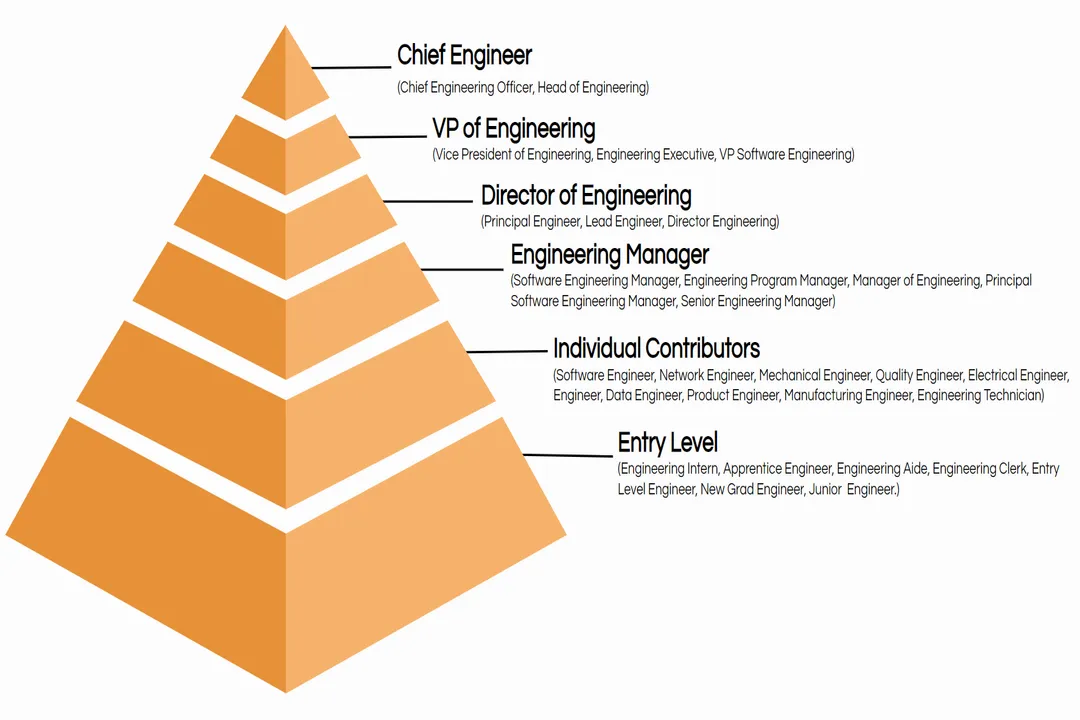
The sheer variety of job titles within the engineering profession can often feel like a specialized dialect, making it difficult for newcomers, or even those switching disciplines, to map out a career path. While the Bureau of Labor Statistics groups many occupations under broad categories like Architecture and Engineering, the day-to-day titles used by companies are far more granular, reflecting specialization and seniority. [6] Understanding these common labels involves looking at three main dimensions: the level of experience, the specific engineering discipline, and the chosen career track (individual contributor versus management).
# Foundational Ranks
At the most fundamental level, many engineering roles are defined by the level of experience and responsibility, often forming a clear hierarchy within a team or organization. [2]
The entry point is frequently labeled as Associate Engineer or simply Engineer I. This level is typically reserved for recent graduates, often those with a bachelor’s degree, who are gaining initial, supervised experience. [2][3] Moving past this initial phase, the title simply becomes Engineer or Engineer II, indicating proficiency and the ability to handle more complex, standard tasks with less oversight. [2]
Advancement leads to Senior Engineer. This title signifies a high degree of technical competence, where the individual not only executes tasks effectively but often mentors junior staff and takes ownership of significant project components. [2] Following the senior level, one might encounter titles like Lead Engineer or Principal Engineer. [2] A Principal Engineer is usually a top-tier technical expert whose contributions are strategic, often setting technical standards or solving the most intractable problems for an entire department or business unit. [2]
This progression from entry-level through principal status often reflects the Individual Contributor (IC) track, emphasizing deep technical mastery rather than people management. [2]
# Field Specialization
The most significant differentiator in an engineering title is usually the discipline itself. These titles define what the engineer works on, irrespective of their seniority level. [1][7] For example, a job posting might list a Senior Civil Engineer or an Entry-Level Mechanical Engineer.
Major disciplinary titles commonly seen include:
- Mechanical Engineer: Involved in design, analysis, manufacturing, and maintenance of mechanical systems. [7]
- Electrical Engineer: Focuses on systems involving electricity, electronics, and electromagnetism. [6]
- Chemical Engineer: Deals with the design and operation of industrial chemical processes. [6][7]
- Software Engineer/Computer Engineer: Designs and develops software or computer hardware and systems, often overlapping in title depending on the company. [1]
- Industrial Engineer: Concentrates on optimizing complex processes, systems, or organizations, often focusing on efficiency and workflow. [8]
For those with a degree in engineering technology or similar fields, you may see titles that reflect a slightly different focus than traditional engineering degrees, such as Engineering Technologist. [3] Some lists show that the title Engineering Designer is also a common B.S.-level role in some STEM fields. [3]
# Construction Focus
In the construction sector, titles often merge technical function with project phase. You frequently see terms like Project Engineer, Construction Engineer, or Field Engineer, roles that demand practical site knowledge alongside theoretical engineering principles. [9] A Structural Engineer in this context applies principles of load-bearing design to buildings and infrastructure. [9]
# Energy Sector Roles
The energy industry presents its own vocabulary. Within oil and gas, for instance, one might encounter highly specific roles that blend technical skill with operational environments, such as Petroleum Engineer, Drilling Engineer, or Subsea Engineer. [5] These titles often imply a specialized knowledge set directly applicable to upstream or midstream operations. [5]

# Functional Variations
It is worth noting that the functional descriptor can sometimes be as important as the core discipline, especially in larger organizations. A Mechanical Engineer might specialize as an HVAC Engineer, a Stress Analyst, or a Reliability Engineer. This is a point where company structure dictates clarity; one company may hire a Senior HVAC Engineer, while another might advertise for a Senior Mechanical Engineer focusing on HVAC systems. [1] The former is more direct, the latter might be used to keep the core title consistent across different functional groups.
One useful analytical lens is to separate the Role Type from the Discipline. For example, a Design Engineer is defined by the function (designing), whereas a Chemical Engineer is defined by the domain (chemistry/process). A single person might be a Senior Design Engineer specializing in Chemical Processes. [7] Companies that emphasize specific project phases or deliverables often favor functional titles.
# Management Tracks
Once an engineer chooses to move away from the individual contributor path, the titles shift to reflect people and resource management responsibilities. [2]
The first significant step into this arena is typically the Engineering Manager. [4] This role shifts focus from writing code or designing schematics to overseeing a team of engineers, managing schedules, handling performance reviews, and allocating resources. [4] An Engineering Manager needs technical credibility but must prioritize team output and development over their own individual technical contributions. [4]
Higher up the ladder, titles become more focused on departmental or organizational strategy:
- Director of Engineering: Typically oversees multiple teams or managers and focuses on long-term technical strategy for a larger organizational segment. [4]
- VP of Engineering/Chief Technology Officer (CTO): Executive-level positions concerned with the overall technical vision, budget, and strategic direction of the entire engineering function within the company. [4]
These management roles often require a different skill set than pure technical roles, blending project oversight with budgeting, hiring strategy, and inter-departmental communication. [4] In some technology-focused management roles, the title might specifically read Engineering and Technology Manager, indicating a broader scope that might encompass both engineering staff and related technical support teams. [4]

# Degrees Versus Titles
It is essential to acknowledge that the title Engineer itself is sometimes used loosely across industries, which can create confusion regarding the required educational background. While many professional engineering roles require at least a bachelor's degree in the specific field, [3] other roles might use the title "Engineer" in a supporting capacity that does not mandate a four-year engineering degree. [3] Conversely, as seen in lists of sample titles for bachelor-level graduates, a clear B.S. degree holder can land roles like Aerospace Engineer or Environmental Engineer straight out of school. [3]
To maintain quality control and signal expertise, organizations often link the title directly to the accreditation or licensing status, although this is more common in fields like Civil or Structural engineering where professional licensure (like PE status) is legally required for certain tasks, such as stamping official documents. [9]
# Data Summary of Common Designations
To give a clearer picture of how these labels combine, we can observe a common matrix structure used in hiring, even if the exact wording varies by industry:
| Seniority Level | Individual Contributor Example | Management Example |
|---|---|---|
| Entry | Associate Engineer | N/A (or Team Lead) |
| Mid-Level | Engineer II | Engineering Manager |
| Senior | Senior Engineer/Principal Engineer | Senior Engineering Manager |
| Executive | Fellow/Consultant Engineer | Director of Engineering |
This table illustrates the branching point: after achieving a level of seniority (e.g., Senior), the path either deepens technically (Principal/Fellow) or shifts to people leadership (Manager). [2][4] Deciding between these tracks often becomes the most defining career choice an engineer makes after their first five to seven years in the field.
Navigating the landscape of engineering job titles requires looking past the single word and understanding the context provided by the accompanying modifier—whether that modifier signifies seniority, discipline, or functional focus. A title like Instrumentation Engineer clearly defines both the function and the technical domain, whereas a simple Engineer requires further inquiry into the specific role description to gauge the actual day-to-day responsibilities and required expertise. [7]
Related Questions
#Citations
Top 30 Engineering Job Titles [with Descriptions] - Ongig Blog
Engineer job titles hierarchy? : r/EngineeringStudents - Reddit
Sample Bachelor's Job Titles for STEM - Career Center | UNT
Engineering and Technology Management Job Titles
Engineering & Science Job Titles and Skill List - Rigzone
Architecture and Engineering Occupations - Bureau of Labor Statistics
Engineering job titles - what do they really mean?
[PDF] ISE Job Titles
Engineering & Construction Job Titles - Ladders