Is Hospitality a Customer-Facing Industry?

The foundation of operating within the hospitality sector is inherently dependent on direct interaction with the consumer, making it profoundly customer-facing. However, simply being customer-facing does not automatically equate to practicing genuine hospitality; that distinction separates the transactional from the truly memorable. [1][5] While customer service focuses on the task—the delivery of a product or the resolution of an issue—hospitality concentrates on the feeling the customer leaves with, often long after the transaction is complete. [1][6]
# Service Versus Experience

Customer service can be defined as the support an organization provides to its customers before, during, and after a purchase or interaction. [2] It is the functional backbone of any business exchange, prioritizing efficiency, speed, and accuracy in fulfilling needs. [1][3] If a customer calls an airline because their flight was delayed, the customer service representative who rebooks them quickly and clearly communicates the new itinerary is performing excellent service. [5] This role is reactive, focused on problem-solving and ensuring the promised goods or services are delivered as expected. [2][3]
Hospitality, conversely, elevates this exchange. It is the warmth, friendliness, and genuine welcome extended to guests or customers. [1] It’s about anticipating needs, going the extra mile to create a positive memory, and ensuring the individual feels valued rather than merely processed. [6] In the context of the delayed flight example, the hospitality aspect would involve the representative not only rebooking the flight but perhaps offering a voucher for a complimentary drink or snack, expressing sincere regret for the inconvenience in a way that feels personal, and proactively checking in later to confirm the new arrangements are satisfactory. [1][5] This difference in approach means that service is about what is done, whereas hospitality is about how it is done and the emotional residue left behind. [3]
# Dimensions of Interaction
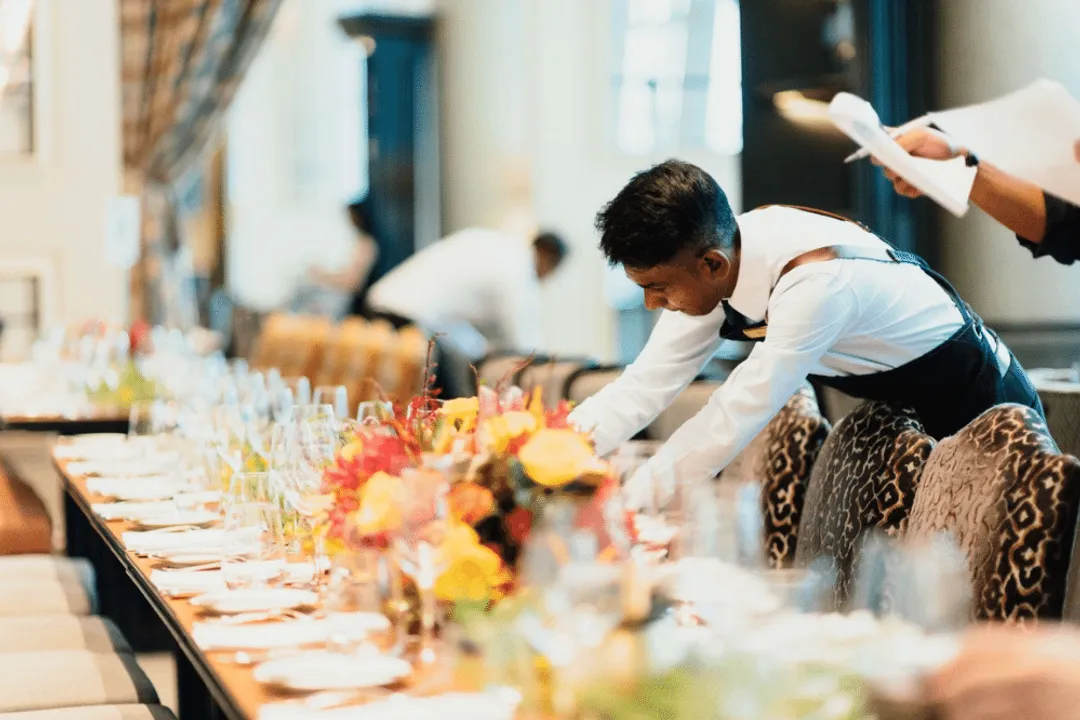
The scope of customer service is vast and touches nearly every industry today, including technology, finance, healthcare, and telecommunications. [2][5] A technician fixing a software glitch or a bank teller processing a deposit are both delivering customer service. In these contexts, the interaction is often brief and strictly transactional. [5]
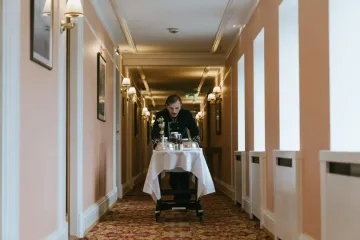
Hospitality, while always involving service, is more intrinsically linked to industries where the primary product is the experience itself. This strongly includes hotels, restaurants, tourism, and entertainment venues. [1][6] These environments require staff to be attuned to subtle social cues, ambiance, and the overall guest comfort level. [8] When considering an establishment like a high-end hotel, the cleanliness of the room (service) is just the baseline; the personalized greeting from the concierge, the quality of the turndown service, and the attentiveness of the dining staff (hospitality) are what define the brand promise. [6]
A useful way to visualize this separation is by looking at the core requirement for each function. For customer service, the key performance indicators (KPIs) often center on metrics like first-call resolution rate, average handling time, or ticket closure speed. [2] For hospitality, the metrics trend toward guest satisfaction scores, repeat business rates, and qualitative feedback regarding ambiance and staff demeanor. [8]
| Feature | Customer Service | Hospitality |
|---|---|---|
| Primary Focus | Transaction fulfillment and problem resolution [2][3] | Guest comfort, warmth, and emotional experience [1][6] |
| Nature of Interaction | Reactive, task-oriented, functional [5] | Proactive, relationship-building, experiential [8] |
| Metric Example | Average Handle Time (AHT) [2] | Guest Sentiment Score [8] |
| Industry Scope | Universal (Tech support, Banking, Retail) [5] | Experience-centric (Hotels, Tourism, Fine Dining) [1][6] |
# Expanding Hospitality's Footprint

While the traditional association remains strong, the principles of hospitality are increasingly recognized as critical in areas that might not immediately spring to mind. For instance, the field of Customer Success (CS) in the business-to-business (B2B) technology sector shows a clear adoption of hospitality thinking. [4] A CS professional’s goal is to ensure a client achieves their desired outcome using the purchased software. While this sounds like service, the high churn rates in subscription models necessitate a focus on retention built on positive feelings. [4] A CS manager who treats a client relationship as a partnership, offering proactive check-ins and celebrating client wins, is applying hospitality principles to a fundamentally service-based relationship. [4] This suggests that in modern business, any role dealing with long-term client retention benefits immensely from a hospitality mindset, even if the setting is an office rather than a lobby. [4]
This migration of focus from mere service delivery to experience management reflects a broader market shift. When basic services become commoditized—when every hotel room is clean and every bank offers a mobile app—the differentiator shifts to the human element. [6] This elevates the employee who provides exceptional service from a functional necessity to a brand ambassador. Mastering this art of customer experience is what separates industry leaders from mere service providers in hospitality jobs. [8]
# The Need for Deep Training

Providing exceptional customer service within the hospitality context requires more than just a friendly disposition; it demands specific, honed skills. [7] Organizations in this sector must intentionally cultivate staff who can manage high-stress situations while maintaining their composure and warmth, which is a skill set distinct from simply following a service script. [6]
Tips for delivering superior service within this hospitality umbrella often highlight behavioral attributes:
- Active Listening: Truly hearing what the guest needs, which often means reading between the lines of their request. [7]
- Personalization: Using names, remembering past preferences, and tailoring interactions rather than resorting to generic responses. [7]
- Anticipation: Observing body language and environmental cues to address a need before it is formally voiced. [7]
When service training stops at the transactional level—teaching what the policy is—it fails to build the relationship required for hospitality. [3] The training must move into empathy and emotional intelligence. [8] For example, teaching a front desk agent the protocol for a lost reservation is service. Teaching them how to handle a guest who has just endured a 14-hour flight delay, recognizing their exhaustion immediately, and smoothly overriding protocol to provide immediate comfort is hospitality. [1][5]
# Value Creation Through Feeling
One observation that emerges when comparing these two concepts is that service minimizes pain, while hospitality generates pleasure, and this difference directly impacts perceived value and willingness to pay. A standard service interaction—getting what you paid for—establishes the minimum acceptable transaction value. A great hospitality interaction adds premium value that the customer is often willing to pay more for, or at least return for repeatedly. [6]
Consider the cost of conflating the two in business operations. If a software company views its relationship with clients purely through a customer service lens, they might become ruthlessly efficient at closing support tickets quickly. This efficiency might save labor costs in the short term, but if the client feels rushed, unheard, or unvalued during the process, that transactional victory breeds resentment and increases the likelihood of subscription cancellation. [4] The organization saves a few minutes on a support call but loses a year's worth of recurring revenue. A hospitality-driven approach to CS, however, might take slightly longer on that same call—perhaps three minutes longer to fully resolve the underlying confusion, not just the immediate error—but by ensuring the client ends the call feeling supported and respected, the long-term customer lifetime value increases significantly. [8] The initial investment in time yields greater returns in loyalty.
# Cultivating the Hospitality Mindset
Translating a business from a transactional service provider to a hospitality leader requires a deliberate shift in internal focus and team structure. This isn't merely about hiring naturally outgoing people; it's about structuring roles and rewarding behavior that prioritizes the emotional outcome.
A crucial step for managers is to move performance reviews away from purely output-based metrics (e.g., "Number of complaints resolved") toward impact-based metrics (e.g., "Net Promoter Score improvement attributed to direct interactions"). When employees are solely rewarded for speed, they will inevitably sacrifice the time needed for genuine connection, thus defaulting back to pure service delivery. [2]
Furthermore, managers must build internal systems that support proactive engagement. If the back-of-house staff (like kitchen or IT teams) are operating under intense pressure with zero buffer time, they cannot afford the mental space to assist frontline staff with spontaneous guest requests. True hospitality requires coordination where support departments buffer the customer-facing teams, allowing them the dedicated time to execute personalized gestures. [7] This organizational alignment means recognizing that the cleaner, the chef, and the front desk agent are all contributing to the overall guest experience, which is the definition of operational hospitality. [8] If the information systems are clunky, slowing down data retrieval, the frontline staff are forced into frustratingly long pauses with guests, instantly breaking the sense of warmth and care. [1] Streamlining the internal mechanics directly enhances the external human interaction.
The inherent customer-facing nature of hospitality is therefore not just a job description; it is an organizational philosophy. It acknowledges that in any interaction, whether solving a broken widget or pouring a perfect glass of wine, the consumer is seeking more than just a functional product—they are seeking positive acknowledgment, respect, and a sense of ease within the interaction space. [6][5] This relentless focus on the subjective, emotional side of the exchange solidifies hospitality's place as a distinct and profoundly customer-facing discipline, one that uses excellent customer service as its necessary, yet insufficient, foundation. [3]
Related Questions
#Citations
Hospitality vs customer service: what is the difference? - Les Roches
Hospitality vs. Customer Service: What Employers Need to Know
Hospitality vs Customer Service: Key differences in Client-Focused ...
Hospitality to Customer Success : r/CustomerSuccess - Reddit
Service vs Hospitality: Skills, Salary, and Career Path
Hospitality customer service as a career - Glion
7 Tips for Providing Exceptional Customer Service in the Hospitality ...
Mastering the Art of Customer Experience in Hospitality Jobs
How do hospitality and customer service compare? - Quora