How do you work in industrial simulation?
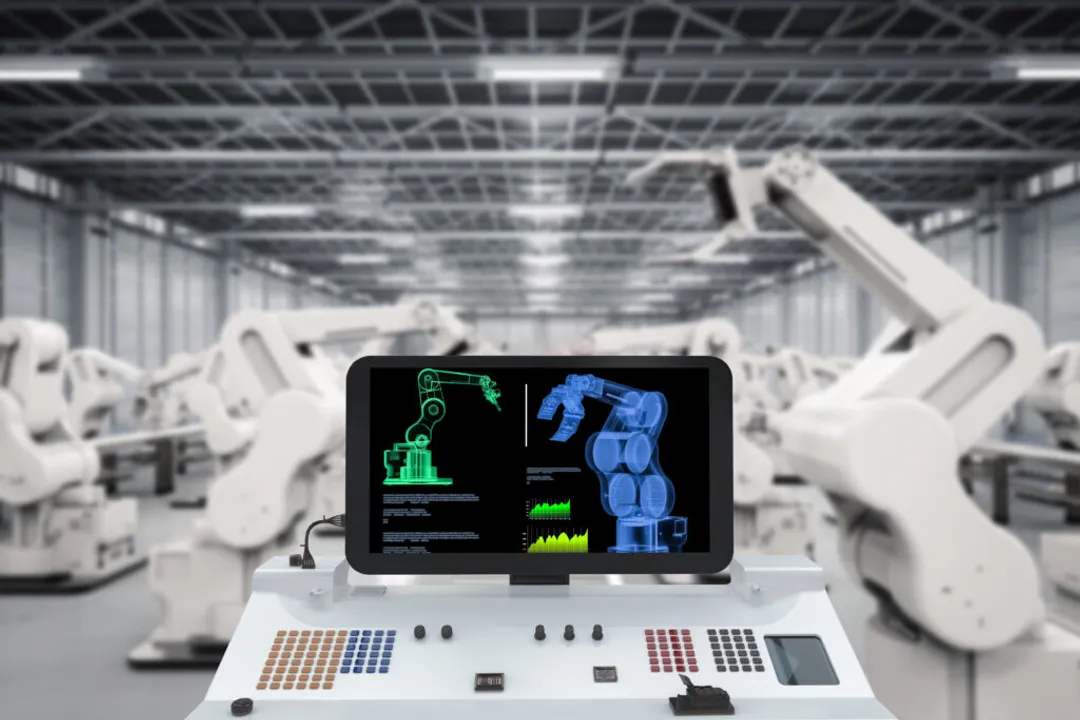
Working in industrial simulation means mastering the art of creating a virtual stand-in for a real-world industrial process or system. [8][9] It is the practice of building computational models that behave like the physical world, allowing engineers and managers to ask “what if” questions without risking downtime, material waste, or safety hazards on the factory floor. [5][3] Rather than relying on guesswork or overly simplistic calculations, simulation transforms decision-making from an educated guess into a data-backed experiment. [8]
This field isn't monolithic; it spans everything from modeling the flow of raw materials through an entire supply chain to testing the structural integrity of a single piece of industrial equipment. [5][10] The core goal, regardless of the scale, is to increase learning and innovation by observing system behavior over time or under stress. [3]
# Modeling Types

Understanding how to work in industrial simulation requires recognizing the different kinds of models used. One major category involves discrete-event simulation (DES), which is extremely common in manufacturing and logistics. [9] DES models track a system as events occur sequentially over time—a machine finishes a part, a vehicle arrives, an operator starts a task. [9] This is perfect for analyzing throughput, buffer capacity, and overall line balance. [5]
Contrast this with simulations focused purely on physics or detailed component interaction, such as those used in Computer-Aided Engineering (CAE) for industrial equipment. [10] Here, the focus might be on stress, thermal loads, or fluid dynamics to ensure a machine will function correctly under its operational parameters before it is even built. [10]
A related, though distinct, application is the use of hyper-realistic simulation for operator training. [7] While this shares modeling techniques, its primary output isn't necessarily process optimization but enhanced human performance and safety training in near-identical virtual environments. [7] Furthermore, the concept of the digital twin blurs the line, linking the simulation model directly to the real asset, providing a window into the future performance of the current operation based on live data. [7][8]
# Simulation Process
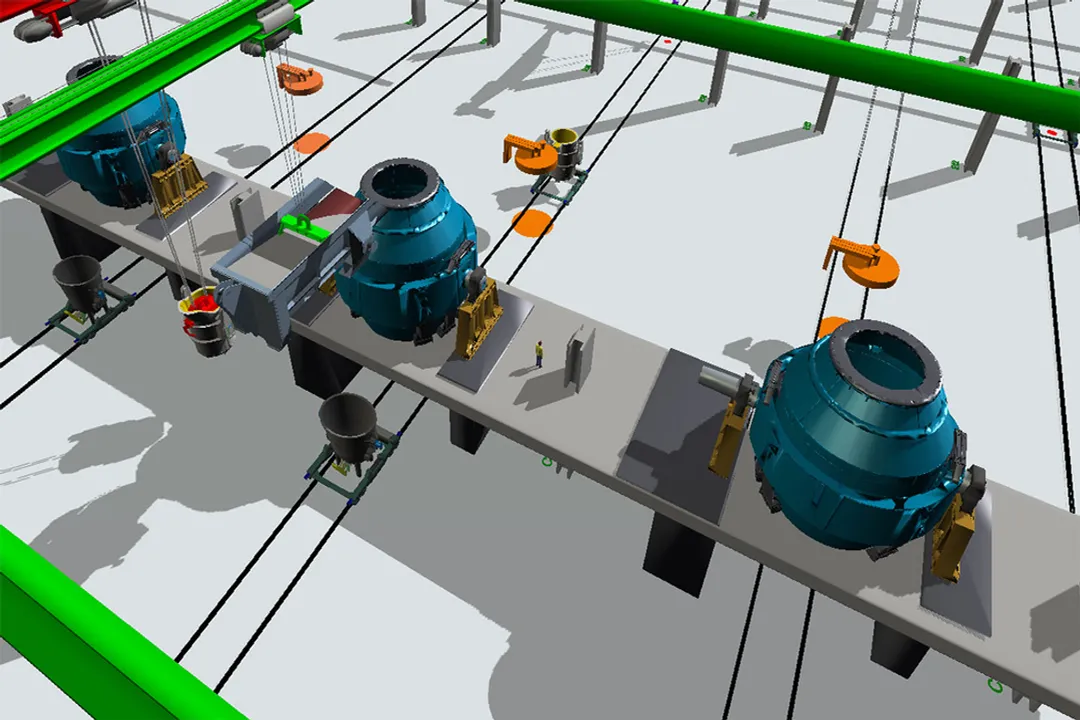
Conducting successful industrial simulation projects follows a disciplined sequence, though the exact steps can vary depending on the complexity of the system being modeled. [4] A general path starts with clearly defining the objective. [4] What specific question needs answering? Is it minimizing waiting time, determining the optimal number of robots, or assessing the impact of a new shift pattern? If the objective isn't sharp, the resulting model will answer irrelevant questions. [4]
Once the goal is set, the next critical phase is model construction. This involves deciding on the level of detail required. Do you need to model every single minute movement of a conveyor belt, or is a high-level representation of movement sufficient for the analysis? This choice directly impacts build time, computational demand, and accuracy. [5] Following construction, data collection and input parameter definition are vital; the model is only as good as the data fed into it. [4]
After the model is built, you run experiments. Instead of trying one configuration, you run hundreds or thousands of different scenarios—varying machine speeds, maintenance schedules, or demand fluctuations. [3][6] This is where the predictive power shines, testing a wide array of operational futures that would be impossible or too costly to test in the physical plant. [5]
The final, crucial stage is analysis and validation. You must demonstrate that the model behaves as the real system does under known conditions—this is model validation. [4] If you cannot prove the virtual system mirrors the actual system, any projections about future performance are merely speculation, no matter how sophisticated the software package appears. [4] After validation, the insights are translated into actionable recommendations for the plant floor. [4]
# Core Competencies
Working professionally in this domain requires a blend of engineering discipline, statistical thinking, and software fluency. [2] Industrial engineers are often the ones driving these projects because they possess the domain knowledge necessary to interpret the system’s mechanics. [6] They need to understand material flow, capacity constraints, and industrial processes fundamentally. [6]
While proficiency in simulation software—whether for discrete events, finite element analysis, or system dynamics—is a prerequisite, it’s rarely the deciding factor for project success. [1][9] Many professionals find that general industrial engineering skills are more important than being an expert in one specific software package. [2] The ability to frame a business problem as a solvable simulation model is paramount. [4]
This often means strong skills in statistics are necessary, as simulation inherently deals with randomness and variation. [4] You need to know how to interpret confidence intervals, set up statistical experimental designs, and correctly identify when an observed difference between two model runs is statistically significant versus just random noise. [4]
A common pitfall for those new to the field is focusing too heavily on creating an exact replica of the physical system. In reality, a good simulation model is often an abstraction—it only models the elements necessary to answer the specific question at hand. Modeling every single bolt and wire when you are only interested in overall throughput is a waste of time and resources. [5]
# Insight and Impact
Simulation provides a window into the future of an operation, offering foresight that traditional spreadsheets cannot match. [8] Where process improvement often focuses on immediate, observable changes, simulation excels at revealing unforeseen consequences of proposed changes. [3]
Consider the difference between optimizing an existing line versus designing a new one. When optimizing an established line, simulation helps identify hidden bottlenecks—perhaps a small queue that consistently starves the next station, leading to massive cumulative downtime. [5] The return on investment here is often fast because you are tuning existing assets. [5]
However, when designing a new facility or introducing major automation, simulation shifts from optimization to risk mitigation. This is where simulation proves its capital value. For example, you might simulate the interaction between automated guided vehicles (AGVs) and human pickers in a new warehouse layout. [9] By testing various traffic control logic rules virtually, you ensure that a multi-million dollar investment won't result in constant, costly gridlock on day one. [5]
| Simulation Goal | Primary Focus | Key Risk Mitigated |
|---|---|---|
| Process Tuning | Improving flow metrics (throughput, utilization) [5] | Inefficient use of existing capital/labor [3] |
| System Design | Validating new layouts, equipment, or logic [10] | Costly rework after physical installation [5] |
| Training | Operator proficiency and safety adherence [7] | Human error in critical operations [7] |

# Tools and Technology
The choice of tool is dictated by the problem type. For factory floor logistics and processes, specialized simulation software packages are the standard. [9] These programs often offer pre-built object libraries for common industrial elements like conveyors, workstations, and queues, speeding up model creation. [9]
On the other hand, if the work involves validating the physical performance of custom machinery—checking if a newly designed actuator can withstand the required forces or if a cooling system maintains temperature—then engineering analysis tools focused on finite element methods or computational fluid dynamics become necessary. [10] These tools often focus on the physics of the component rather than the flow of the overall system. [10]
It is important to note that simulation work is increasingly integrated. As systems become more interconnected, the gap between pure process modeling and detailed equipment modeling shrinks. [7] The modern industrial simulation professional must be prepared to work with data streams from the actual plant, often requiring scripting or programming skills to connect disparate systems or create custom logic within the model environment. [1] Understanding the limitations of the software—knowing when a simple statistical approximation is better than an over-modeled discrete event—is a mark of experience in this line of work. [4]
#Videos
How Does Industrial Process Simulation Work? - YouTube
Related Questions
#Citations
How Does Industrial Process Simulation Work? - YouTube
Want to work in Simulation? : r/industrialengineering - Reddit
How to Use Industrial Simulation to Increase Learning and Innovation
How do you conduct industrial engineering simulations? - LinkedIn
Simulation for Industrial Systems Part 1-Transcript
[PDF] 2006-2116: manufacturing simulation for industrial projects
Why Industries Need Simulation Training - Assima
Simulation is a Window Into the Future of Your Manufacturing ...
Manufacturing Simulation | FlexSim
Simulation for Industrial Equipment | SOLIDWORKS