How to have career stability?

The pursuit of a stable career path has fundamentally changed; the notion that a single employer provides lifelong security is largely outdated. [3][5] For many, career stability is no longer about finding a static position but rather about building a structure resilient enough to withstand inevitable economic shifts and industry transformations. [3] This shift requires individuals to move away from passive security toward active career stewardship. [4]
# Evolving Meanings
The concept of career stability itself requires re-examination in the modern context. [9] Historically, stability often equated to holding a single job for many years, with the employer bearing the responsibility for long-term planning and benefits. [5] Today, that responsibility has largely transferred to the individual. [5] Sources suggest that true modern stability is a blend of factors, including maintaining financial health, ensuring continuous employability, and possessing sufficient personal control over one's work life. [9]
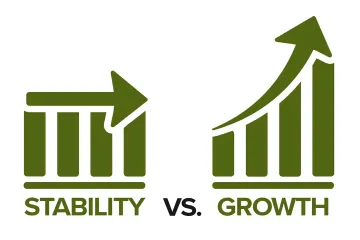
Some people actively choose paths prioritizing financial security over factors like passion or rapid ascent, finding contentment in the predictability that comes with certain industries or roles. [1] For them, stability manifests as a reliable income stream and predictable workload. [1] Conversely, others argue that stability itself is the most perilous illusion one can chase in a dynamic professional environment. [3] From this perspective, clinging too tightly to a specific role or skillset can be detrimental because the environment will eventually shift, leaving the rigid professional behind. [3] The actual goal, then, becomes adaptability or bounce-back capability. [3][6]
# Traditional View Contrasts
The difference between the old and new paradigms can be stark. A traditional perspective valued tenure and loyalty, often leading to pensions or long-term security guaranteed by the organization. [5] The new reality demands continuous self-investment. [2] While some voices caution that seeking guaranteed long-term employment might be a fading ideal, others confirm that selecting industries known for lower volatility remains a viable strategy for those prioritizing consistent income. [1][5][7]
| Traditional Stability Metric | Modern Stability Metric | Focus Area |
|---|---|---|
| Tenure at one company | Continuous market relevance | Skills & Adaptability |
| Employer-led development | Self-driven upskilling | Learning & Investment |
| Fixed role definition | Versatility across tasks | Role Agility |
| Job security | Financial resilience (savings) | Personal Finance |
[1][9]
# Industry Selection
A foundational step toward a more stable career involves making informed decisions about the industry or sector you operate within. [7] Some fields are inherently more prone to cyclical downturns, rapid technological obsolescence, or outsourcing than others. [5] Conversely, certain sectors tend to weather economic storms better or possess a consistently high demand for specific skill sets. [7]
People who prioritize financial stability often gravitate towards sectors perceived as recession-resistant or essential services. [1] Examples often cited include healthcare, utilities, certain areas of government work, and infrastructure maintenance. [1][7] These industries tend to have demand patterns that are less elastic to immediate economic fluctuations. [7] Choosing a career that focuses on necessary maintenance, regulated services, or demographic needs can establish a baseline of consistent work. [7]
When evaluating a potential field, look beyond the immediate job title and consider the underlying utility of the work performed. [7] For instance, a job in direct logistics or specialized compliance often carries more inherent stability than one tied to rapidly shifting consumer trends, though both require continuous learning. [2] Researching trends that predict long-term societal needs—like aging populations or renewable energy infrastructure—can point toward sectors offering greater employment depth over decades, rather than just a few busy years. [1][7]
It is crucial to recognize that choosing a stable industry is not a final destination; it is merely establishing a solid foundation. [2] Even in the most dependable sectors, a lack of personal engagement or skill stagnation will quickly erode any advantage the industry provides. [3][4]

# Skill Fortification
If the industry sets the terrain, skills are the fortifications you build upon it. [4] Building stability means cultivating both deep, specialized expertise and broad, transferable capabilities. [2] This dual focus ensures you remain valuable both within your niche and in adjacent fields should your primary area contract. [6]
Many experts advise a proactive approach to skill maintenance, treating it as a non-negotiable, regular operational cost of your career. [4] This is about more than just completing mandatory training; it involves constantly scanning the horizon for the next necessary tool or method. [2] If your role involves software, for example, understanding not just the current version but the upcoming major platform shift is key. [4]
A significant element of modern skill fortification is developing meta-skills—the abilities that govern how you acquire and apply other knowledge. [9] For instance, the ability to quickly synthesize complex data, communicate effectively across diverse stakeholder groups, or learn a completely new programming language in a short timeframe often outlives the specific technical skill itself. [6] While a specific coding language might become obsolete, the capacity for rapid, self-directed technical education provides a long-term buffer against obsolescence. [4]
Consider the concept of skill half-life. Hard, technical skills often have a shorter half-life—the time it takes for that skill to become half as valuable as it once was—than soft skills or foundational critical thinking abilities. [9] While you must update your hard skills to stay current, doubling down on meta-skills ensures that you remain the constant, adaptable factor in your employment equation. [3]
# Proactive Management
Creating stability involves consistent, strategic actions taken well before a crisis hits, often centering on relationships and personal readiness. [4][6] This moves beyond daily task completion and focuses on career maintenance as a deliberate, scheduled activity. [2]
# Building Networks
Networking is frequently mentioned, but its purpose for stability is specific: it is about building genuine connections that offer information flow and opportunity access. [4] When one's current employment situation becomes precarious, having a broad network that is aware of your capabilities and current status shortens the time needed to secure the next role. [6] This isn't just about finding a job when you are looking; it’s about being known when positions open up privately. [4]
A practical approach involves segmenting your professional contacts: those in your current role, those in your desired future role/industry, and mentors who provide strategic guidance. [1] Regularly investing time in maintaining these tiers of connection ensures you have a multifaceted support system ready for mobilization. [4]
# Financial Buffering
While skills keep you employable, financial discipline keeps you secure during transitions. [1] Many who have achieved stability attribute it partly to maintaining a buffer that allows them the luxury of choice when opportunities arise or when job hunting is necessary. [1] This buffer negates the pressure to accept the first, sometimes suboptimal, offer.
Here is a simple metric that can help translate this abstract concept into an actionable goal: Calculate your Stability Ratio (SR). The SR is calculated by taking the number of months of essential living expenses covered by your accessible savings, divided by the time (in years) since your last significant career validation (e.g., a promotion, a major certification completion, or a successful high-stakes project delivery). [2]
If your SR is low (e.g., 3 months savings / 1 year since last major win), it indicates you are highly exposed both financially and professionally. A healthy ratio suggests you have the time to wait for a good match (professional stability) and the cash flow to manage disruption (financial stability). [1] This calculation forces a reader to confront the twin pillars of security: money and marketability.
# Cultivating Resilience
Job stability in the 21st century often hinges on one's psychological approach to change. [3][9] If the environment is guaranteed to be volatile, the professional must become inherently flexible. [3] This requires embracing continuous professional evolution rather than expecting a plateau of knowledge. [2]
One way to cultivate this resilience is by understanding the psychological contract. [9] Where once the contract was: “I am loyal, you provide security,” the modern contract is closer to: “I deliver high value and adapt quickly, and in return, I maintain control over my career trajectory and financial standing.” [6]
This active ownership of outcomes fosters a mindset where layoffs or shifts are treated as external events that require a response, rather than personal failings that cause complete collapse. [3] For those who have chosen a financially stable path, this resilience is often built upon the security of knowing their baseline needs are met, freeing up mental energy to focus on strategic adaptation rather than immediate survival. [1]
If a role ends, the stable professional moves swiftly to update their profile, network intentionally, and apply the meta-skills mentioned earlier to rapidly acquire the specific knowledge needed for the next target position. [4] They view the disruption as a forced, high-intensity upskilling opportunity, rather than a period of mandatory downtime. This proactive framing helps maintain momentum, a key differentiator between those who experience career setbacks and those who experience career pauses. [6]
# Maintaining Momentum
Sustaining long-term career stability requires integrating stability-building activities into the routine, not treating them as special projects undertaken only when fear strikes. [2] This requires discipline, especially when work is going well. [4]
For employees in structured environments, advocating for cross-training or taking on projects slightly outside the defined scope can be a powerful stability move. [2] This practice builds institutional knowledge that is uniquely yours, making you harder to replace without significant internal disruption. [6] This is different from general upskilling; it is creating specific, localized organizational redundancy around your presence. [4]
Furthermore, even when choosing a financially secure sector, employees should regularly benchmark their compensation and role against external market standards. [1][7] Stagnation isn't just about losing your job; it is about slowly accepting less value for the same work over time as inflation and market rates increase. [9] Checking in externally—perhaps by reviewing job postings or having confidential market chats—ensures that the stability you feel is real and not simply inertia setting in. [2] This periodic reality check, combined with consistent skill updating and financial padding, forms the actionable core of a truly stable, long-term professional life. [4][6]
Related Questions
#Citations
Advice from people who chose financial stability over passion?
How to Find Job Stability in an Unstable Job Market - LHH
How to Avoid Career Stagnation: 5 Steps to Reignite Momentum
Job Stability: How to Create it in an Uncertain World of Work
Are the days where jobs provided stability long gone? What do you ...
How To Build Job Stability in Uncertain Times - The Vector Impact
Choosing A Financially Secure Career - CareerFitter
Promoting Employment Stability and Advancement Among Low ...
What do people really want in their work? Meaning and stability