Are careers in Bayesian analytics growing?

The professional landscape for those skilled in Bayesian analytics is experiencing a subtle but significant evolution, moving from a period of academic fascination to one of mature, targeted industrial application. It is no longer a question of if Bayesian methods are useful—the consensus is that they are a key tool in modern data science, particularly valued for their rigor in handling uncertainty. The debate has shifted from a philosophical one between Bayesian and Frequentist approaches to a pragmatic discussion of when and where to deploy this specific set of techniques for maximum impact.
# Bayesian Trajectory
For decades, Bayesian statistics was often considered a minority or even fringe approach, sometimes viewed with controversy. That perception has drastically changed. Bayesian analysis is now an established part of the professional toolkit for many statisticians and data scientists, regardless of whether they adhere strictly to the philosophy or use the methods opportunistically. This maturation means that Bayesian methods are being integrated into complex, high-stakes applications across finance, environmental science, healthcare, and machine learning. The underlying mathematical concepts, derived from Bayes' Theorem, which allows for the revision of prior beliefs based on new data (Posterior = (Likelihood Prior) / Evidence), offer distinct advantages in volatile or data-scarce environments.
However, the intense hype surrounding the term "Bayesian" has arguably peaked and subsided, making way for a quieter phase where the utility of the methods speaks for itself. Where once practitioners might have slapped the "Bayesian" label on a paper to draw attention, today, the focus is on the specific problem solved, often without explicit fanfare about the underlying philosophy. This move toward integration suggests that the skill is becoming foundational rather than purely specialized, much like the integration of concepts like regularization into standard linear models.
# Uncertainty Quantification
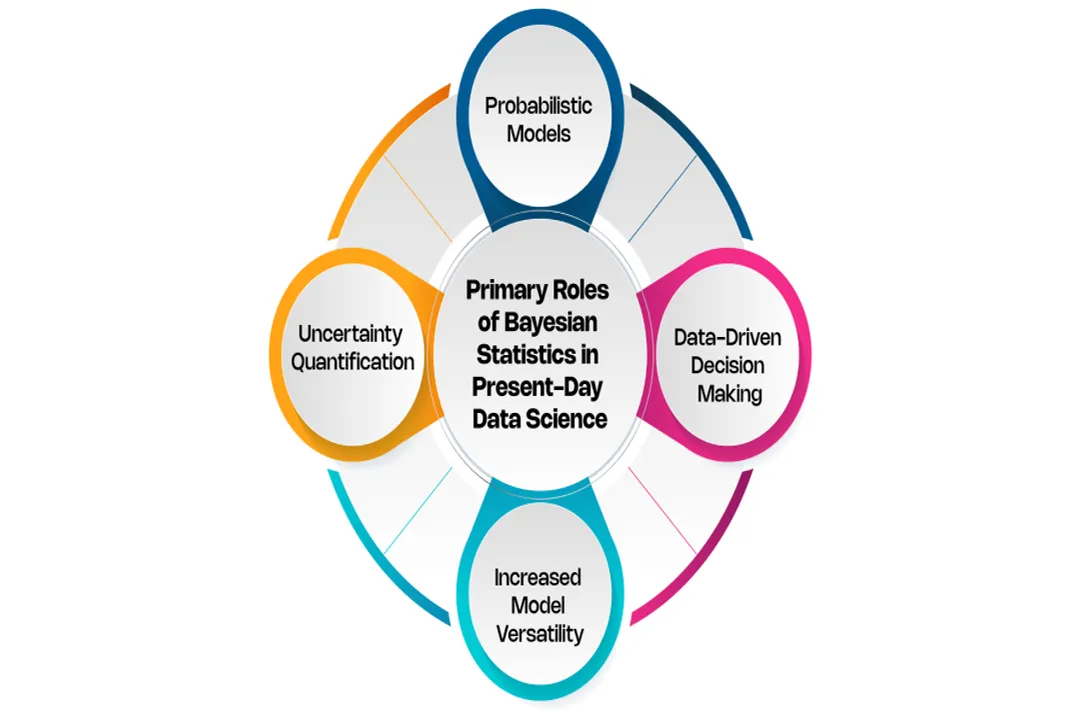
The core strength driving career interest in Bayesian statistics is its native ability to quantify uncertainty, which is often a requirement in critical decision-making fields. Unlike classical approaches that often yield point estimates, the Bayesian approach naturally produces a probability distribution over the parameters, offering a richer picture of the potential error or variation in a forecast.
This capability is indispensable in regulated or high-risk sectors. In pharmaceuticals, for example, Bayesian methods are crucial for addressing uncertainty when dealing with small sample sizes, long-term follow-up, or rare safety events in clinical trials. Similarly, in cybersecurity, a firm might adopt a highly conservative stance, only alerting a customer to a threat if the model is very sure the threat is real—a requirement met by carefully calibrated Bayesian alerting systems. The ability to provide a probability statement like, "There is a $95%$ probability that the true mean lies between and ," is something Frequentist methods often cannot deliver directly for a parameter, instead relying on concepts like confidence intervals which are interpreted differently.
# Niche Domain Growth
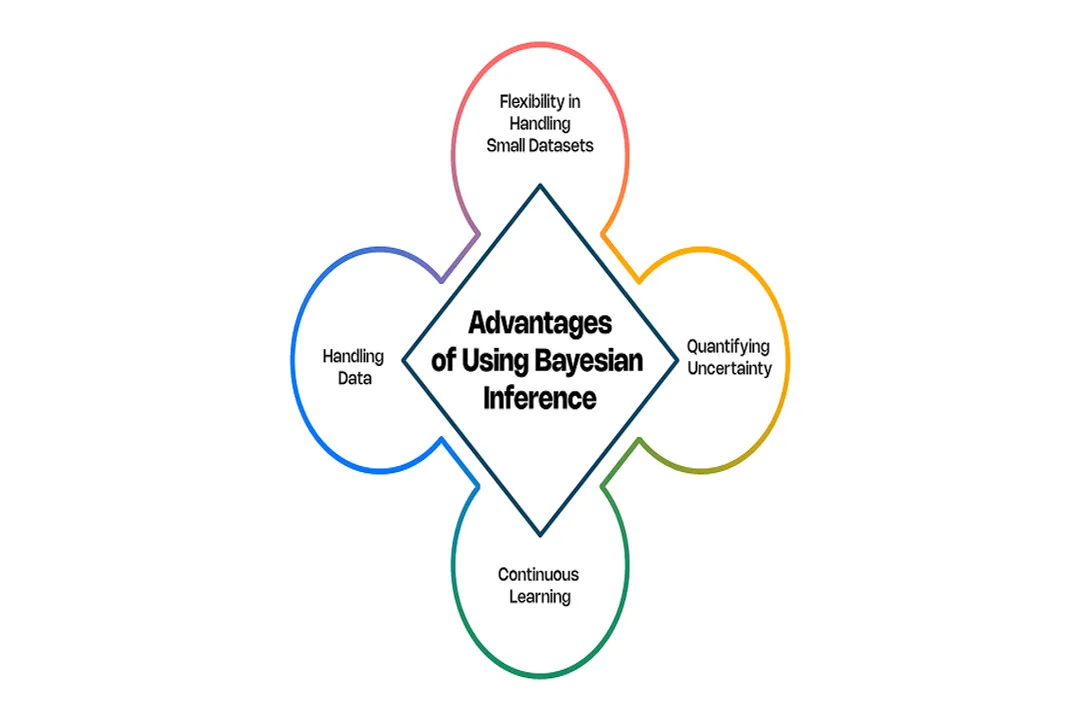
While general data science job growth is strong—with projections showing data scientist employment growing by $36%$ from $2023$ to $2033$—the growth for purely Bayesian careers appears concentrated in specific, high-value niches where uncertainty modeling is paramount.
One observable trend is the demand for Bayesian skills in Marketing via Media Mix Modeling (MMM). These models allow attribution analysis without relying on personally identifiable information (PII), thus navigating data privacy regulations like GDPR. In Finance, specific roles, often in quantitative analysis, explicitly seek expertise in Bayesian statistics and financial engineering.
Perhaps the most robust area is in fields where the inferential goal requires integrating external knowledge or complex structures, such as Causal Inference and Hierarchical Modeling. Multilevel or hierarchical regression models, which are naturally suited to the Bayesian framework, are cited as a workhorse in areas like election polling (MRP models) and other complex analyses. Furthermore, the development of "purposeful products," such as public-facing risk-benefit calculators (like those used for COVID-19 vaccines) or large-scale environmental monitoring platforms (like ReefCloud for coral reefs), relies on the interpretability and uncertainty management of Bayesian networks and spatial models. These real-world tools showcase Bayesian statistics solving tangible problems where the decision-maker needs more than a simple prediction—they need a probability distribution over possible outcomes.

# Tool Versus Focus
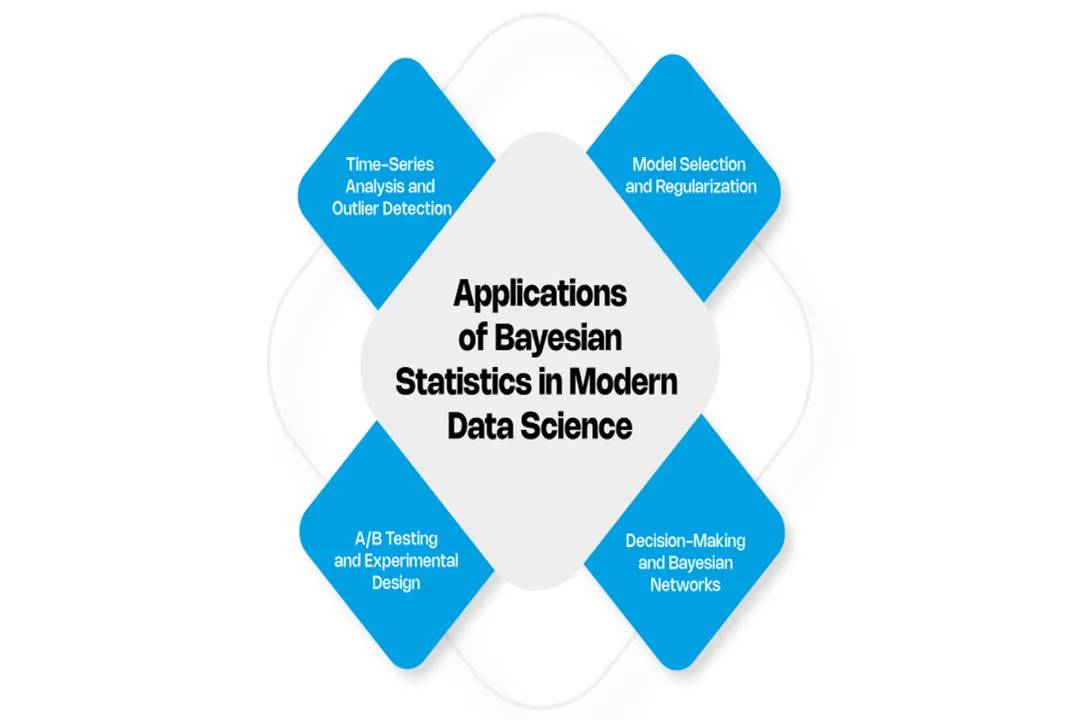
A recurring tension in the job market discussion is whether deep specialization in the Bayesian toolset (like proficiency in Stan or PyMC) is a greater career asset than broad domain expertise. Many industry veterans suggest that for the typical data scientist role, which spans data wrangling, ETL, modeling, and business communication, domain knowledge and general problem-solving flexibility are prioritized over mastery of a single statistical philosophy. The ability to use SQL, wrangle data, and communicate results often takes precedence over MCMC or variational inference techniques for day-to-day tasks.
However, the existence of job titles like "Bayesian Statistician" or roles explicitly seeking Stan/PyMC experience demonstrates that niche opportunities exist precisely for those who possess this specialized technical acumen. For a candidate in a highly technical field—such as biostatistics in pharma, advanced modeling in finance, or research-heavy roles—Bayesian modeling can become the key differentiator, allowing them to tackle problems that standard machine learning techniques or frequentist approximations handle poorly, such as complex dependency structures or limited data sets. A specialist may be hired not because they are cheaper, but because their toolkit (Bayesian) is the only one capable of delivering the required level of inference rigor for that specific business question.
This creates a dynamic where a data scientist who masters Bayesian methods gains an advantage in tackling problems that demand explicit uncertainty propagation, while the generalist who remains agnostic and chooses the quickest working tool may fill the majority of available roles.
When looking at job postings, the required skills often bundle Bayesian statistics with advanced topics like causal modeling and probabilistic programming, suggesting that the growth is not in simply applying an old method, but in developing the next generation of models that naturally require a Bayesian foundation.
# Implementation Reality
The adoption of Bayesian methods is fundamentally linked to computational advancements. The "rise" of Bayes was catalyzed by the popularization of Markov Chain Monte Carlo (MCMC) methods, which made previously intractable posteriors solvable. Today, techniques like Variational Inference are also critical for handling large datasets when MCMC becomes too slow.
The tools themselves—Probabilistic Programming Languages (PPLs) such as Stan and PyMC—have made implementation more accessible, yet they still represent a steep learning curve compared to more conventional software packages. This complexity is why some observers note that a significant portion of practitioners applying Bayesian modeling in industry may be doing so incorrectly, underscoring the gap between book knowledge and reliable, production-level application. To excel, a practitioner must understand not just the posterior sampling but also prior predictive checking and model diagnostics—a process often described as a "workflow" rather than a single analytical step.
If your goal is to operate in an environment where statistical rigor and the ability to design complex, iterative experiments (like adaptive clinical trials or intelligent data collection schemes) are prized, the investment in mastering these computational tools is justified. Conversely, if the primary business need is rapid iteration and straightforward p-value reporting for regulatory or simple A/B testing frameworks, the more accessible Frequentist tools often remain the default.

# Synthesis and Evolution
The trajectory of Bayesian careers points toward synthesis rather than replacement. The most advanced areas of modern data science—especially those blending statistics with machine learning (like Bayesian Deep Learning) or handling distributed/private data (like Federated Analysis)—are actively developing Bayesian methods to ensure principled foundations and reliable uncertainty handling.
A practical strategy for those interested in this career path is to frame their skills around problem types where Frequentist methods show weakness, rather than arguing methodological superiority in all contexts. For instance, instead of simply stating proficiency in Bayesian analysis, highlight experience in:
- Incorporating External Information: Demonstrating how prior knowledge (from literature, expert opinion, or past studies) was formally integrated to achieve more stable results with sparse datasets.
- Experimentation Beyond Fixed Sizes: Showcasing applications in A/B testing or adaptive design where continuous probability updates guide decision-making mid-experiment, avoiding long waits for predetermined sample sizes.
- Generative Modeling and Causal Paths: Emphasizing work in Bayesian Networks or Causal Inference, as these model structures are inherently focused on understanding system dependencies, a move that decision-makers are increasingly interested in.
The key insight here is that the market for Bayesian expertise is growing because the problems are becoming more complex, demanding methods that explicitly handle uncertainty and prior information. While the majority of entry-level and generalist data roles may rely on more familiar statistical paradigms, the upper tiers of analytical consulting, risk modeling, and specialized R&D are increasingly looking for professionals who can move past traditional assumptions and build models that better reflect the true complexity and uncertainty of the real world. The growth is not in the number of people calling themselves "Bayesian," but in the number of high-impact projects that require a Bayesian approach to be solved correctly.
Related Questions
#Citations
How's the job market for Bayesian statistics? : r/datascience - Reddit
ThreatConnect's Bayesian Expert: It's Time to Look Beyond Cool ...
Being Bayesian in the 2020s: opportunities and challenges in the ...
Is there a shortage of data scientists who do Bayesian modeling ...
The rise and fall of Bayesian statistics
Why isn't bayesian statistics more popular for statistical process ...
$14-$108/hr Bayesian Statistics Jobs (NOW HIRING) Dec 2025
Bayesian Statistics: A Key Tool in Modern Data Science
7 Data Analytics Careers That Are in High Demand, and How to ...