What is the difference between career growth and job stability?

Defining Security
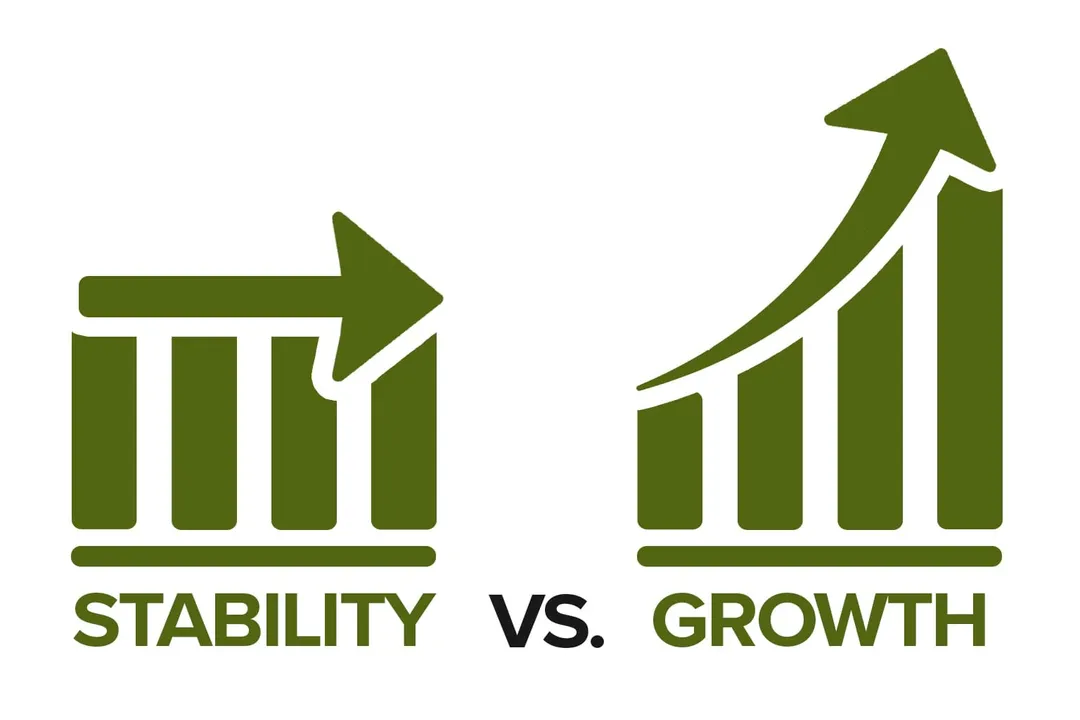
The core difference between career growth and job stability often boils down to the primary currency an individual values most in their professional life: upward trajectory versus consistent predictability. [2][5] Job stability centers on maintaining continuous employment, often characterized by a reliable paycheck, predictable working conditions, and a sense of security in one's position. [2] It is frequently associated with lower-risk environments, established companies, or industries perceived as less susceptible to sudden, drastic shifts. [1][6] A stable role prioritizes the present state of employment—ensuring the job remains available next month and next year. [5]
Career growth, conversely, is focused on forward momentum. This concept encompasses the expansion of one's professional capabilities, including acquiring new skills, taking on greater responsibilities, earning promotions, and seeing an upward trend in overall earning potential over time. [2][3][7] A growth mindset views the current role as a stepping stone, valuing the learning and advancement opportunities it provides, even if that means navigating periods of uncertainty or change. [3]
# Tension Points

The professional landscape frequently presents these two objectives as opposing forces, creating an inherent tension that workers must manage. [1][5] A position offering maximum stability—perhaps in a highly regulated, slow-moving sector—may simultaneously offer minimal room for rapid advancement or significant skill diversification. [1] Conversely, roles that promise rapid skill acquisition or steep climbs up the corporate ladder often introduce volatility. These dynamic environments might require frequent upskilling, exposure to new, untested projects, or even necessitate changing employers to secure the next promotion—a practice sometimes labeled job hopping. [3][8]
It is important to recognize that while stability offers a predictable floor, it can sometimes mask a stagnant ceiling. For someone focused purely on the security of tenure, the annual cost might be slower salary appreciation compared to peers who successfully change roles or companies every few years for substantial bumps. [1] This trade-off means an individual prioritizing stability might be securing their immediate financial comfort at the expense of their long-term market value growth. [9]
On the other side, chasing relentless growth can lead to an unstable work history. While some movement is often necessary for climbing the ladder, a pattern of very short tenures, sometimes referred to as job hopping, can eventually raise flags for potential employers concerned about commitment or long-term reliability. [8][9] The perception is that if a person is always looking for the next big jump, they may not be invested enough in seeing complex projects through to completion. [9] Finding the sweet spot—where one gains substantive experience without appearing flighty—is a delicate balancing act. [1][5]
# Stage Dependency
The perceived value of stability versus growth is rarely static; it changes dramatically based on an individual's career stage and personal obligations. [7]
# Early Career Focus
For those just starting out, typically in their twenties and early thirties, the scales often tip heavily toward growth. [7] The primary goal at this phase is typically knowledge accumulation and establishing a professional network. Skills learned early on compound significantly over a forty-year career. Therefore, taking a slightly riskier role that guarantees exposure to cutting-edge technology or demanding management tasks is often viewed as a smart investment. [3][7] The lower immediate financial burden and fewer dependents at this stage allow for greater tolerance for the inherent instability that comes with rapid development.
# Midlife Considerations
As professionals move into mid-career, personal factors often introduce new variables that shift the balance toward stability. [7] Factors like purchasing a home, establishing a family, or shouldering greater financial responsibility can make the predictability of a stable income stream—and the accompanying benefits like good health insurance—highly valuable. [2] In these situations, an established company with strong vesting schedules or reliable bonus structures might be preferred over a high-growth startup with uncertain long-term viability, even if the startup offers a more exciting title today. [1]
# Late Career Alignment
For individuals approaching the latter half of their careers, the focus might shift again, often seeking a blend that maximizes known expertise while minimizing stress. They may seek roles where their established expertise guarantees security (stability) but also allows them to mentor or transition into advisory capacities (a form of controlled growth). [5] The risk appetite for radical career shifts naturally declines as retirement goals come into view.

# Employer Perceptions
Employers evaluate candidates through the lens of both stability and demonstrated growth, though they weigh them differently depending on the role they are trying to fill. [9]
For positions requiring specialized, long-term project management or deep institutional knowledge—like senior engineering roles or compliance officers—a history leaning toward stability can be a significant asset. It suggests reliability and commitment to follow-through. [9] An employer might interpret a ten-year tenure at a single company as evidence of loyalty and strong character. [6]
However, an overly stable history can also signal a lack of adaptability. If a candidate has stayed in the same role with minimal title changes for a decade, the hiring manager might question their drive or their exposure to modern methodologies. [9] This is where the evidence of internal growth becomes critical. If the tenure was marked by promotions—for example, moving from Analyst to Senior Analyst to Manager within that decade—the stability is viewed as the successful foundation upon which growth was built. [2]
Conversely, a resume peppered with short stints (under two years) is often flagged by recruiters looking for stability. [8] While justified by growth opportunities, if the pattern is unbroken, it suggests a higher potential cost to the new company in terms of replacement and training should the new hire leave quickly. [9]
To navigate this, individuals can frame their growth experiences strategically. For example, leaving a role after two years because the promotion path was demonstrably blocked, compared to leaving after one year because the initial project scope was completed faster than anticipated, sends very different signals about one's motivations. [1]
# Assessing Personal Equilibrium
The most critical aspect of this comparison is defining what you personally need right now. Since the ideal ratio shifts, a useful exercise is to develop a personal equilibrium metric. Instead of just asking if you want growth or stability, consider the cost of each.
For instance, you can calculate the Time-to-Impact versus Time-to-Promotion Ratio. If you join a new company, how long does it take before you are making a measurable, significant impact on the bottom line (Impact Time), versus how long until you receive a title change or pay raise that recognizes this impact (Promotion Time)? [2]
- If Impact Time is consistently shorter than Promotion Time (e.g., you are producing high-level results for 18 months before getting a raise), the role heavily favors stability and underpays for the growth you are delivering. This signals a high potential for external growth via a move, as your current employer is slow to reward your stability in delivering results.
- If Promotion Time is very short, but Impact Time is long (e.g., you get promoted quickly due to organizational restructuring, but it takes you two years to feel truly competent in the new role), the role is high on growth risk but potentially high on stability reward if the structure holds.
This internal audit moves the conversation from abstract concepts to concrete data points about your current employment situation.
Here is a simplified comparison of archetypes based on these priorities:
| Archetype | Primary Driver | Typical Environment | Risk Profile | Key Focus |
|---|---|---|---|---|
| The Climber | Growth | Startups, Project-based consultancies | High | Skill acquisition, faster salary trajectory |
| The Anchor | Stability | Government, Large established corporations | Low | Predictability, tenure-based benefits |
| The Aligner | Balance | Mid-sized, ethically aligned companies with structured internal mobility | Medium | Meaningful work and sustainable advancement |

# Cultivating Internal Growth
A common pitfall is believing that external job changes are the only path to growth. While moving companies often unlocks larger salary jumps and more significant title advancements, substantial internal growth can occur within a stable structure. [1] This requires active cultivation, often termed "intrapreneurship."
When a role leans heavily toward stability, the individual must consciously seek out avenues for skill expansion that the job description might not explicitly demand. This might involve volunteering for cross-departmental task forces, seeking mentorship from senior leaders outside the direct reporting line, or taking on the responsibility of training newer hires—thereby solidifying one's own expertise. [7] This approach allows an individual to build an internal track record of proactive development, making a case for promotion based on demonstrated expanded capacity rather than solely on tenure or market pressure. [2]
For example, if you are in a stable, routine data entry role, volunteering to analyze the existing data streams to suggest automation efficiencies is a direct move toward growth. You are not just performing the assigned tasks reliably (stability); you are redesigning the process (growth). [3] This proactive stance ensures that even in the most secure environments, your professional value does not stagnate, safeguarding your long-term market worth even if you remain in the same seat for many years.
# Finding Personal Alignment
The decision between growth and stability is not a one-time test but a continuous reassessment based on life conditions and personal career philosophy. [1][5] Some professionals have a philosophy that views stability as the necessary foundation for growth—they prefer to build significant expertise in one area before pivoting, ensuring they bring high value to the next challenge. [9] Others see stability as the anchor that allows them the free time outside of work to pursue growth activities, like advanced certifications or starting a side business. [2]
Ultimately, knowing which element is lacking in your current situation is the first step. If you feel restless, under-challenged, and your skills feel outdated, you are likely prioritizing stability too heavily, and growth is the necessary corrective action. [3][7] If you feel anxious about potential layoffs, are consistently living paycheck-to-paycheck despite a good income, or are exhausted by constant organizational flux, then stability should become the immediate focus. [1][2] The most successful careers are those where the balance point is consciously chosen, rather than accidentally defaulted to. [5]
Related Questions
#Citations
Job Stability vs Career Growth: Striking the Right Balance in Your ...
Stability vs. Growth: Making Decisions About Your Career Trajectory
Choosing between career growth and stability: a guide - LinkedIn
Weighing career stability vs growth : r/MoneyDiariesACTIVE - Reddit
What is more important in career growth or stability? - Quora
Decoding the Job Journey – Balancing Stability and Growth
Choosing between stability and growth in your early career
Job Hopping vs. Career Stability: Which is Better for Your Career?
How Work History Stability Impacts Career Growth - Scope Technical