Are careers in public health informatics viable?

The question of whether careers in public health informatics offer a solid professional pathway is met with a resounding affirmative when examining the intersection of healthcare needs and technological advancement. Professionals in this domain are increasingly essential, acting as the translators between complex health data and actionable public health policy. [7] This field sits at a critical juncture, demanding individuals who are adept at managing vast amounts of information while possessing a fundamental understanding of human and population health dynamics. [2][4] The viability stems directly from the continuous explosion of health data and the subsequent need for expert interpretation to improve outcomes, whether for an individual patient or an entire community. [5][9]
# Field Definition
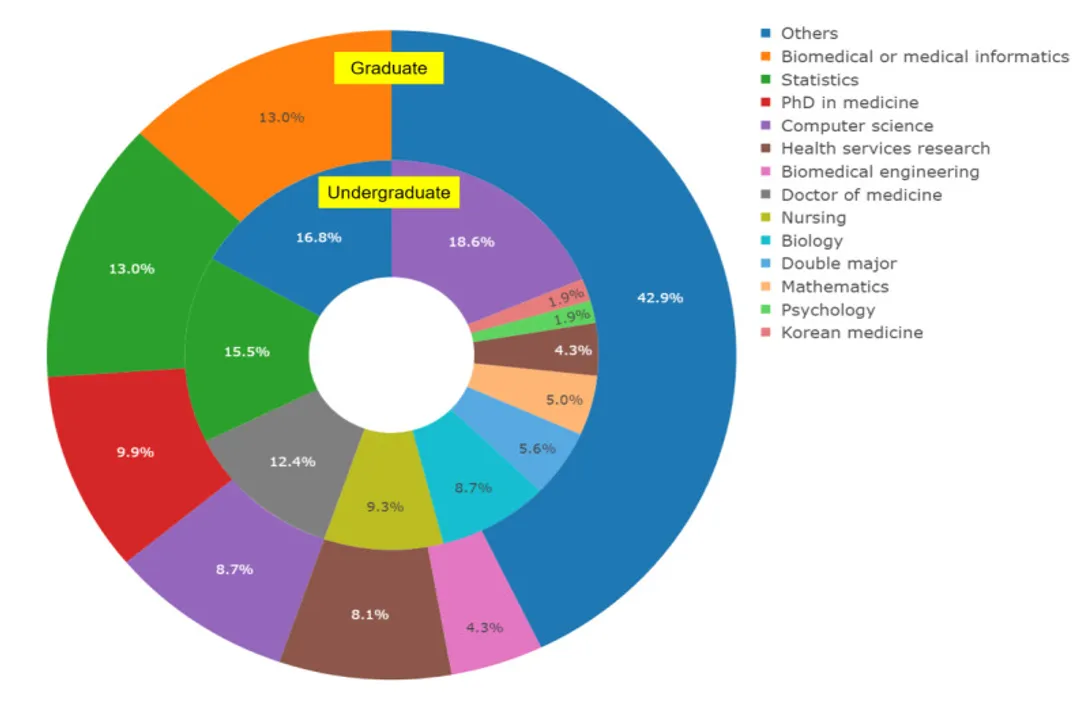
Health informatics, in its broadest sense, represents the convergence of health science, information science, and computer science. [3] It involves the administration of health data and information, ensuring it is available, accurate, and usable for decision-making processes within healthcare organizations. [2] Public Health Informatics (PHI), however, refines this focus. While general health informatics often centers on optimizing clinical workflows and individual patient records, PHI specifically directs these data management and analysis skills toward population health challenges. [4]
PHI professionals are tasked with the collection, management, and analysis of data that informs public health strategy. [4] This involves ensuring the integrity and availability of data sets crucial for activities such as disease surveillance, tracking health trends, managing emergency responses, and developing effective health promotion campaigns across communities. [4][6] Therefore, a career here means one is fundamentally involved in supporting the infrastructure that protects collective well-being. [7]
# Job Titles

The array of roles available within this interdisciplinary field demonstrates its breadth. Professionals might find themselves in positions such as a Data Analyst, where the primary task is sifting through large datasets to identify patterns. [2] Other common titles include Application Coordinator, IT Consultant, or Project Manager, particularly in organizations undergoing electronic health record (EHR) implementation or data system overhauls. [2]
In the public health sector specifically, the work centers on applying informatics principles to track and mitigate population-level threats. [4] A PHI specialist might work for a state or federal health department, ensuring data collected via mandated reporting systems flows correctly and can be rapidly queried during an outbreak. [6] These positions often require a strong grounding in epidemiology and biostatistics alongside technical aptitude. [6] The reality is that the title might be generic—like "Data Specialist"—but the function is highly specialized, bridging IT infrastructure teams with the epidemiology or preventive medicine divisions. [1]
# Core Skills
Viability in this career path hinges on a specific, dual-layered skill set. First, there must be a strong foundation in the data and technology side: statistical analysis, database management, and understanding information systems architecture. [6][3] Second, and perhaps more distinctly, there must be a solid grasp of the health context. [3] For public health roles, this means understanding epidemiology, health law, and the mechanics of population health management. [6]
The field is evolving quickly, meaning static knowledge is insufficient. Current trends highlight the increasing importance of advanced computational methods, such as the application of Artificial Intelligence and Machine Learning in diagnostics and personalized public health recommendations. [9] Security and privacy, governed by regulations like HIPAA, remain paramount, so expertise in data governance and security protocols is non-negotiable. [9] Someone looking at this field must be prepared to continuously learn new statistical software packages and adapt to emerging cloud-based data processing tools, as the underlying infrastructure for public health reporting is constantly being modernized. [2]
# Career Trajectory
One common point of inquiry revolves around whether a career in informatics might feel limiting, especially when compared to purely clinical or purely technical roles. [1] Sources suggest the opposite: the field offers significant diversity, preventing stagnation. Professionals can pivot between highly technical data science work, operational project management, or policy-advising roles within government agencies. [1][8]
The compensation structure often reflects this specialization and experience. [8] A professional who successfully bridges the gap between complex IT systems and clinical or public health practice tends to secure stronger earning potential than those who remain exclusively on one side of that divide. [8] For instance, a credentialed clinical informaticist working directly with hospital systems might see different pay scales than a PHI specialist focusing on large-scale environmental health data analysis for a state agency. [1][4]
A key indicator of long-term success in this area is the ability to translate technical findings into compelling narratives for non-technical stakeholders. For example, an analyst might produce a complex regression model showing a correlation between water quality data and pediatric asthma rates; viability increases exponentially when that analyst can present a clear, data-backed policy recommendation to a city council based on those findings, rather than just delivering the statistical output. [7] This communication mastery separates an adequate data manager from an indispensable health strategist.

# Growth Outlook
The professional outlook for health informatics is overwhelmingly positive, driven by the sheer volume and complexity of data generated daily in health systems and public records. [5][9] As technology becomes more deeply embedded in every aspect of health service delivery and population monitoring, the need for professionals who can harness that data effectively only intensifies. [2][8]
The move toward value-based care models and proactive population health management, which inherently rely on accurate, timely data aggregation, further solidifies this demand. [7] This isn't just about digitizing paper records; it is about using aggregated, anonymized data to predict where the next flu outbreak will strain hospital capacity or which demographic groups require targeted preventative resources. [4][6]
Considering the financial differences between sectors, aspiring professionals might strategically focus early career experience. While high-level IT consulting or clinical informatics roles in large private hospital networks often present the steepest initial salary growth, long-term career resilience might be found in public health roles that gain expertise in complex federal grant compliance and multi-agency data sharing protocols. Mastering the intricacies of federal data standards, for example, can make one indispensable to state health departments reliant on federal funding streams, offering stability that bypasses some of the volatility seen in the private sector.
# Sector Diversity
The viability of the career is also secured by its geographical and organizational flexibility. While government agencies and hospitals are traditional employers, roles are abundant in insurance providers, pharmaceutical companies, healthcare consulting firms, and academic research institutions. [3] This diversity means that if one sector faces budget cuts or a change in technological focus, an experienced professional can often pivot to a different industry without having to entirely retrain their core competencies. [1]
For instance, an informaticist who has spent five years building surveillance dashboards for a county health department can take that expertise in real-time data visualization and move to a private health insurer looking to better manage the chronic disease risk of its members. [4] The underlying principles of data governance, quality assurance, and translating data into actionable insights remain constant across these different environments. [2][5] The career path is less a single ladder and more a sprawling network of opportunities, making it inherently less likely to become professionally obsolete, provided the individual stays current with necessary technology adoption. [8][9]
Related Questions
#Citations
Is health informatics a limiting career? Or are there possibilities for ...
A Career Guide to your Future in Health Informatics | Pitt SHRS
10 Career Options with a Health Informatics Degree - Pace University
6 Public Health Informatics Careers - Augusta University
Top 5 Health Informatics Jobs on the Rise - UNE Online
6 Health Informatics Careers, Job Duties & Resources
Impact of Health Informatics Analyst Education on Job Role, Career ...
3 Reasons Health Informatics is a Great Career Choice
Health Informatics Industry Trends and Career Outlook