How do you work in research knowledge portals?

Navigating a knowledge portal, especially one dedicated to research, is less about passively reading static documents and more about actively engaging with structured, living information assets. These portals exist to serve as the central repository where an organization’s collective intelligence—whether it’s decades of institutional memory, best practices, or the latest scientific findings—is organized, secured, and made instantly retrievable. [2][3][6] For the user, working within this system means understanding its architecture so you can quickly move from a question to a verified answer or relevant dataset without getting lost in digital noise. [5]
# Defining Access
A knowledge portal fundamentally functions as a gateway to organizational information, designed to solve the problem of information fragmentation where data lives in isolated silos across various departments or databases. [2] It aggregates content, often from disparate sources, into one coherent, searchable interface. [1] While many organizations use these systems primarily for internal functions, such as housing HR policies, IT troubleshooting guides, or standard operating procedures (SOPs), research-focused portals have a distinct objective: to manage the lifecycle of discovery, documentation, and dissemination of intellectual output. [10]
The essence of a working portal lies in its ability to be both an information consumption tool and a knowledge contribution engine. [4] For the end-user—perhaps a scientist, engineer, or policy analyst—the initial interaction is finding what already exists. This requires the system to be intuitive enough that users don't have to know the exact name of the file they seek, but rather the concept they are investigating. [5] A successful portal minimizes the time spent searching, allowing users to dedicate more effort to applying the knowledge found. [7]
# Structural Elements
To work effectively within any knowledge portal, one must first appreciate the structure that governs the content. Portals rely on several core components working together: a powerful search mechanism, a logical taxonomy or structure, and strict access controls. [1][4][5]
The search engine is paramount. It must go beyond simple keyword matching, often incorporating faceted search capabilities that allow users to narrow results based on attributes like date, project ID, author, or document type. [5] If the portal is supporting research, the search must be capable of handling technical jargon and interpreting metadata fields crucial for scholarly work. [10]
The taxonomy dictates where content lives conceptually. A good knowledge management system requires a clear information architecture, often involving tagging, categorization, and linking related articles together. [3][7] For instance, in a corporate setting, a document detailing a new compliance regulation might be tagged under Legal, Q3 Initiatives, and Employee Training. In a research context, an article on gene editing might be tagged under CRISPR, 2024 Publications, and Project Phoenix. [9] Understanding this internal logic is the key to effective navigation. [1]
Security and permissions form the final structural pillar. Users only see what they are authorized to see, which is critical when dealing with proprietary research, pre-publication data, or sensitive institutional strategy documents. [1] Working within the portal means respecting these boundaries; being aware that information flagged as "Restricted: External View Only" will not appear in a general query unless the user's role permits it. [4]
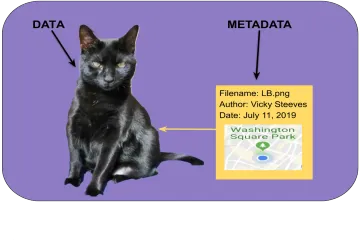
The quality of the content itself determines the portal's overall utility. A well-functioning portal isn't just a data dump; its value comes directly from the curation layer applied by contributors and knowledge managers. For example, metadata quality in a research portal directly dictates the success of automated discovery tools. If an author forgets to tag a publication with the correct Research Area Taxonomy Code because the contribution process was cumbersome, that publication effectively ceases to exist for cross-domain searches conducted by other research teams looking for analogous work. [10]
# Finding Information
For the typical researcher or employee, working in a knowledge portal means optimizing their retrieval strategies. This goes beyond typing a query into a box; it involves employing the portal’s specialized functions. [5]
First, master the search syntax. Many high-quality portals support Boolean operators (AND, OR, NOT) or proximity searching (finding terms within a certain word count of each other). [1] Learning to use wildcards, such as the asterisk (*) for truncation (e.g., searching for bioanalyt* to catch bioanalysis and bioanalytical), can significantly broaden or narrow initial results. [5]
Second, utilize faceted browsing after an initial search. If your search for "battery longevity" returns 500 results, immediately look to the left-hand navigation panel. Can you filter by document type (e.g., filtering down to only peer-reviewed articles and discarding internal meeting notes)? Can you filter by project team or date range to focus only on the most recent findings from the relevant group? This layered refinement process is how experts rapidly narrow down large repositories. [1]
Third, check the "Related Articles" or "See Also" sections often automatically generated by the system or manually linked by contributors. [3] A significant advantage of a well-maintained knowledge base over a simple network drive search is the contextual linkage between documents. If Document A references a key methodology described in Document B, the portal should make that relationship explicit, saving you from performing a second, separate search for the methodology's origin. [10]
# Adding Knowledge
The "working in" aspect also encompasses the active contribution of new knowledge, a process often managed by knowledge management professionals but executed by domain experts. [7] In a research setting, this usually involves formalizing findings, documenting experiments, or updating established procedures.
The process typically involves:
- Drafting and Formatting: Creating content adhering to the portal's standards. This might mean using specific templates for case studies or experimental reports to ensure structural consistency across all contributions. [4]
- Metadata Entry: This is the most critical step for future usability. The contributor must accurately classify the document using predefined keywords, link it to relevant projects, assign proper security clearance, and verify author attribution. [3]
- Workflow Submission: Submitting the content for review. This might trigger an automated check for duplication or, more commonly, route the document to a subject matter expert or editor for validation before publication. [4]
- Versioning and Archival: Once published, the system tracks changes. If a procedure is updated, the new version goes live, but the previous version is archived, not deleted, maintaining a clear audit trail. [3]
For research portals specifically, this contribution step often requires integration with external academic standards.
| Contribution Nuance | General Corporate KMP Focus | Research Knowledge Portal Focus |
|---|---|---|
| Provenance | Document ownership and last modification date. [4] | Citation tracking, DOI linking, and lineage to original raw data. [10] |
| Review Cycle | Approval by direct supervisor or department head. [3] | Validation by peer reviewers or scientific review boards. [10] |
| Format Preference | Easily digestible text, screen-capture heavy guides. [1] | Structured data sets, formal abstracts, and standardized reporting formats. [9] |
This contribution discipline ensures that knowledge doesn't decay. If a researcher simply uploads a PDF report without correct metadata, it becomes dark data—it exists in the system but cannot be reliably found or used by others. [9]

# Research Focus
Working within a research knowledge portal demands a different mindset than using a general document repository like a shared cloud drive. These specialized hubs are designed to manage the often complex outputs of scientific endeavor. [9]
Research portals must manage intellectual property (IP) considerations carefully. They often serve as the first checkpoint for documenting discoveries that might lead to patents or publications, meaning access control isn't just about internal security but also about protecting potential commercial or academic advantages. [1] The system must support workflows where a document might be visible to the immediate project team (draft stage), then to the entire R&D division (internal review), and finally to the public (post-publication). [10]
Furthermore, these portals are essential for maintaining institutional coherence across multi-year, multi-site projects. Imagine a project spanning five years and involving three international partner labs. The portal serves as the single source of truth for all interim reports, methodology specifications, and ethical clearance documents, preventing costly rework based on outdated assumptions. [9] The ability to search across different data types—from a formalized final paper to an informal lab notebook entry—is where these systems truly demonstrate their value in accelerating discovery. [10]
# Sustained Operation
The long-term efficacy of any knowledge portal hinges on ongoing governance and maintenance, which is a key component of "working in" the system, even for non-administrators. If users stop trusting the content, they stop using the portal, reverting to email chains or personal hard drives—the exact fragmentation the system was built to prevent. [2]
To combat knowledge decay, organizations must institute regular content audits. This can sometimes be automated: for example, any document lacking a view or modification in over two years might be flagged for the original author or their current manager to confirm its relevance or archive it. [4] This requires active participation; if a reader finds an article that is factually incorrect or outdated, reporting it immediately via the portal's feedback mechanism is a direct contribution to the portal’s health. [7] This immediate feedback loop solidifies trust in the system as a reliable, living resource rather than a static archive. Organizations should aim to establish a culture where updating knowledge is considered as important as creating the initial piece of knowledge itself. [6]
Related Questions
#Citations
What's A Knowledge Portal And How To Build One That Works
Breaking it down: What is a Knowledge Portal?
Knowledge Management Portal: Ultimate Guide with Examples
Knowledge Management Portal: A Complete Guide For Efficiency
Knowledge Management Portal: Benefits, Guide & Examples
[PDF] Knowledge Portals: Components, Functionalities, and Deployment ...
Knowledge Management Portal: What to Look For When Building One
How to Build a Career in Knowledge Management in 2025 - Bloomfire
Bring your own results to the Knowledge Portal Network
[PDF] Knowledge Portals: Ontologies at Work - AAAI Publications