How Do I Enjoy My Career Long-Term?

Sustaining professional happiness across decades is rarely accidental; it requires a deliberate approach to defining what success means to you today, tomorrow, and ten years down the line. Many people find early career momentum based on external markers—a salary target, a specific job title, or hitting a certain milestone—but these benchmarks often feel hollow once achieved, leading to that unsettling feeling of, "Now what?" True long-term career enjoyment is built on a foundation of alignment, adaptability, and conscious maintenance, not just climbing a predetermined ladder. [1][5]
# Defining Purpose
The initial step toward longevity is shifting focus from what job you have to why you have it and how it fits into your larger life architecture. [4][6] Many individuals who report genuine, sustained career happiness often anchor their work not just in tasks, but in impact or personal growth. [1] For some, this means actively seeking roles where their daily activities contribute to a tangible positive outcome in the world, a core idea emphasized in career planning focused on long-term contribution. [4]
Consider the distinction between the role and the mission. A role might be "Senior Software Engineer," but the mission could be "to build user-friendly tools that democratize access to financial information." If the company's mission shifts, or the technology becomes obsolete, the role may need to change, but the underlying personal mission remains a source of motivation. [4][7] When you connect your actions to a larger why, you create a buffer against the inevitable setbacks or boredom that crop up in any long tenure. [4]
For example, someone satisfied long-term might not be in the same sector they started in. A marketing professional who deeply valued education might start in corporate marketing for a textbook company, transition to non-profit fundraising for a scholarship program, and eventually move into instructional design for an online learning platform. The job title changed completely, but the core driver—the meaningful exchange of knowledge—remained the constant source of enjoyment. [1]
# Goal Setting Structure

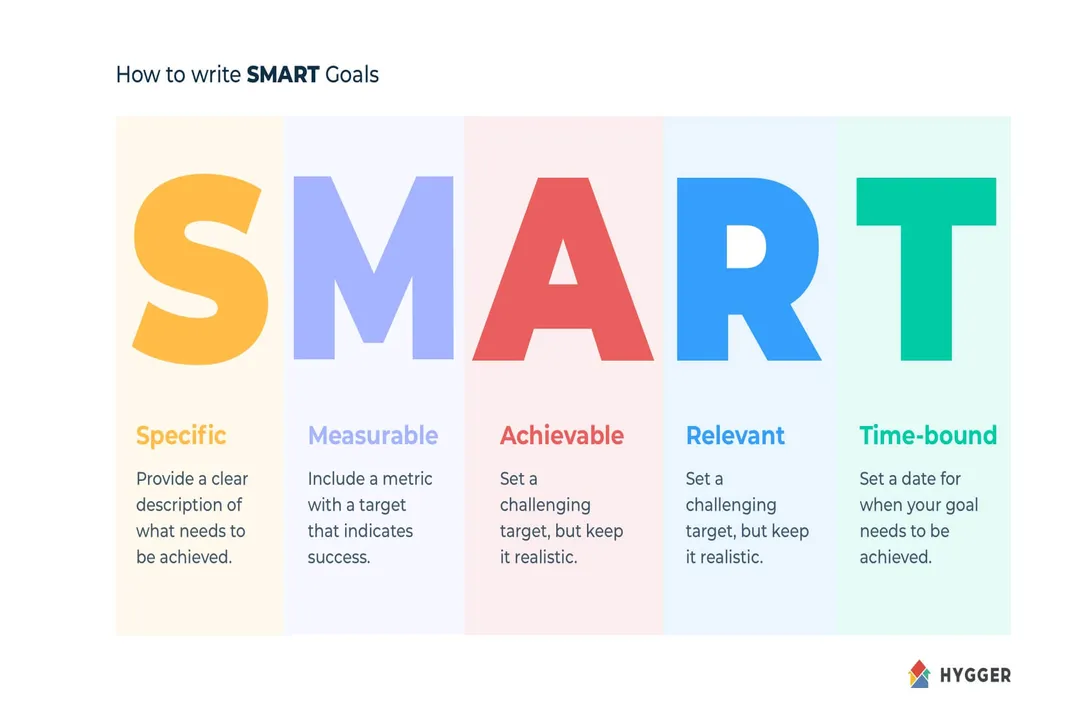
Once the purpose is clearer, translating that into actionable direction becomes essential. Setting long-term career goals is about giving your trajectory a clear bearing, acting as a compass rather than a rigid map. [2][3] While the destination might shift slightly based on new information or opportunities, having a defined endpoint prevents drift. [7]
Effective goal setting often involves looking far ahead—perhaps five, ten, or even twenty years out—and then rigorously working backward. [2] Sources on career development often suggest creating tiers of goals to manage the scope and ensure consistent forward motion. [3][9]
Here is a typical structure for structuring these objectives:
- Vision/Destination (10+ Years): This is the broad outcome you hope to see, often tied to your purpose. Examples range from "Be recognized as an industry expert in sustainable energy policy" to "Run my own specialized consulting firm". [9]
- Mid-Range Objectives (3-5 Years): These are significant milestones needed to make the vision achievable. If the 10-year goal is running a firm, the 3-year objective might be "Secure two senior management roles overseeing large P&Ls" or "Complete specialized certification X and build a client portfolio of three pilot projects". [2][3]
- Short-Term Actions (6-12 Months): These are immediate, concrete steps. They might include "Take a course on advanced negotiation tactics," "Mentor two junior colleagues formally," or "Present at one national conference". [3]
A key difference often seen is between setting outcome-based goals and process-based goals. An outcome goal might be "Be promoted to Director by age 35." A process goal is "Spend 20% of my work week mastering the new data modeling software." While the outcome goal provides a target, it is often outside one's direct control (dependent on budget, hiring freezes, etc.). The process goal, however, is entirely within your control and leads to skill mastery, which is a far more reliable source of day-to-day satisfaction and adaptability. [10] A happy career is often one where you are doing the right things consistently, not just waiting to receive a title. [1]

# Navigating Change

Careers are rarely linear, and enjoyment often hinges on how well you handle the inevitable detours. Long-term success depends heavily on adaptability and recognizing when to course-correct or pivot, which requires continuous self-assessment. [7][10] What you wanted at 25 is likely different at 45, and clinging rigidly to an outdated plan can lead to profound dissatisfaction. [5]
Two things consistently emerge as predictors of long-term job success: adaptability and knowing your own value, often tied to continuous learning. [10]
To manage this evolution healthily, it helps to routinely check if your daily work still aligns with your stated direction. This isn't about weekly reviews, but rather an annual Career Drift Audit.
| Audit Category | Question to Ask | What Indicates Drift? |
|---|---|---|
| Skill Utility | Are the primary skills I use today still challenging me? | I spend more than 60% of my time on tasks I mastered over two years ago. [10] |
| Value Alignment | Does this work still connect to my core belief about impact? | My biggest professional wins lately feel morally neutral or counter to my values. [4] |
| Energy Balance | Which activities consistently drain my energy versus those that recharge it? | My recharging activities (even outside work) are consistently overwhelmed by work-related stress. [5] |
| Forward Momentum | Am I closer to my 3-year objective now than I was 12 months ago? | My current projects do not directly support any stated mid-range or long-term goal. [2] |
If you identify significant drift across two or more categories, it signals the need for a strategic course correction, which might mean learning a new skill, requesting a role change, or consciously taking on high-visibility projects that shift your trajectory. [7]
# Integrating Life
A career that consumes life, no matter how intellectually stimulating or high-paying, cannot sustain happiness long-term. [5] Many voices in career satisfaction discussions stress the importance of setting boundaries and ensuring the professional path serves the life you want to live, rather than becoming the entire point of living. [1][5]
Enjoying your career long-term means defining what "enough" looks like in terms of hours, travel, and mental load. For some, this means rejecting the highest possible rung on a corporate ladder in favor of a role that allows for deep engagement in hobbies, family life, or community service. [1]
This integration involves being proactive about work-life balance rather than passively waiting for an employer to grant it. It means understanding that saying "no" to an opportunity that infringes on non-negotiable personal time is not a sign of weakness, but a sign of respecting your own sustainability plan. [5] If you are someone whose primary satisfaction comes from high-intensity performance, that is valid, but you must actively schedule recovery, or that performance will burn out the enjoyment factor quickly. [1]

# Cultivating Engagement
Beyond goals and boundaries, sustained engagement often comes down to the quality of the day-to-day interactions and the perception of mastery. Mentorship, both receiving and giving, is repeatedly cited as a key element for long-term career health. [3] Developing junior colleagues provides a fresh perspective and reinforces your own accumulated expertise, keeping the learning cycle active even when your primary technical skills have plateaued. [3]
Another vital aspect is managing your internal narrative about your work. If you view your job purely transactionally—time for money—it will naturally feel less fulfilling over time, especially as monetary returns begin to diminish in importance relative to time freedom. [4] Instead, focus on the craft of your work. Even if you are an administrator, focus on becoming the most efficient, organized, and innovative administrator possible within your department. [10] This dedication to process excellence creates intrinsic motivation that external rewards cannot match. [1]
For example, if you find your industry is becoming less interesting, focus your next major goal on learning an adjacent, more engaging skill set, using your current stability as a platform for the transition. This shows that enjoying a career long-term doesn't mean loving every single aspect of your current job every single day; it means having the agency and the plan to shape your work environment over time so that the balance tips toward satisfaction. [7] Recognizing that your career is a series of choices—not a predetermined fate—is perhaps the most powerful mindset shift one can make for enduring professional well-being. [6][7]
Related Questions
#Citations
Those who are genuinely happy in your career and life, what do you ...
Long-Term Career Goals [Examples & How to Succeed] | Chronus
How to Set Long Term Career Goals - And Achieve Them - MentorcliQ
How to generate ideas for longer-term paths - 80000 Hours
How to Reach Your Career Goals (and Enjoy Life, Too) - The Muse
Focus on Career: 7 Powerful Ways to Achieve Success in 2025
How do I stay on my career path with a clear direction?
What are my long-term career goals, and how can I work ... - Quora
Long-Term Career Goals: 12 SMART Examples
2 Things That Will Give You Long-term Job Success - Forbes