Is Construction a Good Long-Term Career?
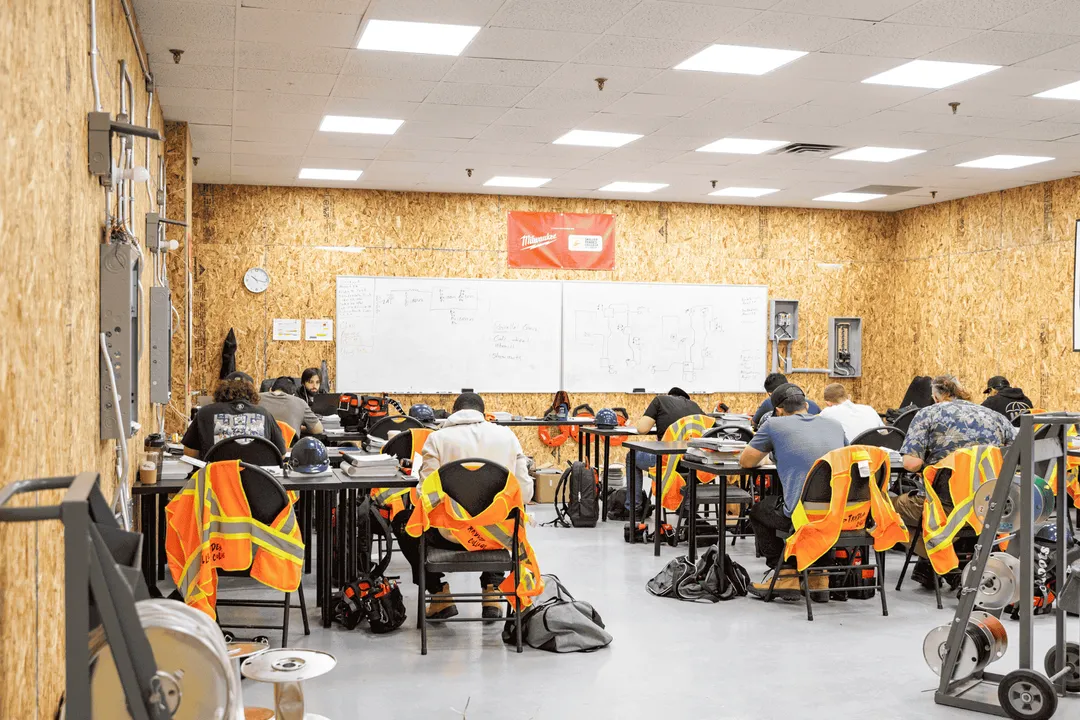
The construction industry offers a tangible career path built upon making real, lasting things, which appeals to many seeking meaningful work. [8][9] When evaluating whether construction serves as a good long-term commitment, the answer often hinges on balancing robust job security and high earning potential against the inherent physical demands of the trade. [1][2] Unlike many white-collar fields where the value of a four-year degree is assumed, construction provides multiple entry points, including apprenticeships and trade schools, which can significantly alter one's financial trajectory early on. [5][10]
# Future Needs

The outlook for construction careers suggests a positive trend for the foreseeable future, indicating strong job security for those entering the field now. [6] Several sources point to a current or near-future environment where demand for skilled construction workers is high. [4][6] This isn't just cyclical growth; it reflects fundamental needs in infrastructure, housing, and commercial development that must be met. [2] For anyone concerned about automation eliminating their role, the hands-on, problem-solving nature of construction provides a degree of resilience. [10] It is a sector that requires human adaptability on site, making sustained demand likely. [4] The strength of the long-term pipeline suggests that securing a position today is less about landing a temporary job and more about joining an industry with persistent, necessary work. [2][6]
# Earnings Potential

One of the most compelling arguments for construction as a long-term career is the potential for substantial financial reward, often achieved without the burden of extensive student loan debt that plagues other professions. [5] Wages in the trades are frequently cited as high, providing a strong foundation for financial stability sooner rather than later. [9] While entry-level positions might start modestly, the trajectory for skilled tradespeople and those who move into supervisory roles is steeply positive. [3] Skilled professionals can command very competitive salaries, sometimes surpassing those of college graduates in other sectors, especially when factoring in the reduced time spent in formal education before earning begins. [2][5]
For instance, consider a hypothetical scenario where a plumber completes a three-year apprenticeship earning a living wage, compared to an office worker completing a four-year degree and spending a year in a low-paying entry role. The tradesperson could potentially have a year's worth of savings and significant on-the-job experience before the other professional fully enters their career path, an initial financial head start that compounds over decades. [5] This immediate value translates directly into long-term wealth-building capability. [2]

# Trade Mastery

The industry rewards specialization and the acquisition of practical skills. Becoming a true master of a specific trade—whether it’s electrical work, welding, carpentry, or concrete finishing—opens doors to higher pay, supervisory roles, or even starting an independent contracting business. [10] The learning curve in construction is continuous; as new materials, techniques, and regulations emerge, the need for updated expertise remains constant. [4] This environment supports a career based on demonstrable skill rather than solely on credentials. [3]
The spectrum of roles is quite broad. You aren't just swinging a hammer for forty years. Advancement pathways exist that move skilled laborers into project management, estimating, or site supervision, often leveraging their practical experience to lead teams and projects. [2][3] A person starting as an apprentice can, with dedication and further training—sometimes through company-sponsored programs—transition into roles requiring significant technical knowledge and oversight. [10]
# Tangible Results

Many individuals find deep satisfaction in construction because the output of their labor is visible and permanent. [8] There is a unique sense of pride associated with pointing to a bridge, a building, or a new home and knowing, "I helped build that". [9] This contrast with abstract or purely administrative work is a key differentiator for job satisfaction. [8] Unlike work that produces reports or digital services, construction delivers physical structures that serve communities for decades. [8] This tangible contribution provides a sense of purpose that many long-term employees highly value. [9]

# Work Environment
It is crucial, however, to approach construction with an honest assessment of the day-to-day environment. It is inherently physical work. [1] Many roles require lifting heavy objects, working in awkward positions, and enduring various weather conditions, whether it’s extreme heat, freezing cold, or rain. [9] Early start times are the norm across most construction sites, meaning the work schedule often dictates a lifestyle shift that requires personal adjustment. [1] Furthermore, safety is paramount, and while technology improves conditions, vigilance against hazards remains a non-negotiable part of the job. [10]
If one anticipates a long tenure, planning for the physical toll is wise. A common strategy among seasoned professionals involves strategic career migration within the sector. For example, a carpenter who spent the first fifteen years framing houses might transition into a quality control inspection role or focus on the project management side of high-end custom builds, leveraging their deep knowledge without the constant heavy lifting. [1] This proactive management of one's physical capacity ensures longevity and continued high earnings within the industry. [3]
# Advancement Ladder
The career map in construction is less of a ladder and more of a lattice, offering many ways to move upward or sideways. [3] Entry often occurs via an apprenticeship or trade school, but the ceiling is high. [5][10] An individual who excels in a trade role can move toward becoming a foreman or superintendent, positions that involve significant responsibility for scheduling, budget adherence, and personnel management. [2] These leadership roles typically command a significant pay increase commensurate with the added stress and management duties. [3]
The industry also constantly needs skilled individuals in supporting roles that bridge the field and the office. Estimators, project coordinators, and Building Information Modeling (BIM) specialists—who require a blend of technical site understanding and software proficiency—are vital to modern construction projects. [4] The ability to pivot from physically executing the work to managing the technical documentation surrounding it provides excellent long-term security, as these roles rely on accumulated, practical site wisdom. [6]

# Skill Transferability
While the industry itself is specialized, the core competencies developed in construction are highly transferable across different types of projects and even related fields. [7] Skills like understanding blueprints, managing complex logistics under pressure, adhering to strict deadlines, and resolving unexpected site issues are valuable in facility management, real estate development, and even logistics planning. [7] Construction instills a form of practical project management that is highly respected outside the traditional building trades. [2]
A common thread across discussions about long-term career health in construction is the value of versatility. A worker who can read plans, operate standard equipment, and communicate clearly between the owner’s representative and the subcontractor team becomes indispensable. [1][3] This versatility acts as a hedge against downturns in specific construction sectors, allowing a seasoned professional to shift focus from, say, retail build-outs to public works projects with relative ease. [4]
# Education Pathways
The decision about how to enter construction heavily influences the long-term experience. While some paths necessitate advanced post-secondary education, many high-earning trades prioritize apprenticeships and on-the-job training. [5][9] An apprenticeship provides immediate income while learning, contrasting sharply with a traditional university path that defers income generation. [5] Many successful builders and managers begin on the ground floor, obtaining certifications and licenses as they progress. [10]
However, it is important not to view formal education as entirely absent. Many successful construction managers or civil engineers hold degrees, often in construction management or engineering. [3] The long-term outlook suggests that while you can start without a degree, advancing into higher-level corporate or executive roles in larger firms often benefits significantly from advanced credentials earned later in one's career. [2] This creates a tiered system: immediate entry and high initial earnings via trades, with the option to supplement with formal education later for executive potential. [3]
# Industry Perception
There is sometimes a persistent, outdated public perception of construction as low-skill or temporary labor. [9] Overcoming this stigma is part of the industry’s ongoing effort to attract and retain top talent. [4] In reality, modern construction relies heavily on technology—from drones for surveying to complex scheduling software—making it an increasingly technical field. [7] High-quality firms actively work to improve job site conditions, safety protocols, and benefits packages to align with modern expectations. [2] Recognizing this shift in perception is key; the career available today is far more professionalized than it was a generation ago. [4]
# Job Variety
The sheer variety of work available ensures that boredom is rarely an issue over a long career. [8] Construction encompasses heavy civil (roads, bridges), commercial (offices, retail centers), residential (single-family homes, multi-family units), and specialized industrial work. [7] An individual can spend decades mastering one specialty, or they can move between sectors to keep the work feeling fresh. [8]
For example, a structural welder might spend ten years on high-rise steel erection (a challenging, high-stakes environment) before shifting focus to industrial piping or bridge repair, gaining entirely new sets of codes and techniques to master. [1][10] This internal mobility within the industry itself is a significant factor supporting a multi-decade career commitment. [7]
# Community and Connection
Beyond the physical structures, many cite the strong camaraderie among workers as a major factor in career longevity. [1][9] Working intensely on a site, facing shared challenges like bad weather or tight deadlines, forges strong bonds between crew members. [1] This sense of belonging and mutual reliance is a powerful motivator that keeps people coming back to the job site every morning. [9] It is a collaborative environment where team success directly translates to individual success. [8]
# Long-Term Considerations and Final Analysis
To summarize the long-term viability, construction appears strong, provided the individual is realistic about the nature of the work and proactive about their development.
Key Long-Term Checks:
- Physical Health: How committed are you to maintaining physical fitness, or planning a transition before wear-and-tear limits your earning capacity?[1][9]
- Education Strategy: Will you rely on field experience exclusively, or plan to pursue certifications or associate/bachelor's degrees in construction management down the line to access executive roles?[3][5]
- Adaptability: Are you willing to continuously learn new software, safety standards, and building codes? Stagnation in skills means stagnation in pay. [4][10]
For a person seeking a career that offers an accelerated entry into solid middle-class or higher earnings, where tangible output provides daily fulfillment, and where job opportunities are expected to remain plentiful, construction presents an excellent, durable choice. [2][6][8] It rewards hard work directly, often more immediately than purely academic pursuits. [5] While the physical demands necessitate careful long-term planning for a sustainable trajectory, the career structure itself supports decades of productivity across varied and essential roles. [3][7] The present moment looks particularly favorable for those ready to pick up the tools—or the project management software—and commit to building the future. [4][6]
Related Questions
#Citations
Is construction a good career? : r/askTO - Reddit
10 Reasons A Career in Construction is a Smart Move
Is construction a good career path? Why or why not? - Quora
Why Now is the Perfect Time to Start a Career in Construction
6 Reasons Why Construction Is a Good Career Choice
Now is a Good Time to Start a Career in Construction
Construction Career Options | The Best Picks - Buildern
Reasons Why Construction is the Best Industry for a Career
Is Construction a Good Profession? - Build Your Future - BYF.org
Is Construction a Good Career? - 360 Training