What roles exist in satellite cybersecurity?

The proliferation of satellite systems, from communication constellations to Earth observation platforms, has fundamentally changed the landscape of critical infrastructure, naturally bringing the challenge of cybersecurity to the forefront. Protecting these space assets is no longer a niche concern reserved only for defense agencies; it is a necessity for commercial operators, governments, and scientific missions alike. This complex domain requires specialized expertise distributed across the entire system architecture, encompassing everything from the launchpad to the ground stations and the spacecraft itself. [1][4] Understanding the roles involved means recognizing that security is not siloed into one department but requires a multidisciplinary team focused on diverse operational and technical domains.
# Ground Infrastructure
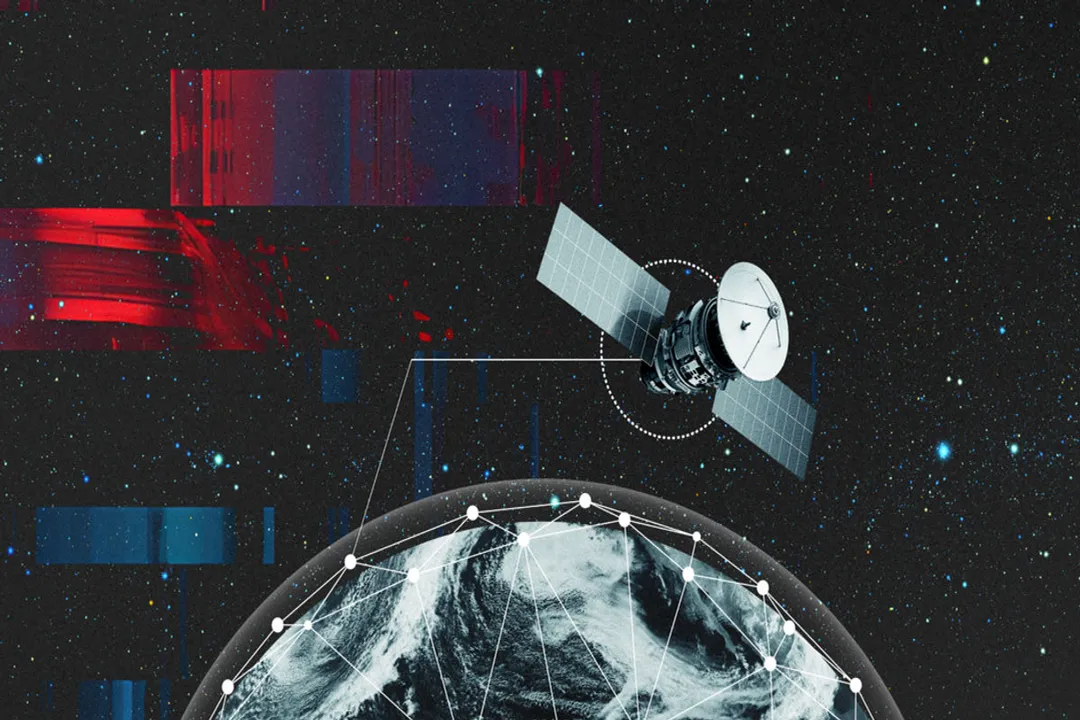
The ground segment often serves as the most accessible entry point for adversaries, making roles focused here essential. These professionals are responsible for securing the terrestrial components that command, control, and receive data from the satellites. [1][7] A key function is that of the Ground Operations Security Engineer. This individual focuses heavily on traditional IT security principles, adapted for the unique mission protocols. They must secure the network infrastructure, including telemetry, tracking, and command (TT&C) links, as well as data storage and processing centers. [9] In many organizations, this area overlaps with the traditional roles of network security architects and system hardening specialists, ensuring that ground-based software and hardware meet stringent operational security requirements before they ever communicate with an orbiting asset. [1]
Their duties often align with general best practices but carry the weight of national security or critical service provision. For example, implementing zero-trust architectures for access to critical command consoles becomes paramount. Moreover, when considering the recommendations issued to space system operators, many initial cybersecurity improvements center on ensuring robust authentication and access controls for ground personnel and systems. [9] The work is very much about managing vulnerabilities in traditional computing environments that interface directly with space assets.
# Orbital Assets

Securing the satellite itself presents a far more specialized set of challenges than protecting ground servers. Roles dedicated to the Space Segment Security Architect must contend with constraints fundamentally different from terrestrial IT: limited computational power, strict power budgets, high latency in patching, and the near-impossibility of physical access to remedy a compromise. [6] Security must be designed in, not bolted on later. [8]
These engineers operate at the intersection of aerospace engineering and information security. They determine the cryptographic algorithms suitable for on-board processing, design secure boot processes to prevent unauthorized firmware loading, and specify hardware root-of-trust mechanisms. [8] Given that updates to on-orbit software are difficult, time-consuming, and often require mission-critical authorization windows, the initial design must prioritize resilience and self-healing capabilities. [9] A key divergence from ground roles is the focus on physical security integration—understanding how electromagnetic interference, radiation hardening, and physical tamper detection affect the cyber posture of the actual spacecraft. [1]
To better appreciate the distinct demands, consider the operational focus:
| Role Type | Primary Security Perimeter | Key Security Constraint | Update Frequency |
|---|---|---|---|
| Ground Operations Security Engineer | Data Centers, Network, TT&C Links | Access Control, Network Segmentation | High (As needed for IT infrastructure) |
| Space Segment Security Architect | Flight Software, On-board Processors | Power Budget, Data Latency, Patching Difficulty | Low (Mission critical, high-risk process) |
This table highlights that the Space Segment Architect's expertise must deeply integrate with hardware and orbital dynamics, a requirement that a purely terrestrial security expert would likely lack.
# Military Cyber Specialists
Where government and defense sectors are involved, dedicated military cyber roles emerge, tasked with both defense and potential counter-operations. The Cyber Operations Specialist within organizations like the U.S. Space Force embodies this function. [5] Their mandate goes beyond preventing external intrusion; it includes continuous monitoring for indicators of compromise across the space domain and maintaining the integrity of military space capabilities. [4]
These specialists are responsible for executing defensive maneuvers, which might involve isolating a compromised ground system, uploading emergency patch routines, or employing electronic countermeasures if necessary. Their expertise often requires a deep understanding of adversary tactics specific to the space domain, blending traditional cyber warfare knowledge with knowledge of orbital mechanics and satellite capabilities. [5] The work here is highly integrated with national defense strategy, making the role distinct from purely commercial security positions. [4] In some contexts, these roles also feed into policy discussions, helping shape the defense requirements that industry partners must meet. [2]
# System Architects
The necessity of securing the entire interconnected system—ground, link, and space—drives the need for high-level Cybersecurity System Architects. These professionals are tasked with defining the overall security posture, often spanning multiple domains and organizational boundaries. [3] They ensure that security controls are appropriately allocated across the complex supply chain inherent in modern satellite systems. [9]
Their function is inherently strategic. They evaluate the risk posed by different mission profiles, such as whether a low-Earth orbit constellation operating commercially requires the same stringent, classified security protocols as a government high-throughput communications satellite. [3] Drawing from the broader industry guidance, these architects translate high-level directives—such as implementing security best practices across the lifecycle—into tangible engineering requirements for subsystems. [2] This role requires authority and technical depth to enforce security decisions that might otherwise be traded off for mission performance or cost savings. [4]

# Resilience Engineering
While many roles focus on prevention and detection, a critical set of roles is dedicated to response and continuity. This falls under the banner of Resilience Engineering. As noted by space connectivity initiatives, the goal is often to develop secure communications and resilient applications. [8] Resilience specialists focus on what happens after an attack has bypassed initial defenses or when a threat actor exploits a zero-day vulnerability in an aging component. [6]
These teams must design and test failover mechanisms, redundancy strategies, and recovery procedures for both ground and space assets. This demands skills in anomaly detection and rapid analysis of potentially corrupted telemetry data to diagnose an issue that could range from a simple software glitch to a targeted cyberattack. [6] If a primary control channel is jammed or compromised, the resilience engineer needs to have pre-validated and tested secondary or tertiary channels ready to take over command authority quickly, often with minimal human intervention due to communication delays. [8]
One practical consideration that often falls to resilience teams, and is rarely discussed outside specialized circles, is the need for deep cross-domain knowledge. A security professional focused purely on the software layer might specify a very fast encryption standard, but the resilience engineer must collaborate with the hardware team to confirm the on-board computer has the necessary processing power to execute that encryption without violating the satellite's power envelope or introducing unacceptable latency into a time-sensitive command sequence. Understanding basic orbital mechanics—like the delay between a command transmission and its reception, or the power drain during an eclipse—is not just for spacecraft operators; it's vital for setting realistic and effective cyber recovery timelines. [1]
# Governance and Policy Specialists
In parallel with the technical roles, there is an essential need for experts focused on oversight, compliance, and organizational strategy. These specialists, which might be titled Cyber Risk Managers or Policy Analysts, ensure that the entire enterprise understands and manages its space-related cyber risk appetite. [3] They are the bridge between the highly technical teams designing the software and the executive leadership accountable for mission success and regulatory adherence. [2][4]
These roles involve codifying security requirements derived from governmental standards or international best practices into internal Standard Operating Procedures (SOPs). [2] They manage the continuous risk assessment process, which, according to many governmental recommendations, must be an ongoing activity, not a one-time audit. [9] Furthermore, they must track the evolving threat landscape concerning space systems—an area where threat actors are becoming increasingly sophisticated—and ensure that security investments align with the highest potential impacts. [3][4] In the Australian context, for instance, a Cyber Security Specialist might operate heavily in this governance layer, ensuring that protections for ground infrastructure and data adhere to national standards. [7]

# Threat Intelligence and Analysis
A specialized, proactive role that underpins all others is the Space Domain Threat Intelligence Analyst. While traditional threat intelligence focuses on IT networks, this specialization must monitor actors who target space systems, which includes nation-states, state-sponsored groups, and sophisticated non-state actors. [4]
This role requires synthesizing information from various sources—open source intelligence (OSINT), classified briefings, and vulnerability reports specific to satellite bus manufacturers or ground station hardware. [6] They are tasked with predicting how an adversary might attempt to gain control or disrupt service, whether through exploiting a known vulnerability in an older communication protocol or by launching a sophisticated jamming attack against a specific frequency band. [1] Their output directly informs the priorities of the Security Architects and the Cyber Operations Specialists, ensuring that defensive resources are allocated where the actual or anticipated threat is greatest. [9]
# Supply Chain Security
Given the complex, multi-vendor nature of space systems, a distinct role focused solely on the Supply Chain Security is increasingly common. Modern satellites are often assembled from commercial off-the-shelf (COTS) components, specialized avionics, and proprietary ground software, creating numerous potential vectors for compromise before the hardware is even launched. [9]
These professionals vet suppliers, demand evidence of secure development practices (like Software Bill of Materials or SBOMs), and establish protocols for secure handling and integration of third-party hardware and software modules. [9] Their success is measured by their ability to map every critical component back to a known, trusted source, ensuring no malicious hardware implants or backdoors are introduced during manufacturing or integration—a crucial preventative measure against long-term espionage or sabotage. [3] The expertise needed here blends procurement law, risk assessment, and deep knowledge of hardware assurance techniques.
# Synthesis and Future Focus
The roles in satellite cybersecurity are thus a blend of the familiar and the cutting-edge. We see established disciplines like Network Security and Risk Management being applied to new environments, [3] alongside novel specializations like Resilience Engineering tailored for zero-patch environments. [8] The specific job titles mentioned across defense and government sectors—Cyber Operations Specialist [5] and Cyber Security Specialist [7]—underscore the authoritative nature of this protection, particularly when public safety or national security is involved. [4]
What links all these functional areas is the overarching need for security enablers that focus on future capabilities, such as those pursued by organizations looking to ensure secure satellite communications and resilient applications. [8] This future focus means that many professionals currently in related fields will need to cross-train into space-specific security concerns. The entire ecosystem demands a high degree of expertise and trust, as failures can be catastrophic, affecting not just data, but physical assets in orbit and the critical services they provide on the ground. [1][4] The industry's ability to staff and integrate these diverse roles effectively will define the safety and reliability of the next generation of space-based services.
Related Questions
#Citations
Understanding satellite cyber security - CyberHive
Cybersecurity – Satellite Industry Association, Washington, D.C.
Satellite cybersecurity: Safeguarding the final frontier - PwC
Real-time cybersecurity in space | Deloitte Insights
Cyber Operations - Enlisted Careers - U.S. Space Force
Role of cybersecurity for a secure global communication eco-system
Cyber security specialist | Australian Space Agency
Cybersecurity as Enabler for Secure Satellite Communications and ...
[PDF] Recommendations to Space System Operators for Improving ... - CISA