What roles exist in bibliometrics?
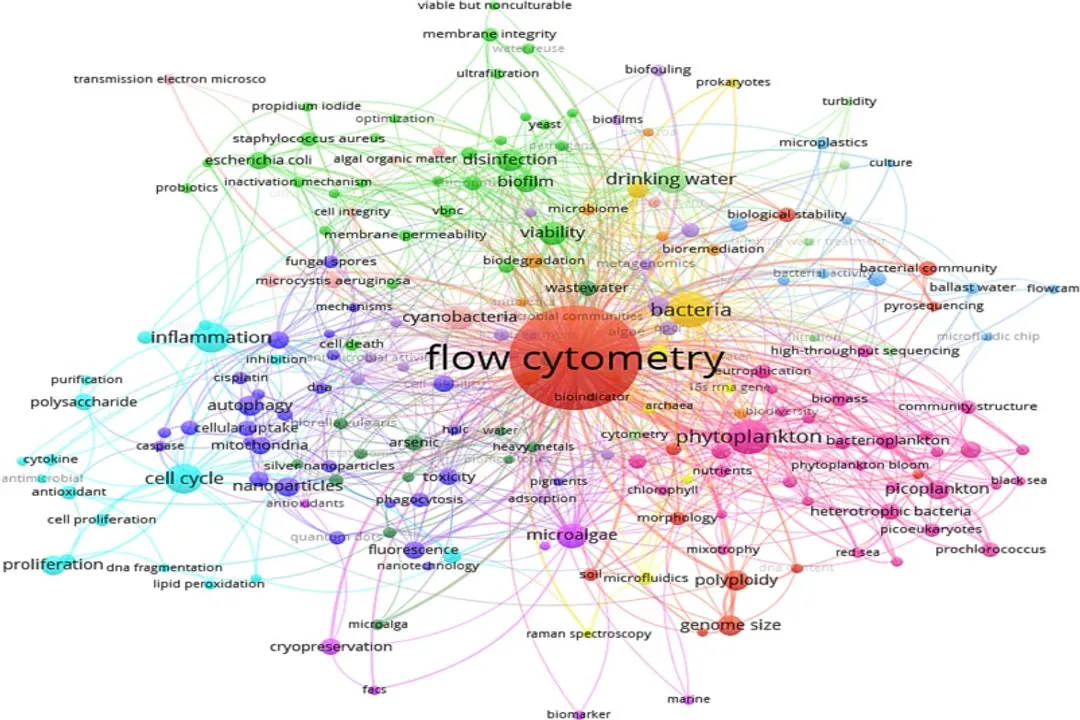
The discipline centered on the statistical analysis of written publications, particularly in the realm of science and technology, defines bibliometrics. While the practice has deep roots in information science, the roles associated with it are proliferating and diversifying as research assessment becomes increasingly data-driven. These roles are not confined solely to academic research departments; they span institutional administration, government bodies, publishing houses, and specialized data analysis firms. Understanding the landscape requires looking beyond simply counting citations to appreciating the analytical and consultative functions these specialists perform.
# Quantitative Study
At its most fundamental, bibliometrics involves measuring the flow and impact of scholarly communication using quantitative methods. Early applications often focused on citation counts, journal impact factors, and author productivity. Consequently, many entry-level or foundational roles require a strong understanding of these metrics—what they measure, how they are calculated, and, critically, what they fail to measure. An expert in this area understands that metrics are proxies for impact, not impact itself. For instance, knowing that a specific journal’s impact factor has seen a recent surge is one thing; being able to contextualize that surge within the specific discipline's publication habits—a key skill for a bibliometrician—is another entirely.
# Library Specialists
Perhaps the most visible evolution of these roles is occurring within academic and research libraries. Libraries are increasingly becoming central hubs for research evaluation support, moving past simple collection management toward providing sophisticated analytical services. Librarians serving in these capacities often function as research impact consultants or bibliometric specialists. Their primary audience is often the faculty member or department needing to demonstrate research strength for promotion, grant applications, or institutional ranking submissions.
These library-based roles demand a dual expertise. They require foundational library and information science skills—understanding metadata, scholarly communication ethics, and data curation—alongside proficiency in analytical tools and metrics databases. They are responsible for data extraction, interpretation, and visualization. A key component of this work involves instruction; these specialists must teach researchers how to effectively interpret their own metrics profiles and how to select appropriate indicators for different evaluation contexts. This consultative approach stands in contrast to purely administrative roles where metrics might be analyzed for an entity; here, the specialist enables the researcher to analyze their own work.

# Policy Analysts
Moving from the direct researcher support level, another significant category of roles centers on institutional strategy and national policy. Individuals in these positions often carry titles related to Research Evaluation Officer, Director of Research Analytics, or Scientometrics Advisor. Their work is deeply integrated into institutional governance, aiding senior leadership in making strategic resource allocation decisions. They assess institutional performance against peers, identify emerging areas of institutional strength ripe for investment, and help shape internal policies regarding scholarly output expectations.
This function requires a high degree of authority and trust, as the findings directly influence funding, hiring, and departmental prioritization. They are tasked with monitoring trends at a macro level, perhaps observing shifts in international research collaborations or the impact of open access mandates on overall citation behavior across the university portfolio. A subtle but critical difference emerges here when comparing this to the library role: the Policy Analyst often advises on behalf of the institution to external bodies or internal executive committees, whereas the library specialist often advises the individual researcher on their own output. One focuses on collective strategic positioning; the other on individual career development support, though both rely on the same underlying data.
# Industry Jobs
The demand for bibliometric expertise is not confined to the public sector or academia. Publishing houses, commercial research organizations, and specialized data service providers hire experts for roles that often blend scientometrics with data science. These positions frequently involve developing or maintaining the analytical platforms themselves. A Data Scientist specializing in Scholarly Data or a Metrics Product Manager within a major publisher uses bibliometric principles to inform business decisions, such as which journals to acquire, where to focus editorial resources, or how to develop better abstracting and indexing services.
Furthermore, these external roles often look beyond traditional citation counts toward novel indicators of impact, such as altmetrics—mentions in social media, policy documents, or news outlets. The challenge here often involves cleaning massive, unstructured datasets derived from non-traditional sources and applying scientifically sound, reproducible methods to generate meaningful signals. This necessitates strong programming skills, often in languages like Python or R, making the bibliometrician in this setting much closer to a traditional software engineer or data analyst than a traditional librarian.

# Modern Titles
The titles applied to these positions reflect the diverse skill sets now required. While "Bibliometrician" is a recognized descriptor, many available jobs utilize broader or more specific terminology. We see listings for Research Impact Analyst, Scientometrics Specialist, and Research Performance Consultant.
For example, a Research Impact Analyst might be employed by a non-profit funding body. Their role would involve designing the evaluation framework for funding calls, ensuring that the required evidence of past impact is both meaningful and equitably assessed across different research fields. This involves significant methodological design—determining if a Field-Weighted Citation Impact (FWCI) metric is more appropriate than a raw count for a specific funding area, for example. Such roles often require advanced degrees in information science, statistics, or a closely related quantitative field, highlighting the increasing specialization required in this area. It is worth noting that where a university might focus its internal bibliometric staff on describing existing research output, external consultants might be tasked with forecasting future research success based on current publication patterns.
# Collection Focus
An older, yet still relevant, role that intersects with modern bibliometrics is the Bibliographer. Historically, a bibliographer focused on the description, history, and physical characteristics of books and manuscripts. In a modern academic library setting, however, this role can evolve significantly. The modern subject bibliographer may now incorporate quantitative data heavily into collection development decisions. Instead of relying solely on faculty requests or perceived prestige, they use data on usage statistics, citation patterns within the collection, and gaps identified through citation analysis to make informed purchasing decisions for digital and print resources. This strategic collection curation, informed by metrics, ensures that library resources actively support the institution’s highest-impact research areas as identified through bibliometric mapping. This subtle shift—from collecting based on subject expertise alone to collecting based on subject expertise validated by usage and citation data—demonstrates how even traditional roles are being digitized and quantified.
The diversity in titles and settings illustrates a key professional evolution: bibliometrics is moving from being a niche academic study to a core professional competency required across the research ecosystem. Whether operating within a library helping one professor secure tenure or within a government agency setting national research priorities, the underlying requirement remains the same: the ability to treat scholarly communication as measurable data, interpreting the numbers with intellectual rigor and contextual awareness. Navigating these different environments means adapting the analytical toolset to the specific mission, whether that mission is optimizing library spending, advising the Provost, or building the next generation of research analysis software.
#Videos
The Role of Bibliometrics in Library and Information Research and ...
Related Questions
#Citations
Bibliometrics - Wikipedia
Emerging Roles for Libraries in Bibliometric and Research Impact ...
Bibliometrics basics - PMC - NIH
What jobs are available for scientometrics and bibliometrics experts?
Roles of bibliometrics in scientific communication - Oxford Academic
Bibliometrics - an overview | ScienceDirect Topics
The Role of Bibliometrics in Library and Information Research and ...
Competencies for bibliometrics - Andrew Cox, Elizabeth Gadd ...
Chapter 3. Applications of Bibliometrics | Bredahl
What does a Bibliographer do? Career Overview, Roles, Jobs