What roles exist in anticipatory governance?

Anticipatory governance represents a fundamental shift away from simply reacting to crises toward proactively shaping outcomes by understanding potential futures. [2][8] This required evolution necessitates a corresponding transformation in the personnel and structures responsible for public administration and policy creation. [3] The roles within this governance model are not always new positions with different titles, but often represent existing roles imbued with significantly different mandates, skillsets, and time horizons. [1][9] To govern in anticipation, organizations must assign specific responsibilities for scanning the environment, interpreting weak signals, integrating long-term thinking into immediate decisions, and then ensuring that action is taken. [2][4]
# Strategic Direction
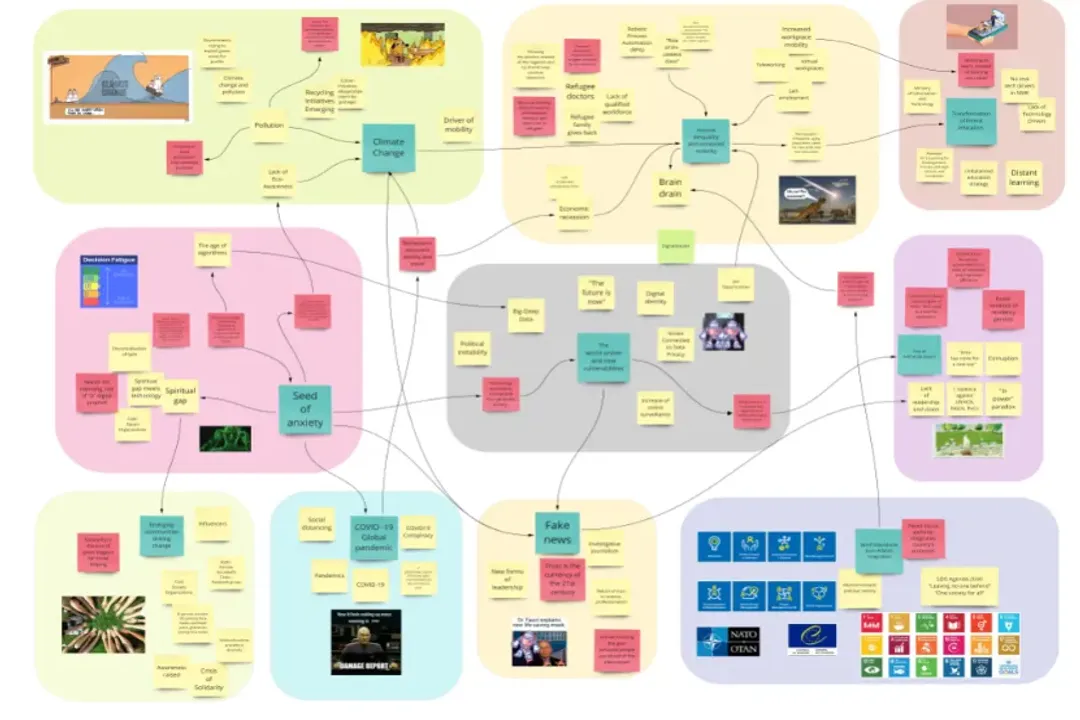
At the highest level, anticipatory governance requires individuals dedicated to setting the intent for future navigation. This is more than just setting traditional long-term plans; it involves embedding a consciousness of deep time and uncertainty into the very DNA of decision-making bodies. [3]
# Executive Sponsorship
Effective AG starts with committed leadership. These are the individuals, often at the ministerial or executive level, who must champion the cultural change required to move from short-term political cycles to longer-term strategic thinking. [3] Their primary role is to authorize the necessary resources—time, funding, and staff—for foresight activities, even when the immediate payoff is not visible. [1] They act as the ultimate sponsors who legitimize the exploration of futures that might contradict current assumptions or strategies. [7] Without this executive buy-in, horizon scanning efforts often become interesting academic exercises that never translate into adjusted budgets or policy direction. [2]
# Foresight Units
A defined function, whether a dedicated office, a center of excellence, or a specialized unit, is often established to formalize the anticipatory function. [7] These units act as the engine room for foresight. Their roles include designing the methodologies for environmental scanning, establishing scenario planning workshops, and maintaining the organization’s intelligence base on emerging global trends. [2][10] They are responsible for taking raw data and transforming it into narratives that leaders and practitioners can engage with—making the abstract concrete. [3] They must be adept at managing a portfolio of potential futures, rather than focusing on predicting a single outcome. [9]
# Analytical Capabilities
The shift to anticipation demands a specialized set of analytical roles focused on understanding complexity and uncertainty, moving beyond simple trend extrapolation. These roles bridge the gap between disparate data sources and actionable intelligence.
# Horizon Scanners
Horizon scanners are the organization’s eyes and ears focused far down the road. Their task is continuous monitoring of weak signals—early indicators of potentially transformative change—across technological, social, environmental, and geopolitical domains. [2] Unlike traditional intelligence analysts who focus on known threats or immediate political developments, scanners look for novelty and anomalies that challenge the status quo. [8] A key skill here is weak-signal detection—identifying faint indicators that, if ignored, could become major disruptions later. [9] For instance, in humanitarian contexts, this role involves spotting early demographic shifts or novel protest methods that could lead to future displacement crises long before they become headline news. [6]
# Risk Modelers and Data Scientists
While scanning identifies what might happen, modeling helps understand the how and how much. These roles focus on developing sophisticated quantitative tools to map causal pathways and dependencies between various factors. [8] In areas like public health or economic planning, this involves building dynamic simulation models that test the robustness of current policies against various future scenarios. [5] A significant challenge for these practitioners is translating complex statistical outputs into clear, narrative-driven assessments that policy-makers can easily digest. [2]
# Sense-Makers and Interpreters
This role is arguably one of the most critical and difficult to staff because it requires a unique blend of disciplinary depth and intellectual curiosity. The sense-maker takes the disparate inputs from the horizon scanners (the weak signals) and the quantitative outputs from the modelers, and synthesizes them into coherent, plausible narratives—scenarios. [2]
One area where this role is particularly complex is when integrating technological shifts with deep societal values. For example, a sense-maker in a local government context might need to combine data on local demographic aging (quantitative) with emerging ethical debates surrounding AI-driven elder care (weak signal) to produce a scenario that tests the viability of current long-term care funding models. This requires an analyst capable of switching between "hard" engineering data and "soft" ethical philosophy to create a meaningful story for decision-makers. [3]
This synthesis moves beyond mere reporting; it involves challenging underlying organizational assumptions about how the world works. [1]

# Implementation and Translation
Anticipatory governance collapses if the insights generated by strategists and analysts cannot be effectively translated into current governmental action. This requires specific roles focused on integration and implementation within existing bureaucratic structures.
# Policy Translators
These professionals act as the crucial interface between the foresight teams and the day-to-day policy developers or legislative drafters. [4] Their job is to take a long-term scenario—say, a future defined by extreme resource scarcity—and deconstruct it into actionable policy implications for the present budget cycle or the next piece of legislation. [7] They essentially run "backcasting" exercises, asking: "If we want to avoid that future, what decisions must we make today?". [1] A key task for the policy translator is identifying "no-regret" policies—actions that yield benefits regardless of which future materializes—and "robust" policies that perform reasonably well across a range of likely outcomes. [10]
# Legislative Agents
In jurisdictions where law-making is a primary function, specific roles are needed to embed anticipatory thinking into the legislative process itself. [4] This involves legislative staff or dedicated committees tasked with performing "future impact assessments" on proposed bills. Instead of asking if a bill complies with existing statute, the anticipatory legislative agent asks if the bill will create unintended negative path dependencies fifty years down the line. [9] This requires deep understanding of the legislative calendar, an awareness of vested interests that might block future-proofing measures, and the ability to structure laws with built-in review mechanisms that adapt as new information emerges. [3]
# Stakeholder Engagement and Ethics
Anticipatory governance is fundamentally democratic; decisions about the future must reflect the values and needs of those who will inhabit that future. [4] This necessitates roles focused on broad engagement and maintaining ethical guardrails.
# Inclusivity Facilitators
Because future shocks often disproportionately affect marginalized or underrepresented groups, effective AG demands roles dedicated to ensuring broad participation in scenario planning and visioning exercises. [6] These facilitators must actively seek out voices that are typically absent from high-level policy discussions, such as youth groups, indigenous communities, or, in the case of migration crises, potential future refugee populations. [4] Their function is to ensure that the "future" being anticipated is not just the future envisioned by the established elite, but a spectrum of possibilities viewed through diverse lenses. [3] If this role fails, the resulting governance may be technically sound but politically illegitimate or socially unjust. [6]
# Ethical Oversight and Governance Designers
As predictive technologies and large-scale interventions become more common, the potential for unintended, ethically problematic consequences grows. [5] A specialized role, or a dedicated committee function, must focus purely on the ethics of anticipation. This includes questioning the inherent biases in the data models used, scrutinizing the normative assumptions embedded in the preferred scenarios, and ensuring that anticipatory actions do not become instruments of social control or unwarranted surveillance. [6] They act as a "devil's advocate" against overly optimistic or technocratic paths, ensuring that means of anticipation do not violate fundamental rights. [9]
A practical consideration often overlooked in defining these roles is the necessary horizontal linkage across government silos. Traditional governance excels at vertical accountability (e.g., the Department of Transportation answers to the Transportation Minister). Anticipatory governance, however, requires deep horizontal coordination. Therefore, one might suggest a specific role that is not about analysis or strategy, but about bureaucratic alignment: the Boundary Spanner. This individual’s Key Performance Indicator (KPI) wouldn't be a policy outcome, but the documented, successful integration of a 20-year climate projection from the Environmental Agency into the five-year infrastructure plan of the Finance Department. Their value lies in dismantling structural silos that naturally resist coordination across different time horizons. [7]

# Comparing the Proactive and Reactive Postures
The distinction between traditional administrative roles and anticipatory roles can be summarized by looking at their primary focus and timeframe. Traditional roles are fundamentally reactive and short-term, focused on legality, efficiency, and managing immediate crises. [3] Anticipatory roles are inherently proactive and long-term, focused on robustness, resilience, and systemic understanding. [1]
We can illustrate this role contrast simply:
| Characteristic | Traditional Administrator Role | Anticipatory Governance Role |
|---|---|---|
| Time Horizon | Quarterly, Annual, or Electoral Cycle | Decades (10, 30, 50 years) [1] |
| Primary Input | Budgets, Legislation, Existing Data [2] | Weak Signals, Emerging Narratives [8] |
| Core Activity | Compliance and Response [3] | Sense-Making and Scenario Testing [7] |
| Success Metric | Meeting targets; avoiding immediate failure | Increased organizational resilience; avoided systemic shock |
This difference in focus demands that individuals in AG roles develop what is sometimes called "strategic empathy"—the capacity to understand and care about the well-being of citizens decades in the future, even when those citizens are not yet born or do not yet vote. [4] This requires a different set of interpersonal and conceptual skills than those prized in highly specialized, reactive environments. [3] Success in anticipatory governance is therefore less about filling a specific job title and more about cultivating a broad organizational capacity for future literacy, distributed across leaders, analysts, and implementers alike. [1][9]
Related Questions
#Citations
Anticipatory Governance: Do You Know What That Is?
Anticipatory governance - OECD
[PDF] Why is Anticipatory Governance and Changing Mindsets Key to ...
Anticipatory Governance in the Legislative: A Path Towards a More ...
Anticipatory governance for newcomers: lessons learned from the ...
Anticipatory Governance and Refugee Protection | UNHCR Innovation
[PDF] Anticipatory Governance Practical Upgrades - NDU Press
What is anticipatory governance and can it help us today?
Anticipatory governance - Wikipedia
Anticipatory Governance: Future-Oriented Leadership I 4strat