What roles exist in uncertainty quantification?

Uncertainty quantification (UQ) is not a siloed discipline but rather a collaborative endeavor, pulling expertise from statistics, applied mathematics, and specific scientific or engineering domains. [2][10] At its heart, UQ provides a structured pathway to manage the inevitable gaps between a mathematical model and the physical reality it attempts to represent. [8] This process requires distinct functional roles to manage input variability, model formulation errors, and computational approximations. [1][5] Successfully implementing UQ relies on specialists who focus on different stages, from setting the theoretical stage to interpreting the final risk assessments. [10]
# Methodology Focus
One fundamental set of roles centers on establishing the statistical and mathematical rigor underpinning the entire UQ exercise. These individuals, often holding advanced degrees in statistics or applied mathematics, are tasked with defining how uncertainty will be measured and modeled. [6][2] They decide the proper statistical formalism to employ, which can often mean navigating the trade-offs between Frequentist and Bayesian approaches to inference. [6]
The choice here is critical because it dictates the subsequent steps. For instance, if a Bayesian approach is selected, the role then involves designing the prior distributions that best reflect existing knowledge or ignorance before any new data is incorporated. [6] In contrast, a more traditional approach might focus heavily on defining robust confidence intervals based on repeated sampling or simulation runs. [1] These methodologists ensure that the language used to describe uncertainty—whether it involves probabilities, confidence limits, or specific error bounds—is both mathematically sound and appropriate for the physical system being studied. [6]
# Model Construction
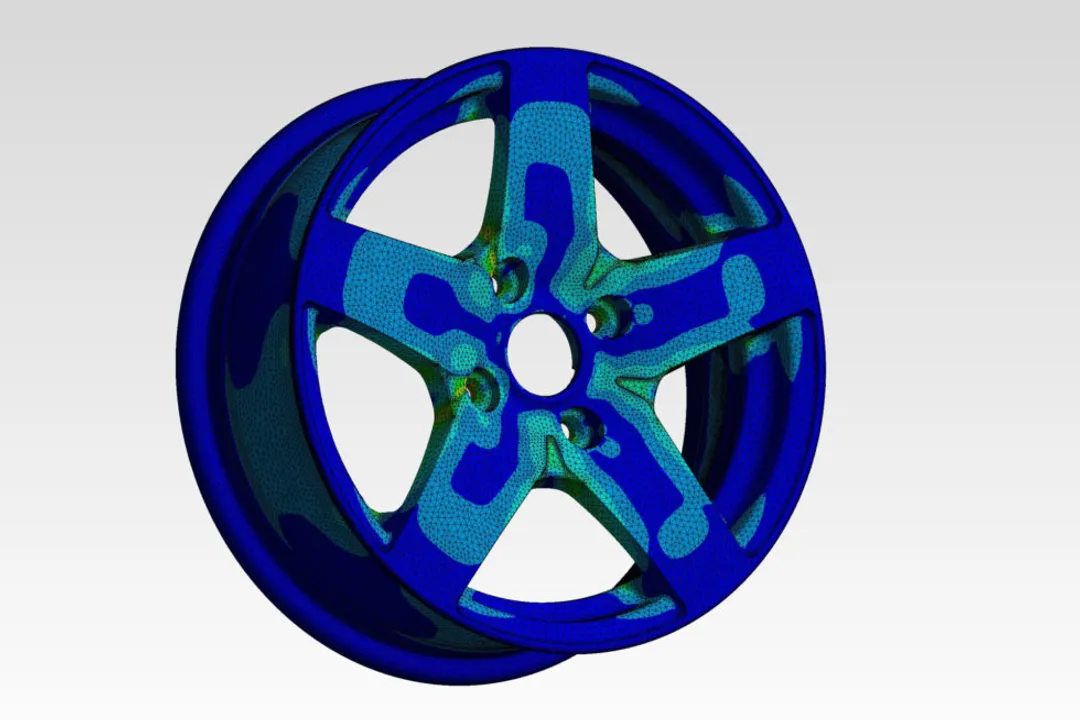
Before any quantification can happen, there must be a model to quantify. This role belongs to the Model Developer or Computational Engineer, the individuals responsible for creating the underlying simulation or algorithm. [2] Whether they are building complex finite element models for stress analysis or crafting neural networks for predictive maintenance, their decisions directly introduce uncertainty into the system. [7]
UQ specialists must collaborate deeply with these builders early on. The developer needs to clearly identify which inputs are subject to experimental error (aleatory uncertainty) and which result from simplifications made in the physics or the mathematical representation itself (epistemic uncertainty). [1][5] For example, in modeling fluid dynamics, the developer must decide whether to simplify the turbulence model or to subject the necessary closure parameters to a full uncertainty analysis. [1] When dealing with modern machine learning, this means ensuring the model architecture itself—for instance, choosing a deep learning method for Computer-Aided Engineering (CAE)—is amenable to uncertainty estimation, as the structure of the model inherently influences the quality of the uncertainty quantification. [7]

# Execution Analysts
Once the model structure is defined and the statistical basis agreed upon, the core implementation role comes into play: the UQ Analyst or Quantification Specialist. [9] This function is highly technical, focusing on the practical execution of the UQ workflow. [5] They are responsible for executing the analysis plans laid out by the methodology experts.
This involves running two primary procedures: uncertainty propagation and sensitivity analysis. [5][9] Uncertainty propagation traces the input variability through the model to determine the resulting output distribution, often requiring sophisticated numerical techniques to remain efficient. [9] Sensitivity analysis, conversely, determines which uncertain inputs have the greatest influence on the output uncertainty. [5] An analyst in this role must be proficient with tools that handle high-dimensional problems, potentially employing techniques like stochastic spectral methods or surrogate modeling to manage the computational burden imposed by complex simulations. [1][9]
A key aspect of this role, especially in modern data-driven contexts, involves calibration. Calibration is the process of adjusting uncertain model parameters based on observed data to reduce epistemic uncertainty. [4] A specialist performing calibration must expertly blend new experimental evidence with existing model knowledge, a task that requires careful management to avoid overfitting the limited available data. [4]
# Verification Validation
A distinct and vital role is that of the Verification and Validation (V&V) Expert. [5] While the UQ Analyst focuses on the uncertainty within the model's established formulation, the V&V expert steps back to question the formulation itself. [1] Verification confirms that the computer code correctly solves the mathematical model chosen (Are we solving the equations right?). [5] Validation confirms that the mathematical model accurately represents the physical system (Are we solving the right equations?). [5]
This function often relies heavily on comparing simulation output against high-quality experimental or historical data. [5] In the context of machine learning models, this role is becoming increasingly important; validating an AI model means confirming that its predicted uncertainty accurately reflects its actual prediction errors across various operational envelopes. [4] This critical assessment prevents the team from producing mathematically precise error bars for a fundamentally flawed prediction. It bridges the gap between pure computation and empirical truth. [1]

# End Use Context
Finally, there are the Domain Specialists or End Users whose needs drive the entire UQ effort. [8] These individuals—who could be reliability engineers, climate scientists, financial modelers, or medical device designers—must be able to interpret the UQ output in a way that informs decision-making within their specific operational context. [2][8]
The language of statistical distributions or sensitivity indices must be translated into actionable risk statements, safety margins, or design requirements. [7] For an engineer, a 95% confidence interval for structural failure might translate directly into a required safety factor in a design specification. [8] A practical consideration for these users is developing the skill to critically evaluate which uncertainty sources the model prioritized. If the UQ analyst highlights that input measurement error accounts for 80% of the final output uncertainty, the domain specialist knows exactly where to direct resources for their next set of experiments—namely, improving sensor accuracy rather than refining the underlying physics equations. [5] This loop—where the end user informs the need for better inputs or better models—completes the UQ cycle.
To effectively manage complex problems, these specialized roles often need to share a common language and a basic understanding of adjacent skills. For instance, a computational scientist focused on optimizing the numerical methods for propagation (the Execution Analyst) benefits immensely from understanding the implications of Bayesian priors set by the Methodology Focus expert. Conversely, the methodology expert gains credibility by knowing the computational limitations inherent in solving high-dimensional, non-linear systems. [9] The true power emerges when teams recognize that UQ is less about discrete job descriptions and more about a spectrum of required expertise flowing across the project lifecycle, demanding constant cross-training and communication between the statistician, the modeler, and the decision-maker. [10]
Related Questions
#Citations
[PDF] Uncertainty Quantification: An Overview - AFIT
Uncertainty Quantification | UQ and Data-Driven Modeling Group
Challenges and opportunities in uncertainty quantification for ...
A review of uncertainty quantification and its applications in ...
Uncertainty Quantification
The Statistical Formalism of Uncertainty Quantification - SIAM.org
The Importance of Uncertainty Quantification for Deep Learning ...
Uncertainty quantification - Wikipedia
Uncertainty Quantification | Complex Infrastructure Systems
Uncertainty Quantification Explained | Towards Data Science