What Is the Future of Marketing Careers?

The landscape of marketing careers is undergoing a significant transformation, driven largely by technological advancements and shifting consumer expectations. Rather than a sudden obsolescence, what's occurring is a profound evolution, demanding adaptability from practitioners at every level. [1][5] Marketing professionals who thrive in the coming years will be those who embrace this change, focusing on where human insight intersects with digital capability. [4]
# Automation Impact

Artificial intelligence is fundamentally reshaping how marketing work is executed, but the narrative that AI will simply replace all marketers is incomplete. [9] Instead, AI systems are becoming powerful tools that take over repetitive and data-intensive tasks. [4] For instance, tasks like optimizing ad bids, segmenting massive datasets, or drafting initial copy variations can be managed by machines with impressive speed and accuracy. [9] This automation changes the day-to-day reality for many specialists.
The concern that marketing itself might become obsolete is a topic discussed actively by professionals, often leaning toward the idea that bad marketing—the kind that is purely transactional or heavily reliant on manual, repetitive execution—is what faces obsolescence. [3] Marketing that relies on deep understanding of human behavior, brand storytelling, and complex strategic alignment will remain essential. [1] Marketers need to shift their focus from doing the repetitive work to managing, training, and interpreting the output of the automated systems. [4] The future marketer is less a craftsman of manual processes and more an architect overseeing intelligent workflows.
# Skill Evolution

To successfully manage these new systems, the required skill set for marketing professionals is clearly moving toward technical proficiency and data fluency. [5][8] The ability to crunch numbers, understand analytics platforms, and translate data into actionable business strategy is becoming non-negotiable. [1][5] Roles that require strong analytical thinking and comfort with data visualization are becoming increasingly valuable across the industry. [7]
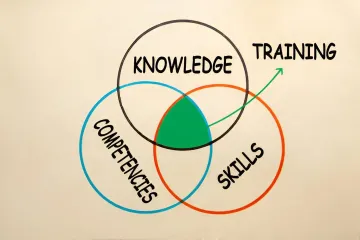
This doesn't mean soft skills are disappearing; they are simply being paired with new technical requirements. The ideal candidate emerging from educational programs, or those successfully upskilling today, possess what could be described as a reinforced "T-shaped" profile. [10] The vertical bar of the T represents deep expertise in a specific area—perhaps data science, personalization engine management, or perhaps now, AI prompt engineering and model training—while the horizontal bar maintains a broad understanding of all marketing disciplines, customer experience, and business goals. [1] Without that technical depth, the broad marketing knowledge risks becoming disconnected from execution capabilities in the near future.
Specific technical competencies cited as highly important include knowledge of automation tools, customer relationship management (CRM) systems, and data platforms. [5] Marketers must understand the technical underpinnings of how data flows across systems to ensure compliance, accuracy, and effective personalization. [8]
# Emerging Roles
As the foundational layers of marketing become automated, specialized roles focused on high-level strategy and customer connection are rising to prominence. [2] Several job titles indicate where the industry is placing its emphasis:
- Customer Experience (CX) Strategists: Focusing on the entire user journey, ensuring every touchpoint, both digital and human, aligns with brand promise. [7]
- Data Scientists / Marketing Analysts: These roles are becoming more integrated, focusing purely on extracting predictive insights that machines might miss in the initial analysis phase. [7]
- Personalization Experts: Moving beyond simple segmentation to deploy real-time, individualized content experiences across multiple channels, requiring deep knowledge of tag management and API integration. [2]
- Digital Transformation Managers: Professionals dedicated to integrating new technologies, like AI tools or headless CMS solutions, into existing marketing operations. [2]
These roles often demand a hybrid background, sitting at the intersection of technology, psychology, and business operations. [5] Even traditional roles, like Content Manager, are evolving into roles requiring proficiency in generating, curating, and validating AI-assisted content at scale. [4]
# Human Advantage
Despite the technological push, the core of successful marketing remains inherently human, which serves as a critical counterpoint to the rise of algorithms. [1] The skills that are hardest to automate—strategic foresight, authentic creativity, emotional intelligence (EQ), and ethical reasoning—are gaining value precisely because technology handles the rest. [1]
Marketers must be the translators—converting business objectives into compelling narratives and then interpreting complex system outputs back into human-readable strategy. [1] Where AI excels at optimization within defined parameters, humans excel at defining those parameters and identifying entirely new opportunities that exist outside current data sets. [3] If a brand needs to pivot its entire market position based on a subtle cultural shift, that requires human judgment, not just pattern recognition on historical data.
This emphasis on EQ means that effective team leadership and cross-departmental communication—getting sales, IT, and marketing aligned—will become a differentiating factor for successful marketing organizations. [1]

# Lifelong Upskilling
The shelf-life of a specific technical skill is shrinking rapidly. [1] What was cutting-edge yesterday might be standardized software configuration today. [5] This reality means that a marketing career path is no longer linear or defined by a single degree acquired early on. [10]
For today's graduates entering the field, the mindset must be one of perpetual learning. [10] It means actively seeking out training in new platforms, understanding regulatory changes like data privacy laws, and experimenting with emerging tech like generative AI tools before they become mandatory requirements. [1] One actionable approach is to allocate dedicated, protected time—perhaps four hours every two weeks—specifically for non-client-facing technical learning, treating it as seriously as a high-priority project deadline. [5] This proactive approach builds what could be called future-proofing inertia.
Furthermore, professionals should look at certifications or micro-credentials in adjacent fields, such as cloud computing basics or introductory statistics, as these provide a deeper context for the digital tools they use daily. [1] Staying current also means understanding how different tech stacks integrate. For example, knowing the difference between a MACH architecture and a traditional monolithic system allows a marketer to advise more effectively on technology adoption, even if they aren't the ones coding it. [8]
# Global Context
While major technology hubs drive the immediate adoption of new marketing tools, the future career outlook varies somewhat by geographic context. [3] In markets with high digital saturation, the focus remains intensely on deep specialization and optimization, where competition for niche AI-driven roles is fierce. [1] However, for marketers in developing regions or smaller economies, the immediate future might involve a race to adopt basic digital hygiene—establishing strong foundational analytics, mobile optimization, and efficient cross-channel communication—which the more developed markets have already established. [3]
For a marketing professional operating outside a major tech center, this presents a unique advantage: mastering foundational digital scaling techniques first provides the necessary base to then leapfrog into advanced AI adoption when the local infrastructure catches up. If you can build a scalable, high-ROI email segmentation program using only modest tools today, you will be perfectly positioned to deploy the next-generation AI-driven personalization engine when it becomes affordable and accessible tomorrow. [8] This ability to build foundational strength while keeping an eye on the technological horizon offers a stability that pure early adopters sometimes lack when the next major platform shift occurs.
# Career Longevity
Ultimately, the future of a marketing career is defined not by what technology is used, but by the marketer's ability to maintain relevance. [1] Relevance is achieved by maintaining a reputation for delivering measurable business results, not just executing campaigns flawlessly. [5] This requires strong commercial acumen—understanding the company’s P&L, the cost of customer acquisition, and the lifetime value of a customer. [7]
The most secure marketing professionals in the years ahead will be those who view their careers as a continuous project in applied learning and ethical application of powerful tools. They will be the strategists who can articulate the why behind the data, ensuring that technology serves human goals, rather than the other way around. [1][4]
Related Questions
#Citations
Marketing in 2025: What Is the Future of Work for Our Industry?
The Future of Marketing Jobs in 2025 - Storyblok
Is marketing going to become an obsolete career in the future?
AI Will Shape the Future of Marketing - Professional & Executive ...
Is the Marketing Job Outlook Strong? Trends You Need to Know
The Future of Marketing Careers: Trends to Watch | VM
6 In-Demand Marketing Roles in 2025
The Future of Marketing Careers: 2025–2030 Outlook - Palm Beach ...
AI at Work: The Future of Marketing Jobs - McGraw Hill
9 Must-Know Digital Marketing Careers for 2025 - St. John's University