Which Careers Are Future-Proof?
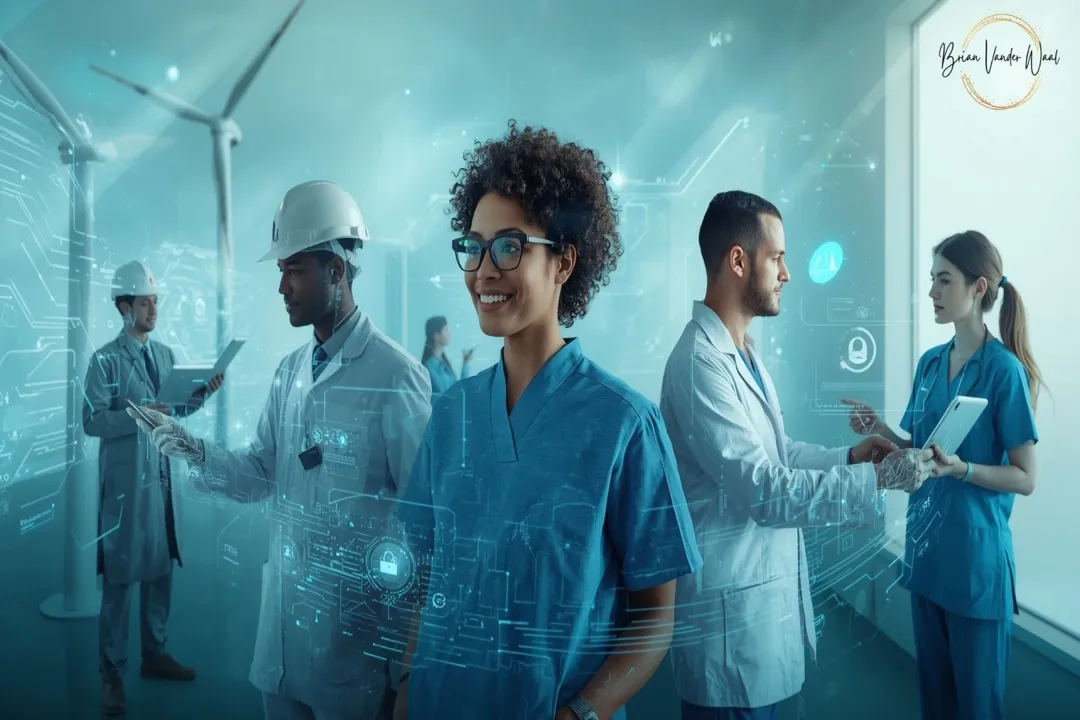
The quest for career stability in an era defined by rapid technological advancement, particularly the rise of artificial intelligence, often leads to one central question: what work will remain fundamentally human? Navigating the evolving job market isn't about finding a single static profession that lasts forty years; rather, it involves identifying sectors and roles where human judgment, complex emotional intelligence, and physical dexterity still hold an insurmountable edge over algorithms and robotics. [2][3] Certain careers, due to their direct, high-touch nature, reliance on abstract reasoning, or requirement for highly specialized, non-replicable physical labor, appear significantly less susceptible to widespread automation. [6]
# Core Principles

The foundation of a future-proof career rests on understanding what technology currently struggles to replicate effectively. [4] Jobs characterized by routine, predictable tasks—whether cognitive or manual—are the most vulnerable to displacement or significant restructuring. [2][6] Conversely, roles demanding high levels of creativity, critical thinking, emotional quotient (EQ), ethical reasoning, and complex problem-solving in unpredictable environments show greater longevity. [2][6][7] A common thread across many analyses is the need to work with technology rather than competing against it, often suggesting that careers requiring deep human interaction or sophisticated maintenance/creation of these very technologies will see growth. [4][5]
It is also worth noting that geographic stability plays a role; while digital work can be outsourced globally, certain essential services must remain local. This lends inherent, long-term security to skilled trades and in-person caregiving roles, a factor often overlooked when discussions focus purely on software-based AI advancements. [1]
# Safer Fields
Several broad occupational fields consistently emerge as having lower risk profiles concerning automation, primarily because they satisfy the criteria for essential human input. [6][10] These aren't just stop-gap solutions; they represent long-term societal needs that technology supplements but cannot yet replace entirely. [2][5]
# Care Professions
The demand for healthcare professionals is not only high due to aging populations in many developed nations but also inherently resistant to full automation because the core of the work is empathy, comfort, and nuanced physical care. [2][10] Positions like Registered Nurses (RNs), Physical Therapists, and Occupational Therapists require constant patient assessment, emotional support, and adaptation to unique physical conditions—tasks that demand far more than pattern recognition. [1][5][6] Similarly, specialized mental health providers, such as Psychologists and Counselors, rely on building complex therapeutic relationships that AI cannot authentically simulate. [2][5] Even within healthcare, roles that focus on detailed procedural execution or complex diagnostics, such as specialized surgeons or advanced diagnostic technicians, remain vital. [1]
# Skilled Trades
The trades offer a fascinating counterpoint to the focus on white-collar tech jobs. While industrial robots handle repetitive factory assembly, the complex, non-standardized environments of construction sites, home repair, and infrastructure maintenance require human dexterity, improvisation, and problem-solving in unpredictable spaces. [1][6][9] Electricians, Plumbers, and HVAC technicians are frequently cited as secure because installing, troubleshooting, and repairing systems in existing, varied structures demands on-the-spot critical thinking that generalizes poorly to current robotic capabilities. [1][2][6] The necessity for on-site presence solidifies this sector's future-proof status, making it an excellent avenue for those preferring hands-on work over screen time. [9]
# Specialized Technology
Paradoxically, careers at the cutting edge of technology—those that create and manage the AI systems—are highly secure. [4] This group includes Data Scientists, AI/Machine Learning Engineers, and Cybersecurity Analysts. [4][5] These roles involve defining new problems, designing novel algorithms, understanding ethical implications, and constantly defending against ever-evolving threats, activities that demand high-level strategic creativity. [3][4]
For instance, while AI might write basic code snippets, the architect defining the purpose of the new system, integrating it into legacy infrastructure, and ensuring data governance remains firmly in the human domain. [4] Cybersecurity is a constant arms race; as one defense is coded, the threat evolves, requiring human ingenuity to anticipate the next vulnerability. [5]

# Essential Skill Profiles
Focusing solely on job titles can be shortsighted; the true defense against obsolescence lies in cultivating adaptable skill sets. [3] The market rewards individuals who possess a blend of technical proficiency and deep human competencies. [3][4]
# Cognitive Agility
The ability to learn, unlearn, and relearn is perhaps the single most important meta-skill. [3] Future-proof professionals must exhibit strong critical thinking and complex problem-solving skills. [2][3] This isn't just about solving pre-defined math problems; it's about analyzing ambiguity, synthesizing information from disparate sources, and formulating strategies where no manual exists. [10] Another critical factor is creativity and originality—the capacity to generate new ideas or solutions that deviate from established training data. [2][5]
# Interpersonal Mastery
As routine cognitive tasks become automated, the value of human interaction increases exponentially. [2] This elevates the importance of emotional intelligence, persuasion, negotiation, and leadership. [2][3] A financial advisor who can navigate a client's anxiety during a market downturn or a project manager who can successfully mediate a conflict between technical teams offers a value proposition far beyond simple data processing. [1] Roles requiring complex social coordination, like teaching or high-level sales, are therefore well-protected. [2][6]
# Digital Literacy and Data Fluency
Even in traditionally non-tech fields, a fundamental understanding of data, digital tools, and algorithmic processes is becoming mandatory. [3] This does not mean everyone must code, but rather that everyone must be fluent enough to interact effectively with automated systems. [4] For example, a marketer needs to understand how AI-driven ad platforms score customers, and a nurse needs to interpret complex readings from advanced monitoring equipment. [3]
Here is a comparative look at how skill emphasis shifts across supposedly "safe" careers:
| Career Type | Primary Technical Focus | Key Human Skill | Automation Resistance Source |
|---|---|---|---|
| Healthcare Provider | Medical Diagnostics/Equipment | Empathy & Physical Care | High-touch, unpredictable physical interaction [1][2] |
| Skilled Tradesperson | System Repair/Installation | Improvisation & Dexterity | Non-standardized physical environments [6][9] |
| AI Engineer | Algorithm Design/Data Integrity | Abstract & Ethical Reasoning | Creating the next generation of tools [4][5] |
| Educator/Trainer | Curriculum Design/Platform Use | Motivation & Tailored Communication | Adapting pedagogy to individual learning styles [3][10] |
# Emerging Roles and Growth Areas
Beyond the established safe zones, certain emerging areas signal sustained growth driven by global shifts. [3] The transition toward sustainability, for instance, creates a high demand for specialized expertise. Renewable Energy Engineers and technicians specializing in solar, wind, and battery storage are positioned well as global infrastructure pivots. [3][5] These roles often blend complex engineering with the on-site installation and maintenance challenges seen in traditional trades.
Another area of significant predicted growth, according to labor market forecasts, involves roles focused on the human interface with technology. [3] This includes User Experience (UX) Designers who ensure that complex software remains intuitive, and AI Ethicists or Governance Specialists who ensure that autonomous systems align with human values and regulations. [4] These careers require deep understanding of human psychology married to technical capability.
In an interesting local application of this trend, consider the small business owner who needs to digitize their operations. An individual offering boutique IT consulting focused solely on helping local restaurants or independent retail shops adopt cloud inventory systems and local SEO strategies—a high-touch, context-specific service—is likely far more secure than a centralized, mass-market IT provider, simply because the former requires adapting generalized tech solutions to highly unique, local, physical realities. [1] This points to a future where contextual expertise is highly rewarded.

# Longevity Mindset
Securing a future-proof career is less about choosing the right field today and more about adopting a growth mindset regarding one's skill portfolio. [3][7] If a 2026 analysis suggests that 65% of jobs will require significant retraining in the next decade, that statistic should not breed panic but instead signal an ongoing commitment to professional evolution. [7]
One actionable approach is the "T-shaped" professional model: developing deep expertise (the vertical bar of the T) in one high-demand area—like machine learning or advanced nursing care—while simultaneously developing a broad base of foundational skills (the horizontal bar), such as data literacy, project management, and cross-cultural communication. [3] This combination allows an individual to either become a deep specialist or pivot relatively easily between related disciplines as market needs shift. [4]
Furthermore, career security is often enhanced by taking on roles that combine multiple vulnerable functions into one hybrid position. For example, a Technical Writer who can also manage the documentation workflow using AI tools, perform basic quality assurance testing, and train new hires on the documentation process, becomes significantly more valuable than a writer performing only one of those tasks. [10] This bundling of skills across traditionally separate roles creates a higher barrier to replacement. [2]
The focus should continually pivot from what you do to how effectively you execute the uniquely human aspects of that work, ensuring that your value proposition is tied to irreplaceable judgment, empathy, or complex physical agency, rather than simple data processing or execution of repetitive steps. [7]
Related Questions
#Citations
Best Future-proof careers? : r/Career_Advice - Reddit
What Are Future-Proof Jobs? (12 Career Paths To Explore) - Indeed
Future of Jobs Report 2025: The jobs of the future – and the skills ...
22 Future-Proof Careers That Thrive in the AI Era - LinkedIn
10 High-Paying Jobs That Are Future-Proof and Will Remain in ...
Top 65 Jobs Safest from AI & Robot Automation - U.S. Career Institute
Future-Proof Careers in the Age of AI: What You Should Learn in 2026
6 Future-Proof Careers That Will Thrive in the Next Decade - Hiration
25 Jobs AI Can't Replace (Yet): Safe Careers for the Future - Paybump
25 Best Jobs For The Future: Your Career-Proof Blueprint for 2025 ...