How Do You Start a Career in Marketing?

Marketing, at its core, is the art of understanding human nature and communicating value to potential consumers so they take a desired action. If you are looking to pivot into this dynamic field, the good news is that it is surprisingly accessible, as many successful professionals did not start with a traditional marketing degree. However, the sheer breadth of the discipline—from SEO and paid ads to content and product strategy—can make the starting line feel overwhelming. Your entry point requires a strategic blend of learning, demonstrating practical skills, and cultivating the right mindset.
# Mindset Foundation
Before diving into certifications or resumes, consider the personality traits that separate marketers who thrive from those who simply punch a clock. Fulfillment in marketing often comes to those who possess both a creative and an analytical mind. You need the creativity to devise an ad that captures attention, but also the analytical skill to optimize the platform settings to ensure a low Customer Acquisition Cost (CAC). If you find yourself naturally curious about why people prefer one product over another at a specific moment, you are already leaning into a vital marketing principle.
Marketing success is often built on observation and application. One highly effective approach is to become observant of what successful marketers are doing elsewhere and then reverse-engineer or emulate those strategies with your own original twist. Remember that while tools and platforms change rapidly, the fundamentals of human behavior, market dynamics, and value creation remain constant. Do not let the jargon of new tools distract you from understanding the basic principles of convincing an audience that your offering has value.
# Education Choices
The pursuit of formal education presents a choice between traditional degrees and focused, agile certifications. A marketing degree, while advantageous in some corporate settings, is frequently not a prerequisite for landing that first role, particularly in startups. Many hiring managers focus more on demonstrable, real-world experience than on academic credentials.
For those without a degree or seeking to upskill, online learning platforms and professional certificates offer a direct route to acquiring industry-recognized knowledge. These often come at low or no cost and provide immediate resume value.
Key areas for initial certification include:
- Analytics: Familiarity with Google Analytics is crucial, as nearly every company with a website uses it to track campaign performance and visitor behavior.
- Advertising: If paid media interests you, Google Ads (covering search, video, and shopping ads) provides essential campaign optimization knowledge.
- Inbound/General Digital: The HubSpot Inbound certification is often recommended for rookies to grasp core concepts like content and email marketing.
- Social: The Facebook Blueprint courses cover managing and optimizing ads on that major platform.
It is important to note that not all certifications are equal. Some merely confirm course completion, while others, like the core certifications from Google or HubSpot, require passing a test. Be discerning; certifications are best used to supplement momentum once you know your area of interest, not as the sole starting point.

# Building Experience First
The most commonly cited frustration for newcomers is the paradox of job applications requiring one to two years of experience when you have none. The solution, widely advised, is to create your own experience. This self-generated work becomes the tangible proof that validates any certifications you may have earned.
This process is about getting your hands dirty and applying what you learn. Start a side project—it could be a personal blog about a niche interest, a YouTube channel, a podcast, or even a small e-commerce venture like dropshipping crafts. The subject of the project matters less than the act of marketing it. When you launch your own endeavor, you are forced to learn the entire ecosystem: content marketing, basic SEO, running inexpensive test ads, email list building, and tracking results via analytics.
If you are focused on Digital Marketing, learning the tools is secondary to understanding the strategy behind them. For instance, while getting certified in a platform like Facebook Ads or Google Ads shows platform literacy, the real value emerges when you understand why and when to use that tool for a specific business objective. You should develop a deep understanding of a few key areas rather than surface-level knowledge across everything.
To truly stand out when presenting this self-made experience, frame every side project achievement using business-centric, quantifiable language. Instead of listing "Wrote 10 blog posts," rephrase it as: "Executed a content marketing experiment over six weeks, resulting in a 40% increase in organic site traffic and capturing 100 MQLs through targeted on-page SEO optimization." This shows potential employers you understand the entire value chain, from creative input to measurable business impact [Original Insight: Results-First Resume Metric Conversion].
# Strategy and Specialization
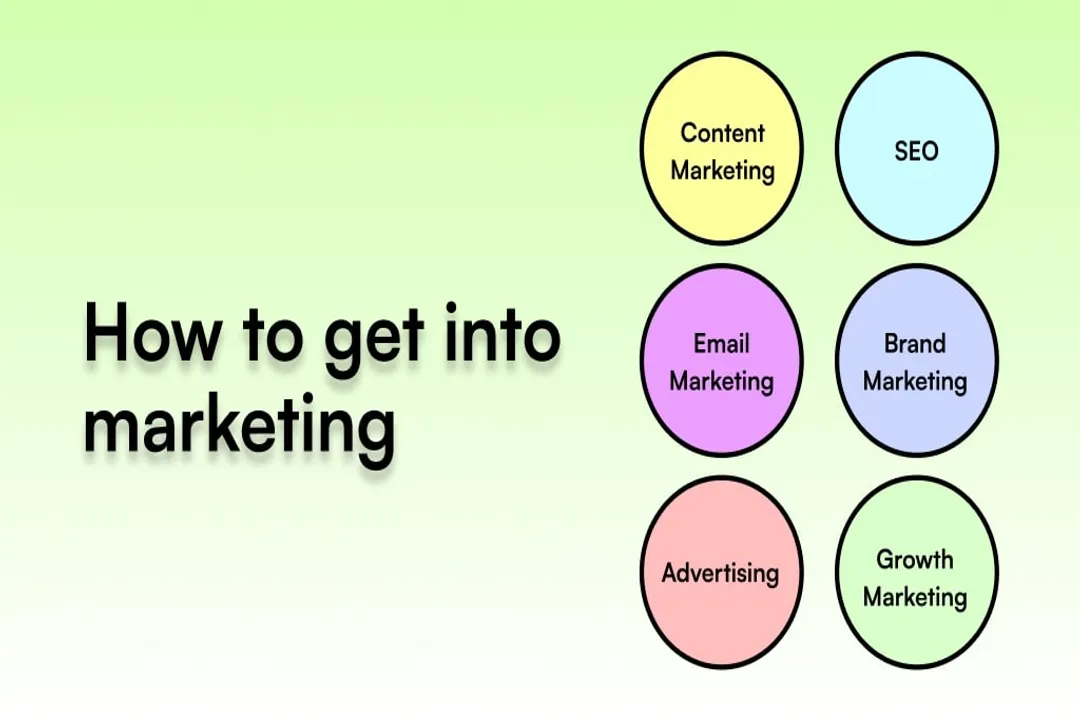
Marketing is too broad to master all facets at once. Successful entry often involves exploring a few areas and then choosing one to pursue deeply. You should start by picking an area that intrigues you, even if you pivot later. Entry-level roles often exist as generalists or coordinators, but career acceleration comes from specialization.
Consider the diverse specialties available:
- Content Marketing/Copywriting: Creating compelling narratives across blogs, social media, and ads.
- SEO Specialist: Compiling keyword data and optimizing sites to rank higher in search results.
- Social Media/PPC: Managing paid advertising campaigns and community interaction on platforms like Meta.
- Market/Data Analyst: Examining market conditions, trends, and campaign performance data.
- Product Marketing (PMM): This specialized role acts as the bridge between product development, sales, and marketing, focusing intensely on positioning, messaging, and go-to-market execution. PMMs often come from sales or content backgrounds because they already understand the customer or the narrative.
While general knowledge across areas like social media, email, and content is necessary to communicate effectively with other team members, deep expertise is what commands higher value.
Many new marketers mistakenly over-index on platform-specific certifications (like a new feature in a specific ad manager) over foundational knowledge. While a platform certification (e.g., Google Analytics) is great for initial resume filtering, true expertise—the T-shape—comes from balancing that technical skill with strategic mastery. Dedicate 70% of your learning time to strategy, psychology, and data interpretation (the vertical bar of the T), and 30% to rapidly mastering the interface of the current top tools (the horizontal bar). When the tool changes next year, your strategic knowledge remains the differentiator [Original Insight: T-Shaped Marketer Triage].

# Landing the Role
Once your knowledge is structured and your portfolio is active, the job search begins. This stage is about marketing you.
# Resume Refinement
Your resume must serve as your personal advertisement. Move away from outdated templates that prioritize stark professionalism over visual engagement. Since marketing is a creative field, your resume should reflect that creativity and an understanding of basic marketing principles, like the AIDA formula (Attention, Interest, Desire, Action). Use modern, attractive templates to stand out from the volume of monotonous applications a hiring manager sees. Crucially, pivot from listing responsibilities to quantifying achievements, using data to demonstrate results.
# Career Trajectory Options
There are several common entry points discussed by working professionals:
- Internships: If you are a student or recent graduate, an internship—even if unpaid initially—provides invaluable on-the-job context and mentorship. It can drastically speed up skill acquisition.
- Marketing Agencies: Working at an agency forces you to manage multiple clients across various industries quickly. This accelerates your learning curve in execution and professional management, although pay might be lower and the workload heavier than in-house roles initially. A successful stint here can lead to referrals to other companies.
- In-House Roles: Working inside one company allows you to dive deep and master one specific craft, often leading to better compensation and focus compared to the scattered nature of agency work. This path also exposes you to cross-departmental collaboration with areas like engineering or finance, building your professional defensibility.
If you are older or pivoting careers, focusing on building the portfolio first (Step 4 from the side project advice) is key, as employers may weigh proven application over recent academic status. Regardless of your approach, networking is non-negotiable. Connect with professionals on LinkedIn, attend industry events, and don't hesitate to send a direct, thoughtful message to a recruiter or hiring manager to express your sincere interest. By combining foundational learning, self-driven experience, and targeted job application strategies, you build a compelling case that overcomes the lack of traditional prerequisites.
#Videos
A CAREER IN MARKETING with PROVEN tips from marketing leaders
Related Questions
#Citations
how to get started in marketing and how to get a job? - Reddit
How to get into marketing in 7 steps (my personal story)
How to Start Your Marketing Career When You Know Nothing About ...
How to Start a Digital Marketing Career: A Student Success Story ...
Your Guide to Landing an Entry-Level Marketing Job | Coursera
How to Start a Career in Marketing
A CAREER IN MARKETING with PROVEN tips from marketing leaders
How to start a career in product marketing: The insider guide