How Long Should a Resume Be?
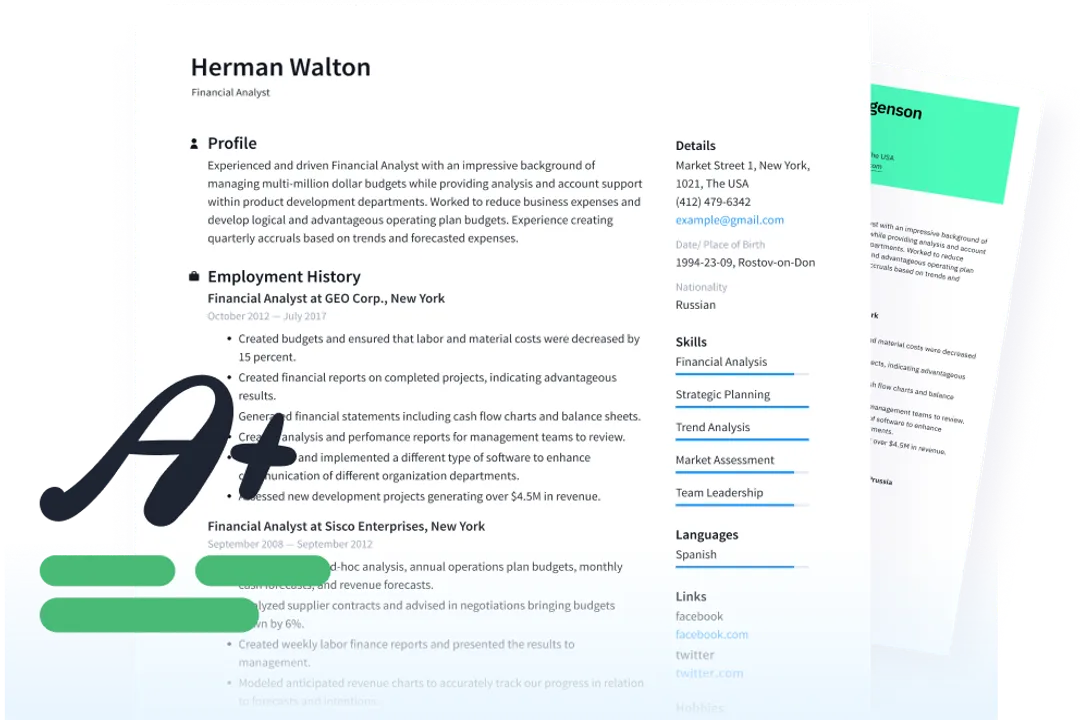
The ideal length for a resume is less about a universal number and more about a finely tuned balance between showcasing your value and respecting a hiring manager’s limited attention span. While you may hear a persistent echo of the "one-page-only" mantra from years past, the reality of the modern job market suggests a more nuanced approach is necessary. The most fundamental principle, which overrides all others, is this: your resume should be as short as possible while still including all relevant accomplishments, skills, and experience necessary to secure the interview.
# Length Standards
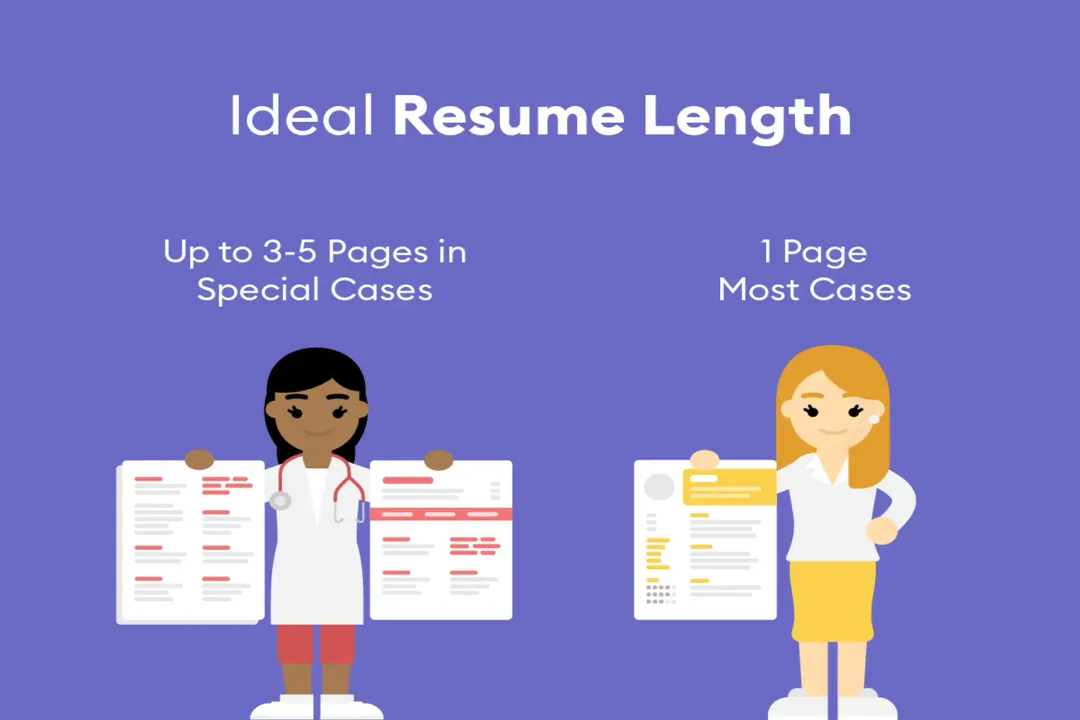
The sheer volume of applications received for many roles means recruiters often spend only seconds scanning a document before moving on. When hiring managers review resumes digitally, scrolling through a document is far less taxing than flipping through a physical stack, which has contributed to the slow acceptance of slightly longer formats. Consequently, the sweet spot for the majority of applicants today generally settles between one and two pages. However, stating a fixed length is misleading; the correct answer is entirely dependent on your career stage, the specific role, and the expectations of the industry you are targeting.
# One Page Focus
For those early in their professional lives, the one-page resume remains the benchmark for conciseness. This length is considered ideal for current students, recent graduates, or job seekers who have accumulated fewer than ten years of relevant experience. For an entry-level candidate, fitting all necessary information—education, key skills, and brief experience—onto a single page demonstrates an ability to distill complex information into a high-impact pitch. If you are a career switcher, the one-page format forces you to prioritize only those accomplishments that directly transfer to the new field, effectively eliminating irrelevant history that would otherwise bloat the document. If you have about five years of experience, a single page is often sufficient, provided you are critical about the content you include.
# Two Page Rule
The expectation for a two-page document has gained significant traction, moving past the previous "myth" that anything over one page was too much. For professionals who have accumulated significant, relevant history—often those with ten to fifteen years in the workforce, or sometimes even more—two pages is generally the accepted maximum. This extended space allows for a stronger career narrative, which hiring managers increasingly value. It provides the room to detail career progression, list a wider variety of relevant skills, and sufficiently quantify major accomplishments across multiple roles.
It is important to ensure that if you opt for two pages, the second page is not just a few lines of text hanging at the bottom. A two-page resume with a sparse second page can appear unfinished or like the content was not prioritized effectively. Think of the document as a unit: if you need the second page to fully detail your impact, then use it completely, ensuring strong content fills the space right to the bottom margin. If you find yourself hovering at one-and-a-half pages, resist the urge to leave that awkward half-page empty. You must either aggressively condense the document to fill one full page or expand the relevant sections slightly to justify a second, complete page. This strategic density on page two is often more impressive than a truncated one-page document that omits key achievements that could have made the difference in a competitive pool.
# Three Plus
Moving beyond two pages should only occur under specific, well-justified circumstances. For the vast majority of roles in corporate America, three pages can feel like grandstanding, potentially limiting your chances of landing an interview. The situations where three or more pages become appropriate are highly specialized:
- Academia and Research: Professors, scientists, and researchers must often use an extended document, sometimes called a Curriculum Vitae (CV), to list extensive publications, grants, presentations, and specialized projects. A CV can run significantly longer, sometimes up to eight or even fifteen pages, depending on the field.
- Senior Executives/C-Suite: Candidates with over 15 to 20 years of high-level experience, board memberships, and a track record of major strategic impacts may require a third page to adequately frame their scope of work.
- Federal Government: Applications for U.S. federal jobs often require a highly detailed format, where resumes commonly run three to seven pages, though four pages is often suggested as a practical limit.
- Consultants/Freelancers: Individuals with a very long history of diverse, complex consulting projects may need the extra space to showcase a portfolio of high-value engagements.
# Experience Timeframe
A universal recommendation across various experience levels is to limit the chronological depth of your work history. Hiring managers are primarily interested in what you have done recently and how it applies to their current opening. For a standard resume, the general rule suggests going back a maximum of 10 to 15 years. Anything older than that, unless it is exceptionally prestigious or directly relevant to a specific niche requirement of the new job, should likely be omitted or summarized.
# Trimming Tactics

If your current draft exceeds your target length, the solution isn't simply to shrink the font; it requires ruthless content prioritization. Every entry must earn its place by either demonstrating recent, relevant skill application or showcasing significant, measurable impact.
# Achievement Focus
A frequent cause of resume bloat is listing every job duty instead of highlighting concrete achievements. A hiring manager already knows the general duties of a "Sales Manager" or "Software Engineer"; what they need to know is how well you performed those duties. Instead of describing a task, describe the outcome of the task, preferably using metrics. For example, stating you "Tutor two dozen high schoolers in STEM, resulting in an average student GPA increase of two letter grades" is significantly more valuable than listing tutoring and SAT exam administration as separate duties.
# Bullet Efficiency
Limit the number of descriptive bullet points for any single position to between three and five. If you find yourself with overlapping points, consolidate them. For instance, combining a bullet about designing websites for specific clients with another about the resulting traffic increase into one powerful, quantified statement saves valuable space. Furthermore, use strong action verbs to start each point and strip out unnecessary words like very, basically, or that to keep the phrasing tight.
# Formatting Adjustments
If content justification is sound but space is tight, subtle formatting tweaks can help you transition from a marginal 1.5 pages to a clean full page, or from a tight two pages to a slightly more comfortable two-page spread. Experimentation is key here, but readability must remain paramount.
You can adjust margins slightly, moving from the standard 1 inch down to 0.75 or even 0.5 inches, though care must be taken not to cram the edges. Similarly, reducing line spacing between sections or bullet points by a point or two can gain precious vertical room. Font size is also adjustable; while 12pt is common, moving to 11pt or 11.5pt is often perfectly readable for the body text, while headers can sometimes be reduced to 13pt or 15pt. Be cautious about going below 10pt, as this forces the reader to strain their eyes. Another structural approach is experimenting with format, such as a two-column layout, which can fit more information visually on one page, provided it remains ATS-friendly and clear. Finally, eliminate space-wasting elements like listing "References available upon request" or including your full street address; city and state suffice for location context.

# Experience Narrative
When evaluating which experiences to keep, always start with relevance to the current job description. If you are applying for a Director of Marketing role, your summer job as a camp counselor from twenty years ago likely does not need space, unless you can frame it as early leadership experience.
For those with very long careers—say, over 20 years—a specialized strategy for older roles can save significant space. Instead of deleting these jobs entirely, which creates gaps that might prompt questions, create an "Earlier Career History" section at the bottom. This section lists the older job titles, companies, and dates without the achievement-driven bullet points. This maintains the employment timeline while reserving prime real estate for the modern, relevant impacts. A similar technique for senior professionals is creating a short "Career Note" to summarize one or two very similar roles from over a decade ago into a single line, mentioning names if clients or companies are noteworthy.
An important consideration when deciding on length is how your experience transitions into strategy. For senior roles justifying that crucial third page, the content on that final sheet needs to be distinct. It should not just be a continuation of bulleted history; it should function as a Strategic Contributions Appendix. This page must frame your most significant, multi-year impacts—like turning around a division or leading a major acquisition—in a context that a standard bullet point summary cannot accommodate, proving that the extra length is necessary to convey the scope of your executive-level influence [original insight].
# ATS Considerations
The length of your resume interacts directly with Applicant Tracking Systems (ATS). These systems scan for keywords tied to the job description. While being concise is paramount, you must ensure that the necessary keywords are naturally incorporated throughout your summary, skills section, and work experience sections. A common mistake is keyword stuffing to bulk up a short resume; be wary of this, as overly dense or irrelevant keywords can cause systems to discard your document. The best approach remains tailoring the relevant, concise content to match the job posting’s language, thereby satisfying both the digital scanner and the human reader.
Ultimately, the debate over one versus two pages is often a debate over relevance. If your career is lean and focused, a single page is a powerful testament to your efficiency. If your career is deep and your recent achievements require more space to demonstrate impact through quantification, two pages is a professional expectation. The length is a tool to present your best professional story; never let the length dictate the quality of the narrative you are trying to convey [original insight]. Always edit for impact first, and then manage the resulting length to fit the conventional page boundaries.
Related Questions
#Citations
How many pages should a professional resume be? - Reddit
How Long Should a Resume Be? Complete Guide and Tips
How Long Should a Resume Be in 2026 [For Any Profession]
How Long Should a Resume Be? [2025]
How Many Pages Should a Good Resume Be? - TopResume
How Long Should a Resume Be? - ResumeBuilder.com