What's the ideal length for a resume?
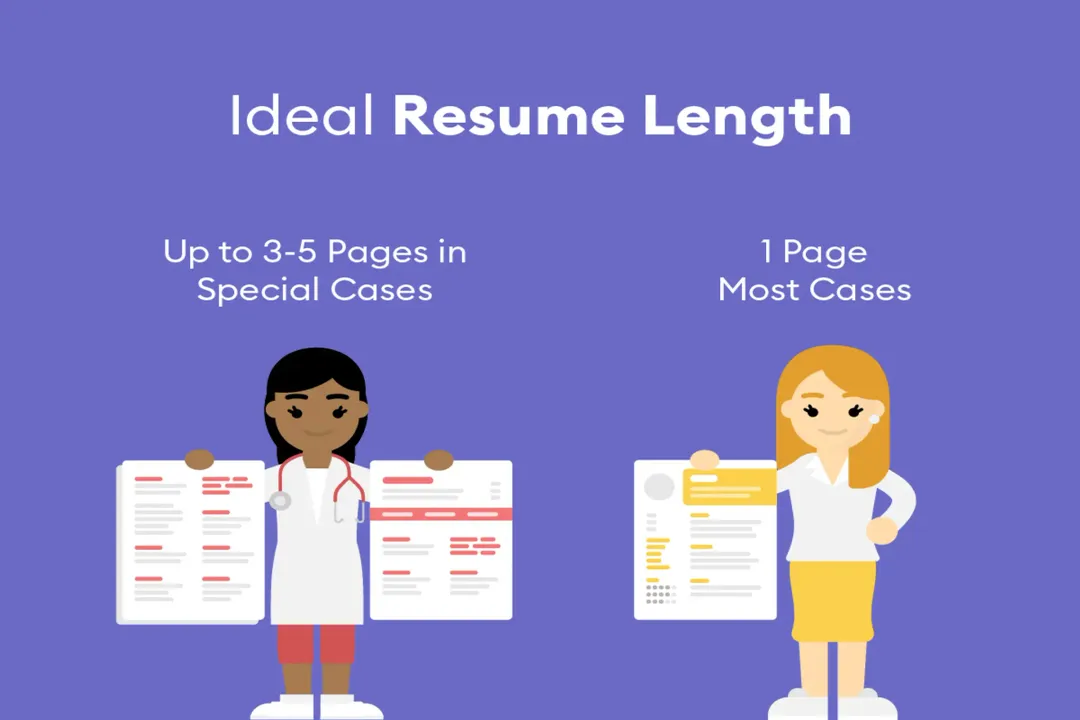
The determination of the perfect resume length is one of the most persistent debates in job searching, largely because the "ideal" answer shifts depending on who is reading it and what stage of your career you are in. [6][7] There is no universal, single-number mandate; rather, the length should be a strategic decision based on your experience and the role you are targeting. [2][4] However, the overarching principle favored by most hiring managers and recruiters is conciseness: keep it as short as possible while still conveying your value. [6][7]
# Standard Expectation
For the majority of job seekers—those with perhaps a decade or less of professional experience—the one-page resume remains the established gold standard in many industries. [1][6] This standard stems from the reality of the initial screening process. Recruiters often spend only about six to seven seconds reviewing an application on the first pass. [1][9] A single page forces you to prioritize the most impactful achievements and ensures that a hiring manager can quickly grasp your qualifications without needing to flip pages. [8]
However, this one-page rule is not absolute, particularly for mid-to-senior level professionals. Many sources agree that two pages are perfectly acceptable, and sometimes necessary, for individuals who have accumulated significant accomplishments or possess a longer, relevant career history. [4][5][7] If condensing your entire professional narrative onto one page requires you to cut achievements that directly address the job description, then extending to two pages becomes the necessary choice. [2][5]
# Experience Tiers
The structure of your experience dictates the acceptable length. For entry-level candidates, recent graduates, or those early in their careers (under ten years of experience), sticking rigidly to one page is generally advisable. [1][6] This demographic often has less substance to justify a second page, and attempting to fill one can lead to including less relevant or less impressive early-career details. [6]
As you advance, the expectation shifts. Professionals with about ten years of experience or more often find that two pages are required to adequately detail promotions, leadership roles, quantifiable results, and cross-functional projects. [4][5] Furthermore, for C-level executives or highly specialized roles where project scope is vast, even a third page might be justified to outline extensive leadership tenures, board service, or large-scale business transformations. [10] The key differentiator here is relevance; the older, less critical experience should be the first content edited down to accommodate the most recent, senior-level successes. [7]
# Recruiter Viewpoint
The primary audience for your resume is typically a recruiter or an Applicant Tracking System (ATS) before it ever reaches the hiring manager. [1] Since screening time is minimal, the first page must serve as a highly effective executive summary. [8] If a recruiter has to search for your core qualifications on page two, they might miss them entirely, particularly if they are already pressed for time. [9]
When deciding between one or two pages, it is crucial to remember that the document serves one immediate purpose: to secure an interview. [6] It is not an autobiography of your entire professional life. Therefore, if the first page is strong, compelling, and covers all the must-have keywords and achievements for the role, the length becomes less of a concern for the reader who has already decided to learn more. [2]
# Content Focus
Length should always be secondary to quality. A poorly written, padded, two-page resume will be discarded faster than a tightly edited, impactful one-page resume. [2][6] The space you use should be dense with accomplishments, not duties. [1] For instance, instead of listing "Responsible for managing the Q3 budget," use language that quantifies the result: "Managed Q3 budget of $1.2 million, achieving a 7% cost reduction through vendor renegotiations."
Consider this guideline: If you cannot summarize your last 10 to 15 years of relevant career achievements onto one page without resorting to severely condensing your font size (below 10pt) or eliminating all white space, you likely warrant a second page. If you have 25 years of experience, those first 10 years might necessitate aggressive trimming—perhaps only listing company names and titles for very early roles—to make space for recent, higher-level responsibilities. [5][7]

# Formatting Pitfalls
The way you manage the transition between pages heavily influences the reader's perception. A critical formatting error many job seekers make involves the "one-liner" second page. If your resume is technically two pages but the second page contains only two or three bullet points, it signals to the reader that you could not condense your narrative, suggesting either a lack of selectivity or an inability to prioritize the most critical data points. [8]
A half-page second sheet is often viewed as wasted space, which can negatively impact how your experience is perceived. If you must use two pages, aim to utilize at least two-thirds of the final page with meaningful content. If you fall short of that mark, it is often better to edit rigorously, potentially moving less critical sections—like older employment history, lengthy sections on basic technical proficiencies, or hobbies—to an appendix or condensing them significantly to keep everything on the first page. [8]
# Industry Differences
It is important to recognize that not all career paths adhere to the same resume brevity rules. Fields that rely heavily on publications, research, or extensive project histories often use the Curriculum Vitae (CV) format, which is inherently much longer than a standard resume. [7] Academic researchers, scientists, or certain consultants may present multi-page documents detailing grants, presentations, and publications without penalty. In these specific fields, length directly correlates with established expertise and authority. [7][10] For standard corporate, tech, marketing, or administrative roles, however, the advice remains focused on aggressive editing and page limitation. [1][4]

# Finalizing Length
Ultimately, the ideal length is the shortest possible document that provides sufficient, compelling evidence to warrant an interview for the specific job you are applying for. [7] Always tailor your content. If an executive role requires detailing five major initiatives from the last decade, two pages are necessary. If you are applying for a more junior role where only two of those initiatives are relevant, condensing that information down to a highly focused single page demonstrates superior understanding of the employer's needs. [7] Test your resume by giving it to a trusted peer and asking them, "What are my three biggest accomplishments?" If they struggle to answer or have to search across two pages, you have a content hierarchy problem, not necessarily a length problem. [2]
Related Questions
#Citations
How Long Should a Resume Be? | Indeed.com
How many pages should a professional resume be? - Reddit
How Long Should a Resume Be? Complete Guide and Tips
How long should your resume be? I conducted hours of ... - LinkedIn
How Long Should A Résumé Be? - Forbes
How Long Should a Resume Be in 2026 [For Any Profession]
What is the ideal length for a resume, and how do I ensure it ... - Quora
How Long Should a Resume Be in 2025? - Jobscan
How Many Pages Should a Good Resume Be? - TopResume
Executive Resume Length: One, Two, or Three Pages?