How do you work in swarm robotics?

Swarm robotics centers on coordinating a large number of relatively simple robots to achieve complex tasks that a single, sophisticated robot might struggle with or complete inefficiently. It draws deep inspiration from social insects like ants, termites, and bees, where local interactions between individuals lead to organized, global collective behavior. Instead of relying on a single central controller, intelligence is distributed across the entire group, which is a key departure from traditional, centralized robotic systems.
The fundamental shift is moving away from designing one perfectly capable machine toward designing many moderately capable machines whose collective interaction produces the desired outcome. This approach inherently builds in a degree of resilience; if one or a few robots fail, the overall mission is unlikely to collapse entirely, unlike in systems dependent on a single point of failure.
# Core Concepts
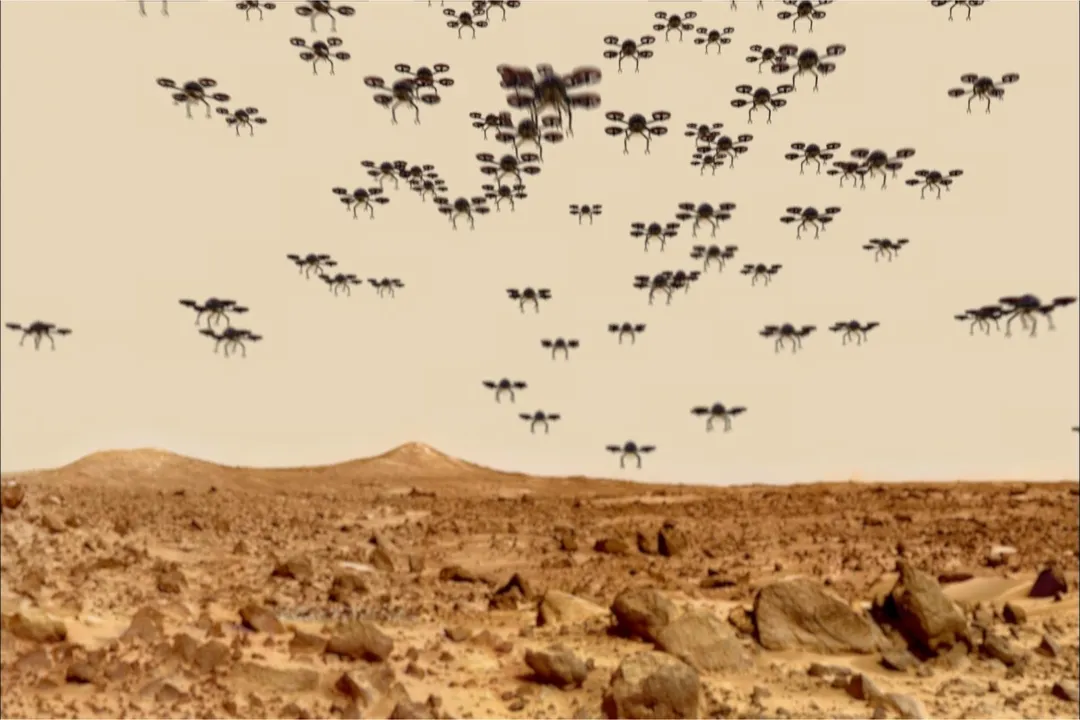
The success of a swarm hinges on three main characteristics: decentralization, local sensing and interaction, and emergent behavior.
Decentralization means there is no master robot directing traffic or processing all the data. Each robot operates based only on the information it gathers from its immediate vicinity and its pre-programmed rules. This lack of central command simplifies the programming for the individual unit but requires careful design of the interaction rules to avoid chaotic or unproductive group movement.
Local interaction is the mechanism through which this collective decision-making occurs. A robot only needs to perceive and react to its nearest neighbors or environmental cues, such as chemical trails or localized sound gradients. This means the communication range is intentionally limited, forcing robots to rely on their neighbors to relay information across the swarm boundary, much like news spreading through a crowd.
The result of these local rules and interactions is emergent behavior. This is the complex, goal-oriented action—like building a structure, mapping an unknown area, or sorting objects—that arises spontaneously from the simple interactions of the many parts. The global pattern is more complex than the sum of the individual robot programs.
# Building Blocks

To function as a cohesive swarm, the constituent robots generally share a set of common traits. They tend to be small, inexpensive, and mechanically simple, often prioritizing functionality over high individual performance. This simplicity reduces the cost of mass production and replacement.
A crucial element is the programming philosophy. Rather than creating complex, unique behavioral scripts for every robot, the swarm relies on a small set of general rules applied uniformly across the population. Consider a simulated search task: one rule might be "move forward unless an obstacle or a robot is directly in front," and another might be "if a target is detected, signal neighbors using light/vibration". The actual mission success comes from the statistical aggregation of these simple actions executed by dozens or hundreds of agents.
Programmable robot swarms, like those developed at Harvard's Wyss Institute, showcase how highly specific collective actions can be achieved through precise coding of these interactions. These systems often use mechanical actuation based on chemical or thermal changes, allowing the group to dynamically change shape or reconfigure tasks, pushing the definition of simple robots toward integrated, programmable physical matter.
| Feature | Centralized System | Swarm System |
|---|---|---|
| Control | Single, complex master unit | Distributed among all agents |
| Failure Tolerance | Low (Single Point of Failure) | High (Redundancy) |
| Individual Complexity | High (Advanced sensors/AI) | Low (Simple processing) |
| Scalability | Difficult and costly | Relatively easy (add more units) |

# Working with Swarms: Design Philosophy
For someone looking to work within the field of swarm robotics, whether academically or practically, the primary focus must shift from optimizing the robot to optimizing the interaction. When starting a project, a common pitfall is attempting to program a sophisticated individual robot that can handle many contingencies. However, in true swarm design, complexity must reside at the group level, not the individual level.
When debugging or testing swarm behavior, thinking in terms of probabilities and statistical outcomes, rather than deterministic sequences, becomes essential. If you program three rules, you are not analyzing three sequential steps; you are analyzing the attractor states of the system defined by the intersection of those three rules applied simultaneously to the entire field of agents. A useful exercise early on is to define a measurable group metric—like "the average distance between the two farthest robots"—and then iterate on the interaction rules until that metric stabilizes at the desired value. This forces the designer to work with emergent properties rather than direct control.
Furthermore, the choice of communication modality heavily dictates the achievable scale and mission scope. If you are working on a small, contained task like organizing blocks on a table, near-field communication (like simple collision detection or magnetic attraction/repulsion) might suffice, minimizing power consumption and complexity. However, for tasks spanning a large area, such as environmental monitoring across a field, the system requires richer, longer-range communication—often radio frequency (RF) based—which then introduces new problems related to signal interference and energy management within a dense group. A common error is over-engineering the communication layer when simple physical contact or environmental signaling is sufficient for the required collective goal.
# Applications and Future Directions
The potential applications for swarm robotics are vast because of their adaptability and resilience. In environmental applications, swarms excel at tasks like monitoring pollution in water bodies or performing extensive area surveys where a single drone might miss details or run out of battery before completion.
In manufacturing and construction, the concept moves toward self-assembling structures. Instead of pre-building a large object, a swarm could assemble it on-site by coordinating simple movements, adapting to small irregularities in the terrain or material.
For search and rescue operations, a swarm can cover a large disaster zone quickly. If one robot detects signs of life or a clear path, that information can propagate through the local interactions to guide the rest of the group toward the source of the signal, potentially far faster than a sequential search pattern.
The field is also actively working on more sophisticated means of programming these systems. Researchers are developing methods to teach robots group behaviors using reinforcement learning where the reward function is based on the collective performance of the swarm, rather than the success of any single agent. This moves the field closer to truly autonomous, self-organizing systems capable of adapting to unforeseen changes in the environment without requiring human reprogramming.
While the academic study often involves simplified physical robots or simulation environments—forums discussing starting out often highlight the need for basic hardware like Arduino or specific kits—the progression is toward integrating these collective algorithms into real-world deployment, especially in micro-robotics and material science. The way forward involves bridging the gap between simple, theoretical interaction models and the noisy, unpredictable reality of physical hardware operating together.
#Videos
Engineering a swarm - with Sabine Hauert - YouTube
Swarm Robots!!! - YouTube
Related Questions
#Citations
What is swarm robotics, and how does it work? - Milvus
Engineering a swarm - with Sabine Hauert - YouTube
Swarm Robotics: A Comprehensive Overview | by Preeti - Medium
Swarm Robotics | Making Stuff | PBS LearningMedia
Seeking Resources and Guidance to Start in the Field of Swarm ...
Swarm robotics - Scholarpedia
Need guidance with swarm robotics project - Arduino Forum
Swarm Intelligence: How Multiple Robots Work Together
Programmable Robot Swarms - Wyss Institute