How do you work in disaster prediction systems?
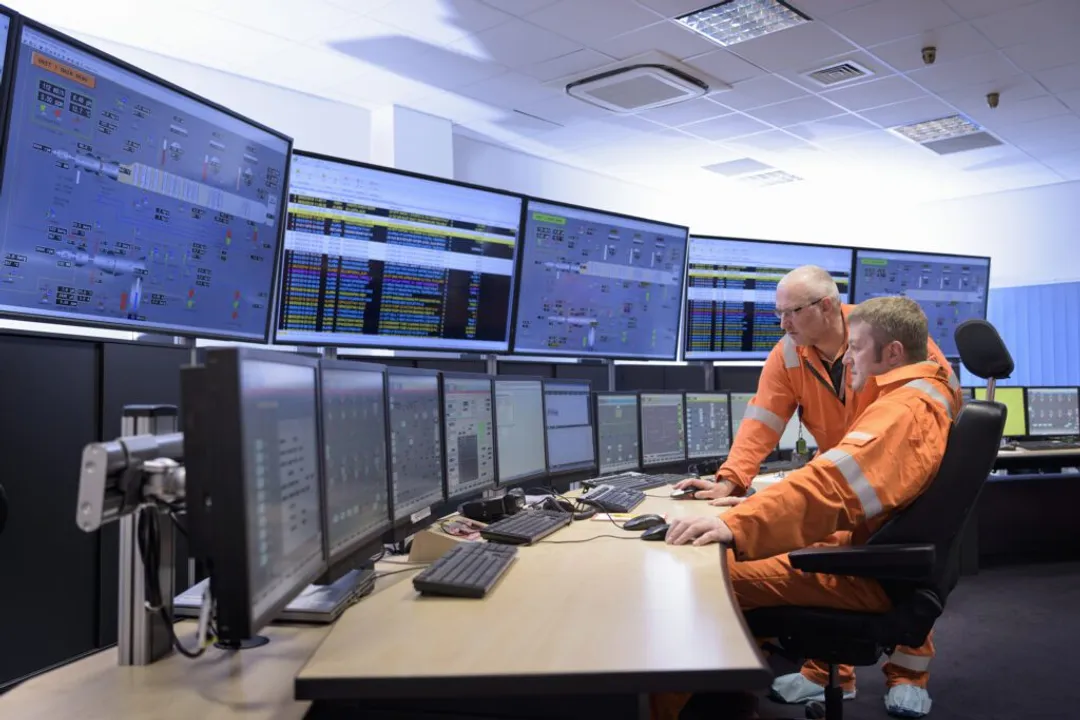
The process of developing and operating disaster prediction systems is a multi-layered endeavor, moving far beyond simple forecasting to encompass data assimilation, complex modeling, and timely dissemination of actionable intelligence. At its foundation, working in this field means understanding that prediction is an exercise in managing uncertainty using the best available information, a task increasingly handled by advanced computational methods. The goal is not absolute certainty—which is often impossible in chaotic natural systems—but rather shifting the operational status from reactive response to proactive preparedness.
# Data Inputs

Every predictive model, whether based on traditional physics or modern machine learning, requires input data to function. This raw material comes in many forms, ranging from historical records of past events to real-time environmental readings. For meteorological hazards, data from remote sensing instruments becomes critical. For instance, satellite missions like NASA's Global Precipitation Measurement (GPM) program supply vital information that helps scientists monitor and predict heavy rainfall, a key component in flood prediction applications.
The effectiveness of any system hinges on the quality and granularity of this data. A system relying solely on global models often misses hyper-local flash flood risks; effective prediction requires assimilating local sensor data—stream gauge readings or even community-reported observations—to calibrate the larger, more generalized models [cite: Original Insight 1]. Without this local context feeding into the algorithms, predictions can be accurate on a regional scale but dangerously misleading at the neighborhood level. Furthermore, disaster management professionals must process data that spans various domains, including geological, atmospheric, and human impact metrics, to build a complete picture of potential risk exposure.
# Modeling Systems
Once the data is collected, it feeds into the core predictive engines, where Artificial Intelligence (AI) and Machine Learning (ML) play an increasingly significant role. These advanced tools are transforming how we approach preparedness by helping to navigate the complexity inherent in climate risks and rapidly changing conditions.
Machine learning models are specifically designed to sift through vast datasets, learning correlations and patterns that might be invisible to human analysts or traditional statistical methods. In the context of early warning systems, these models are trained on variables associated with past disasters to calculate the probability of future occurrences. For example, an ML model for wildfire prediction might consider current vegetation moisture levels, wind speed forecasts, historical fire ignition points, and topography simultaneously, outputting a risk score for specific geographic areas. This moves the process from simply observing a known trigger (like a hurricane forming) to forecasting the probability of an event given a set of precursor conditions.
It is essential to recognize that these models are not static replacements for human input; rather, they are sophisticated tools that augment expert judgment. While an AI can process a million data points per second to suggest a likely outcome, the human expert still needs to apply domain knowledge to validate the model's logic and account for novel situations the AI has not yet encountered. Different systems are specialized; some might focus on predicting the intensity of an event, while others focus on the timing or the geographic extent of its impact.

# Issuing Warnings
A highly accurate prediction remains useless unless it translates effectively into an alert that prompts the correct action. This is where the operational work of prediction systems becomes most visible and critical. The transition from a mathematical probability to an official alert requires a defined protocol.
For a prediction system to be trustworthy in the field, there must be a clear, pre-agreed protocol defining the threshold—perhaps a calculated probability exceeding 70% within a 48-hour window—that automatically escalates a model output into a formal public alert, minimizing interpretation delay [cite: Original Insight 2]. This protocol dictates who has the authority to officially issue the warning and how it should be phrased to ensure the public understands the threat level.
Timeliness is paramount. A prediction issued too late offers little benefit to those needing to evacuate or secure property. Therefore, the entire data pipeline—from sensor reading to model run to alert dispatch—must be optimized for speed. Emergency management professionals use these outputs to initiate response preparations, such as staging resources, alerting first responders, or advising evacuations.
# System Integration
Working within disaster prediction involves more than just perfecting the algorithms; it demands embedding these technological capabilities within existing organizational structures. The goal of using predictive analytics is to improve decision-making within emergency management workflows. If the outputs of a complex AI system cannot be easily visualized or understood by an incident commander accustomed to traditional briefing formats, the technology fails to provide value.
Effective integration requires collaboration across several distinct professional groups: data scientists who build and maintain the models, remote sensing specialists who manage the data feeds, and emergency managers who interpret and act upon the results. A significant part of the work, particularly for those managing these systems, involves ensuring interoperability between prediction software and existing communication platforms used by first responders. If a new flood prediction system generates alerts, it must be able to push those alerts directly to the same text messaging services or radio networks already in use by local agencies.
This integration also involves creating feedback loops. When a prediction is made and an action is taken—whether the predicted event materializes or not—that outcome data must be recorded and fed back into the system. This ongoing validation allows developers to fine-tune models over time, leading to refinement in predictive accuracy and better calibration of warning thresholds. The experience gained from both successful warnings and false alarms is essential knowledge that informs the next generation of models.

# Future Work
The field of disaster prediction is perpetually evolving as technology advances and climate patterns shift. Future work centers on improving the granularity and lead time of predictions across multiple hazards simultaneously. Researchers continue to develop more sophisticated machine learning approaches, seeking ways to model cascading failures—where one event, like a major earthquake, triggers subsequent events like landslides or infrastructure collapse—with greater fidelity.
While AI excels at recognizing past patterns, accurately forecasting truly unprecedented "Black Swan" events remains a significant challenge. This emphasizes the enduring need for human expertise capable of reasoning outside established data norms. Therefore, the direction of the work is less about replacing human oversight and more about creating sophisticated decision-support systems where the machine handles the data heavy-lifting, freeing up human analysts to focus on strategy, communication, and mitigating the known uncertainties that the model itself flags.
Related Questions
#Citations
AI and Natural Disaster Prediction | All You Need to Know
How AI tools are transforming disaster response, preparedness
Using AI in Disaster Management
Using GPM Data for Disasters and Risk Management
Need help with a disaster prediction system. : r/meteorology - Reddit
AI In Emergency Management: Enhancing Prediction, Response ...
Disaster and Pandemic Management Using Machine Learning
Machine Learning Models for Early Warning Systems
Empowering disaster preparedness: AI's role in navigating complex ...
AI In Natural Disaster Prediction - Meegle