How do you work in military AI systems?

The application of artificial intelligence within the defense sector is rapidly evolving, moving beyond theoretical concepts into tangible capabilities designed to act as a combat multiplier on the modern battlefield. [6] These systems are being integrated across various functions, from augmenting decision-making processes during complex operations to automating aspects of logistics, intelligence, surveillance, and reconnaissance (ISR). [1][8] The U.S. military recognizes AI as a critical technology, making the pursuit of careers within this domain a highly relevant goal for technical professionals. [7][9] Understanding how to actually work in these systems requires a look at the necessary technical grounding, the different entry points into the defense ecosystem, and the unique operational context that shapes the work.
# Entry Paths
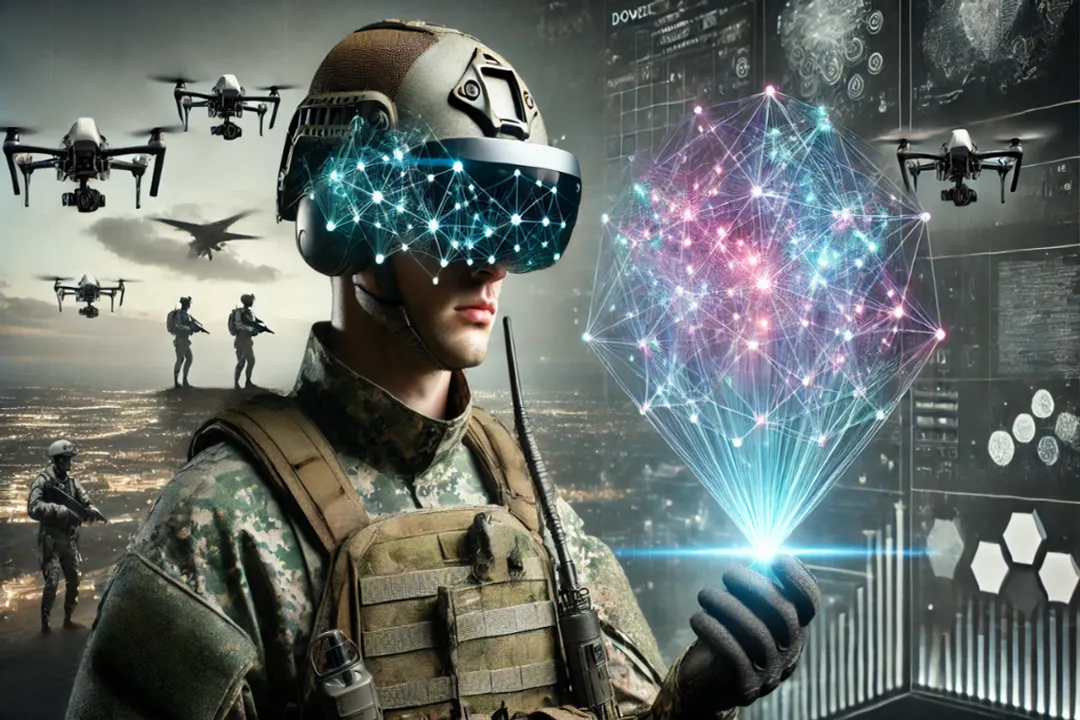
Gaining a position developing or supporting military AI systems typically funnels through a few distinct avenues, each with its own timeline and set of requirements. [2] These paths generally involve working directly for a branch of the U.S. military, securing a role within the federal civilian service, or joining one of the numerous defense contractors that partner with the Department of Defense (DoD). [2][7]
# Military Service
Joining the active duty military offers a direct route into the environment where these technologies are deployed and tested. [2] For those interested in IT careers, utilizing the U.S. military structure can be a strategic way to gain initial experience, as service members can access training and work on cutting-edge projects that might otherwise be inaccessible to entry-level civilians. [3] While serving, individuals might find themselves placed in roles focused on data science, cyber operations, or specialized technological commands where AI is a current focus. [2] However, this path often necessitates adhering to the structure and mission priorities of the armed forces, meaning the specific AI work you do might be dictated by your unit’s immediate operational needs rather than purely academic research interests. [2]
# Civilian Roles
The DoD also employs a large civilian workforce dedicated to research, development, acquisition, and sustainment of these advanced technologies. [7] These positions often require specific security clearances and a strong technical background, typically in fields like computer science, engineering, or mathematics. [2] Landing these roles involves navigating the standard federal hiring processes, which can sometimes be slower than the private sector. [2] A professional coming from a purely commercial AI background might find that while their technical skills are valued, they must rapidly acquire domain-specific knowledge to be effective in a military context. [2]
# Contractor Employment
A substantial amount of the cutting-edge defense AI work is carried out by private defense contractors. [2] For many, this presents the most direct path to applying advanced AI/ML skills immediately after graduation or career transition, often providing roles focused strictly on software development, data engineering, or algorithm creation for specific DoD contracts. [2] A professional transitioning from a civilian tech background might find that contractors are more flexible in applying commercial best practices, though this still hinges on the specific contract requirements and often still necessitates holding a security clearance, which can be a barrier to entry. [2]
It is interesting to note the different seasons of career development these tracks represent. A fresh graduate entering via a defense contractor might immediately focus on model optimization for a specific platform, whereas a service member might spend their first few years gaining the operational insight necessary to define what optimization problem the AI should be solving in the first place. [2] The contractor path is often faster to deployment, but the military path builds a foundational understanding of the operational requirements that the AI must satisfy.
# Necessary Skill Sets
Working on military AI systems requires a blend of deep technical expertise and an understanding of the demanding environment in which these tools will operate. [2] Simply having strong machine learning skills, while essential, is usually insufficient on its own. [2]
# Technical Foundations
Core competencies revolve around the standard pillars of modern AI development. [2] This includes proficiency in:
- Machine Learning and Deep Learning: Building, training, and validating models capable of handling the unique data sets encountered in military scenarios. [2]
- Software Engineering: Translating algorithms into reliable, tested, and deployable software. [2]
- Data Science: Handling, cleaning, and structuring the large volumes of data often associated with intelligence gathering and sensor fusion. [2]
These technical abilities are the price of admission for most AI-related roles within the defense sphere. [2]
# Operational Acumen
The second, equally important component is domain knowledge. [2] An algorithm that performs flawlessly in a lab setting may fail catastrophically if it does not account for the realities of combat conditions, communication latency, or the specific procedures of military personnel. [2] Therefore, professionals often need to bridge the gap between abstract computation and concrete military application. [2] This might mean understanding battlefield physics, specific intelligence gathering protocols, or the command structure that an AI-driven decision support tool must integrate with. [2] This synergy between high-level technical skill and practical operational context is often the defining characteristic that separates a successful defense AI professional from a general data scientist.

# Developing AI Capabilities
The Department of Defense views AI as essential for maintaining an advantage, looking to integrate it across the force to improve efficiency and capability. [7] This work isn't just about building autonomous weapons; a significant portion involves enhancing back-end functions and aiding human operators. [1]
# Use Case Diversity
The spectrum of AI applications in the military is broad, reflecting the many facets of modern defense operations. [1] Key areas include:
- Logistics: Optimizing supply chains, predictive maintenance for vehicles and aircraft, and resource allocation. [1]
- Intelligence Analysis: Processing vast amounts of ISR data to identify patterns or targets far faster than human analysts could manage alone. [1]
- Decision Support: Providing commanders with data-driven assessments and probable outcomes for various courses of action. [8]
The focus remains heavily on employing AI as an augmenting force multiplier—systems designed to enhance human capabilities rather than replace them entirely. [6]
# Ethical and Policy Considerations
Working in military AI is inherently connected to significant ethical and policy discussions. [5] As AI systems become more integrated into the domain of conflict, there are ongoing international conversations about emerging challenges, including accountability, transparency, and the potential for unintended consequences. [5] Professionals in this field must operate with an awareness of these boundaries, as development often occurs under scrutiny related to responsible use and adherence to international law. [5]
# Navigating the System
Getting started often requires proactive steps that acknowledge the specific hiring hurdles present in the defense sector, particularly around security and clearance requirements. [2]
# Clearance Requirement
A major factor for many high-level defense roles is the need for a security clearance. [2] Obtaining a clearance requires extensive background investigations, which is a process that often takes significant time. [2] For those seeking to enter quickly, securing an entry-level role that does not immediately require a high-level clearance, perhaps in a less sensitive supporting role at a contractor or on the civilian side, might be the most practical first step while simultaneously applying for clearance sponsorship. [2]
# The Value of Prior Experience
While advanced academic degrees are certainly valuable for the technical roles, prior direct experience with military systems or working environments can be a significant advantage. [2] This experience helps professionals understand the operational tempo and the specific data environments they will be interacting with. [2] If a direct military background is not feasible, seeking out defense-related internships or projects that mimic the constraints of defense systems can help bridge that experience gap when applying for specialized AI positions. [2]
For example, while a general AI thesis might focus on achieving state-of-the-art accuracy on a publicly available benchmark dataset, a defense-focused project might prioritize explainability and reliability over marginal accuracy gains when dealing with mission-critical intelligence data. [8] This subtle shift in development priority is something an experienced professional understands intuitively.
# Continuous Learning
The field of AI evolves at an astonishing pace, and military adoption cycles, while sometimes perceived as slow, are attempting to keep up. [7] Therefore, continuous professional development is not optional. [2] Staying current with the latest advancements in model architectures, data processing techniques, and especially DoD-specific integration standards is necessary to remain relevant in this sector. [2] Professionals should actively seek out training opportunities—whether internal to the DoD or through specialized certifications—that keep their technical expertise sharp against the backdrop of evolving operational needs. [2]
#Videos
This Is How AI Is Rewriting the Rules of War - YouTube
Related Questions
#Citations
AI in Military: Top Use Cases You Need To Know - SmartDev
How to Break Into Artificial Intelligence Defense Jobs - JOBSwithDOD
Using the (US) military to break into IT. Best way to do it? Or just an ...
How can one get into AI jobs in the military? - CollegeVine
Artificial intelligence in the military domain
Artificial Intelligence as a Combat Multiplier: Using AI to Unburden ...
2025 in Review: How the US Military Put AI to Work
AI for Military Decision-Making | Center for Security and Emerging ...
Artificial Intelligence | U.S. Department of War
This Is How AI Is Rewriting the Rules of War - YouTube