How Do I Build Career Resilience?

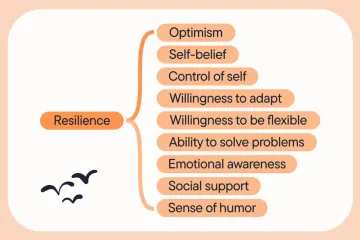
That feeling of being knocked off balance professionally—a restructuring, a technology shift, or a project failure—is increasingly common, and navigating it requires more than just a good resume; it demands genuine career resilience. Resilience isn't about avoiding setbacks; it’s about the speed and effectiveness with which you bounce back, adapt, and keep moving forward. [1][2] It’s the ability to manage the inevitable stress, change, and adversity that defines modern professional life, ensuring your career path remains intact even when the terrain shifts unexpectedly. [8] Building this capacity isn't a one-time fix; it's an ongoing commitment to developing internal fortitude and external adaptability, making preparation now far more valuable than reaction later. [3]
# Define Resilience

Career resilience can be understood as the combination of your mindset, behaviors, and social support structures that allow you to maintain high performance and well-being during periods of career turbulence. [4] It’s the internal mechanism that processes negative events—like criticism or job loss—not as insurmountable barriers, but as temporary obstacles requiring a change in approach. [1] Think of it less as an innate trait and more as a muscle that strengthens with intentional use. [2] While one person might weather a layoff by immediately updating their LinkedIn profile, another might need a week to process before taking the next step; resilience is about recognizing your own process and equipping yourself for the next inevitable disruption. [8] Some research suggests that resilient individuals possess a greater sense of purpose, which acts as an anchor during storms. [4]
# Reframing Challenges
A foundational element of building resilience centers on how you mentally process setbacks. This involves shifting your perspective from victimhood to agency, essentially changing the internal narrative about what happened. [2] When facing difficulty, a resilient approach involves actively challenging negative thought patterns. Instead of accepting, "I failed because I’m not smart enough," a resilient person might ask, "What specific actions led to this outcome, and what can I change next time?". [1] This mental reframing is crucial because it converts passive disappointment into active learning. [4]
One helpful technique discussed is using "what if" scenarios not to worry, but to prepare. For instance, if a major client seems likely to pull their business, instead of obsessing over the potential loss, one can use that foresight to proactively diversify their pipeline or seek cross-training in a different area of the business. [2] The goal is to maintain optimism without succumbing to blind positivity; it requires acknowledging reality while intentionally focusing energy on controllable responses. [1]
Here is a point to consider when practicing this reframing. When you encounter a professional roadblock, try to immediately categorize it using a simple Cognitive Stacking method: Is this a Skill Gap, a Resource Limitation, or a Communication Breakdown? Naming the problem precisely allows you to select the correct countermeasure—e.g., a Skill Gap requires training, while a Communication Breakdown requires dialogue—preventing you from misdiagnosing the issue and wasting energy on the wrong solution. [4][5]
# Learning Paths
Continuous development is inseparable from career durability. If the market demands new abilities, the resilient professional already has a mechanism in place for rapid acquisition. [7] This isn't merely about formal degrees; it involves embracing lifelong learning as a career path in itself. [7] Many sources suggest that recognizing the need to evolve your skill set is a primary defense against obsolescence. [5]
The methods for learning can vary significantly. Some suggest formal, structured development, like pursuing certifications or advanced degrees, providing deep expertise in a narrow, needed area. [7] Others point toward building a broad set of adjacent, transferable skills—for example, a top engineer learning basic project management or data visualization. [5]
Comparing these approaches reveals a trade-off: deep expertise offers higher value in specific high-demand roles, but broad skills offer adaptability across different organizational structures or industries. [7] A balanced approach often incorporates both: maintaining a core area of specialization while dedicating time each quarter to exploring a completely new, adjacent capability. [5] One set of tips for building resilience specifically advises against complacency, suggesting that you should be building new skills even when you are comfortable and performing well, rather than waiting for a crisis to start learning. [5]
# Support Networks
While internal strength is vital, no career is sustained in isolation. The connections you cultivate become the safety net and the launchpad when you need them most. [4] Building career resilience requires developing strong, authentic social capital long before a career shock hits. [3] This is encapsulated in the concept often referred to as building your network before you need it, rather than scrambling for contacts during a layoff or transition. [3]
This network extends beyond mere contacts; it involves intentional relationships across different dimensions. You need mentors who can offer strategic advice, peers who understand your current struggles, and sponsors who advocate for your advancement when you are not in the room. [8] The quality of these connections often outweighs the quantity. [4]
The C-Suite Network article touches upon an interesting concept—the Brown Sugar Principle—which suggests that just as brown sugar is more complex and less refined than white sugar, a resilient career needs varied ingredients and support mechanisms to thrive. [3] This means not relying solely on one mentor or one industry group. If your primary mentor leaves your industry, for example, your support system doesn't collapse because you have other sources of guidance. [3]
Actionable Tip: To build strong, authentic connections effectively, schedule "give first" appointments. For every networking coffee or informational interview you request seeking advice, proactively offer a genuine piece of help, insight, or an introduction to someone else in your network—even if the other person is senior to you. This flips the dynamic from transactional seeking to mutual relationship building, increasing the likelihood that people will genuinely invest in your long-term success. [8]

# Utilizing Strengths
Understanding what you are naturally good at provides a significant buffer against uncertainty, as you can anchor your career moves around proven competencies. [6] Career resilience thrives when individuals align their work with their inherent strengths, making challenging tasks less draining and successful outcomes more probable. [6] Identifying these strengths is often done through formalized assessments, but it can also be observed by noting which activities leave you feeling energized rather than depleted, even if they were difficult. [6]
The concept here is that people recover faster from setbacks in areas where they are already intrinsically strong. If a team leader's core strength is strategic thinking, a major project failure might sting less if they immediately pivot to analyzing the high-level strategic breakdown rather than getting bogged down in minor administrative errors where they lack innate aptitude. [6]
This self-assessment process requires honesty. Are you truly utilizing your signature strengths, or are you spending the majority of your time compensating for weaknesses? Resilience often involves strategically positioning yourself to delegate or minimize time spent on tasks that drain your energy reserves, thereby preserving that energy for when true adversity strikes. [6]
# Taking Action
Resilience is demonstrated through action, not just thought. Once you have the right mindset and a solid network, you need concrete steps to solidify your position. [9] One suggested method involves creating a set of Key Steps for Career Resilience that you can review periodically. [9] These steps can be formalized into a routine checklist.
A few critical actions consistently appear across various expert recommendations:
- Maintain Physical and Mental Health: This underpins everything. Burnout drastically reduces the capacity to absorb shocks. [4] Self-care is not a luxury; it's an operational requirement for long-term performance. [2]
- Plan for Change: Don't wait for the change to happen to you. Proactively identify potential threats or opportunities in your industry and sketch out a response plan for the top three scenarios. [9]
- Seek Feedback: Actively solicit constructive criticism, especially when things are going well, to identify blind spots before they become crises. [5]
Here is a second original point on proactive preparation: To ensure your career navigation remains agile, practice Scenario Mapping quarterly. This involves outlining three distinct, plausible future scenarios for your career over the next 12 months:
- Scenario A (The Expected Path): If everything goes according to plan.
- Scenario B (The Upgrade/Pivot): A positive, yet unexpected opportunity arises (e.g., a promotion to a new department).
- Scenario C (The Disruption): A significant negative event occurs (e.g., department elimination or industry downturn).
For each scenario, detail the first three actions you would take. This mental rehearsal builds cognitive flexibility, meaning when Scenario C actually happens, you aren't starting from zero; you are executing a pre-vetted plan, dramatically cutting down on reaction time and panic. [1][2]

# Adaptability Score
Ultimately, building resilience is about increasing your personal adaptability score. Adaptability is fueled by self-awareness and a willingness to be flexible about how you achieve your goals, even if the goal itself remains constant. [4] Resilience involves recognizing that the path you planned might become blocked, necessitating a creative detour. [8] For example, an aspiration to become a partner in a specific consulting firm might need to adapt into becoming a senior leader in an in-house corporate strategy team if the economic climate shifts away from external consulting needs. [7] The aspiration remains similar (high-level strategic influence), but the vehicle changes. [4]
Resilience is often associated with successful navigation through turbulence, which means viewing your career not as a single, rigid ladder but as a matrix of possibilities. [9] When the ladders shift—when economic conditions change or new technologies emerge—the resilient professional can jump sideways or diagonally to find the next viable upward trajectory. [7] This requires constantly checking in with your own values and skills to ensure your current role still serves them, irrespective of the title on the door. [6] By integrating proactive learning, strong support structures, and a self-aware, growth-oriented mindset, you build a career that bends without breaking when the next inevitable wave hits.
Related Questions
#Citations
How to Build Career Resilience in Uncertain Times
How To Build Career Resilience When Everything Feels Uncertain
The Brown Sugar Principle: Build Career Resilience Before You ...
How to Develop Career Resilience
Top 6 Tips for Building Career Resilience | Coaching Actuaries
How to Build Career Resilience
Building Career Resilience: 4 Paths for Lifelong Learning - SHRM
7 ways to build resilience at work - Working Career
6 Key Steps for Career Resilience - 169th Fighter Wing