How to build a career in sustainability?

Building a career in sustainability is often viewed as entering a single, defined track, but the reality is much more complex and, frankly, more exciting. The field isn't a monolith; it’s an ever-expanding intersection touching every industry from finance and technology to manufacturing and agriculture. [1][6] Many people feel stuck at the starting line, unsure how to translate passion for environmental and social issues into a practical job description. [8] Success in this domain requires a blend of specialized knowledge, keen business acumen, and strong interpersonal skills to drive change within existing structures. [2][5]
# Defining Scope
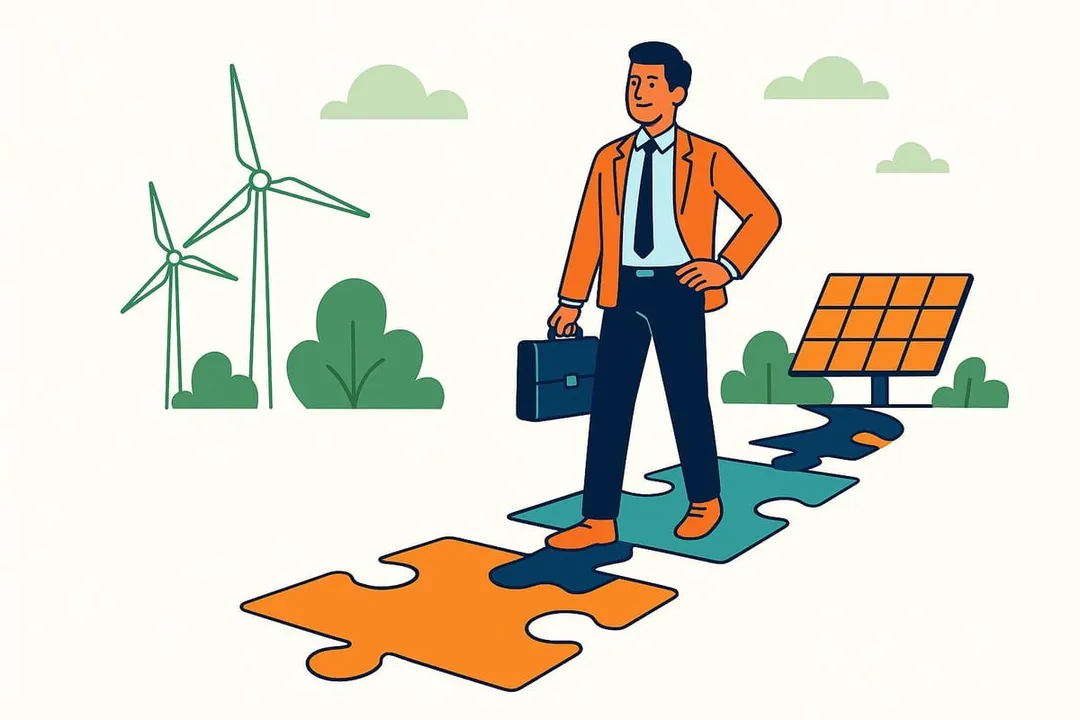
Understanding the landscape is the first major step. Sustainability jobs generally fall into a few broad categories, though the lines blur constantly. You might find roles focused on Environmental, Social, and Governance (ESG) reporting, which centers heavily on measurement, compliance, and investor relations. [1] Then there are Operational Efficiency roles, often dedicated to waste reduction, energy management, and supply chain improvements, where the primary language spoken is cost savings. [5] Finally, there are Strategy and Innovation positions, which look years ahead to develop circular economy models or net-zero roadmaps. [6]
To approach this practically, consider two archetypes for entering the field. The first is the Specialist, someone who dives deep into a niche, perhaps becoming the company expert on water stewardship or carbon accounting standards like the Greenhouse Gas Protocol. This path usually demands rigorous technical training or specific certifications. [2] The second is the Integrator, the generalist who excels at project management, stakeholder engagement, and translating complex environmental needs into language that operations, marketing, and finance teams can adopt. For many looking to make a change, the Integrator path allows for a smoother transition by leveraging existing professional experience while learning sustainability concepts on the job. [8] Choosing which type of professional you aim to be will significantly shape your immediate skill-building focus.
# Core Competencies

While the specific technical skills vary depending on the industry—a sustainability role in a tech firm looks very different from one in heavy industry—certain core competencies are nearly universal. At the technical level, proficiency in data analysis is becoming non-negotiable. [2] Whether you are calculating a Scope 3 emissions inventory or modeling the return on investment for solar panels, you must be comfortable with metrics and tools that can handle complex datasets. [9] Familiarity with specific reporting standards, such as those from the Global Reporting Initiative (GRI) or Sustainability Accounting Standards Board (SASB), signals a level of readiness. [2]
Beyond the hard skills lies the crucial area of systems thinking. [1] Sustainability problems are rarely linear; they involve feedback loops, unintended consequences, and trade-offs between social, economic, and environmental factors. A candidate who can map out how a change in packaging material affects transport emissions, raw material sourcing ethics, and consumer recycling behavior demonstrates a much deeper understanding than one who only cites a percentage reduction in plastic. [2]
However, the most common challenge cited by those already working in the field is not technical knowledge but the ability to influence without direct authority. [8] Every sustainability professional acts as an internal consultant or change agent. Therefore, skills in communication, negotiation, and cross-functional collaboration are paramount. [2][8] If you cannot clearly articulate why a change benefits the bottom line, or how it aligns with the company's core mission, even the best technical solution will stall. [1]

# Experience Building
The classic catch-22—needing experience to get an entry-level sustainability job—is a major barrier. [8] To break this cycle, you must actively create relevant experience, even if it doesn't come with a corporate title initially. [7]
Here is a practical roadmap for gaining that necessary footing:
- Internal Projects: If you are currently employed, look inward. Can you volunteer to lead a small initiative in your current department? This could be auditing energy use in your office wing, streamlining the recycling program, or researching sustainable vendors for a small procurement contract. This demonstrates initiative and provides measurable results you can discuss in interviews. [7]
- Targeted Volunteering and Pro Bono Work: Many non-profits or community organizations need help with strategy, communications, or basic data management related to their mission. Offering a defined set of hours to help a local land trust develop a communications plan or assisting a food bank in mapping its sourcing footprint provides tangible portfolio pieces. [3]
- Skills Certification Application: If you pursue a certification, immediately apply its principles to a real-world case study. For example, if you study LEED, analyze a local commercial building and document a hypothetical pathway to a higher certification level, complete with estimated costs and benefits. [9]
- Networking as Research: Informational interviews are not just for asking for a job; they are for gathering intelligence and demonstrating interest. [2] Ask established professionals about the biggest failures they have seen when implementing new sustainability projects. Their answers will reveal common pitfalls you can proactively state you are prepared to avoid. [3]
When preparing your materials, think about translating past achievements. Instead of saying, "Managed logistics," say, "Optimized route planning, resulting in a documented 5% reduction in fuel consumption and associated CO2 emissions," framing the outcome through a sustainability lens. [7]
# Strategic Entry Points
Figuring out the right door to enter is crucial. For those changing careers, directly targeting "Head of Sustainability" roles is rarely feasible. [1] Instead, look for roles where sustainability is a necessary component of the job description, rather than the sole focus. [3]
Consider these lateral moves:
- Finance/Accounting: Target roles in Investor Relations or Financial Reporting that involve ESG disclosures. This is a rapidly growing area requiring rigor and accuracy. [1]
- Supply Chain/Procurement: Look for positions focused on vendor management, compliance auditing, or risk assessment related to sourcing. These roles are ground zero for labor standards and raw material impact. [5]
- Operations/Engineering: Positions focused on process improvement, energy management, or capital expenditure analysis often overlap heavily with sustainability ROI calculations. [6]
It can sometimes be easier to find a role in a company whose core business is sustainability—for example, a renewable energy developer, a sustainable finance firm, or a waste-to-energy plant—even if your initial job is in administration or finance, simply to get exposure to the industry's rhythm and terminology. [5]

# Credentialing Value
Formal education and professional certifications serve to prove two things: commitment and foundational knowledge. [2] A master's degree in Environmental Management or a related field provides depth, but the proliferation of shorter courses and certifications means you don't always need a multi-year commitment to establish credibility. [2][9]
Certifications like LEED (for green building), ISSP-SA (Sustainability Associate), or specialized training in circular economy principles can signal to recruiters that you speak the common professional dialect. [9] However, it is vital to treat these as accelerators, not foundations. [2] A certificate without practical application or the ability to discuss real-world challenges will hold less weight than a candidate who can cite a successful, self-directed project. [7] If you already have a strong technical background (e.g., engineering or finance), focus on targeted certifications that bridge the gap to sustainability language, rather than pursuing a second, broad degree.
# Staying Current
The regulatory environment, scientific consensus, and market expectations around sustainability evolve at a startling pace. What was best practice five years ago—say, focusing solely on carbon emissions—is now insufficient without addressing water use, biodiversity, and social equity. [1]
To maintain career relevance, you must treat continuous learning as a job requirement. This involves actively monitoring policy shifts at regional and international levels, which directly affect corporate compliance needs. [1] A practical strategy here is establishing what I call Sustainability Translation. This involves actively practicing how to rephrase complex findings—like the nuances of Task Force on Climate-related Financial Disclosures (TCFD) recommendations or the implications of the EU's Corporate Sustainability Reporting Directive (CSRD)—into terms of financial risk, operational opportunity, or competitive advantage for a non-expert audience, such as a CEO or a marketing director. [6] This translation skill is what separates the technical expert from the impactful leader.
Furthermore, pay attention to the intersectionality of the field. For instance, as climate adaptation becomes more critical, professionals who can combine climate modeling data with local community development knowledge—understanding not just if a flood risk increases, but which local populations are most vulnerable and how the company can support resilience efforts—will be the most valuable. [2] Sustainability is increasingly moving from an external reporting exercise to an internal risk management imperative, and the professionals who can manage that internal integration will define the next decade of the career path. [8]
#Videos
Transitioning to a Career in Sustainability? Start here. - YouTube
Related Questions
#Citations
How to Build a Career in Sustainability
How to Build a Career in Sustainability: Key Skills and Steps
How do you get into sustainability jobs? : r/Environmental_Careers
7 Steps to Start Your Career in Sustainability - Northeastern University
How to Find a Sustainability Career in Business
How to build a career in sustainability? Discover the top 10 skills
How to Start a Sustainability Career: A Step-by-Step Guide
Why it's so darn hard to launch a career in sustainability (and how to ...
Checklist for Starting a Career in Sustainability - Upskillist
Transitioning to a Career in Sustainability? Start here. - YouTube