Are autonomous vehicle safety jobs growing?
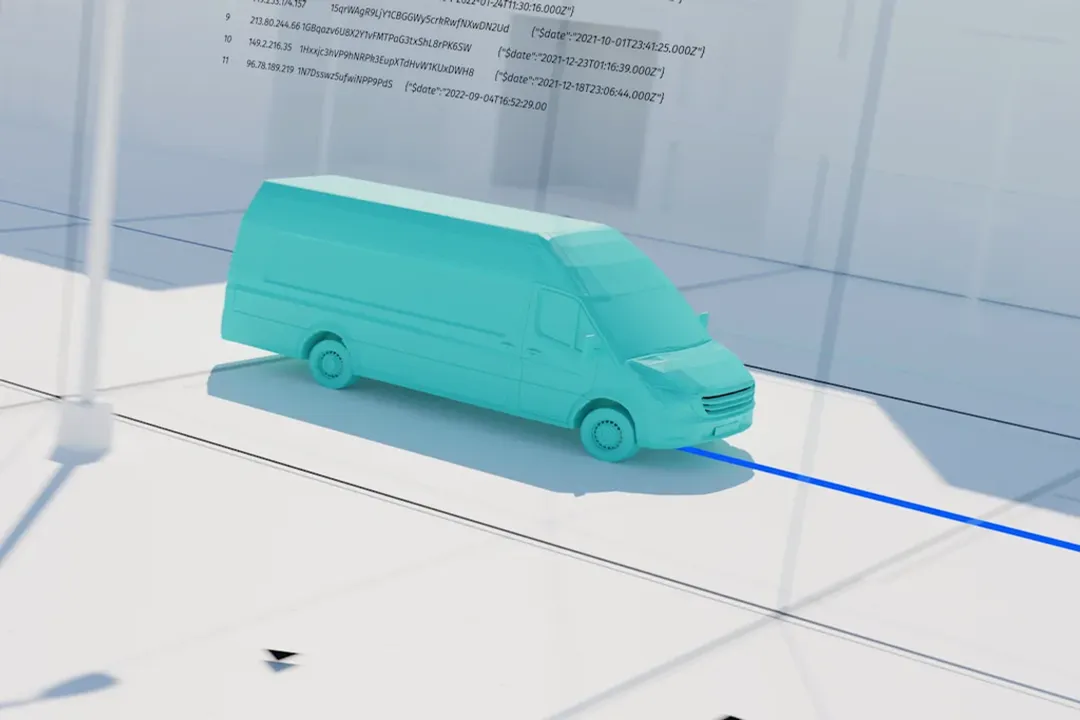
The landscape surrounding autonomous vehicles (AVs) is rapidly evolving, and with that evolution comes significant changes in the labor market. For many, the primary concern is job replacement, particularly for drivers. However, a closer look at the industry reveals a substantial parallel development: the creation and growth of entirely new roles centered on making these self-driving systems safe, reliable, and functional. [1][6] The growth trajectory for jobs specifically dedicated to ensuring the safety and operation of AVs appears strong, marking a shift in employment rather than a simple reduction.
# Economic Outlook
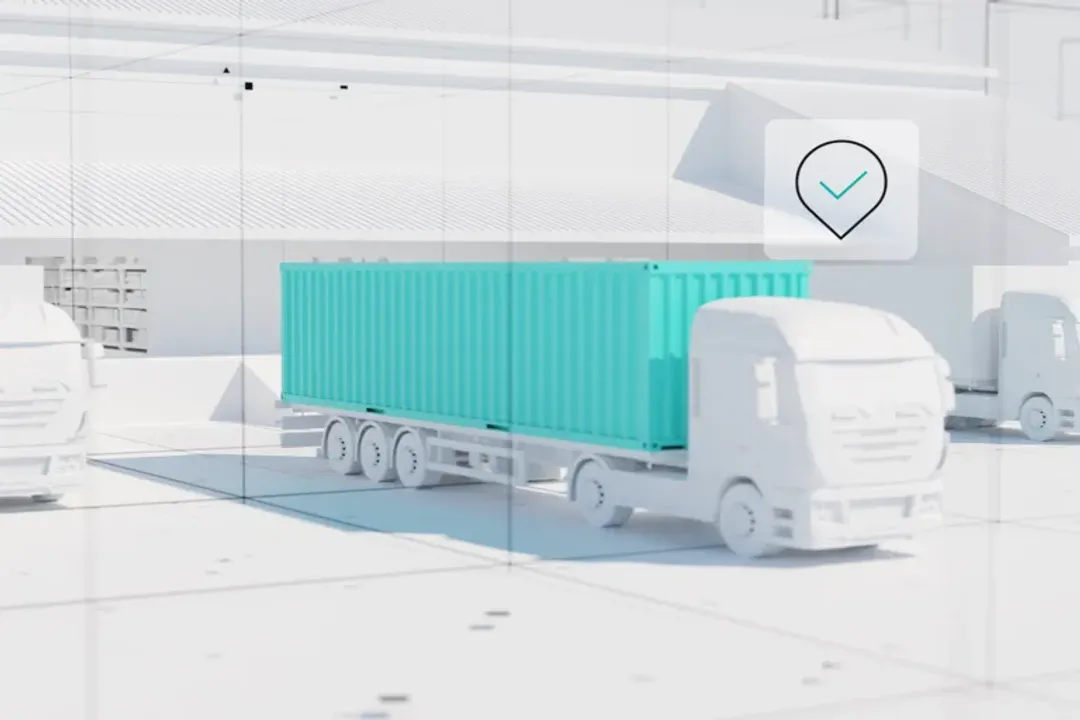
The overall economic forecast for the autonomous vehicle sector suggests a significant employment expansion in the United States. One projection indicates that the AV sector is poised to create more than 110,000 jobs across the U.S. economy. [9] This anticipated growth highlights the massive infrastructure required to support the testing, deployment, and ongoing management of automated fleets, spanning from software development to on-the-ground operational support. [5] This economic underpinning provides the foundation upon which safety-related jobs are built.
# New Role Types

The jobs emerging are diverse, moving beyond the traditional roles associated with the automotive industry. While the headline-grabbing advancements happen on the road or in simulation, a vast workforce is needed behind the scenes to ensure public confidence and regulatory compliance. [2] In the realm of autonomous delivery, for instance, the technology is transforming existing jobs into roles that involve monitoring and remote assistance rather than pure driving. [3]
These roles often fall into categories that directly support safety and operational integrity:
- Remote Operators/Supervisors: These individuals monitor vehicle performance from a distance, ready to intervene or guide a vehicle through an unexpected scenario that the onboard AI cannot resolve alone. [6][7] This is a safety net job, ensuring continuity when edge cases arise. [3]
- Data Labelers and Annotators: While not strictly "safety drivers," these positions are critical for safety validation. They review and tag the massive amounts of sensor data (LiDAR, camera, radar) collected by test fleets, which feeds the machine learning models that dictate safe driving behavior. [1]
- Simulation and Validation Engineers: These professionals design the virtual environments where AV software is rigorously tested under extreme or rare conditions that would be too dangerous or impractical to replicate on public roads. [1]
For autonomous trucking specifically, the introduction of self-driving technology doesn't necessarily mean the end of the driver but rather a shift toward roles like remote assistance operators, system supervisors, and depot managers for AV fleets. [7]
# Safety Focus

The direct connection between AV deployment and safety jobs is perhaps the strongest argument against the notion of simple job elimination. Building public trust hinges entirely on demonstrable safety records, which requires intense, human-involved validation processes. [2]
One crucial area is mapping and localization. AVs require incredibly precise, high-definition maps to understand their environment. [1] Jobs focused on maintaining and updating these maps—driving specialized vehicles to verify map accuracy against real-world road changes, construction, or new signage—are essential safety roles. If the map is wrong, the decision-making process that relies on it can be compromised. [6]
Furthermore, the feedback loop from real-world testing drives safety improvements. Personnel involved in collecting, analyzing, and reporting on "disengagements" (when a human safety driver takes control) provide the direct, experiential data needed to refine the autonomous driving system. [4] These safety personnel are the frontline validators of the technology's maturity. A recent view from industry leaders suggests that while the path to full autonomy continues, the need for rigorous safety testing and validation work remains high, sustaining demand for qualified personnel. [2]
# Job Shifts
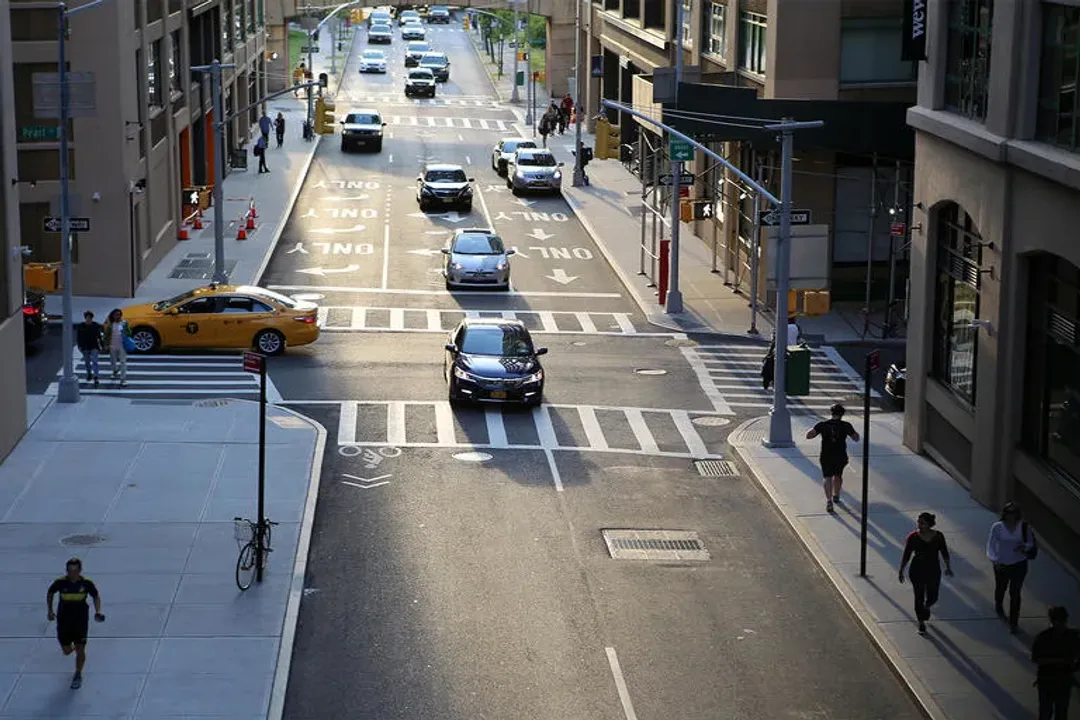
It is vital to acknowledge that the transition is not uniformly positive across all pre-existing jobs. Government technology publications have noted that while new roles are emerging, the AV transition is pushing some workers, particularly professional drivers, out of their established positions. [8] This displacement, however, is often framed alongside the concurrent creation of new technical and monitoring positions. [3]
If we consider the trucking sector, a hypothetical scenario involving long-haul autonomous routes might see a reduction in the number of drivers needed for the long highway segment, but an increase in demand for local drivers to handle the first and last miles of the delivery, or for remote operators to manage the autonomous leg. [7] This substitution of tasks requires new training pathways.
Here is a look at how certain job functions are transforming, rather than disappearing outright:
| Traditional Role Component | Emerging AV Safety/Operational Role | Key Difference in Focus |
|---|---|---|
| Road Navigation & Control | Remote Assistance Operator | Oversight; remote intervention for complex situations |
| Vehicle Maintenance | Fleet Health Monitoring Specialist | Predictive maintenance based on vehicle data streams |
| Traffic Observation | Disengagement Report Analyst | Structured analysis of failures for system correction |
When looking at job creation, it is easy to focus only on the major metropolitan tech hubs where the software is written. However, the physical validation and data collection roles create opportunities that may decentralize slightly. For example, a company testing Level 4 autonomy in a specific region needs local safety drivers and data collectors familiar with that region's specific infrastructure, weather patterns, and unique traffic culture. This means that the growth in these safety support roles can follow the deployment strategy geographically, creating pockets of specialized employment wherever large-scale testing or commercial operations begin, which is an important counterpoint to the concentration of purely software development jobs in established tech centers. [9]
# Required Skills
The skills demanded by these growing safety jobs differ significantly from those needed for traditional driving. While spatial awareness remains important, the emphasis shifts heavily toward technical literacy and immediate decision-making under pressure based on electronic inputs, not just visual ones. [1]
For a remote operator, proficiency in operating sophisticated teleoperation interfaces is paramount. These systems often provide fused views from multiple sensors, requiring the operator to interpret digital representations of the environment quickly. [6] Experience in related fields such as drone operation, air traffic control, or even complex video gaming that demands rapid reaction times can serve as surprisingly relevant experience for these emerging roles. [1]
For the validation and simulation roles, a foundation in computer science, engineering, or statistics becomes highly valuable. These professionals are tasked with designing the scenarios that prove the system is safe, requiring expertise in testing methodologies and data analysis to determine when a vehicle has successfully navigated a difficult maneuver or, more importantly, why it failed. [2] This blend of on-road experience (often gained from former safety drivers) and analytical ability defines the higher-value safety positions in the modern AV ecosystem.
# Measuring Progress
Understanding whether safety jobs are truly growing requires looking beyond simple headcounts to the intensity of validation. As companies move from early R&D toward commercialization, the nature of the safety workforce changes. Initially, safety jobs are dominated by safety drivers collecting real-world miles. As simulation capabilities improve, the demand for simulation engineers and scenario designers increases relative to the need for human drivers on every single test mile. [2][6]
One way to gauge the industry's maturity is to track the ratio of simulation engineers to test drivers. If a company increases its testing fleet size but keeps the number of safety drivers flat, it signals that the investment is shifting toward automated validation techniques, which creates more complex engineering roles rather than entry-level driving roles. This points toward a future where safety assurance is less about human reaction time and more about rigorous, data-driven engineering proof points. [1]
Ultimately, the momentum behind autonomous deployment suggests sustained job creation in the safety and operational oversight domains for the foreseeable future. While specific driving jobs may be retired, the complex work of validating, monitoring, and maintaining the world's automated infrastructure is creating an entirely new, technically demanding career path within the transportation sector. [5][6] The growth is real, but it requires a willingness from the workforce to adapt to new technical requirements. [8]
Related Questions
#Citations
Careers In The Autonomous Vehicle Industry - Forbes
The autonomous vehicle industry moving forward - McKinsey
How autonomous delivery is transforming jobs, not replacing them
Has anyone here work as a Self Driving Vehicle Operator? - Reddit
Driving Economic Growth - The AV Industry
[PDF] AUTOMATED VEHICLES & THE WORKFORCE
Fleeting chances: will autonomous trucks create new jobs?
Autonomous Vehicles Pushing Some Workers Out of Jobs - GovTech
New Study: Autonomous Vehicle Jobs to Exceed 110k in U.S.