What roles exist in virtual power plants?
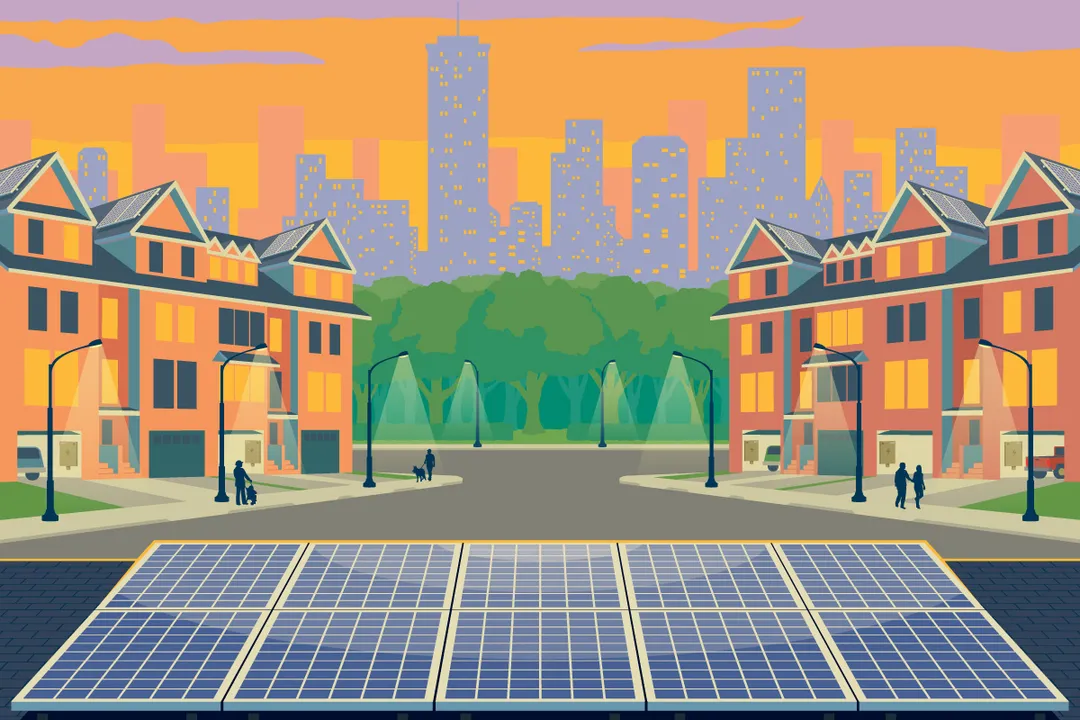
The structure of an electrical grid is changing rapidly, moving away from massive, centralized power stations toward a distributed network where countless small energy sources talk to each other. Within this transformation, the concept of the Virtual Power Plant (VPP) has emerged, requiring several distinct operational roles to function correctly. A VPP is essentially a cloud-based system that aggregates and manages the capacity of many decentralized energy resources (DERs) so they can operate collectively like a single, dispatchable power plant. To achieve this coordination, several key players must execute specific functions.
# Aggregator Role

The Aggregator or Operator sits at the very center of the VPP ecosystem. This entity possesses the primary responsibility for gathering the capacity from diverse DERs—like rooftop solar, home batteries, or commercial HVAC systems—and offering that aggregated power or flexibility into organized wholesale energy markets. They are the decision-makers, determining when to instruct an asset to charge, discharge, or curtail consumption based on grid needs and market prices.
The aggregator acts as the singular point of contact with the larger power system operators, such as Independent System Operators (ISOs) or Regional Transmission Organizations (RTOs). When an RTO needs five megawatts of reserve power for frequency regulation, it calls upon the VPP aggregator who manages that commitment across their portfolio of thousands of small assets. This requires specialized market expertise; the aggregator must understand bidding strategies, market rules, and settlement procedures, which individual asset owners generally lack the time or resources to pursue.
It is important to distinguish the aggregator's role from simple billing or customer service. The core function is active, real-time asset management. For example, if a VPP has committed to providing voltage support services, the operator must ensure that connected batteries respond within milliseconds to grid fluctuations. The success of the entire VPP hinges on the operator’s ability to accurately forecast how much capacity they can reliably count on from their enrolled fleet at any given moment.
# Asset Owners
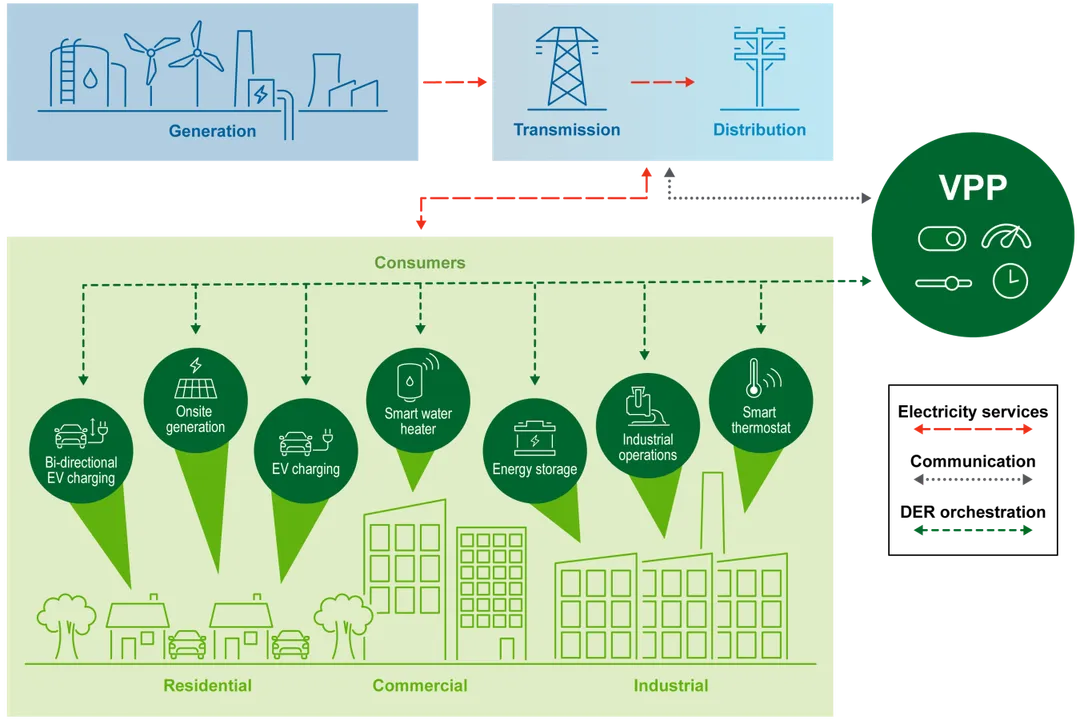
The physical foundation of any VPP is the Asset Owner. These are the entities or individuals who own the distributed energy resources that provide the actual supply or demand flexibility. This group is extremely diverse, ranging from residential customers with behind-the-meter solar and home batteries to large commercial and industrial (C&I) facilities with massive uninterruptible power supply (UPS) systems or thermal storage.
The asset owner’s role is one of enrollment and participation. They agree, usually via a contract, to allow the VPP operator to send dispatch signals to their hardware under specified operating parameters. In return for granting this access, they receive financial compensation, typically a share of the revenue the aggregator earns from the grid operator or energy market.
While the asset owner provides the physical capability, they often seek to minimize disruption to their primary activities. For a homeowner, this means the VPP control must prioritize maintaining a comfortable indoor temperature, even while drawing down battery power for the grid. Similarly, for a large retail center, the VPP intervention must ensure that refrigeration units or critical IT loads are never compromised. This tension—maximizing revenue versus maintaining local service quality—is a defining feature of the asset owner's participation.
It is interesting to note that the value proposition for an asset owner in a C&I setting often revolves around offsetting their own energy costs first, with the VPP participation being a secondary, revenue-generating function. This contrasts with a dedicated battery storage facility whose sole purpose might be VPP participation, meaning the C&I owner carries inherent operational risk related to their core business, which the VPP must account for when setting participation agreements.

# Technology Providers

Behind the scenes, the Technology Provider plays an indispensable part. A VPP cannot exist without sophisticated software and communication infrastructure to manage the flow of data between the central control platform and the individual, dispersed assets. These providers develop the software stacks necessary for secure, low-latency communication and data processing.
This role encompasses several technical layers. First, there is the communications hardware and software installed directly at the site of the DER—the edge device—which receives commands from the VPP headquarters and executes them on the local equipment. Second, there is the central platform, which uses machine learning and advanced algorithms to forecast generation/load availability, optimize dispatch schedules, and handle the complex data reporting required by market operators. In some organizational structures, the aggregator and the technology provider are the same company, creating an integrated, single-stack VPP solution.
The software must also manage cybersecurity risks inherent in remotely controlling critical infrastructure, ensuring that command signals are authenticated and protected against tampering. The performance of the entire VPP—its ability to bid accurately and respond quickly—is directly limited by the speed and intelligence of this technological backbone.
# Grid Entities
The ultimate counterpart to the VPP is the Grid Entity, which represents the actual demand for flexibility and stability. These are the organizations responsible for maintaining the physical integrity and reliability of the transmission and distribution networks.
These entities include:
- ISOs/RTOs: These organizations manage wholesale markets and procure capacity for large-scale reliability services like spinning reserves, non-spinning reserves, and regulation (frequency control).
- Utilities (Distribution System Operators or DSOs): As the grid becomes more decentralized, utilities are increasingly interested in VPPs providing localized services, such as congestion management on specific feeders, to defer expensive infrastructure upgrades.
The role of the Grid Entity is one of procurement. They issue requests for capacity or ancillary services, and the VPP acts as a qualified bidder. The VPP effectively transforms otherwise passive or intermittent resources—like an industrial freezer or a residential solar array—into active grid assets that can either inject power, absorb excess power, or reduce instantaneous demand when needed.
The functional separation between the technology provider and the aggregator is becoming clearer in mature markets. While historically one company might handle both software and aggregation—a single-stack model—we are seeing specialization emerge. An aggregator might choose the best dispatch software from Provider X because it integrates better with residential smart thermostats, while using Provider Y’s software for industrial load control due to its superior forecasting capabilities. This specialization demonstrates that the role of the aggregator is evolving from a general manager to a sophisticated portfolio architect, curating the best software tools for each asset class they enroll.

# Interaction Dynamics
The relationship between these roles defines the VPP business model. The dynamic is essentially a contractual chain: the asset owner contracts with the aggregator, and the aggregator contracts with the grid operator (or utility).
In a simplified view of the transaction flow:
- The grid operator signals a need for reduction in demand at price .
- The aggregator’s software platform analyzes its enrolled assets and calculates the optimal dispatch strategy across all resources to meet while minimizing impact on asset owners.
- The aggregator sends dispatch commands to the edge devices.
- Asset owners curtail load or discharge energy, providing the service.
- The grid operator pays the aggregator for the service provided.
- The aggregator deducts its operational costs and a fee, passing the remainder back to the asset owners.
This interaction is creating new classifications of market participants. Traditional generators are now competing directly with aggregated demand response, which is being supplied by VPPs. This competition naturally drives down overall energy costs for the grid by finding the cheapest available source of flexibility, whether that source is a gas turbine or a thousand smart water heaters.
The evolving nature of the grid means that roles are sometimes blurred, but the functional separation remains key to ensuring reliability and managing risk. For instance, when considering high penetration of storage, the VPP operator’s expertise shifts. They must now balance providing fast ancillary services with long-term energy arbitrage, ensuring that batteries are not needlessly depleted by grid services only to be unavailable for high-price energy sales later in the day. This requires the operator to possess not just grid expertise, but also deep knowledge of asset degradation economics—a specialized area of expertise that goes beyond simple dispatch instructions. The VPP thus acts as an economic translator, converting the technical requirements of grid stability into actionable, profitable opportunities for decentralized asset owners.
Related Questions
#Citations
Virtual Power Plants: What You Need To Know - EnergySage
Virtual Power Plants (VPPs): All You Need to Know - 60Hertz Energy
[PDF] VIRTUAL POWER PLANT - RMI
What's the business model of a Virtual Power Plant (VPP)?
VIRTUAL POWER PLANTS PROJECTS - Department of Energy
Virtual Power Plants and the Future of Energy
What Is the Role of a 'Virtual Power Plant' Operator in a Grid with ...
Virtual Power Plants At Commercial And Industrial Properties
What is a Virtual Power Plant? - Voltus
The Role of Virtual Power Plants in a Decentralized Power Grid