What roles exist in swarm decision-making?

The concept of swarm decision-making is fascinating, drawing its inspiration directly from the complexity we observe in the natural world—flocks of birds coordinating flight or ant colonies efficiently exploiting distant food sources. At its most fundamental, swarm intelligence (SI) describes the collective behavior of decentralized, self-organized systems, whether natural or artificial. The core question when studying these systems is how a collection of simple agents, each operating only on local information and following basic rules, arrives at a seemingly sophisticated global choice.
However, the "roles" within a swarm are not a single concept; they shift dramatically depending on the system’s complexity and whether humans are involved in supervision. In purely algorithmic or natural swarms, roles are emergent functional states dictated by the dynamic relationship between the agent and the environment. Conversely, in large-scale, applied systems—such as military drone operations—roles become explicitly assigned structural positions necessary for logistics, safety, and command. Understanding the spectrum between these two extremes is key to engineering reliable swarm systems.
# Functional States
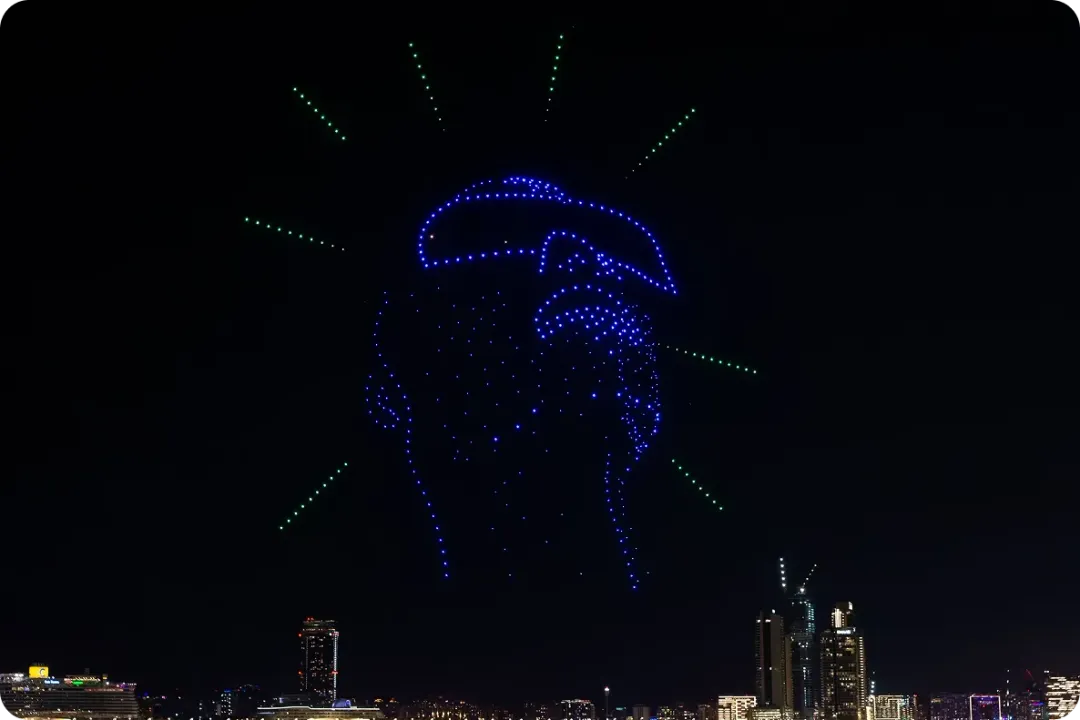
In the realm of bio-inspired computation, the idea of a fixed role is often irrelevant; instead, agents adopt temporary states that contribute to a global decision or outcome. This is where the distinction between simple agent rules and complex global behavior becomes clear.
For instance, in simulations modeling ant foraging behavior, agents cycle through distinct functional states to solve the shortest path problem. An agent might start in a random wandering state, moving without a specific goal. Upon encountering a pheromone trail, it transitions into a food tracking state, moving outward from the colony and depositing pheromone. After acquiring food, it enters a homebound state, moving directly back to deposit its find. The decision here—which path to use—is determined by how the collective manages its presence on the trails. The desired outcome (minimizing the average path length, ) is achieved when the flow of agents is dynamically steered toward shorter paths based on pheromone reinforcement.
A different kind of decision-making role is seen in models inspired by locusts, where the state is internal to the agent rather than environmental. In this context, agents exist in an unexcited state with their internal state variable decaying over time. When local interaction—like colliding with another agent—occurs frequently, the internal state increases. The global decision, such as the entire swarm moving from a space, is triggered when a sufficient number of agents (a threshold, ) reach an excited state due to high local density. The "role" of an agent at any moment is simply whether its internal metric dictates it contributes to the triggering condition or continues its exploration.
These functional states highlight an important design philosophy: the agent’s task is simply to execute its local rule correctly. The intelligent decision—like choosing the shorter food source or recognizing that a bounded space is too crowded—emerges from the dynamics of those collective actions. This contrasts sharply with systems where human operators must consciously assign roles and intent.
# Decision Models

For swarms to make a collective choice between alternatives, they must employ specific decision-making models, which also define the functional interactions between agents. These models determine how local preferences aggregate into a global choice, often utilizing simple communication protocols like direct messaging or indirect environmental modification (stigmergy).
Three primary models underpin this collective choice:
- Voting-based Models: This relies on agents expressing a preference, with the final decision being based on a majority rule. In a simple scenario, an agent might adopt the choice that the highest number of its neighbors have already selected.
- Consensus-based Models: These require more interaction. Agents communicate and negotiate their positions until the entire group settles on a single, agreed-upon conclusion. This is useful when absolute uniformity in the final state is required.
- Threshold-based Models: This is often seen when a swarm needs to commit to an action only when the signal is strong enough. An individual agent accepts a decision if the number of neighbors supporting it surpasses a pre-set threshold.
In AI optimization, algorithms like Particle Swarm Optimization (PSO) incorporate a variant of this: each particle (agent) adjusts its trajectory based on its own best finding and the best finding of its neighbors—a form of weighted social influence that directs convergence toward the optimum. The success of any swarm decision, whether biological or engineered, hinges on the careful design of these local interactions to ensure the collective property aligns with the desired global outcome.

# Structural Assignment

When swarm technology moves from abstract modeling or controlled labs to real-world deployment, especially in complex domains like logistics or defense, the decision-making process requires human oversight and support. In these contexts, the most evident "roles" are the human roles required to sustain and command the physical assets. Research into large-scale drone deployments, such as the DARPA OFFSET program, clearly delineates a structured team hierarchy necessary for success.
The roles discovered in these high-fidelity exercises are not about how the drones decide amongst themselves, but who manages the drones, the mission, and the hardware lifecycle. These roles span multiple phases, from setup to mission execution and breakdown.
The major structural roles identified include:
- Swarm Commander/Operator: This individual holds the main supervisory role during deployment. They are responsible for executing the mission plan and issuing high-level directions to the active swarm, often using advanced interfaces like augmented or virtual reality.
- Abstract Supervisor Roles (Mission Planner/Team Leader): These personnel operate at a higher strategic level, often outside the direct, moment-to-moment control loop. The Mission Planner develops the overall plan and sets the high-level objectives, while the Team Leader provides the mission overview. They act as primary Information Consumers by reviewing past performance logs.
- Mechanic Roles: This is the physical backbone of the operation. Mechanics handle the tangible aspects of the swarm assets, including assembly, calibration, battery charging, hardware updates, and repairs. This role transitions between setup, pre-mission checks, and post-mission packing.
- Logistics/Deployment Roles (Dispatcher Team): Personnel focused on the infrastructure supporting the mission. The Dispatcher Team ensures communication systems are functional, effectively acting as operators for the underlying network infrastructure. The Vehicle Deployment Team manages the physical movement and staging of vehicles at the launch/landing zones.
A central role is the Information Consumer, a broad category for anyone using the data generated by the swarm to complete their non-command tasks. This includes Visual Observers who monitor line-of-sight actions and the Government Team stakeholders analyzing performance data.
# Command and Support Nexus
The analysis of human-swarm interaction in applied settings reveals a critical interdependence between the primary decision-maker and the support structure. While the Swarm Commander is central to mission execution, their ability to remain effective relies entirely on the efficiency of the supporting roles.
A key finding is the need for dedicated ancillary support roles, particularly in managing the fleet’s health outside of active engagement. In early developmental tests, a single engineer might monitor both air and ground platform health, alongside network health. However, with larger, heterogeneous swarms, it was recommended to break out health and status monitoring for each domain, suggesting a role specializing in Fleet Health Monitoring.
Furthermore, in scenarios where the Swarm Commander is a warfighter, a distinct role for the Commanding Officer (CO) emerges. The CO provides the high-level tasking that shapes the Commander’s intent, creating a necessary chain of command where the Commander must report back on execution status. This demonstrates that even in a decentralized-by-design system, the human interface often demands hierarchical roles to manage strategic direction and accountability.
It is interesting to note a persistent tension in human-swarm interaction research regarding trust. Novice operators often exhibit System-Wide Trust (SWT), where a single faulty agent drags down the perceived reliability of the entire swarm. Experts, however, often exhibit Component-Specific Trust (CST), dynamically evaluating each asset. Designing the interface to present information transparently, allowing operators to build accurate mental models of why an agent behaved a certain way, is crucial for calibrating trust appropriately and avoiding complacency or unwarranted distrust. If a system's complexity prevents operators from discerning whether an anomaly is a necessary deviation or a true error, they may lose trust quickly, and repairing that trust is known to be difficult.
From a system design perspective, one can infer that when implementing a swarm, the more explicit the functional roles can be made via the agent's local rules—analogous to the ant's pheromone-guided state transitions—the lower the cognitive burden placed on the human supervisor. If the swarm can internally manage Exploration vs. Exploitation based on gradient dynamics (like P1 and P2 in the ant model), the human commander is freed from micro-management and can focus on strategic oversight. The sheer logistical overhead of launching and recovering a large physical swarm—requiring dozens of personnel fulfilling mechanic and deployment roles—shows that while the decision-making is decentralized, the operational envelope remains heavily dependent on structured human roles until advanced logistics systems are fielded.

# Synthesizing for Better Swarms
When applying swarm principles, whether through optimization algorithms or autonomous robotics, the roles structure itself around the need to balance exploration and exploitation—the trade-off between searching widely for new solutions and refining known good ones. The structure of roles reflects this trade-off at the human level:
| Role Type | Primary Function | Primary Focus | Biological/Algorithmic Parallel |
|---|---|---|---|
| Commander | Mission Execution & Re-tasking | Real-time Strategy | The collective achieving the current optimal goal. |
| Abstract Supervisor | Setting Intent & Goal Definition | Strategy/Long-term | Setting the fitness criteria or the global attractor state. |
| Mechanic/Logistics | System Sustainment & Setup | Infrastructure Readiness | Agent self-maintenance or resource availability checks. |
| Information Consumer | Situational Awareness | Data Processing | Localized sensory input and interaction. |
A key operational consideration that bridges the emergent and structural perspectives is the need for explanations. When an agent, or the swarm, makes a decision that appears erroneous, the human operator's trust calibration depends on attribution. If an error can be attributed to a tangible system failure (e.g., a bad data link, a mechanical issue), the negative impact on trust is often lessened compared to an error that seems arbitrary. This suggests that for complex swarms, one of the most vital functional roles an agent must execute is Error Attribution Signaling—communicating why a local state changed in an unexpected way, thus feeding valuable context back to the human abstract supervisors and commanders.
For practitioners designing such systems, recognizing the human interface challenges is as important as tuning the agent algorithms. For example, when designing a swarm's decision logic, one must consider the density of agents relative to the task complexity. A system that converges too quickly on a suboptimal solution due to strong local reinforcement (premature convergence) is analogous to human operators suffering from complacency due to over-trust in a system that appears too reliable. The system designer, therefore, must intentionally engineer friction or checks—perhaps by embedding a role analogous to the Safety Officer within the software logic—to ensure exploration continues until a validated global attractor is confirmed, rather than simply settling on the first attractive local minimum. Ultimately, even in the most advanced autonomous systems, the human element’s need for clarity, trust, and logistical support means that a set of well-defined human roles remains critical to successful swarm deployment for the foreseeable future.
Related Questions
#Citations
Swarm intelligence - Wikipedia
Swarm Intelligence in Vision AI: How it Works - Ultralytics
Collective Decision-Making | Swarm Intelligence and Robotics Class ...
Examining the human-centred challenges of human–swarm ...
[PDF] Decision making swarms - IMSA digital commons
How does swarm intelligence improve decision-making? - Zilliz
AI Algorithms and Swarm Intelligence - Unaligned Newsletter