What roles exist in modular construction?
The evolving landscape of construction is placing a significant demand on specialized skill sets, moving beyond conventional site-based labor to encompass factory-floor precision and advanced digital coordination. The adoption of modular construction—the process where sections of a building are manufactured in a controlled, off-site facility and then transported for final assembly—necessitates roles that bridge the gap between traditional building trades and manufacturing discipline. [5][8] Understanding the available roles means looking at where the work happens: in the factory, in the design office, and on the final assembly site.
# Design Engineering

The structural integrity of a modular building hinges on its ability to withstand transportation and subsequent connection to other modules once on site. [2] This places immense importance on specialized engineering roles. Structural engineers working on modular projects must possess expertise in the specific demands of prefabrication, which often means designing connections that are both strong enough for lifting and shipping, yet efficient for final assembly. [2] They need to focus intently on the interface points between factory-built units. [2]
The complexity of these engineered connections often requires meticulous planning far earlier in the project timeline than in traditional stick-built construction. This planning is heavily integrated with Building Information Modeling (BIM) and Virtual Design and Construction (VDC) processes. [7] In this context, roles within the Preconstruction phase become indispensable. The preconstruction team acts as a translator, converting the architectural vision into buildable, manufacturable components. [7] They determine the feasibility, sequencing, and logistics required to move from the design studio to the factory floor. [7] Their work directly impacts the efficiency of the entire production line, making their input critical for cost control and scheduling accuracy. [7]
A key difference observed when analyzing the structural role in modular versus site-built projects is the emphasis on load paths during transit. While a conventional building is designed for its permanent, static loads once complete, a modular component is also subjected to dynamic, temporary forces during transportation—vibration, shock, and the stresses of being lifted and set. [2] Engineers must account for these transient loads, meaning the design review process is inherently more rigorous regarding connection detailing and material selection for module corners and transport points. [2]
# Manufacturing Roles
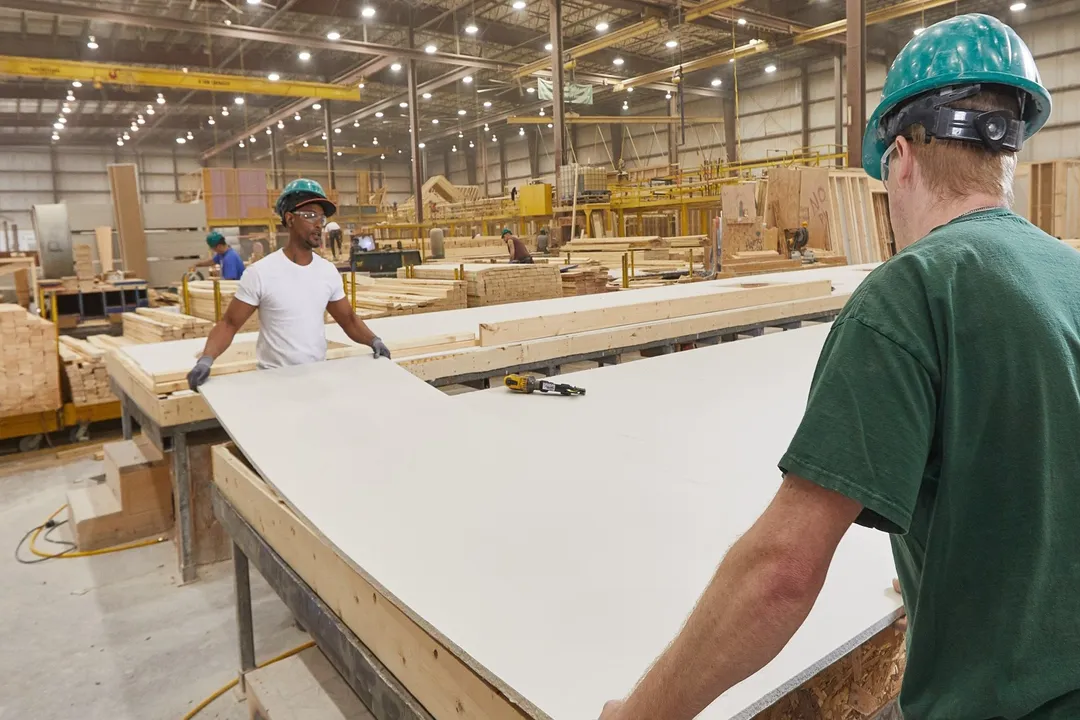
The majority of the physical construction in a modular project occurs indoors, resembling a high-tech manufacturing line rather than an open construction site. [5] This shift brings factory-based roles into sharp focus, demanding precision and adherence to tight production schedules. [1]
# Assembly Technicians
These individuals form the backbone of the off-site production process. Typical daily responsibilities for personnel in a modular building position often involve tasks directly related to fabrication and assembly within the controlled environment of the plant. [1] This includes tasks such as operating specialized machinery, framing, installing MEP (Mechanical, Electrical, Plumbing) rough-ins, and performing interior finishing work. [1] They are actively building modules on an assembly line that moves components through various stages of completion. [1]
# Quality Assurance
Because the factory setting allows for tighter environmental controls and easier access to workers, modular construction often touts superior quality control. [5] Roles dedicated to Quality Assurance (QA) and Quality Control (QC) are therefore prominent. [1] Daily duties here might involve inspecting work completed in previous stations, verifying that materials meet specifications, ensuring all work conforms to the approved engineering drawings, and confirming that building codes and standards are met before the module leaves the facility. [1] This early defect detection saves substantial time and cost compared to finding issues after installation on site. [1]
# Logistics Personnel
Moving large, finished modules is a distinct discipline. Roles related to Logistics and Material Handling are essential. [1] This involves coordinating the movement of raw materials into the fabrication facility, organizing the sequence in which completed modules are prepared for shipment, and ensuring proper loading and securing procedures are followed for over-the-road transport. [1] The precision required here is significant, as improperly secured modules risk damage during transit. [1]

# Project Oversight
Managing a modular project requires a unique blend of traditional construction management skills and industrial production scheduling. The timing of off-site fabrication must align perfectly with on-site site work, foundation completion, and utility tie-ins. [7]
# Project Managers
Modular Project Managers must maintain clear lines of communication between the factory floor, the design team, and the site crew. [1] A key part of their responsibility is scheduling the factory production runs to meet the site readiness milestones. [1] If site work is delayed, the factory schedule must adapt to avoid expensive module storage or, conversely, production must be fast-tracked if site readiness accelerates unexpectedly. [1] They often oversee the critical "set day," where cranes lift and place the modules onto the foundation. [1]
# Site Superintendents
The on-site role shifts from building the entire structure to managing the assembly and connection process. [8] The Site Superintendent oversees the preparation of the building pad, the placement of foundations, the reception of the delivered modules, and the final installation and connection, including setting utility hookups. [1][8] They ensure that the installation sequence follows the precise connections detailed by the structural engineers. [2] Their focus is less on general site supervision spanning months of framing and more on the intense, short-duration activity of setting and sealing the building components. [1]
One crucial area where the site role differs significantly is in punch-listing and remediation. While factory QA minimizes defects, any necessary rework on a module after it is set often requires specialized access solutions since the exterior walls and finishes are complete. [1] The site superintendent manages this specialized punch list, ensuring that field modifications integrate cleanly with the factory-built envelope. [1]
# Specialized Careers
The growth of this sector has also opened up roles that require specialized technical knowledge or a creative approach to problem-solving. [6][4]
# VDC Specialists
As mentioned earlier, the reliance on advanced digital tools is high. [7] VDC (Virtual Design and Construction) specialists are crucial for creating the digital prototypes and managing the data flow that informs the fabrication process. [7] These individuals use software to coordinate clash detection between architectural, structural, and MEP systems before any physical work begins, which is paramount when modules have limited tolerance for field changes. [7] Their expertise bridges the traditional office-based design team and the manufacturing technicians. [7]
# Creative Roles
Not all positions are purely trade-based or management-focused. The need to innovate and market this building method has led to positions described as Creative Modular Construction Jobs. [6] These roles might involve marketing, sales, or perhaps design roles focused on optimizing aesthetic possibilities within the constraints of module sizes and logistics. [6] Furthermore, as an emerging field, there are always career paths opening up across the entire modular ecosystem, from initial concept to final handover and servicing. [4] People find opportunities across the entire process, including design, manufacturing, logistics, and site coordination. [4]
To help visualize the varied requirements, we can map general duties to the primary location of work:
| Primary Work Location | Example Role Type | Key Focus Area | Source Mention |
|---|---|---|---|
| Factory Floor | Fabrication Technician | Precision assembly, trade work execution | [1][9] |
| Factory QC Station | Quality Inspector | Verification against drawings, code compliance | [1] |
| Engineering Office | Structural Engineer | Designing transportable and connectable units | [2] |
| Preconstruction Dept. | BIM/VDC Coordinator | Digital clash detection, fabrication sequencing | [7] |
| Job Site (Field) | Site Superintendent | Foundation readiness, module setting, utility tie-ins | [1][8] |
| Project Office | Project Manager | Scheduling factory output with site readiness | [1] |
When considering a career transition into modular, one useful heuristic to apply is the Three-Phase Check. First, evaluate your comfort level with design finality; can you commit to designs earlier than you are used to? [7] Second, assess your precision tolerance; is your standard of finish consistent with factory-level QA/QC checks? [1] Third, consider your logistical aptitude; can you think about how a component will be lifted, transported, and connected on a schedule dictated by a production line, not just weather delays? [2] Answering these honestly will help direct one toward design, factory, or site management roles.

# Comparing Traditional vs. Modular Focus
The roles in modular construction often require overlapping expertise but with a distinct emphasis shift compared to their traditional counterparts. [5] For instance, a traditional site carpenter spends much of their time framing walls and roofing based on real-time site conditions. In modular, that same skilled tradesperson is still framing, but they are now doing so repetitively on a standardized jig inside a facility, often completing interior finishes concurrently. [1] Their focus shifts from building a unique element to repeating a high-quality, pre-engineered component. [1][5]
Similarly, the site electrician in a modular project spends less time running conduit through open framing bays and more time ensuring all necessary pre-wired boxes and connections are perfectly positioned to meet the corresponding module's hookup points when the units meet on site. [2] The field connections become the most critical part of the electrical system installation, requiring extreme care during the final tie-in phase. [2]
This difference in emphasis means that while traditional construction experience is valuable, successful modular professionals must also demonstrate strong adherence to process, excellent documentation, and a deep understanding of how their specific contribution impacts the next stage, whether that stage is the next station on the assembly line or the final crane lift. [1][7] The entire culture revolves around minimizing unknowns that could halt the production line or complicate final assembly. [7]
# Industry Growth and Career Trajectories
The fact that organizations are actively detailing these necessary roles and that job boards are populated with specific modular titles suggests the industry is maturing rapidly. [4][9] This isn't a niche or temporary trend; it represents a fundamental shift in construction methodology. [5] For those entering the field now, understanding the interconnectedness—how a change in a module's bracing (structural role) affects the crane rigging plan (logistics role) and the site preparation timeline (superintendent role)—is the key to career advancement. [4] Career development often involves moving across these phases, gaining experience in the factory first to better manage the site logistics later, or vice versa. [4] The industry is actively seeking talent to fill these defined positions. [9]
A final practical observation for those considering a move into this area involves adopting digital fluency. Given the heavy reliance on VDC and BIM for coordination between the design office and the manufacturing plant, proficiency in these technologies is rapidly becoming a baseline expectation, not just a specialty skill, for managers and senior technical staff in modular construction. [7] Those who master the digital twin representation of the physical module are best positioned to manage the entire construction sequence effectively. [7]
Related Questions
#Citations
What are some typical daily responsibilities in a Modular Building ...
Roles and Responsibilities: Structural Design of Modular Projects
Careers in Modular Construction - Modular Building Institute
Exploring careers in off-site construction: What you need to know
What Is Modular Construction? Benefits, Process & Uses - finfrock
Creative Modular Construction Jobs, Employment | Indeed
The Rise of Modular Construction: Preconstruction's Role in ...
Off-Site and Modular Construction Explained | WBDG
Modular Construction Jobs: The Fastest-Growing Career 2025-26