What roles exist in misinformation analysis?
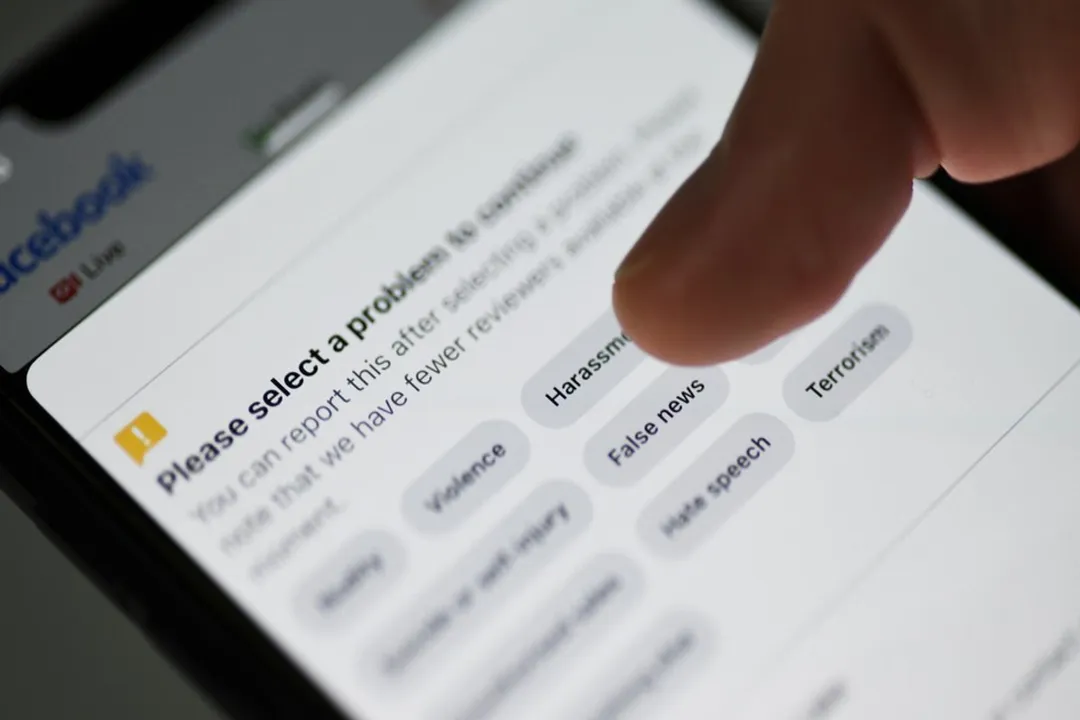
The landscape of understanding and combating misinformation is populated by a diverse collection of specialists, each focusing on a different facet of the information ecosystem. While the public often thinks of the work as simple fact-checking, the roles within misinformation analysis are far more varied, spanning technical monitoring, deep social science research, policy development, and direct intervention. These positions exist across technology companies, government agencies, non-profit organizations, and academia, reflecting the multifaceted nature of deceptive information itself. [4]
# Analyst Roles
At the operational forefront are the analysts—the individuals tasked with the day-to-day identification, tracking, and decomposition of influence operations. [10] A Disinformation Analyst position, frequently advertised on job boards, requires a deep dive into current events and digital trends. [1][2] Their primary responsibility is often threat monitoring: detecting inauthentic behavior, coordinated inauthentic activity (CIA), and emerging narratives designed to mislead audiences. [4]
The nature of this analysis dictates specialization. Some analysts work within security teams at major platforms, focusing on identifying violations of terms of service and mapping out networks responsible for dissemination. [2] Others might work for think tanks or consultancies where the focus is broader, perhaps analyzing the impact of foreign interference on domestic conversations or studying the diffusion patterns of false health claims. [4] The work is often time-sensitive, requiring rapid assessment to inform moderation decisions or public advisories. [4]
A related, often more technical function is that of the Threat Intelligence Specialist. While an analyst might focus on the content and the narrative, the intelligence specialist focuses more on the actor and the methodology. They look for the digital fingerprints left by coordinated groups—the infrastructure, the bot networks, and the financial incentives behind the spread. [2] This often necessitates strong technical skills in data processing and network analysis, bridging the gap between pure social science and computer science. [10]
# Research Focus
Moving away from immediate operational response, research roles delve into the fundamental mechanics of how falsehoods take hold and persist. These positions are common within universities, specialized research institutes, and organizations focused on civic integrity. [4]
# Truth Decay
Organizations like the RAND Corporation actively study phenomena such as truth decay, which describes the erosion of shared facts and empirical evidence in public discourse. [4] A researcher in this area doesn't just flag one false article; they study the long-term societal shifts that make people susceptible to such content in the first place. Their output is typically long-form reports, academic papers, and policy recommendations designed for lasting impact rather than daily moderation queues. [4]
# Narrative Structure
Another critical research area involves the narrative itself. Misinformation is rarely just a simple lie; it is often packaged within a compelling story. [6] Researchers examine the role of narrative in misinformation games, studying why certain rhetorical structures, emotional appeals, or conspiracy archetypes are particularly effective at capturing public attention and altering belief systems. [6] This requires expertise in communication theory, psychology, and often game theory when studying interactive disinformation campaigns. [6]
It is important to note the subtle contrast here: the analyst needs to know that a narrative is spreading now, whereas the researcher needs to know why that specific narrative works across different cultural contexts. For instance, a researcher might compare how a politically charged narrative adapts its emotional core when crossing from an English-language platform to a Spanish-language one, a level of thematic deconstruction that an operational analyst might not have the time for during an active campaign. [6]

# Detection Systems
The sheer volume of digital content necessitates systems built by engineers and data scientists dedicated to automated detection. These roles are crucial because human review alone cannot keep pace with the scale of content production. [2]
Roles here include Data Scientists and Machine Learning Engineers specializing in content classification and anomaly detection. [1] They build the algorithms that look for known deceptive patterns, assess the credibility of sources based on historical performance, and flag content for human review. [2] This often involves working with massive, messy datasets scraped from various online sources. [1]
A nuanced challenge in this area is balancing precision against recall. A highly precise system flags very few false positives but might miss a lot of true misinformation (low recall). [4] Conversely, a system with high recall might flag everything, overwhelming human moderators with noise. An original point of consideration for those designing these detection tools is accounting for semantic drift—where the language used by disinformation actors subtly changes over time to bypass established keyword or phrase filters. This requires constant model retraining and adaptation, treating the detection process as an adversarial game against evolving obfuscation techniques. [2]
# Policy and Legal Work
Misinformation analysis is increasingly moving into the realm of governance, regulation, and law, necessitating specialized roles within legal clinics, government agencies, and think tanks focused on digital society. [10][5]
# Clinical Instruction
One example is the position of a Clinical Instructor focusing on cyberlaw, often found at university centers associated with legal scholarship. [10] These roles blend legal analysis with practical digital forensics. They examine the legal liabilities associated with platform dissemination, the application of existing laws (like defamation or incitement) to online speech, and the potential necessity of new regulatory frameworks. [5] Their work often informs advocacy groups or government bodies looking to create effective, rights-respecting guardrails against malign information campaigns. [5]
# Governance Experts
Another set of roles focuses purely on governance strategy. These experts analyze how different societies—from liberal democracies to authoritarian states—are responding to the challenge. [5] They look at the effectiveness and unintended consequences of policies enacted by social media companies, comparing internal company moderation guidelines against external public expectations. [5]
# Intervention and Education
Not all roles are about identification and policy; many are dedicated to mitigation and building societal resilience. Organizations dedicated to debunking and public awareness represent a major segment of the employment base in this sector. [3]
# Debunking Specialists
Roles within organizations like Debunk.org focus on direct intervention, often involving the creation of clear, factual counter-narratives. [3] While this involves fact-checking, the specialist's job extends further to how that correction is delivered. They must understand the psychology of belief persistence—why simply stating a fact does not automatically correct a deeply held false belief. [3] Their expertise lies in crafting messages that are persuasive, accessible, and capable of reaching the audiences who consumed the initial misinformation. [3]
# Public Resilience
A critical area, particularly in areas like health, involves building long-term public resilience. [10][5] These specialists might work with public health bodies or NGOs to preemptively inoculate populations against likely future falsehoods. This involves understanding the typical "attack vectors" for health claims—for example, recognizing that narratives often spike around major public health events or vaccine rollouts—and preparing factual resources before the wave hits.
If we were to visualize the time spent by different professionals on a single, large-scale disinformation event—say, a viral health hoax—the allocation might look something like this:
| Role | Primary Focus Duration | Core Activity |
|---|---|---|
| Threat Analyst | Immediate (Hours 0-48) | Real-time identification and scoping [2] |
| Data Scientist | Short-term (Days 1-7) | Building filters and scaling detection [1] |
| Debunker | Mid-term (Days 3-14) | Crafting and distributing corrections [3] |
| Policy Expert | Long-term (Weeks/Months) | Reviewing platform response and legal gaps [5] |
| Researcher | Ongoing (Months/Years) | Studying underlying narrative efficacy [6] |
# Required Skill Sets
The breadth of these roles means that there is no single required degree, but certain competencies consistently appear across job descriptions. [1][10]
First and foremost is critical thinking and an aptitude for rigorous, evidence-based analysis. [1] Whether analyzing data logs or policy documents, the ability to discern signal from noise is paramount. [10]
Second, strong digital fluency is non-negotiable. This doesn't just mean knowing how to use a platform; it means understanding the architecture of the modern internet—how APIs work, how algorithms prioritize content, and how different media formats (text, image, video) are manipulated and spread across various digital spaces. [2][4]
Third, specialized knowledge matters deeply. A disinformation analyst tracking financial scams needs different domain expertise than one tracking election interference or one tracking anti-science narratives in medicine. [10] Domain-specific knowledge acts as the essential context necessary to evaluate whether a claim is merely false or if it is deliberately misleading within a specific field. [4] Finally, skills in data analysis, network mapping, and statistical methods are becoming increasingly central, even for traditionally social-science-focused roles, as the fight against falsehoods becomes increasingly data-driven. [1]
Related Questions
#Citations
Disinformation Research Jobs, Employment - Indeed
$80k-$165k Disinformation Misinformation Jobs (NOW HIRING)
Employment and Career Opportunities at Debunk.org
Tools That Fight Disinformation Online - RAND
Navigating the Landscape of Misinformation and Disinformation
Full article: What Is the Problem with Misinformation? Fact-checking ...
The Role of Social Media in Health Misinformation and ...
The role of narrative in misinformation games
ICRC - Disinformation Analyst - UN Talent
Senior Research Analyst, Disinformation Action Lab