What Are Skilled Trades in Manufacturing?
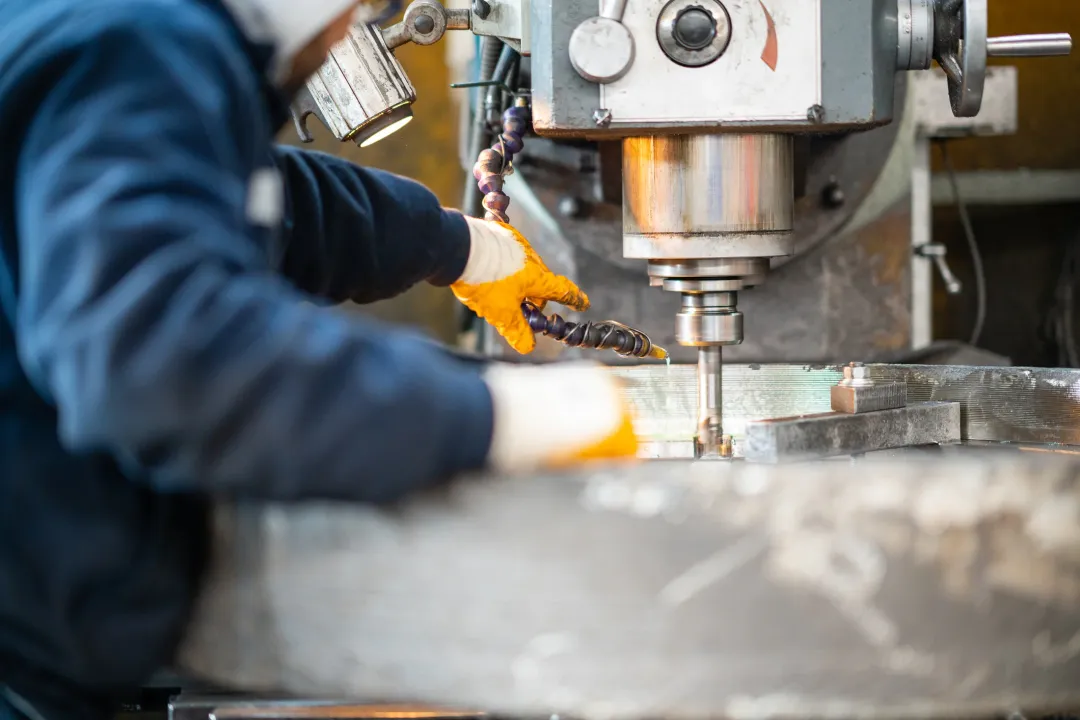
The world of modern manufacturing relies on specialized expertise to keep complex machinery running, products moving, and innovation possible. These essential personnel are known as those in the skilled trades, professionals who possess a high level of technical aptitude and hands-on proficiency. Unlike general laborers, individuals in a skilled trade have mastered a specific craft through rigorous training, often involving apprenticeships, technical instruction, or extended on-the-job learning. In the context of manufacturing, these roles are the backbone that supports everything from the initial design and fabrication of parts to the ongoing operation and maintenance of the assembly line itself.
# Defining Trades
A skilled trade represents a specific set of competencies within an occupation that requires specialized knowledge and extensive practical application. These professions are fundamentally distinct from entry-level production work because they demand the ability to diagnose non-routine problems, interpret complex blueprints or schematics, and safely operate or repair intricate equipment. In many cases, specific trade certifications or licenses are required to practice legally and competently, signaling a verified level of expertise to employers.
The manufacturing career cluster itself encompasses a wide array of occupations, but the skilled trades are specifically positioned within that cluster where technical, hands-on skills are paramount to the physical transformation of materials into finished goods. These workers bridge the gap between engineering design and physical execution.
# Core Examples
The specific trades thriving within manufacturing environments are diverse, reflecting the varying needs of different production facilities, from automotive assembly to advanced chemical processing. While the exact list can shift based on local industry demands, several core trades consistently appear as critical needs across the sector.
For instance, the Millwright is indispensable, often responsible for installing, dismantling, aligning, troubleshooting, and repairing heavy industrial machinery and mechanical systems. Welders are required not just to join materials, but often to perform high-precision work that maintains structural integrity under stress. Similarly, Industrial Electricians handle the wiring and maintenance of power, control, and lighting systems for production equipment, requiring deep knowledge of electrical codes and troubleshooting diagnostics. Tool and Die Makers are another fundamental group, tasked with creating and maintaining the specialized tools, dies, and gauges that shape raw materials into precise components.
We can categorize some of the most sought-after roles based on their primary focus:
| Trade Focus | Primary Responsibility Area | Required Skill Depth |
|---|---|---|
| Mechanical Maintenance | Heavy machinery upkeep, alignment, and repair | Hydraulics, pneumatics, precision measurement |
| Electrical/Controls | Power distribution, instrumentation, control panels | PLC programming knowledge, electrical schematics |
| Fabrication | Joining materials, creating custom parts | Advanced welding techniques, metallurgy basics |
| Machining | Creating components via subtractive methods | CNC operation, interpreting technical drawings |

# Trade Versus Production
It is important to draw a clear line between a role classified as a skilled trade and a standard production position, as this difference often dictates training investment and career trajectory. A production worker generally performs repetitive, standardized tasks focused on volume and speed—assembling a specific part or operating a single, pre-set machine on an assembly line. Their work is crucial for throughput, but it is often task-specific.
Conversely, the tradesperson’s function is focused on capability and reliability. If the machine breaks, the production line stops. The skilled trade professional is the one who diagnoses the root cause, which could involve electronics, mechanics, or control software, and then applies varied expertise to fix it. This difference suggests that while production roles focus on doing the standardized job, trade roles focus on ensuring the ability to do the job through maintenance and critical problem-solving.
# Modern Shift
The traditional image of a tradesperson often conjures notions of grease and heavy manual labor, but the reality in manufacturing today is far more integrated with information technology. Skilled trades are continually evolving alongside production technology. Modern facilities depend heavily on automation, robotics, and sophisticated computerized control systems.
This technological integration means that today’s Millwright might spend as much time interacting with a Human-Machine Interface (HMI) or calibrating sensors as they do turning a wrench. Troubleshooting a failure now frequently involves querying error logs from a Programmable Logic Controller (PLC) or checking network communication between different pieces of equipment. Therefore, expertise is increasingly bifurcated: deep mechanical intuition remains necessary, but it must be layered with competence in digital control systems and data interpretation. A successful maintenance technician today must understand both physics and basic software logic to maintain uptime.
# Entry Paths
The pathway into a skilled trade is fundamentally different from a typical four-year university degree track, often offering a faster route to a solid earning potential. Many manufacturing trades champion the apprenticeship model, which combines classroom instruction with extensive, paid, on-the-job training under the guidance of an experienced professional. This structure provides immediate real-world experience while learning theory.
For example, an individual might complete a formal technical or trade school program focused on industrial maintenance before entering a structured apprenticeship program where they log thousands of hours under supervision. This contrasts with degree paths where significant time is spent in theoretical study before any professional application begins. For those looking to pivot careers or start immediately after high school, focusing on technical certifications and employer-sponsored training programs can cut years off the time spent in formal education while still achieving high competency. When considering career investment, aspiring tradespeople should weigh the upfront cost and duration of training against the accelerated time-to-income that many apprenticeship tracks allow, which can be a significant advantage for early financial stability.
# Building Expertise
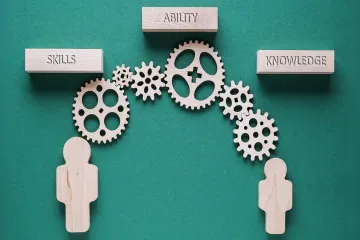
The value of a tradesperson lies not just in knowing how to do something, but understanding why a specific process or repair method is necessary based on material science or engineering specifications. This depth of knowledge allows them to be proactive rather than purely reactive. They must be adept at reading complex technical drawings and schematics, ensuring that any repair or installation adheres precisely to the manufacturer’s specifications, whether for safety or performance.
The continuous professional development required in these fields means that learning doesn't stop upon certification or graduation. As machines are upgraded and new manufacturing processes are introduced, the skilled trades professional must adapt their skillset to remain effective in the ever-modernizing industrial environment.
Related Questions
#Citations
Exploring the Role of Skilled Trades in Advanced Manufacturing
Top 5 In-Demand Trades in Manufacturing and How to Get Hired
What is Classified as a Skilled Trade? - Berks Technical Institute
Manufacturing - Careers in Trades
Skilled Trades in Manufacturing Are Evolving | Rockwell Automation
Trade vs Production : r/UnitedAutoWorkers - Reddit
Advanced Manufacturing - Pure Michigan Talent Connect
Manufacturing career cluster | Explore Careers - CareerOneStop
Skilled Trades - American Fuel & Petrochemical Manufacturers