How do you work in network science?
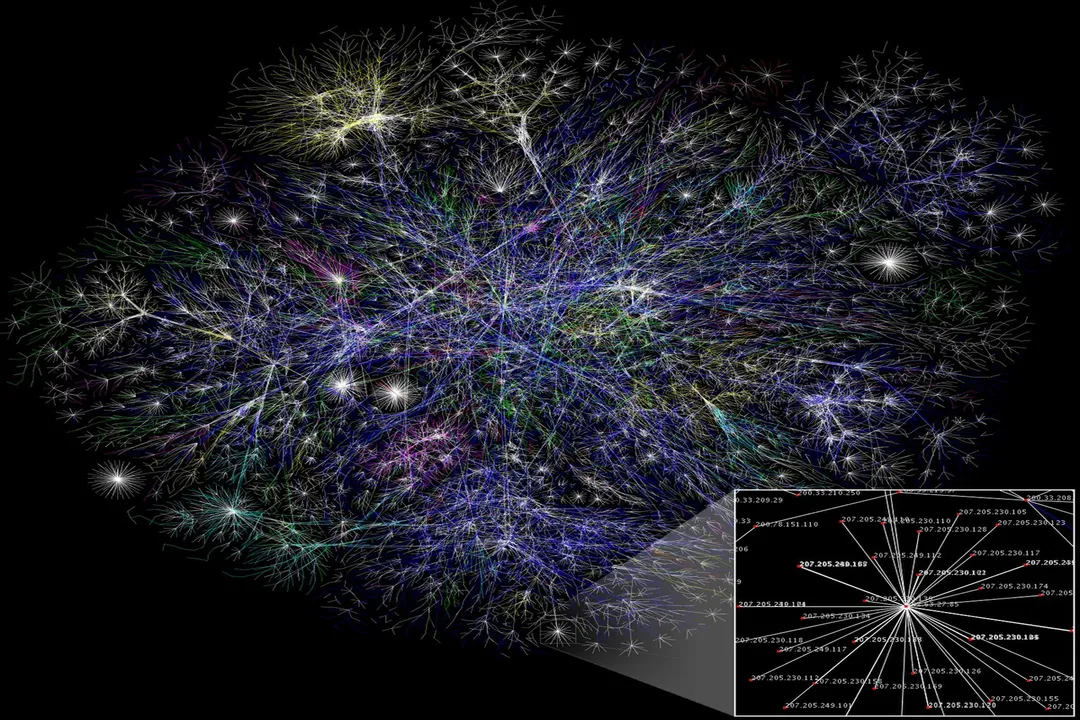
The study of network science delves into understanding complex systems by modeling them as interconnected sets of entities, allowing researchers to uncover patterns in relationships that might otherwise remain hidden within vast datasets. [4][2] This field is inherently interdisciplinary, drawing on concepts from physics, computer science, mathematics, and the social sciences to study things as diverse as social media connections, the structure of the brain, airline routes, and disease spread. [4][5] Working in network science, therefore, involves applying these mathematical and computational lenses to real-world problems that depend on interaction and structure. [2]
# Defining Networks
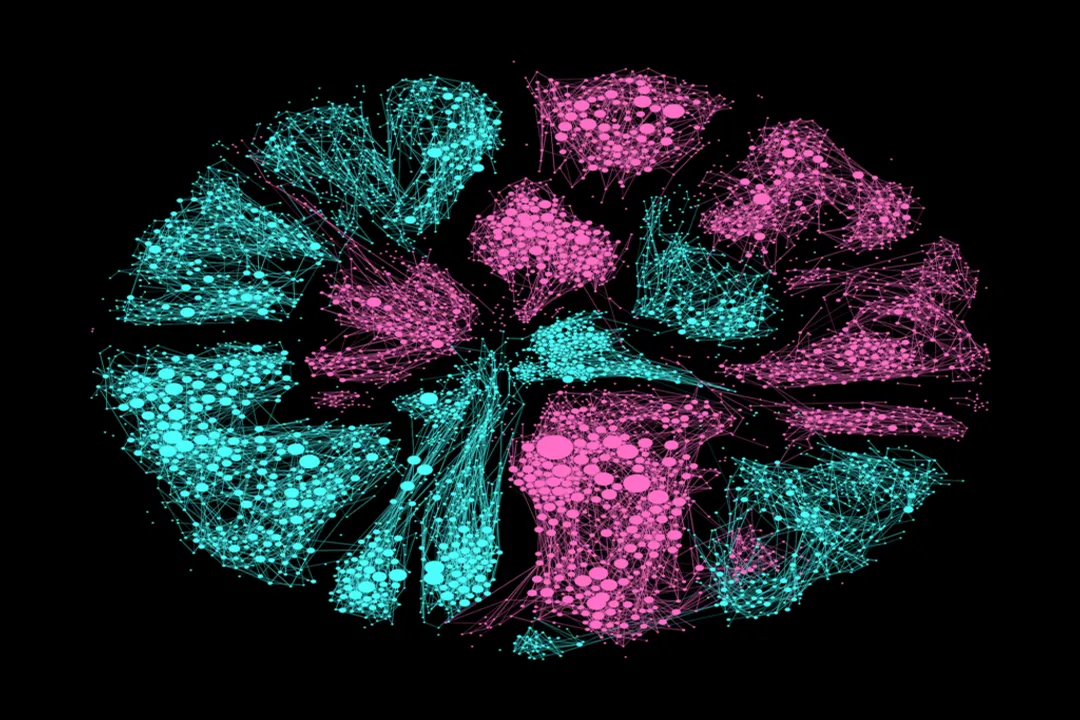
At its most basic, a network consists of nodes (or vertices) representing the entities, and edges (or links) representing the relationships between those entities. [4] The core goal of a network scientist is not just to map these connections but to analyze the properties of the structure itself—how things are connected is often more important than the individual components alone. [4] For example, in a social network, a node might be a person, and an edge could be a friendship or a communication link. [4] The analysis then focuses on metrics like centrality, community structure, or the overall path length across the network. [4]
It is important to differentiate network science from related, yet distinct, fields like network engineering. A network engineer, for instance, is typically focused on the practical infrastructure of communication systems, such as ensuring the reliability and security of a corporate LAN or the internet backbone. [3] While they certainly work with networks, their focus is on implementation, troubleshooting, and maintenance of physical or virtual connectivity. [3] Network scientists, on the other hand, use the mathematical language of networks to study the abstract structure of any system where relationships matter—be it the flow of money, the diffusion of information, or the functional connectivity of neurons. [4][3] This distinction means a scientist might study the structure of protein interactions without ever configuring a router, while an engineer's expertise remains deeply tied to telecommunications infrastructure. [3]
# Core Competencies
To effectively work in this domain, one must build a foundation in several key areas. Because the output of network analysis is often visualized or used for predictive modeling, strong computational skills are essential. [2] A working knowledge of programming languages like Python or R is frequently required, often including familiarity with specialized libraries for graph analysis. [2] Furthermore, the mathematical underpinnings—specifically graph theory—provide the formal language for describing these structures. [4]
Educational pathways reflect this necessity for breadth. While some enter the field through established computer science or physics departments, dedicated programs are emerging. [5] A PhD in network science, for example, often requires students to possess a background in quantitative fields like engineering, computer science, mathematics, or the physical sciences. [5] This indicates that the required expertise is a hybrid: the ability to develop and apply abstract models while possessing the practical skill to manage and process the large datasets these models analyze. [2] If you are planning a career shift or entry, focusing on mastering graph databases and statistical modeling alongside core programming competency will significantly boost your readiness. [2]

# The Analytical Practice
The day-to-day work in network science revolves around the scientific method applied to relational data. This process generally involves several stages: defining the system, collecting or acquiring the interaction data, modeling it as a graph, analyzing its topological features, and interpreting those features in the context of the original problem. [2]
# Data Representation
The first hurdle is often translating a real-world phenomenon into a mathematical graph structure. [2] This requires careful decisions about what constitutes a node and what constitutes an edge. [2] For instance, analyzing misinformation spread on social media might involve setting users as nodes and retweets or replies as directed edges. [2] A key consideration here is the nature of the data: is the network static (a fixed snapshot in time) or dynamic (evolving over time)? Representing a dynamic system correctly, perhaps through a sequence of static graphs or a time-expanded network, is crucial for accurate interpretation. [4]
# Key Analytical Tools
Once the network is built, the analysis begins by calculating descriptive statistics and looking for emergent structures. Essential concepts include:
- Centrality Measures: Identifying the most important nodes. This could be through degree centrality (most direct connections), betweenness centrality (acting as a bridge between others), or eigenvector centrality (being connected to other highly connected nodes). [4]
- Community Detection: Finding clusters or groups within the network where connections are denser internally than externally. [4] This is vital for understanding social groups, functional modules in biology, or modularity in technological systems. [4][8]
- Path Analysis: Determining how quickly or efficiently information or influence can travel across the network, often measured by the average shortest path length. [4]
A useful way to think about the value of these metrics is to compare their focus. Degree centrality gives you the local powerhouse, while betweenness centrality identifies the bottleneck or key broker. A node that ranks highly on degree but low on betweenness is influential within its immediate circle but plays little role in connecting disparate groups across the entire system. [4]
# Application Settings
Network scientists apply these tools across a broad spectrum of domains. In public health, they might model disease transmission to identify optimal intervention points. [4] In computer science and data science, the techniques inform recommendation engines, search engine ranking algorithms, and the identification of fraudulent activity. [8] Social scientists use them to map influence, power, and information flow in organizations or entire societies. [8] The versatility means that the "how" often changes based on the application—a biological network analysis will focus on modularity and flow dynamics, whereas a transportation network analysis might emphasize resilience to disruption. [8]
# Career Prospects and Roles
The versatility of network science skills translates into diverse and generally strong working prospects. [6] Professionals equipped to handle complex relational data are in demand across academia, government, and industry. [1][6] A ZipRecruiter profile for a network scientist often includes job descriptions that blend data science, statistical modeling, and systems thinking. [7]
# Industry Roles
In the private sector, roles frequently overlap with Data Scientist, Machine Learning Engineer, or specialized Analyst positions. [7] Companies dealing with large-scale user interactions—like social media platforms, e-commerce sites, or financial institutions—are prime employers. [1]
- Tech Companies: Analyzing user engagement, platform integrity (detecting bots or coordinated manipulation), and building better recommendation systems. [1]
- Finance: Modeling financial contagion risks or mapping supply chain vulnerabilities. [1]
- Biotech/Pharma: Analyzing biological interaction networks like protein-protein interactions or gene regulatory pathways. [1]
The prospects for someone holding a PhD in network science are particularly promising, as these roles often require the high level of theoretical grounding necessary for novel methodological development. [6] These advanced positions often involve research and development or leading complex analytical teams. [6]
# Academic and Research Paths
The academic route involves pursuing post-doctoral research or faculty positions where the focus remains on advancing the theoretical understanding of complex systems or applying network theory to fundamental scientific questions. [5] Work here might be pure research, like developing new algorithms for dynamic network partitioning, or applied research, such as using network models to understand urban mobility patterns. [8]
It is worth noting a potential difference in hiring for roles advertised strictly as "Network Scientist" versus those requiring network skills as a component of a broader Data Scientist title. Roles explicitly named "Network Scientist" often demand deeper expertise in graph theory and simulation techniques, whereas a Data Scientist role might primarily require the application of common network metrics to existing datasets. [7] If career development involves climbing into leadership, understanding the organizational structure of network science teams—who focuses on modeling versus tool development—can offer a helpful viewpoint for team integration. [1]

# Developing Your Path
If the goal is to enter this field, actionable steps can be broken down based on desired focus. For those aiming for a research-heavy, technical role, deep dives into Graph Theory and Stochastic Processes are non-negotiable. [5] For those aiming for an industry role focused on immediate impact, mastering the practical implementation using tools is key. [2]
Here is a comparative guide for skill development:
| Focus Area | Primary Skill Set | Key Deliverable |
|---|---|---|
| Theory/Academia | Advanced Graph Theory, Statistical Physics, Computational Modeling | Novel Algorithms, Theoretical Papers |
| Industry Analytics | Python/R (NetworkX, igraph), Visualization, A/B Testing | Actionable Insights, Optimized Systems |
| Data Engineering | Handling Large Graph Databases (e.g., Neo4j), Scalability | Efficient Data Pipelines for Network Analysis |
Another crucial element, especially when moving from theory to application, is building a public portfolio. Since many network science jobs are hybrid between data science and specialized research, demonstrating your ability to clean, model, and visualize a novel network structure—perhaps from publicly available data like citation networks or transportation logs—is incredibly valuable. [2] This practical demonstration bridges the gap between academic knowledge and industry expectation, showing you can handle the messy reality of real-world data. [1] The ability to clearly communicate why a network property is meaningful for a business outcome, rather than just what the property is, will often determine success in transitioning into applied roles. [7]
#Videos
Network Science Course s01e01 Overview of Network ... - YouTube
Related Questions
#Citations
Tangled Webs: Careers in Network Science
A quick guide to Network Science
Network Engineering and the field of science? : r/ITCareerQuestions
Network science - Wikipedia
Network Science - PhD Graduate Education at Northeastern University
What is the working prospect for a PhD in network science? - Quora
What is a Network Science job? - ZipRecruiter
Network Science and Network Analysis
Network Science Course s01e01 Overview of Network ... - YouTube