How do you work in Mars mission planning?

This deep dive into Mars mission planning is less about suiting up and more about sitting down—at a desk, in front of complex simulations, and surrounded by diagrams. Working on planning for a crewed mission to the Red Planet means orchestrating an endeavor so complex that a single overlooked variable can cost the mission everything. It is a discipline that blends logistics, engineering rigor, resource management, and an almost preternatural ability to foresee failure.
While much public attention focuses on who will be the first human boots on Martian soil, the true front lines of that effort are populated by systems engineers, mission architects, and logisticians who must build the bridge between Earth and Mars long before a launch window opens. NASA's own work toward sending humans to Mars involves engineers and scientists developing technologies for everything from staying alive to safely returning home. The sheer scale of this task requires a strategic, multifaceted approach to planning.
# Core Planning Components

Mission planning for a deep-space endeavor like Mars is fundamentally about balancing science goals with the harsh realities of interplanetary travel and survival. A payload systems engineer involved in this process must account for the what, when, how, and how much of the entire operation.
# Defining Objectives
Every mission, whether robotic or crewed, begins with establishing clear, measurable, and attainable objectives. For Mars, these goals usually revolve around answering fundamental questions: Was there life? Could humans live there? What does this teach us about Earth? Once the "why" is defined, the entire subsequent plan—from propulsion selection to landing site—must serve those goals. If the objective is cutting-edge geological sampling, the payload must reflect that; if it is simply habitat testing, the requirements shift entirely.
# Logistics and Timing
The travel time itself dictates a massive amount of planning. A trip to Mars can take anywhere from six to nine months, depending heavily on the launch timing and the mass being sent. This leads directly to the concept of launch windows, which are dictated by orbital mechanics—the relative positions of Earth and Mars. High-school students can even use advanced algebra to calculate these windows, illustrating that timing is a non-negotiable, mathematical reality of the mission.
For a system like SpaceX's vision, which aims to establish a self-sufficient city, the logistics involve delivering millions of tonnes of cargo and supporting upwards of a million people. This necessitates launching more than ten times per day during optimized windows to maximize throughput, meaning mission planning extends into manufacturing and supply chain forecasting for the interplanetary transport system itself.
# Payload Integration
The "payload" is what achieves the mission's scientific or operational goals—the rovers, drills, labs, and communication gear. Payload development is integral to success because it houses the necessary tools. A planner must ensure everything fits on the rocket, which brings in the critical constraint of mass budgeting. Furthermore, the functionality of the payload must be continually assessed. For instance, incorporating highly sensitive sensors improves data quality, while robust communication systems are needed to transmit that data across astronomical distances.
# The Technical Backbone: Systems Engineering

If the mission planner is the architect, the Mission Planning Systems Engineer is the lead builder who makes sure the blueprints translate into a functioning structure. This role often involves working within the Agile Software Development Life Cycle when dealing with ground systems software.
A Mission Planning Systems Engineer at a company like Maxar, which supports space operations, is responsible for bridging various technical domains. Their work involves:
- Defining Features: Working with product owners and feature owners to define what the ground system software needs to do.
- System Design Artifacts: Creating the high-level designs that map out how the system will work, including defining and managing requirements within those designs.
- Collaboration: Participating in design sessions with subject matter experts (SMEs) from the back-end processing all the way to the user interfaces, often emphasizing the mission planning aspect within the ground systems.
The required background for this highly technical role is usually a Bachelor's degree in a field like Aerospace, Computer Science, Physical Science, or Mathematics, coupled with at least two years of relevant experience. Strong communication and a self-motivated engagement with the fine details of system design are essential.

# Planning for Martian Realities
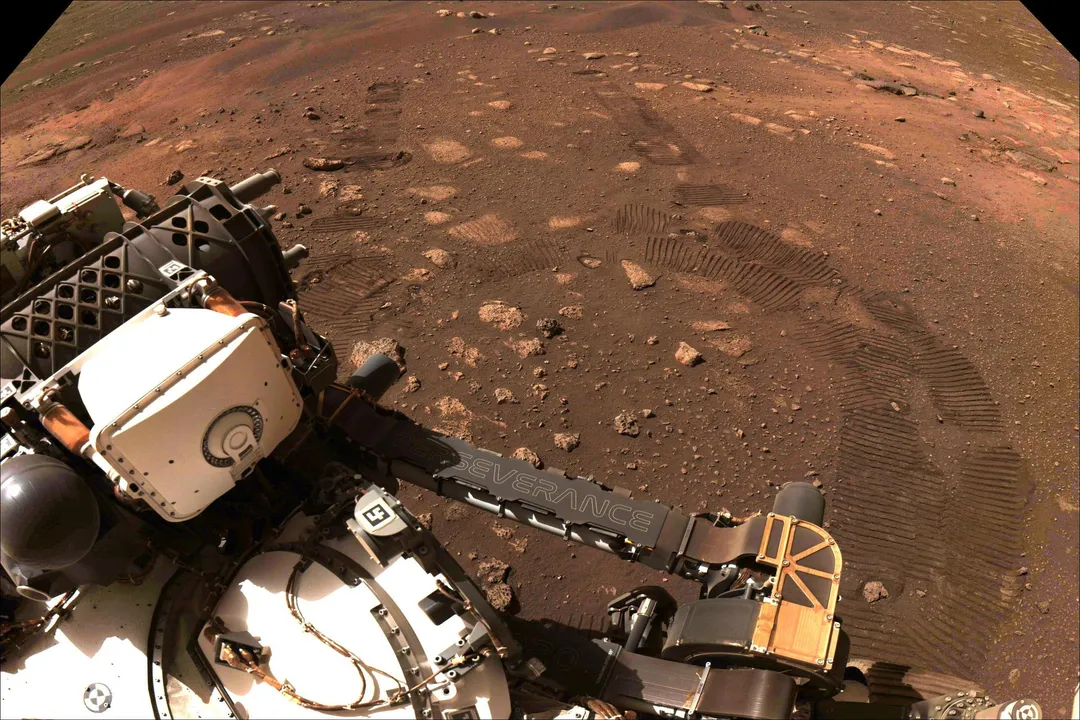
The environment on Mars is utterly unforgiving, and mission planning must proactively address these factors to ensure human and technological survivability.
# Life Support and Habitation
For a roundtrip mission, resupply is not an option for basic necessities. This forces planners to focus heavily on In-Situ Resource Utilization (ISRU) and closed-loop systems.
- Oxygen: Technology demonstrations like MOXIE are crucial, as they prove the ability to produce oxygen from the Martian atmosphere (which is 96% carbon dioxide) for both breathing and producing rocket propellant for the return trip.
- Water/Air: Life support systems being tested on the International Space Station (ISS) must reliably regenerate consumables like water and air to support the crew for the mission duration.
- Power: Given that dust storms can last for months, solar power might be unreliable. Mission planning often investigates more consistent sources, such as nuclear fission power systems, for a reliable surface power supply.
- Shelter: Planners must design habitats, whether fixed or mobile, that offer the same amenities as a home on Earth but must also incorporate robust water recycling and a pressurized volume.
# Risk Mitigation and Safety
Effective planning is defined by minimizing risk and being ready for the inevitable "something to go sideways" scenario. This relies heavily on Space Situational Awareness (SSA), even for deep-space craft, to monitor space debris and calculate trajectory adjustments if needed.
A key insight from examining successful mission planning literature is the necessary integration of contingency plans and regular assessments to build resilience into the mission architecture. One excellent analytical tip for aspiring planners is to map out three complete mission timelines: the nominal path, the path with a known, moderate failure (e.g., one communication relay fails), and the path with a severe but survivable failure (e.g., primary landing system degraded). The differences between these timelines reveal where redundancy funding and effort must be prioritized.
# Paths to Participation: Astronaut vs. Planner
The desire to "be involved in the Mars mission" often splits into two distinct career paths: becoming an astronaut who executes the plan, or becoming a planner/engineer who designs the plan. The skill sets and educational requirements for each differ, though there is significant overlap in the demand for high achievement.
# The Astronaut Track
Astronaut candidates are expected to be the best in their field and bring specialized expertise to the crew. While historical precedent favored military pilots, modern selections include numerous civilian astronauts. Common pathways include:
- Pilot: Often requires military aviation experience, frequently graduating at the top of test pilot school, and accruing significant flight hours.
- Mission Specialist/Scientist: Requires advanced degrees, often a Master's or preferably a Doctorate, in fields like physics, biology, geology, or medicine. Excelling to the point of becoming a premiere expert in a field relevant to Mars is often cited as a better bet than piloting, especially as technology advances. Furthermore, developing cross-disciplinary skills—like geology combined with robotics or materials science—is highly valued.
# The Ground Support Track
For those focused on the planning and engineering side—the people who design the mission—the entry point is often through the aerospace industry or direct hiring at agencies like NASA or private space companies.
To work directly on Mars mission systems planning, educational paths focus on engineering and software, such as Computer Science, Mechanical, or Electrical Engineering. Aspiring deep-space mission planners should not wait for a specific posting; rather, they should seek out informational interviews with people already in roles of interest.
An important practical reality for getting one's foot in the door is realizing that many crucial NASA jobs are executed through contractors. Identifying these key contractors and monitoring their job postings alongside NASA's can double an applicant's opportunities. One compelling tip shared by those familiar with recruitment is that for high-level or specialized government jobs, candidates are often identified or selected before the public posting goes up, emphasizing the need for proactive networking and early engagement in the field.

# Cultivating Mission-Ready Expertise
Regardless of the specific job title—from astronaut candidate to systems engineer—the common thread for individuals selected for the most critical Mars efforts is demonstrated excellence under pressure and mastery in a chosen domain.
# Dual Expertise and Adaptability
It is seldom enough to be good at one thing. Astronauts, for example, are often talented in five or six different areas. A planner needs not only to master their primary discipline (e.g., orbital mechanics) but also cultivate a secondary set of useful skills—perhaps welding or advanced medical training—as a hobby or secondary focus.
This translates directly to mission planning roles. A planner who only understands software design but not the constraints of materials science or life support will create a plan that is technically infeasible. A planner who understands the Agile development cycle for the ground control software and has insight into the unique challenges of deep-space propulsion systems will create a more resilient overall schedule.
# The Importance of Partnerships
Modern space exploration is too expensive and technically challenging for any single entity to manage alone. Mission planners must account for and actively build strategic partnerships, especially within the defense and aerospace sectors. Collaborations with international partners or other commercial entities allow for the sharing of resources, technology, and expertise, which leads to more versatile and well-supported missions. A planner must therefore be adept at understanding the technical requirements and schedules of multiple organizations working in concert.
This collaborative nature means that how you work with others is as important as what you know. Strong listening, written, and oral communication skills are vital when defining complex system designs across multiple teams, often requiring alignment on abstract concepts before physical hardware exists.
In contemplating the necessary foundation for this work, it becomes clear that an aspiring mission professional should view their education not just as a degree checklist, but as a long-term strategy to become indispensable. If you are the person who can solve the novel problems that the mission team hasn't even anticipated—perhaps in robotics, advanced geology, or bioengineering—your value proposition for a Mars mission becomes immense, whether you are physically on Mars or commanding the mission from mission control on Earth. The goal is to cultivate a skill set so deep and unique that when an urgent need arises for the Mars endeavor, you are the obvious person to call upon, and the "offer" to go or to lead the plan will follow naturally.
#Videos
Mission to Mars Student Challenge: Plan Your Mission - YouTube
Related Questions
#Citations
Education Plan Plan Your Mission
How do I become an Astronaut?/go to Mars? : r/nasa - Reddit
Space Mission Planning: Strategies for Success
Mission Planning Systems Engineer - Maxar - Space Crew
Mission to Mars Student Challenge: Plan Your Mission - YouTube
Mission: Mars - SpaceX
Humans to Mars - NASA