How do you work in lab informatics?
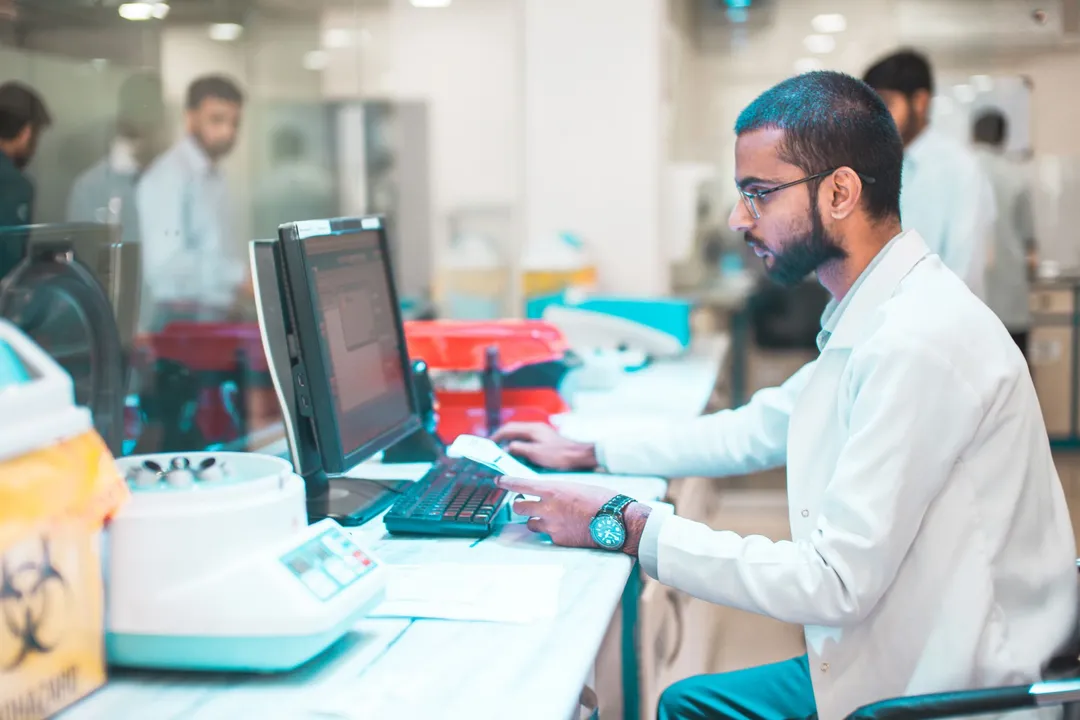
Working in laboratory informatics involves applying information technology principles to optimize and extend the operations within a scientific testing environment. This discipline is essential because modern laboratories generate vast quantities of data, and the true utility of that information hinges entirely on how effectively it is acquired, managed, interpreted, and secured. Essentially, informatics professionals bridge the gap between the bench scientist, the analytical instrument, and the data management infrastructure.
# Defining the Scope
Laboratory informatics is a specialized field that encompasses much more than simply using one piece of software. It is the structure that enables reliable data handling and workflow management across the entire laboratory process. At its broadest, it covers everything from the initial step of data acquisition—whether through sensors, hardware, or voice input—to the final stages of knowledge management, which may involve using tools like an electronic lab notebook (ELN).
The work is rooted in the life cycle of the specimen. Informatics ensures that as a sample moves through the laboratory—from collection and receipt through testing and final disposal—its data integrity is maintained and communicated accurately. This oversight applies across diverse settings, including public health labs, clinical diagnostics, pharmaceuticals, and industrial testing facilities.
# Core Systems Ecosystem
To manage this complexity, the work revolves around several interconnected software systems that together form the digital backbone of the modern lab. Understanding how these systems interact is central to working in this domain.
# System Management
The Laboratory Information Management System (LIMS) often sits at the operational center. A LIMS is designed to automate workflows, manage the tracking of every sample, handle inventory, and ensure that reporting meets compliance standards. In a hospital setting, the LIMS often manages the software aspect from when a physician places an order through to the final release of results.
The Electronic Laboratory Notebook (ELN) serves a different, yet related, purpose, primarily in research and development contexts. It replaces traditional paper notebooks, offering a secure, digital, and searchable way to record experimental observations and procedures.
A Scientific Data Management System (SDMS) is crucial for handling the massive raw and processed data outputs generated by sophisticated analytical instruments. The goal of the informatics professional is often to ensure these disparate systems—LIMS, ELN, instrument software—can communicate, eliminating the fragmentation common in older lab setups. This requires working with middleware and integration tools to connect systems that were not originally designed to speak to one another.

# Daily Tasks Flow
The day-to-day reality of working in lab informatics is highly varied, often depending on whether the focus is on implementation, support, analysis, or compliance, but it generally tracks the specimen's journey through the system.
A typical process flow that informatics professionals support involves several critical data handoffs:
- Ordering: A test request is placed, often digitally.
- Logging/Receiving: The sample is logged into the LIMS upon collection or arrival at the lab. This is a crucial checkpoint where data quality begins.
- Processing and Testing: Worksheets are generated, and instruments process the specimen. Informatics ensures instrument interfacing captures the raw data automatically, minimizing manual transcription errors.
- Result Release: Results are checked against predefined validation rules before being released. Informatics professionals often configure these validation rules.
A significant component of the job involves acting as the technical liaison between the bench staff who use the instruments and the IT department that maintains the servers and network. You might find yourself translating a laboratory's need for a new test workflow into functional software requirements, or conversely, explaining why a proposed IT security update might impact instrument data capture. This mediating role demands deep technical understanding coupled with practical lab knowledge. When designing user interfaces for lab personnel, for instance, direct experience with lab techniques and procedures becomes invaluable for optimizing usability.
If we consider a public health context, informatics professionals also focus heavily on data standards. They must ensure that data generated adheres to standards necessary for sharing information across jurisdictions or for epidemiological surveillance—recognizing the types of standards available and the importance of their consistent application is key.
# Addressing the Liaison Gap
In many organizations, the primary challenge is the communication chasm between laboratory operations and the central Information Technology department. While IT staff understand servers and networks, they often lack the specific context of regulatory needs like 21 CFR Part 11 or the nuances of clinical test result validation. Conversely, seasoned lab technicians might understand what they need from a software system but struggle to articulate that need in terms of database fields or interface programming. Working in informatics means closing this gap. A valuable move for anyone stepping into this field is to proactively document the standard operating procedures (SOPs) of the lab you support using precise, non-jargon language, and then mapping each step to its corresponding LIMS function or data field. This documentation serves as an invaluable reference for future troubleshooting, system updates, and new employee training, ensuring that institutional knowledge about how the lab functions is never lost, regardless of staff turnover [This action combines the need for workflow documentation and user support mentioned in system implementation].
# Necessary Skills and Qualifications
Thriving in this area requires a blended skillset where technical aptitude meets deep domain knowledge. No single degree covers everything, but a strong foundation is usually required in laboratory science, data management, or computer science.
# Technical Competencies
Technical proficiency often involves hands-on experience with the core informatics platforms themselves, such as LIMS or ELN. Beyond the specific software, understanding the infrastructure that supports them is vital. This includes:
- Data Integration: Knowing how to build or manage interfaces, potentially involving standards like HL7, and understanding the utility and limitations of interface engines.
- Data Standards: Recognizing and implementing data standards necessary for interoperability and regulatory reporting.
- Systems Experience: Familiarity with data acquisition systems, database administration, and the networking that allows systems to communicate. For those in development or configuration roles, expertise in specific programming environments like .NET, or in data visualization tools, is necessary.
# Soft Skills are Non-Negotiable
While the technology is complex, many sources emphasize that the people aspect of the job is what defines success. Strong attention to detail is paramount, as minor errors in configuration or data entry can lead to incorrect patient results or compliance failures.
Problem-solving abilities are constantly tested when legacy systems fail to interact or when a new regulatory requirement must be implemented under a tight deadline. Perhaps most important is effective communication. This skill is not just about writing clear documentation—like User Requirement Specifications (URS) or test cases—but about professional demeanor and the ability to negotiate priorities between technical teams and clinical or scientific stakeholders, even under stress.
# Actionable Tip for Skill Development
If you come from a pure laboratory science background and are transitioning into informatics, prioritize formal training or demonstrable project experience in data structuring and basic IT security concepts (like the principles behind 21 CFR Part 11 compliance) rather than solely focusing on advanced programming languages. A scientist who can clearly map a lab's validation needs into structured functional requirements will often be more immediately valuable in an implementation role than a junior coder who only understands the syntax but not the why behind the LIMS validation module [This insight focuses on prioritizing compliance/requirements documentation over niche coding skills for entry-level informatics roles rooted in lab experience].

# Trajectory of the Field
Working in lab informatics today means being part of a system undergoing constant technological acceleration. Historically, labs relied on paper logs, making reproducibility difficult. The introduction of LIMS in the 1990s marked a major shift toward formal data organization.
The contemporary challenge, which defines much of the current work, involves moving from siloed software to an integrated digital ecosystem. This involves migrating data from older platforms, enforcing standards like ISO or CLIA, and integrating new analytical instruments in real-time. Organizations that provide informatics solutions often offer services like consulting, validation support, and cloud hosting to help labs manage this integration and compliance load.
Looking forward, the trend is toward "smart science." Emerging technologies like Artificial Intelligence (AI), Machine Learning (ML), and the Internet of Things (IoT) are being woven into laboratory informatics platforms. This shift suggests that future roles will move beyond simple record-keeping and validation toward enabling predictive analytics—using historical data collected via LIMS and SDMS to anticipate operational needs or flag anomalies before they become errors.
A key observation for anyone entering this space is that while specialized systems like LIMS and ELN are central, the true value is unlocked by interoperability. A lab might have state-of-the-art instruments generating perfect data, but if that data remains isolated in a vendor-specific format, it cannot contribute to broader decision-making, such as tracking disease surveillance or optimizing national testing capacity. Therefore, a successful informatics professional focuses not just on implementing the best individual tool, but on mastering the connective tissue between all tools, ensuring that data flows freely, securely, and meaningfully from point of collection to point of final insight [This analysis emphasizes that data flow and interoperability—the connective tissue—often present a greater strategic challenge than the selection of any single major system like LIMS].
Related Questions
#Citations
Laboratory Informatics: What Is It and How Does It Work? - USF Health
Can someone explain to me what a Laboratory Informatics person ...
Careers - Lab-Informatics
Introduction to Laboratory Informatics: Life of a Specimen
What are the key skills and qualifications needed to ... - ZipRecruiter
How Laboratory Informatics Drives Scientific Progress - LabLynx
Laboratory informatics - Wikipedia