How do you work in high-throughput screening?
Working in high-throughput screening (HTS) means engaging with one of the most powerful, yet detail-oriented, workflows in modern scientific discovery, whether you are searching for a new medicine or a novel material. [2][3] At its heart, HTS is a methodology designed for speed and scale, allowing researchers to rapidly test vast libraries of chemical compounds or biological agents against a specific target. [8][3] This contrasts sharply with traditional bench chemistry, where testing might take weeks or months. HTS compresses this timeline by employing automation to process hundreds of thousands, sometimes millions, of samples in just days or weeks. [7][3]
# Defining Scale

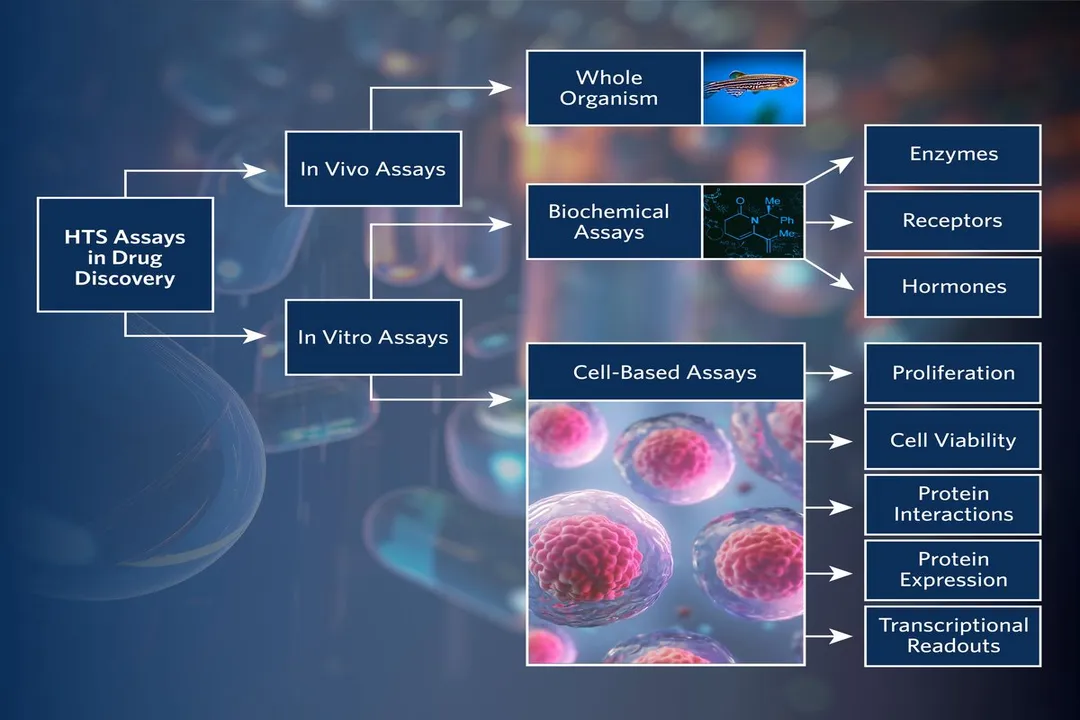
The "high-throughput" aspect directly relates to the volume handled and the instrumentation required to manage it. [8] The goal is efficiency: to quickly filter an enormous chemical space down to a manageable set of "hits"—those compounds that show the desired interaction with the target system. [6] In drug discovery, this target might be a protein involved in a disease pathway; in material science, it could be a surface reaction that yields a desirable property like enhanced conductivity or stability. [2][6]
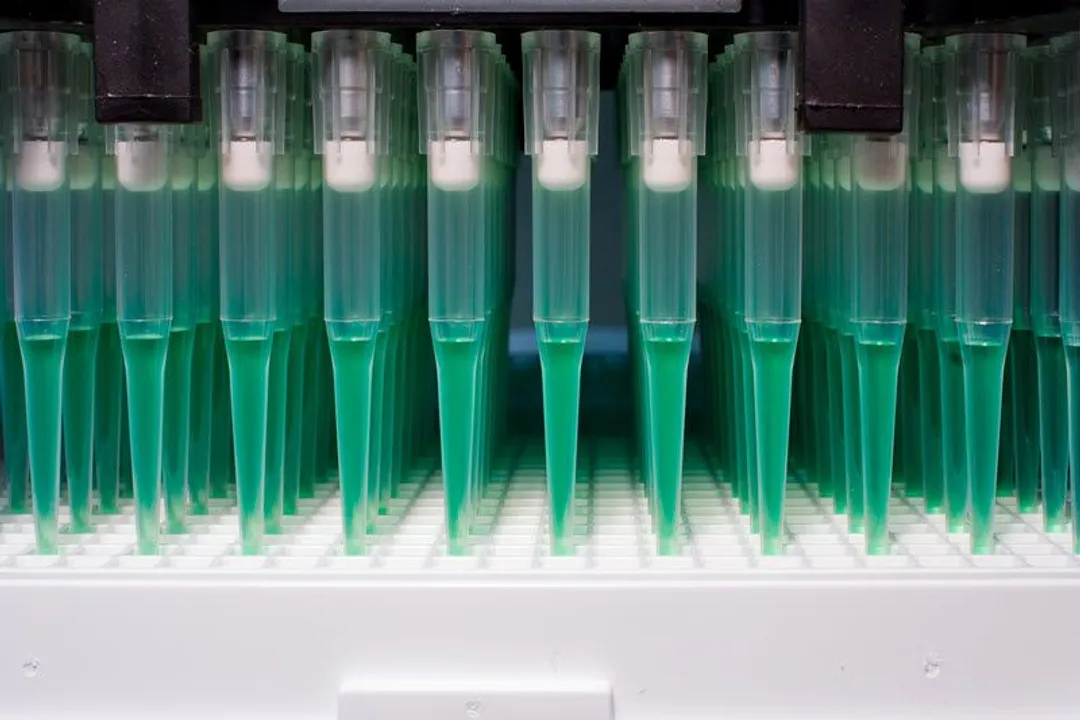
The defining characteristic that separates HTS from medium- or low-throughput methods is the drastic miniaturization of the assay. [1] Instead of using traditional test tubes or large multi-well plates, HTS often utilizes formats as small as 384-well or even 1536-well plates. [1] This miniaturization dramatically reduces the required volumes of expensive reagents, the quantity of the target molecule, and the amount of test compound needed per test, enabling the testing of larger libraries. [7]
# Assay Preparation
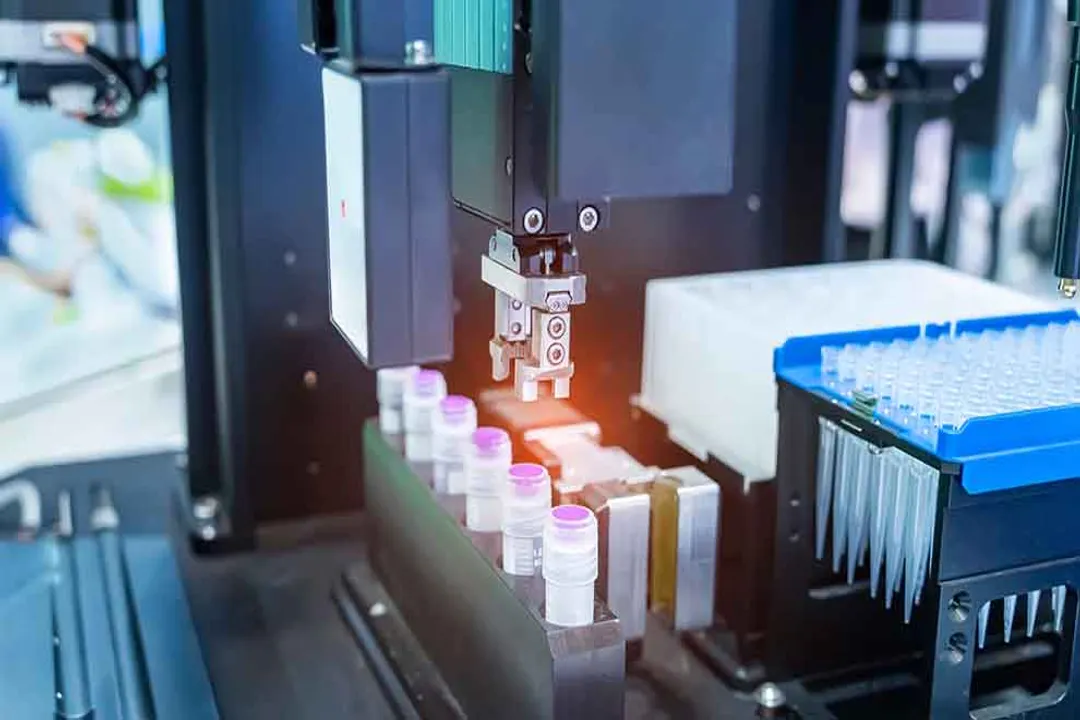
Before any compound library touches the automated robots, the success of the entire operation hinges on a well-developed assay. [1] This stage, known as assay development, is arguably the most crucial step in the entire HTS workflow. [5] You cannot simply pour chemicals onto a biological system and hope for a clear result; the reaction must be predictable, robust, and measurable. [1]
Assay development involves several critical optimizations. Researchers must determine the ideal buffer conditions, pH, temperature, and concentrations of the target and any co-factors needed for the reaction to occur correctly. [1] Furthermore, the system must be miniaturized without sacrificing the signal quality. The readout—whether it is fluorescence, luminescence, or another measurable characteristic—must be significantly different between the "active" (positive control) and "inactive" (negative control) conditions. [5]
A key metric here is the Z-factor, which quantifies the assay window quality. If the Z-factor is low, meaning the noise (variation) between controls is high relative to the difference between them, the assay is too unreliable for large-scale screening. [5] A well-optimized assay should reliably produce a Z-factor above 0.5, giving confidence that what is measured at scale is genuine biological activity and not random experimental variation. [5]

# Screening Workflow
Once the assay is validated, the physical screening begins, following a strict, programmed sequence of events that minimizes human intervention to maintain precision and speed. [1][8]
- Plate Preparation: The primary assay plates are prepared. This involves dispensing precise, often nanoliter-scale, volumes of the target molecule or cell suspension into every well of the plate. [1] High-precision liquid handling robotics are essential here to ensure uniformity across all wells. [8]
- Compound Addition: The test compounds, stored in large sister plates (the screening library), are then transferred into the assay plates. [1] This is where automation excels; robotic arms move plates between compound storage, incubators, and the dispensing units, often using acoustic dispensing technology to move droplets accurately without physical contact that could cause carryover contamination. [1]
- Incubation: The plates are incubated for a specified time, allowing the test compound to interact with the target system. [1] The duration is determined during the assay development phase to ensure the reaction reaches an endpoint suitable for measurement. [1]
- Signal Detection: Finally, the plates are moved to specialized plate readers. [4] These instruments are configured for the specific detection method the assay relies upon—perhaps measuring light produced via luminescence, the intensity of emitted fluorescence, or even using sophisticated imaging systems to look inside the cells for morphological changes. [4]
# Technology Backbone
The entire concept of HTS relies on sophisticated engineering and automation systems working in concert. [8] This is far removed from traditional lab work; HTS labs resemble highly organized factory floors for biochemical reactions. [1]
Instrumentation is modular, allowing labs to tailor the setup to their specific needs. Key components include:
- Automated Liquid Handlers: These robots are responsible for the precise dispensing of low-volume liquids, often down to the picoliter or nanoliter range. [8]
- Robotic Plate Movers: Systems that physically transport microtiter plates between different stations (dispensers, incubators, readers). [1]
- Plate Readers: The detectors must be extremely sensitive and fast. [4] Common technologies include:
- Luminescence: Measuring light generated by a chemical reaction, which is often very sensitive. [4]
- Fluorescence/TRF: Measuring how a compound absorbs and re-emits light, frequently used for binding assays. [4]
- High-Content Screening (HCS): In more complex assays, HCS uses automated microscopy to gather multiple data points per well, such as cell count, protein localization, and morphology, moving HTS toward functional profiling. [4]
The choice of technology profoundly impacts the data output. For instance, a simple intensity reading provides a single number per well, whereas an HCS system generates thousands of pixels' worth of data per well, requiring significantly more computational power downstream. [4]
# Data Processing
Generating the raw signal is only half the battle; interpreting the deluge of data is the other. [8] Raw data from the plate reader—often just a collection of fluorescence units or optical density readings—must be transformed into meaningful biological information. [1] This transformation involves sophisticated data processing pipelines. [8]
The initial processing involves normalization. Every raw value is typically compared against the known positive and negative control wells present on every plate. [1] This corrects for minor variations in reagent concentration or instrument performance plate-to-plate, yielding a normalized percentage of inhibition or activation for each test compound. [1]
After normalization, data scientists apply statistical filtering. Compounds that fall outside defined statistical cutoffs (e.g., inhibiting the target by more than 50% with a low standard deviation) are flagged as preliminary hits. [1]
One area where experience in HTS really pays dividends is in hit triage. A compound might appear statistically significant based on the raw calculations, but poor spatial consistency on the plate is a massive red flag. A compound whose signal is strong only in the corner wells, for example, often signals an edge effect or dispensing artifact rather than true activity. [5] A critical step, often performed manually or semi-automatically after the initial pass, involves assigning a confidence score based not just on the statistical threshold met, but on the spatial uniformity of that signal across the entire assay plate. Prioritizing compounds with high statistical scores and uniform spatial distribution saves enormous resources during the expensive confirmation phase. [5]
# Application Differences
While the methodology relies on standardized automation and miniaturization, the application dictates the entire design philosophy. [2][6]
| Discovery Field | Primary Goal of HTS | Typical Target System | Readout Focus |
|---|---|---|---|
| Drug Discovery | Identify small molecules that modulate a disease-related protein or pathway. [6] | Recombinant proteins, cellular pathways, enzymes. [6] | Inhibition, activation, receptor binding. [6] |
| Material Science | Discover novel chemical structures with desired physical characteristics. [2] | Polymerization reactions, catalytic surfaces, material surfaces. [2] | Conductivity, thermal resistance, spectral properties. [2] |
In the pharmaceutical context, a confirmed hit then moves into Hit-to-Lead (H2L) optimization, where medicinal chemists begin to tweak the structure to improve potency, selectivity, and pharmacokinetic properties. [6] In material discovery, the confirmed hit is then subjected to scale-up tests to see if the desired property is maintained when synthesized in larger batches or applied to a bulk surface. [2] The rigor applied in the initial HTS defines the quality of the candidates entering these downstream, more focused research streams. [6]
Related Questions
#Citations
High-throughput Screening Steps
High-Throughput Screening (HTS): A Simple Guide to ...
An Overview of High Throughput Screening | The Scientist
High-throughput screening (HTS)
High Throughput Screening
What is High-Throughput Screening in Drug Discovery
High-Throughput Screening (HTS) in Drug Discovery
What is High-Throughput Screening (HTS)?