How do you work in energy forecasting?

Energy forecasting forms the mathematical backbone of the modern power system, transforming uncertain future demand and supply into actionable data points. [1] This practice moves far beyond simple extrapolation; it is a sophisticated application of data science dedicated to ensuring grid stability, optimizing resource allocation, and managing the financial risks associated with energy trading and generation. [7] The entire structure of electricity markets, from long-term capacity planning to moment-to-moment frequency control, rests upon the reliability of these predictions. [9]
# Prediction Importance
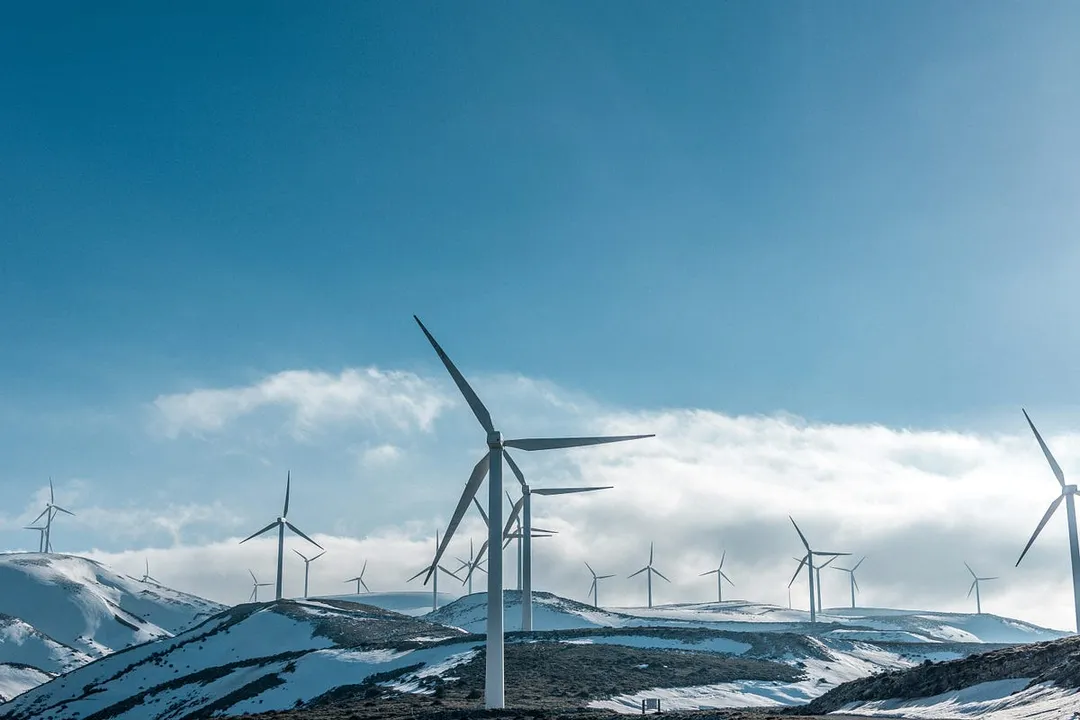
The primary objective in this domain is reducing uncertainty because uncertainty translates directly into cost and risk. [7] When a power generator overestimates demand, they might burn fuel unnecessarily or commit reserve capacity that sits idle, wasting money. [1] Conversely, under-forecasting can necessitate expensive, rapid activation of peaker plants or the costly purchase of energy from the wholesale market at spot prices, which can spike during peak shortages. [7] For distribution system operators, precise short-term forecasts allow them to commit the right mix of conventional generation alongside managing intermittent renewable sources like wind and solar, keeping system frequency stable. [9] This balancing act is increasingly complex due to the integration of variable renewable energy sources, making high-quality forecasting non-negotiable for grid health. [1]
# Input Elements

Working in energy forecasting begins and ends with data. The foundation of any successful model is historical consumption data, often broken down into hourly or 15-minute intervals spanning several years. [5][6] This historical load profile reveals diurnal patterns (daily peaks and troughs) and seasonal trends (higher usage in summer/winter). [6]
However, simply knowing past usage is insufficient; the core of the expertise lies in identifying the exogenous variables that drive the load. Weather data is almost always the single most influential external factor. [1][6] Forecasters must acquire granular meteorological information, including temperature, relative humidity, cloud cover, and solar irradiance for solar power forecasting, or wind speed and direction for wind power. [1]
One subtle but critical factor many initial models overlook is local infrastructure health; for instance, a major planned outage in a specific substation area, even if outside the primary demand centers, can significantly alter localized load profiles, requiring manual adjustments or unique spatial variables in the data pipeline. [4] The quality and spatial resolution of these inputs often dictate the ceiling of forecast accuracy achievable by the subsequent algorithms. [3]

# Modeling Spectrum
The methodological approach has evolved significantly over time. Early energy forecasting relied heavily on classical statistical techniques, such as auto-regressive integrated moving average (ARIMA) models or basic regression methods, which are good at capturing linear trends and seasonality. [3] While these remain useful for simple baselines or long-term planning where data noise is less critical, they struggle with the complex, non-linear interactions present in modern energy systems. [6]
Today, the field is dominated by machine learning approaches. [3][8] Common algorithms include Support Vector Machines (SVMs) and various forms of Neural Networks. [5] For practitioners in the field, the choice of algorithm often depends on the forecasting horizon and the available computational resources. [2] For instance, predicting load one to four hours ahead often benefits from models that excel at capturing temporal dependencies, like Recurrent Neural Networks (RNNs) or Long Short-Term Memory (LSTM) networks, which inherently understand sequences. [8] Conversely, day-ahead forecasts might utilize more traditional supervised learning models optimized for feature importance mapping. [5]
| Model Category | Typical Application Horizon | Strength |
|---|---|---|
| Statistical (e.g., ARIMA) | Long-Term | Simplicity, Interpretability |
| Machine Learning (e.g., Random Forest) | Medium-Term (Days to Weeks) | Handling non-linear features |
| Deep Learning (e.g., LSTM, RNN) | Short-Term (Minutes to Hours) | Capturing complex time-series dependencies |
| Ensemble Methods | All Horizons | Improved generalization and stability |
To ensure model robustness across seasons, a useful practice is to normalize weather inputs not just against historical averages, but against the specific year-over-year weather deviation for that same date. For example, if this July is projected to be 3 degrees warmer than the 10-year average for July, the model should weigh that anomaly relative to historical July behavior, rather than just the absolute temperature value. [1]
# Time Scales
A professional energy forecaster rarely works on a single timeline; rather, they manage a portfolio of forecasts differentiated by their required lead time, each serving distinct operational needs. [6]
- Short-Term Forecasting (STF): This covers predictions ranging from a few minutes up to about 72 hours out. This is arguably the most demanding area, directly impacting real-time economic dispatch and system security. [6] Accuracy here must be high, often measured in very low percentage errors, as errors directly translate into immediate operational costs. [1]
- Medium-Term Forecasting (MTF): Spanning weeks to a few months, MTF guides decisions like fuel inventory management, routine power plant maintenance scheduling, and financial hedging strategies in energy markets. [6]
- Long-Term Forecasting (LTF): These projections look out over several years and are essential for capital expenditure planning, assessing infrastructure upgrades, and determining future capacity needs. [6] These forecasts are generally less sensitive to daily weather fluctuations and more focused on demographic shifts, economic growth, and electrification trends. [6]

# Day Work
The actual day-to-day existence of an energy data scientist often involves less model training and more preparation and monitoring. According to professionals sharing their experience in the sector, data preparation, cleaning, and feature engineering can easily consume 60 to 70 percent of the project time. [4] Data pipelines must be automated to ingest new weather feeds, real-time consumption data, and market information constantly. [10]
Once deployed, models are not left unattended. Grid operation requires constant vigilance, meaning models must be monitored for "model drift"—a decline in accuracy over time caused by real-world changes that the model was not trained on. [1] For instance, the widespread adoption of rooftop solar panels fundamentally changes net load profiles, potentially rendering older models obsolete until they are retrained on the new load dynamics. [9] Model validation is continuous, using metrics like Mean Absolute Error (MAE) or Mean Absolute Percentage Error (MAPE) to quantify performance against the actual outcomes. [2][5] The goal is not just high accuracy, but trustworthy accuracy. [10]
# Measuring Success
The output of the forecasting process is only valuable if its quality can be objectively quantified and trusted by the engineers and traders who depend on it. [10] The industry relies on standard error metrics to benchmark performance. [2] While MAPE offers an intuitive percentage view, MAE is often preferred when dealing with energy systems where large errors during small demand periods can skew results disproportionately. [5]
A key challenge in building trust is the 'black box' nature of the best-performing algorithms, such as deep neural networks. [4] An operator needs to know why the system predicts a sudden 500 MW drop in solar output—is it a cloud bank formation, or a sensor error? This necessity drives the growing importance of Explainable AI (XAI) techniques. [4] Even if a complex model is marginally more accurate than a simpler, transparent model like Random Forest, the operator may choose the latter if they can interrogate its decision-making process effectively. [10] This trade-off between predictive power and interpretability remains a central theme in practical energy forecasting implementation. [3]
Related Questions
#Citations
Energy Forecasting: The Key to Smart Energy Decisions
Getting started with Energy Forecasting - Kaggle
Energy forecasting methodologies: science and technology at the ...
Anyone working in energy sector? How does your work look like?
Energy Forecasting: Optimizing Power Generation and ... - Medium
Energy Use Forecasting Methodology
How Energy Forecasting Saves Money and Resources - Propmodo
Forecasting Algorithms for Energy Optimization - METRON
How Forecasting Will Transform Grid Operations - Camus Energy
How do you model and forecast energy in your practice? - LinkedIn