How do you work in alternative protein companies?
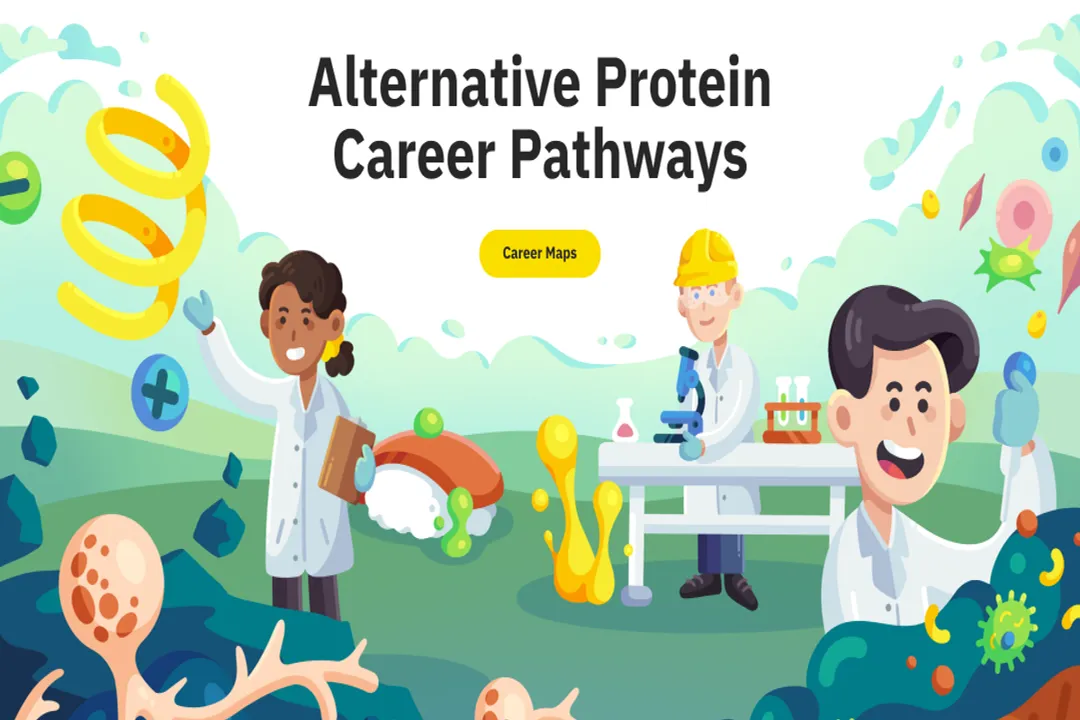
The alternative protein industry represents a significant area of expansion for food technology, drawing in professionals from diverse backgrounds who are keen to contribute to more sustainable and resilient food systems. [1][6] Working within this space is not limited to those holding advanced degrees in biochemistry or microbiology; there is a substantial need for talent in business development, engineering, operations, policy, and communications. [3][4] Understanding where your current skillset fits within the ecosystem—which includes plant-based foods, cultivated meat, and precision fermentation—is the first step to a successful career transition. [1][9]
# Sector Overview

The field of alternative proteins generally divides into a few core technological categories, and the work involved varies significantly depending on which sector a company operates within. [1][9]
# Plant-Based Foods
This is often the most visible segment, focusing on creating food products derived entirely from plants, such as soy, wheat, peas, or fungi, to mimic the taste, texture, and function of conventional meat, dairy, or eggs. [1] Jobs here often resemble traditional food manufacturing and CPG (Consumer Packaged Goods) roles but with an added focus on ingredient functionality and novel processing techniques. Roles might involve flavor chemistry, extrusion science, or optimizing supply chains for novel protein sources. [4]
# Cultivated Meat
Cultivated meat, or cell-based meat, involves growing animal cells in bioreactors to produce actual meat products without raising and slaughtering livestock. [1] This area is heavily reliant on core scientific disciplines. Positions often require expertise in cell biology, tissue engineering, media formulation (the "cell food"), and scaling up production from lab bench to industrial scale. [5][4] Regulatory navigation is also a huge focus as companies move toward commercialization. [7]
# Precision Fermentation
This technology uses microbes, such as yeast or fungi, as "cell factories" to produce specific functional ingredients—like milk proteins (casein, whey) or egg proteins—without the animal itself. [1] Workers in this sector often bridge the gap between biology and large-scale chemical engineering. Expertise in microbiology, bioprocessing, downstream purification, and fermentation scale-up are highly valued here. [3][9]
# Core Professional Functions
Regardless of the specific technology, companies in this sector require the same foundational functions as any other high-growth technology business. Recognizing transferable skills from existing industries is key to mapping your professional profile onto the needs of an alternative protein company. [5]
# Science and Technology
This function is the engine of innovation, covering everything from basic research to product application. A specialist in alternative proteins, for instance, might require a foundation in food science, combined with an understanding of biochemistry and product development principles to successfully formulate a final product. [2] Roles here include:
- R&D Scientists: Focused on improving ingredients, developing new scaffolding materials for cultivated meat, or engineering microbes for better yield. [4]
- Process Engineers: Tasked with taking a successful bench-scale process and designing the equipment and protocols to make it manufacturable at commercial volumes. [3]
- Analytical Chemists: Ensuring product safety, quality, and consistency through rigorous testing protocols. [2]
# Business and Operations
As the science matures, the business side becomes critical for viability. These teams handle market entry, funding, and physical production.
- Supply Chain & Sourcing: Identifying and securing reliable, scalable sources for raw materials, whether plant biomass or cell culture growth media components. [4] If you have experience in global procurement for food or pharma, this is a direct fit.
- Finance & Strategy: Securing venture capital, managing budgets for capital-intensive projects (like bioreactor construction), and planning market expansion. [1]
- Sales & Marketing: Educating consumers and business buyers about novel products and overcoming initial skepticism regarding taste, texture, or novelty. [1]
When looking at required operational skills, one area that often gets overlooked by incoming talent is scale-up logistics. Moving from making a kilogram of product in a pilot plant to producing metric tons requires deep expertise in fluid dynamics, heat transfer, and sterilization protocols—skills directly transferable from traditional chemical or large-scale food processing, even if the product itself is new. [5]
# Policy and Advocacy
The trajectory of this industry is heavily influenced by public perception and government regulation. Roles in this function work to ensure favorable regulatory pathways for new food categories and build public trust. [7] This often involves liaising with bodies like the FDA or USDA, requiring expertise in law, public affairs, and regulatory science. Organizations focused purely on advocacy may also hire for similar roles to influence policy from a non-profit angle. [7]
# Pathways into the Industry
The path into alternative proteins is rarely linear, particularly for those transitioning from established food, biotech, or agricultural backgrounds. [5][9]
# Education and Credentials
While a specific "Alternative Protein Degree" is still rare, formal education provides a necessary foundation. [2] Many successful candidates have backgrounds in:
- Food Science and Technology.
- Biological or Chemical Engineering.
- Molecular Biology or Biochemistry.
- Business Administration (MBA) focused on sustainability or innovation. [4]
For those already possessing a degree in a related field, upskilling through short courses, specialized certificates, or attending targeted industry workshops can signal commitment to hiring managers. [9] For example, a chef transitioning to product development might benefit from taking a specialized short course in lipid chemistry related to plant-based texture modification.
# Transferring Experience
One of the most common entry points is lateral transfer, moving skills honed in traditional sectors to the novel environment of alternative proteins. [5] Someone with deep experience in quality assurance (QA) for a major meatpacker, for example, brings invaluable knowledge about pathogen control, traceability, and large-scale sanitation that a pure academic researcher might lack. [5][4] Conversely, individuals coming from animal welfare charities often possess strong communication skills vital for navigating the ethical questions surrounding new food technologies. [7]
# Navigating the Job Market
Job seekers should look beyond general job boards and target resources specifically dedicated to the sector. [10] Specialized job boards and industry association portals are crucial for catching roles that are often filled quickly through internal networks or focused searches. [3][10] When applying, it is helpful to quantify how your past work solved problems analogous to those the alternative protein company currently faces. For instance, instead of saying you managed a lab, state that you "reduced experimental failure rates by 20% by redesigning standard operating procedures," as this demonstrates immediate value delivery. [9]
# Startup Culture vs. Established Roles
The environment you choose plays a massive role in your day-to-day work and career trajectory.
# Early-Stage Startups
Working at a pre-revenue or Series A startup means adapting to an environment characterized by high uncertainty, rapid change, and significant personal responsibility. [7]
- Pro: You will likely wear many hats, gaining broad exposure to different business functions very quickly. This "generalist on steroids" experience is excellent for rapid learning. [5]
- Con: Resources are often scarce, processes are unformed, and the risk of failure is higher. [7] Your job description might change weekly.
# Mid-to-Large Companies and Spin-offs
As companies mature or large food incumbents enter the space, roles become more defined, specialized, and often better funded. [7]
- Pro: Clearer career ladders, more established HR and training programs, and access to larger capital for scaling production. [6]
- Con: Less opportunity to influence core strategy outside of your specific functional silo; work can sometimes feel more incremental than revolutionary compared to the early days. [7]
It is insightful to consider that while a large food company offers excellent training in regulatory compliance and consumer trust building, a startup offers better training in speed and capital efficiency. A truly strategic move might involve spending a few years in an early-stage venture to grasp the technology’s core constraints, then moving to a larger firm to help apply those lessons to commercialization at scale, or vice versa. [4]

# Cultivating Industry-Specific Expertise
Making the jump requires more than just a resume update; it demands demonstrating fluency in the industry’s unique challenges and vernacular.
# Understanding the Metrics of Success
For a cultivated meat company, success isn't just about making tasty tissue; it's about achieving cost parity with conventional meat through scale-up—a concept heavily tied to reducing the cost of cell culture media. [1] For a precision fermentation company, success is defined by titer (the concentration of the desired protein produced) and yield (how much raw input is converted into the final product). [3] Understanding these technical benchmarks shows you grasp the economic realities of the business, not just the scientific novelty.
# The Importance of Localization
While global trends exist, regulatory and consumer acceptance challenges are highly local. For instance, the path to market approval in the United States for cultivated products differs significantly from the processes in Singapore or the European Union. [5] If your goal is to work in regulatory affairs or market access, specialized knowledge of a specific geography—its import/export laws, its dominant consumer preferences, and its specific regulatory bodies—is a powerful differentiator that general industry knowledge cannot replace. [9] This localized expertise often dictates where the next wave of hiring will occur as companies target new regions for expansion.
#Videos
Finding your place in the alt protein industry - YouTube
Related Questions
#Citations
Alternative protein career portal - The Good Food Institute
Alternative Protein Specialist Career and Certification for RDNs
Roles & Pathways - AltProtein.Jobs
Alternative Protein Career Pathways: GFI
Advice for transferring into Cultured Meat jobs : r/wheresthebeef
Alternative Protein Industry – Growing Opportunities – Career Center
Working in alternative protein startups or animal charities?
Finding your place in the alt protein industry - YouTube
<br/>Career Guide for Ending Factory Farming