How Do Job Interviews Work?
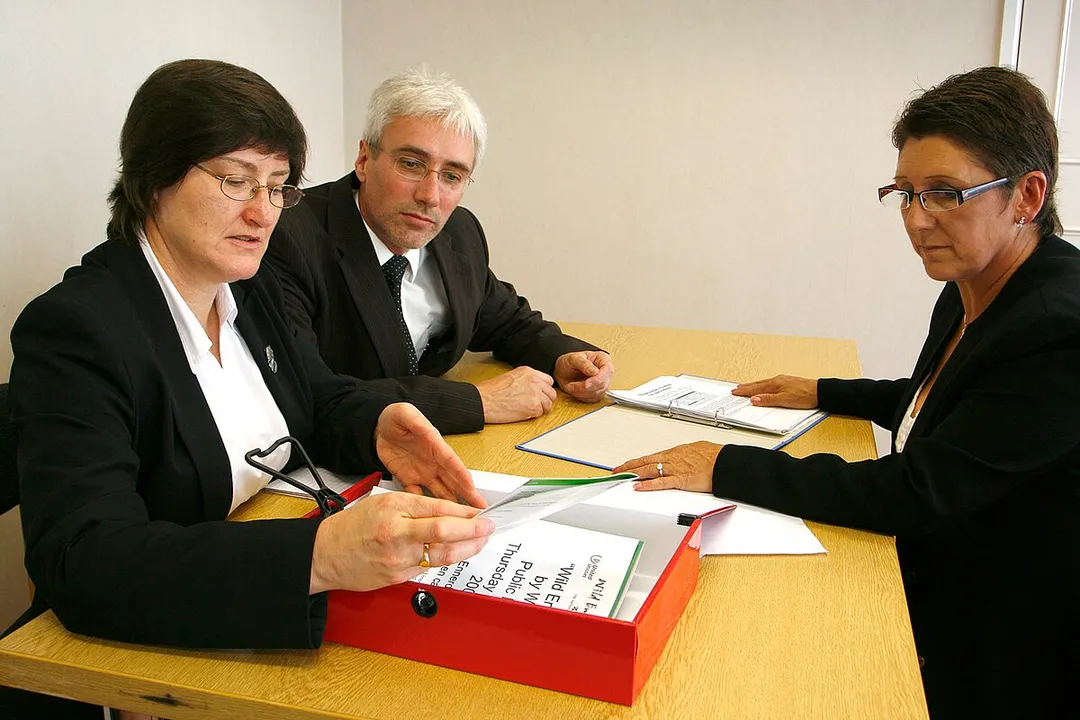
The initial conversation between you and a potential employer, commonly known as the job interview, serves a fundamental purpose: it is the mechanism by which both parties assess suitability for a role. Far from being a one-sided interrogation, the interview is designed as a mutual exchange of information and ideas. The employer seeks to analyze your knowledge, skills, and abilities (KSAOs) to predict success in the position, while you simultaneously determine if the role, team, and corporate culture align with your career goals and values.
For many organizations, interviews remain one of the most frequently used tools in the employee selection process, sometimes even more so than standardized tests of cognitive ability or personality. However, research indicates that the reliability of interviews can vary widely, often depending heavily on how they are structured and executed. Understanding how this process typically unfolds—from the initial screening to the final follow-up—is the key to moving from a nervous applicant to a confident candidate.
# Three Phases
Any job interview process can be broken down into three distinct, yet interconnected, phases: pre-interview, interview, and post-interview. Understanding what happens outside the formal meeting time is just as important as preparing for the questions themselves.
# Pre-Interview Dynamics
The pre-interview phase sets the stage, often before a single word is spoken face-to-face. For the interviewer, this involves reviewing submitted materials like résumés and application data, often integrating this information with their initial perception of the ideal candidate profile, leading to a pre-interview evaluation. In the modern context, this information gathering can extend to public-facing social media profiles, blogs, and search engine results, which can influence an interviewer’s impression regardless of job relevance.
For the candidate, preparation is the bedrock of this phase. This means thorough research is mandatory. You need to know the company’s mission and goals, and, critically, how your own qualifications map directly onto the requirements listed in the job announcement. It also means managing logistics: knowing the exact location (or virtual link), confirming the names of your interviewers (and their correct spelling and pronunciation), and ensuring you have physical copies of your résumé, even for a video call. Aiming to arrive about 10 to 15 minutes early for an in-person meeting is standard practice, as it allows time for check-in procedures and showing professionalism.
If you are earlier in your career, consider creating a structured document, perhaps a "Skill Substitution Matrix." This involves taking the key skills listed in the job description and, opposite each one, noting a concrete example from your background—be it academic, volunteer, or personal—that demonstrates proficiency. This forces you to connect your past activities directly to the employer's present needs, which is crucial when paid, direct experience is limited.
# The Conversation
The core interview phase is the actual interaction. While formats can vary—from one-on-one to panel settings—the flow usually has a predictable shape. It generally begins with introductions and small talk, which serve the purpose of making you feel more at ease, covering topics like the weather or traffic. Following this initial rapport-building, interviewers move into broad questions about your background, education, interests, and goals. Finally, the conversation narrows to position-related questions, focusing on how your specific experience fits the job requirements and assessing your work ethic and values.
It is important to remember that you are gathering information too. This mutual dialogue allows you to assess the corporate culture and job demands, helping you decide if you want to accept an offer should one arrive. The interaction itself can be dynamic; if an interviewer seems hesitant or negative, you might subconsciously pick up on that cue, potentially leading to increased anxiety which, in turn, might negatively affect your performance—a subtle, self-fulfilling prophecy.
# Concluding and Following Up
The conclusion of the interview is not just a hurried exit; it’s a final chance to leave a strong impression. The interviewer should summarize the discussion and clarify the next steps, including timeframes for hearing back. If they fail to mention this, it is entirely appropriate for you to ask before leaving. Always request a business card to ensure you have the correct contact information for follow-up.
The post-interview phase demands prompt action. Sending a thank-you email or note is essential, an act that reiterates your interest and can allow you to briefly highlight a strength or add context to a prior answer. Patience is also a required virtue, as the hiring process takes time, but if the established timeframe passes without contact, a polite follow-up is acceptable.
# Question Types and Structure
Interviews are generally characterized by their degree of structure, which can range from completely unstructured and free-flowing to highly structured, where every candidate receives the exact same predetermined set of questions, often scored using established criteria. Research suggests that highly structured interviews are significantly more accurate predictors of future job performance than unstructured ones.
Regardless of structure, the questions typically probe specific areas. The two most frequently used, and empirically supported, types are behavioral and situational questions.
# Behavioral Questions
Behavioral questions are past-oriented, asking you to recount what you did in previous jobs or life situations that relate to the required KSAOs. The underlying assumption here is that past behavior is the best predictor of future conduct. This is where techniques like STAR (Situation, Task, Action, Result) become invaluable.
When applying the STAR method, focus not just on the positive outcome, but on the process and what you gained. A key aspect of demonstrating high potential is showing you can extract lessons from experience. Therefore, for every achievement you narrate, dedicate a portion of your "Result" to what you learned or how you improved the process for next time. For example, if you exceeded a sales quota (a clear result), also state that this success taught you the critical value of a proactive follow-up system, which you have since implemented in all subsequent projects. This counters the tendency to simply recount accomplishments and instead demonstrates a continuous learning mindset.
# Situational Questions
Situational questions, conversely, are future-oriented, asking you to imagine a specific set of circumstances and describe how you would respond. An advantage of these questions is that every candidate addresses the identical hypothetical problem, making comparison easier, and they allow those with limited direct experience to still offer a reasoned, hypothetical response.
Other common question categories include conventional background questions concerning experience and education, and specialized questions like technical assessments (problem-solving scenarios) or puzzle questions (brain teasers). In senior roles, case interviews (business problem-solving) are common, especially in consulting.

# Performance and Perception
The interview is a social performance, and evaluators assess more than just the factual content of your answers. Your ability to communicate, present yourself, and manage social dynamics plays a substantial part in the final rating.
# Nonverbal Cues and Anxiety
Nonverbal behaviors—vocal cues like pitch and pace, and visual cues like eye contact, smiling, and body orientation—all contribute to the impression you make. Positive nonverbal behavior can lead interviewers to perceive you as more likable, trustworthy, and competent. Conversely, interview anxiety, a common feeling stemming from a perceived lack of control or speaking to a stranger, often manifests as a slower speech rate, which interviewers consistently notice. While feeling nervous is normal, preparation is the most effective stress management technique. Furthermore, if you do not understand a question, it is advisable to ask for clarification or pause to gather your thoughts rather than rush to an ill-formed answer.
# The Reality of Bias and Faking
It is important to acknowledge that interviewer judgments are susceptible to biases unrelated to job performance, such as the applicant's physical attractiveness or demographic characteristics. While structured interviews are designed to minimize these external influences by standardizing content and evaluation, they are not immune.
On the candidate's side, impression management—the attempt to ensure the interviewer forms a positive view—is common. This ranges from honest self-promotion to deceptive impression management, or "faking," which involves exaggerating true skills or inventing experiences. It is notable that some studies suggest that individuals high in certain personality traits, like narcissism, often receive favorable initial interview ratings due to their ability to display likable social cues, even if those ratings do not actually predict long-term job performance. The key takeaway for the candidate is to focus on demonstrating genuine, job-relevant skills rather than trying to fabricate an ideal persona, though honest self-promotion remains a necessary tactic.
# Questions for You
A major component of demonstrating your preparedness and engagement is asking pointed, thoughtful questions when the interviewer opens the floor. This shifts the dynamic and confirms your active assessment of the opportunity.
Avoid generic questions. Instead, focus on gaining clarity on the role’s context and the team’s dynamics. Asking about specific future plans, the composition of the team you will join, or what success looks like in the first 30 to 90 days shows genuine interest in contributing immediately. For example, instead of asking generally about company culture, you might ask, "How does the team balance individual project focus with necessary cross-functional collaboration on a day-to-day basis?".
A practical consideration for candidates is legal boundaries. In many regions, interviewers are prohibited from asking about protected characteristics such as age, marital status, religion, or family plans. If you are asked an inappropriate question, it is recommended to handle it by briefly deflecting the personal nature of the query and steering the conversation back toward your professional qualifications for the role. For instance, to a question about future family plans, you might reply by redirecting focus toward the career advancement paths the company offers.
In essence, how job interviews work is less about a single script and more about a complex social interaction governed by structure, psychological dynamics, and preparation. When you master the preparation, navigate the phases deliberately, and engage authentically, you maximize the chance that the interviewer sees your true potential, rather than just your nervousness or surface-level presentation.
#Videos
Stand Out in a Job Interview | The Harvard Business Review Guide
Related Questions
#Citations
What usually happens during an interview? : r/jobs - Reddit
General Stages of an Interview | Career Services
How does interviews work ? | CareerVillage
Interview Tips - U.S. Department of Labor
Stand Out in a Job Interview | The Harvard Business Review Guide
Job interview - Wikipedia
Tips for a Successful Interview - University of North Georgia
60+ Most Common Interview Questions and Answers - The Muse