Are careers in microinsurance sustainable?

The question of whether microinsurance careers are sustainable is intrinsically linked to the viability of the microinsurance model itself. For this sector to support long-term professional paths, the underlying business must prove it can operate profitably while serving low-income populations. [3] Microinsurance aims to offer protection against specific perils to people who are typically excluded from the formal insurance market, representing a significant social good by facilitating movement toward financial independence for these populations. [2] It plays a role in achieving sustainable development goals by providing a crucial safety net. [1]
# Profitability Concerns

Making microinsurance both sustainable and profitable presents a distinct challenge. [3] It is not merely a matter of taking a standard insurance policy and writing it for a smaller sum; this miniaturization approach rarely works. [3] The operational economics are entirely different when dealing with very small premiums. For instance, if the premium for a product is extremely low, the administrative and acquisition costs associated with servicing that single policy must also be drastically reduced. [4] Where a standard commercial policy might justify several hundred dollars in overhead, a microinsurance policy priced at perhaps ten dollars cannot sustain even a fraction of that cost through traditional means. This disparity necessitates radical rethinking of distribution channels, often pushing providers toward mobile technology or dense agent networks that reduce per-policy expense. [3][4]
A crucial factor for long-term success is that the insurance must be sustainable in its own right, not just dependent on subsidies or donor funding. [6] When providers fail to grasp this distinction—believing that scale alone will solve profitability issues—the entire sector suffers, eroding trust among the very clients they intend to serve. [3]
# Community Resilience
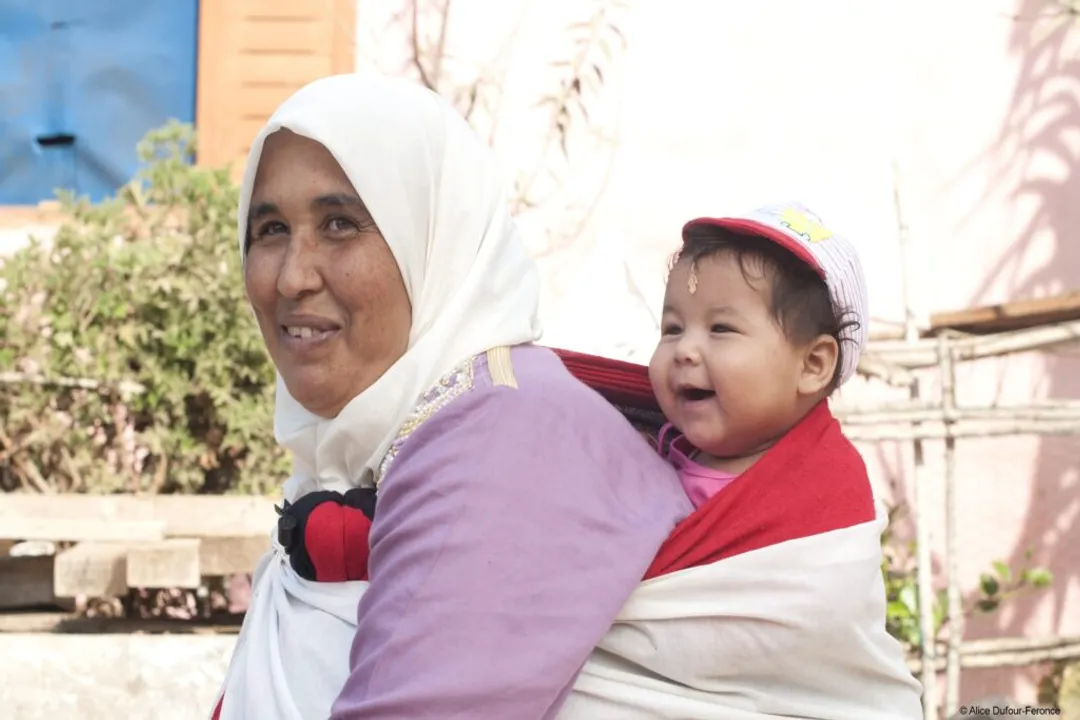
Despite the economic hurdles, the intended impact of successful microinsurance programs is substantial. When these programs function correctly, they act as shock absorbers, preventing small adverse events from becoming catastrophic financial disasters for poor families. [7] For instance, successful health microinsurance can prevent households from liquidating assets or incurring crippling debt when a family member falls ill. [10] This protection is key to building resilient communities, particularly those exposed to climate volatility, where weather-related losses can instantly wipe out years of progress. [7] By transferring that risk, microinsurance helps secure the foundation upon which families can build financial independence. [2]

# Designing Success

The right approach starts long before the first premium is collected; it begins with the mindset of the provider. [4] A successful microinsurance venture prioritizes the client's needs and context over simply applying conventional insurance metrics. [4] If the product design does not fit the local context—perhaps the trigger event is wrong, or the payout mechanism is too slow—it will fail to gain traction, regardless of how sustainable the back-end operations might be. [3] Breaking down market barriers requires understanding these practical realities. [7]
The importance of actuarial science in this space cannot be overstated, yet it often needs adaptation. While traditional insurers rely on vast historical data, microinsurance in developing contexts often lacks that depth. [10] Professionals in this field must apply actuarial expertise to ensure proper pricing and reserving while operating with limited historical evidence, which requires a different kind of estimation skill than that needed for mature markets. [10] Furthermore, unlocking global potential often depends on the ability of these small schemes to access risk capital, meaning that reinsurance plays an increasingly necessary role in stabilizing the sector. [9]
One way to analyze the sustainability of the career aspect is by looking at the required talent mix. A successful microinsurance entity needs experts who are simultaneously adept at navigating complex regulatory environments, applying sophisticated risk modeling to sparse data, and understanding last-mile distribution challenges inherent in reaching low-income segments. [10] This dual competency requirement often makes the talent pool shallower than in traditional insurance sectors, meaning those professionals who can bridge technical finance with community context often find very specialized, and therefore potentially more enduring, career opportunities. [10]
# Sector Opportunities
Major opportunities exist, particularly within the health sector, which is often cited as having the largest untapped potential for microinsurance coverage. [5][10] This growth area is seen as representing a "new insurance model" for the developing world, suggesting that the potential scale warrants continued focus from industry players. [10] As technologies improve and delivery costs drop, the economics shift in favor of the model, making the career paths within it more secure.
Another element critical to long-term viability is the efficient management of claims. For example, a life microinsurance product might seem straightforward, but if the claims process is bureaucratically heavy, beneficiaries will abandon the product quickly. [4] Streamlining claims to be fast and respectful of the user’s situation—perhaps paying out directly via mobile money upon verification—turns a necessary administrative step into a positive client touchpoint. [4]
When looking at the sheer operational expense required to bring insurance to extremely remote populations, the administrative burden relative to the tiny premium becomes staggering. If a typical premium is $$5$10$ per policy is an immediate failure. This suggests that sustainable careers will be found in operations that can drive the cost to serve below $$3$ per policy through extreme process simplification and digital integration. This pressure forces innovation in ways that traditional insurance companies, insulated by higher-value clients, often avoid. [3]

# Finalizing Sustainability
The sustainability of careers in microinsurance hinges on the industry’s ability to move from pilot projects to scalable, replicable business models that satisfy both the social mandate and the financial requirement for solvency. [6] It is not enough to demonstrate that protection can be provided; evidence must show that this protection can be reliably maintained over decades, regardless of immediate subsidy availability. [3]
The trajectory is showing positive signs, with emerging models proving that financial independence can be linked directly to access to appropriate insurance instruments. [2] While challenges remain in pricing for the risks encountered in volatile economies, [10] the sector’s link to global development agendas, such as the SDGs, ensures continued focus and investment in new delivery mechanisms. [1] Therefore, while the path is narrow and demanding, careers in microinsurance are sustainable if they are paired with organizations committed to solving the core economic equation rather than just solving the social problem temporarily. The professionals who succeed in this niche will be those who marry social purpose with rigorous, cost-conscious financial engineering.
Related Questions
#Citations
Microinsurance and Sustainable Development
Can Microinsurance Lead to Financial Independence for Low ...
Making microinsurance sustainable and profitable - Arthur D. Little
Successful microinsurance starts with having the right mindset
Major Opportunities in Microinsurance | Insurance Thought Leadership
The importance of sustainable insurance - Microinsurance Network
How Microinsurance is the key to building 'sustainable, resilient ...
Waiting for the market? Microinsurance and development as ...
Unlocking the Global Potential of Microinsurance and Life Insurance
Microinsurance: A new insurance model for the developing world