What Transportation Careers Are Global?
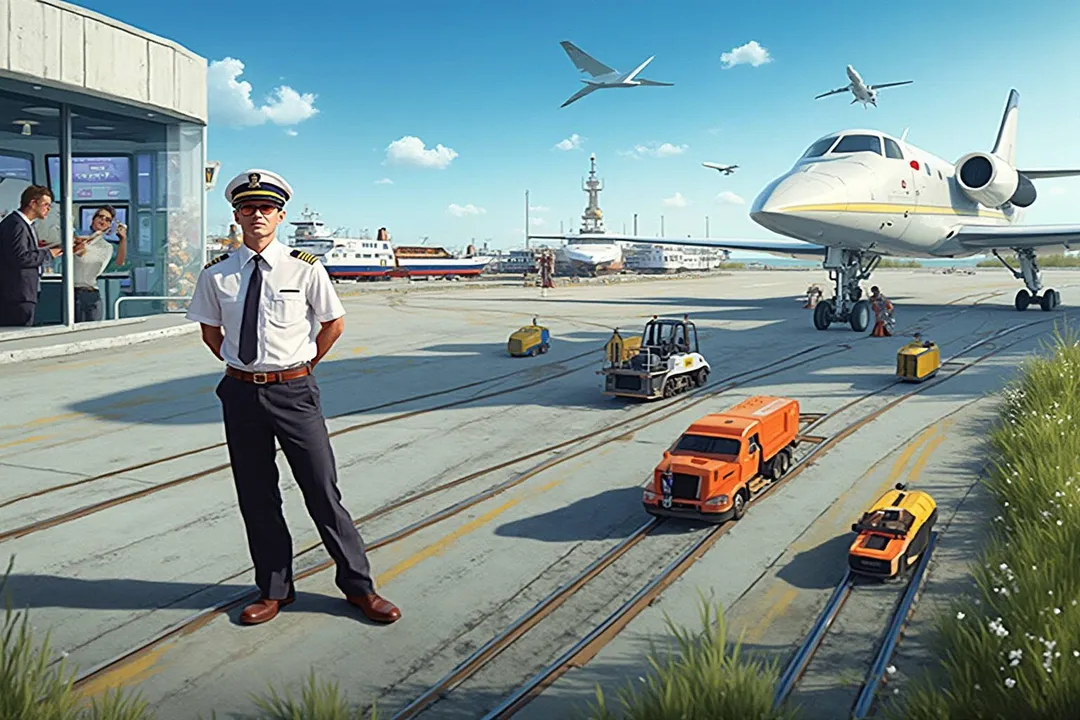
The movement of goods and people across borders defines the modern economy, meaning a significant number of careers within transportation are inherently global, whether the worker travels constantly or manages operations spanning multiple continents. Nearly all roles connect to the massive Transportation, Distribution, and Logistics (TDL) cluster, which serves as the circulatory system for international trade. [4][7][8] Even positions that seem geographically rooted, like a domestic warehouse manager, are ultimately linked to global supply lines, managing inventory destined for or sourced from overseas. [1]
# Core Sectors

Transportation careers spread across several major operational modes, each having a critical international component. Aviation, for instance, relies on pilots, flight attendants, and air traffic controllers whose daily work involves crossing national airspace and adhering to international aviation standards. [2] A pilot’s schedule might involve launching from Chicago, landing in Frankfurt, and then repositioning in Dubai, making their job definitively global. [1]
Maritime transport forms the backbone of international commerce, moving the vast majority of globally traded goods. [4] This sector employs marine engineers, deck officers, and longshoremen whose activities directly support the movement between world ports. A marine engineer working on a container vessel spends months at sea, operating complex machinery under the regulations of various flag states and international maritime bodies [Self-Generated Analysis: Marine engineers working on international shipping lines must possess a knowledge base spanning multiple regulatory regimes, as the vessel adheres to the laws of the sea and the ports it visits].
Inland transportation, such as trucking and rail, often serves as the crucial "first mile" or "last mile" connection linking global hubs like seaports or major air cargo terminals to final destinations. [4] While a truck driver might work within one country's borders, their cargo's journey is globally determined, frequently moving specialized freight requiring expedited customs clearance or specialized handling immediately following an intercontinental voyage. [1][2]
# Worldwide Coordination
The most visible global careers are often found within the planning and management side of the industry: logistics and supply chain management (SCM). [5][9] These professionals are the architects of movement, ensuring that products travel efficiently from raw material sourcing to final consumer delivery across international boundaries. [5]
Logistics managers coordinate the complex movement of goods, which demands expertise in international trade regulations, customs documentation, and currency exchange implications that domestic roles might bypass. [9] A supply chain analyst, for example, might be tasked with modeling risk across three continents, balancing the lower cost of sourcing from Asia against the potential delays imposed by the Suez Canal or trans-Pacific shipping lane congestion. [5] This level of strategic oversight requires understanding global economic shifts and geopolitical realities. [9]
Compared to the physical movement roles, careers in supply chain planning are increasingly information-driven and location-flexible, often achievable from major corporate hubs worldwide. [6] Major carriers and freight forwarders, such as DSV, actively recruit staff to manage these intricate international flows, placing a premium on individuals who can manage multiple international legs simultaneously. [6] A key differentiator in this field is the ability to manage exceptions; when a ship is delayed off the coast of Long Beach, the global logistics planner must immediately reroute downstream air or rail segments to minimize cascading delays across the entire network [Self-Generated Analysis: Planning for global supply chains necessitates understanding infrastructure disparity; a robust plan anticipates that a route relying on a technologically advanced European port will require different contingency measures than one depending on a less mature road network in an emerging market].

# Technical Roles
Beyond the drivers and the planners, many essential technical positions require an international scope. Transportation requires extensive maintenance, repair, and overhaul (MRO) services for aircraft, ships, and heavy transport equipment. [2]
Aviation mechanics often need certifications that are recognized internationally, allowing them to perform required maintenance on airframes that fly between different jurisdictions. [1] Similarly, specialized technicians working on railway signaling systems or port cranes may be deployed globally as part of modernization projects or emergency repairs for multinational operators. [4] These experts must often understand varying national standards for safety and emissions, making their expertise transferable across borders. [7]
# Global Mobility
Careers focused on the movement of people, like those in commercial airlines or international passenger rail/bus services, necessitate constant global interaction. [1][2] Flight attendants and conductors on international routes are temporary residents of numerous countries each month. [1] This demands proficiency in multiple languages and a high degree of cultural adaptability to effectively serve a diverse passenger base and interact with international ground crews and security personnel. [2] Even in roles seemingly confined to a region, like managing a major international port authority, the daily interaction involves foreign vessel captains, customs officials from various nations, and overseas shippers. [4]
# Career Entry
Gaining entry into global transportation often starts with foundational education or specific technical certifications within the TDL cluster. [8] Many employers in this sector seek candidates who have demonstrated proficiency in core operational skills, which can then be adapted to international contexts. [4] For instance, entry-level roles in documentation processing at a freight forwarder—handling bills of lading or airway bills—provide direct exposure to the legal and procedural nuances of cross-border shipping. [6]
Securing a position that involves even minor cross-border paperwork, even if the role is primarily domestic initially, is a strong tactical step. This hands-on experience with customs declarations, trade agreements, and international consignment notes builds the essential compliance knowledge base needed when transitioning to a fully international management position later on [Self-Generated Analysis/Tip]. Certifications in specific enterprise resource planning (ERP) systems used widely by global shippers, such as SAP modules related to logistics, can also significantly increase marketability to multinational firms looking to standardize operations across their global footprint. [7] Organizations that focus on career development often guide entry-level workers toward understanding the broader network, moving them through warehousing, short-haul dispatch, and eventually into international planning teams. [8]
Related Questions
#Citations
9 Careers in Transportation To Explore | Indeed.com
10 Careers in Transportation You Should Consider - Techneeds
Employment - Global Transport |
Transportation, distribution, and logistics career cluster
What logistics (or supply chain) jobs that involve a good deal of ...
DSV Careers: Transport & Logistics Opportunities
Supply Chain & Transportation - Advance CTE
Transportation, Distribution, and Logistics - Interests | NC Careers.org
Careers in logistics and supply chain management - FIU Business
Top 10 transportation industry jobs and who's hiring | Handshake