How does globalization affect careers?

The world of work has been fundamentally reshaped by the rapid integration of economies, information, and cultures across national borders, fundamentally altering the trajectory of individual careers. This interconnected environment means that a job opening in one country can now be filled by someone thousands of miles away, and conversely, professionals gain access to markets and opportunities previously confined by geography. This shift presents a complex duality: simultaneously unlocking unprecedented potential while introducing new layers of pressure and competition to the labor scene.
# Global Markets Open
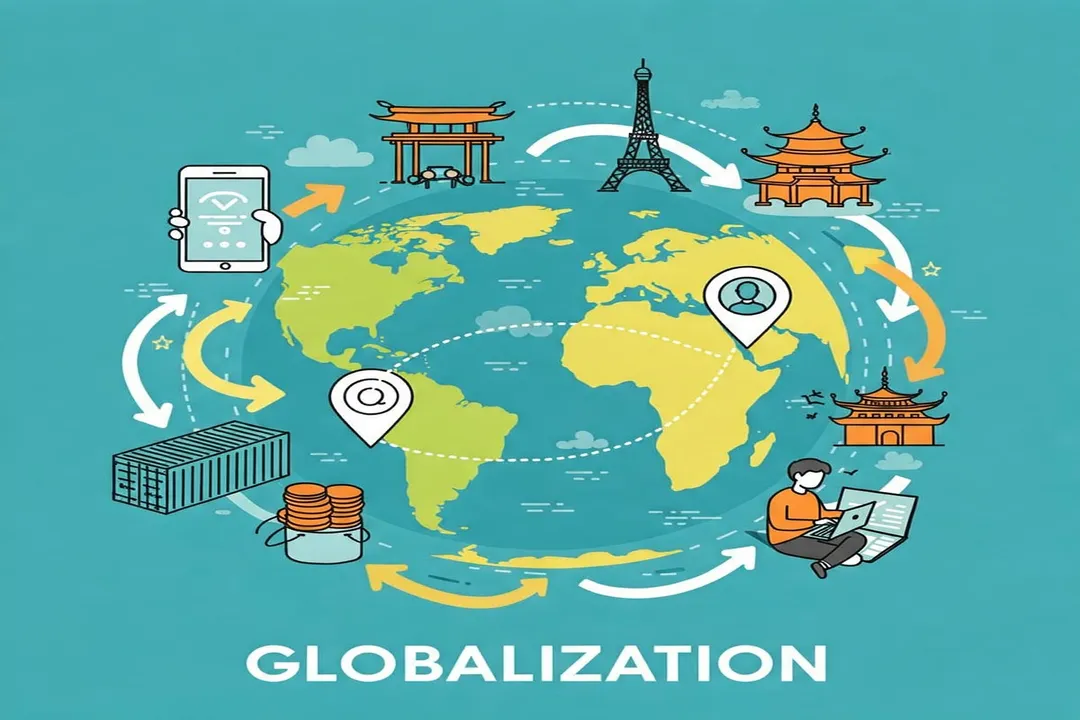
One of the most visible impacts of globalization on careers is the expansion of potential job markets far beyond local borders. Companies no longer need to restrict recruitment efforts to their immediate vicinity, leading to multinational corporations sourcing talent globally. For the individual, this translates into the possibility of securing employment with an international firm without necessarily relocating, thanks to advances in digital communication and remote work capabilities. This access is not limited to high-level executive roles; it permeates various sectors, creating opportunities for specialized work that might have been too niche in a smaller domestic market.
Furthermore, globalization drives the creation of new types of jobs centered around cross-border interaction, such as international trade facilitation, cross-cultural management, and global supply chain logistics. Professionals who possess language skills or an understanding of international regulatory environments become particularly valuable assets in this connected ecosystem. The ability to service clients or manage projects across different time zones is now a valued, and often expected, component of many modern roles.
# Rivalry Intensifies
While borders are opening for opportunities, they are also opening for competition. The flip side of being able to work for an international firm is that domestic jobs become subject to competition from equally or more qualified individuals located elsewhere, often in regions with lower prevailing wage rates. This competitive pressure can lead to stagnation or even reduction in wages for certain types of jobs in developed economies, particularly those that are routine or easily digitized. Outsourcing and offshoring are direct manifestations of this effect, where companies relocate tasks or entire departments to maximize cost-efficiency.
This competition extends beyond just wage arbitrage. In fields reliant on specialized knowledge, such as software development or data analysis, professionals must constantly benchmark their skills against the global pool. If a skill set becomes commoditized internationally, the value premium associated with that skill locally diminishes rapidly. The pressure is constant to stay ahead of the curve, not just within one's city or country, but against the global average of professional capability.
| Career Impact Dimension | Positive Effect | Negative Effect |
|---|---|---|
| Job Location | Access to global remote work and international postings | Increased competition leading to wage stagnation in some sectors |
| Skill Value | Higher demand for cross-cultural and digital skills | Commoditization of routine skills due to global sourcing |
| Market Size | Larger pool of potential employers and clients | Exposure to labor market volatility across diverse economies |

# Skill Requirements
Globalization has fundamentally recalibrated the essential skills required for career success, shifting emphasis away from purely technical expertise toward adaptable, relational capabilities. While technical knowledge remains the entry ticket, the ability to navigate ambiguity and cultural differences is what differentiates thriving professionals.
Digital literacy is no longer optional; it is the baseline infrastructure that makes global collaboration possible, enabling everything from video conferencing across continents to the management of distributed teams. Beyond the technical, intercultural competence—understanding varying business etiquettes, communication styles, and legal norms—is now critical for anyone interacting with international stakeholders. A brilliant individual who cannot effectively communicate or negotiate across cultural divides will likely find their upward mobility severely limited in a globalized environment.
A key skill emerging from this reality is cognitive flexibility. For instance, consider the mid-level project manager whose company decides to source its design team from India and its marketing team from Brazil. This manager doesn't just need to know project management theory; they need to understand how to motivate a team when their primary communication channel is asynchronous email due to time zone differences, and how to interpret feedback that might be less direct than they are accustomed to.
To thrive in this environment, professionals must develop what could be termed a "T-shaped" skill profile: deep expertise in one vertical area (the stem of the 'T') combined with a broad base of complementary skills like communication, adaptability, and technology fluency (the crossbar of the 'T') [Original Insight 1]. This breadth allows them to connect their deep expertise with diverse global teams and projects, making them indispensable navigators rather than just specialized technicians.
# Labor Shifts
The economic integration driven by globalization does not affect all nations equally, leading to significant divergences in labor market outcomes between developed and developing economies.
In many developing nations, globalization has spurred the growth of new industries, particularly in manufacturing and IT services, leading to job creation and a rise in the middle class. However, this growth often comes with concerns about labor rights and wage suppression, as these economies compete to attract foreign direct investment by offering lower operational costs. These emerging markets benefit from the outflow of routine tasks from wealthier nations.
Conversely, developed economies often experience job displacement in sectors where labor costs are high and the work can be easily moved elsewhere, such as certain manufacturing, back-office processing, and customer service roles. While high-skilled, high-value jobs—those requiring significant research, innovation, or complex strategic oversight—tend to remain concentrated in established economies, the middle-skill segment faces substantial erosion. This divergence contributes to rising internal income inequality within wealthier nations as the rewards flow disproportionately to the highly educated and the owners of capital, while the lower-skilled labor force faces increased precarity.
A striking comparison exists in the perception of job security. For a software engineer in a major European city, globalization might mean they are competing for a promotion against an equally skilled engineer in Bangalore or Buenos Aires. For an assembly line worker in a factory that subsequently moves to Southeast Asia, globalization means the entire job disappears from their local economy. This differential impact creates distinct social and political challenges that directly influence career planning.

# Career Path Shaping
Globalization significantly influences not just how we work, but what we choose to work on. For younger generations entering the workforce, the perceived desirability of certain careers is often tied to their global potential. Careers that inherently involve travel, international relations, or digital nomadism become more aspirational.
Students might actively select majors or minors based on the perceived demand in globalized sectors, such as focusing heavily on Mandarin or Spanish, or choosing engineering disciplines known for international project work. This conscious selection is a direct response to the market signals sent by an interconnected world.
On the other hand, the uncertainty created by global competition can lead some individuals to favor more stable, locally-focused professions, seeking roles less exposed to immediate international market pressures, even if the earning potential is capped [Original Insight 2]. To decide where to place one's bets, consider a simple readiness assessment:
- Geographic Flexibility: Could I perform 70% of my current core duties remotely? (Assesses digital/process readiness).
- Cultural Quotient: Have I successfully collaborated on a project with someone from a fundamentally different cultural background in the last year? (Assesses relational readiness).
- Skill Decay Rate: How quickly would my primary technical skill become outdated if I stopped active learning for six months? (Assesses competitive readiness).
If the answers point to low flexibility, low cultural exposure, and high decay rates, the career is positioned precariously in the globalized market, suggesting an urgent need for skill diversification or upskilling in cross-cultural communication.
# Adaptation Strategies
Navigating this environment requires proactive career management that views professional development as a continuous, rather than periodic, activity. Success is increasingly tied to the capacity to learn new tools and absorb new market dynamics rapidly.
Professionals must actively seek out international exposure, even if it is virtual. Participating in global working groups, taking online courses from international institutions, or mastering collaboration software used by remote teams builds demonstrable experience that is recognized across borders. This active demonstration of global literacy provides tangible evidence of preparedness for multinational roles.
Moreover, the understanding of economic interconnectedness should inform financial and professional planning. Recognizing that one's industry might be subject to external shocks—like a trade dispute or a technological leap in a competitor nation—necessitates building buffers, whether through diversified income streams or maintaining highly transferable skill certifications. The reality is that globalization offers tremendous upside for those willing to continuously redefine their expertise and embrace fluidity in their work style. The career is no longer a ladder within one organization or nation; it is more accurately described as a portfolio of evolving competencies navigating a world without traditional limits.
Related Questions
#Citations
Globalisation's impact on employment and the EU | Topics
Globalization and employment nexus: Moderating role of human ...
Globalization, the jobs ladder and economic mobility - ScienceDirect
What Is Globalization? (With Advantages and Disadvantages) - Indeed
The Impact Of Globalization On Career Choices! - LinkedIn
[PDF] Globalization and Your Career - Tau Beta Pi
Globalization and the Labor Market
How Globalization Affects Jobs, Money and Everyday Life | Medium
How Globalization Shapes Our Career Choices - Svastrino