What Skills Improve Employability?

The modern professional landscape is characterized by rapid technological shifts, yet the skills most prized by employers often have surprisingly little to do with the latest software update or programming language. While technical aptitude remains necessary—a form of hard skill required to operate in contemporary environments—it is increasingly the durable, human-centric abilities that secure offers, drive promotion, and ensure long-term relevance. [2][1] Employability is less about possessing a finite list of certifications and more about cultivating a mindset and a collection of transferable capabilities that allow one to integrate effectively into any team and handle unforeseen complexity. [1][5] A significant finding across various employer surveys confirms this: soft skills matter as much, or even more, than technical proficiency; one poll found that 92 percent of talent professionals rank soft skills as equally or more important than hard skills. [1]
# Cognitive Core

The ability to process information, diagnose issues, and generate novel responses stands as the bedrock of career value. Employers consistently rank analytical and creative thinking at the very top of desired competencies, even above skills directly related to burgeoning fields like AI and big data. [2] This points to a fundamental organizational need: people who can solve problems that haven't been programmed yet.
# Thinking Analytically
Analytical thinking is the component of critical thinking that allows professionals to evaluate ideas objectively, assess information accurately, and draw sound, evidence-based conclusions. [1][7] It involves recognizing assumptions, spotting biases, and breaking down complex scenarios into manageable parts. [7] In data-rich environments, this translates directly into data literacy—not just the ability to run a query, but the capacity to interpret the results meaningfully and differentiate between clean, useful data and "dirty" data. [1] Professionals who can apply academic knowledge thoughtfully to practical workplace situations, fitting within the U.S. Department of Education’s concept of Applied Knowledge, are demonstrating this skill daily. [4]
# Creative Solutions
If analytical thinking diagnoses the problem, creative thinking, often coupled with innovation, designs the cure. [2] This skill set involves approaching challenges from new angles, being open to a wide range of possibilities—even those that initially seem unconventional—and taking calculated risks to find unique process improvements. [1][5][7] A commitment to creative problem solving requires a willingness to move beyond established norms, which is vital when existing tools and techniques are becoming obsolete faster than ever. [2] It’s the skill that allows an employee to generate solutions broad enough to achieve something genuinely new, rather than just recycling old answers. [2]
# Interpersonal Mastery
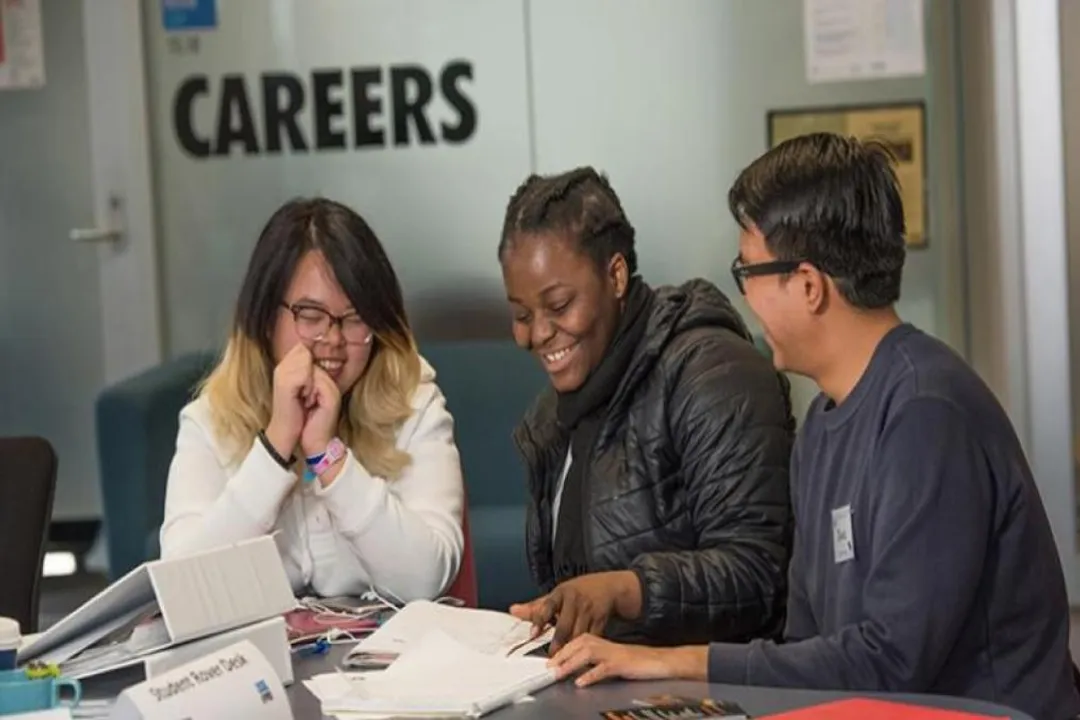
Success in the modern workplace, regardless of remote or in-office structure, hinges on how effectively one navigates relationships. These interpersonal skills, falling under the umbrella of "Effective Relationships" in some professional frameworks, govern team dynamics, client interaction, and overall workplace culture. [4]
# Communication Essentials
Effective communication is consistently cited as a top-tier soft skill. [1][2] It is much broader than merely speaking clearly or writing coherent emails. It requires active listening—truly absorbing what others say—and demonstrating empathy. [1][5] In an era defined by virtual meetings and asynchronous correspondence, the ability to convey complex ideas concisely across multiple platforms—from a formal report to a brief chat message—is non-negotiable. [1] A good communicator tailors their approach to the audience, balancing professionalism with approachability. [5]
# Emotional Intelligence
Emotional intelligence (EQ) is the capacity to interact positively and understand the human element in professional interactions. [1] This includes self-awareness, empathy for colleagues' positions, and the ability to maintain a positive attitude even under pressure. [1][5] This skill is crucial for conflict resolution, as emotionally intelligent individuals can manage their own frustration while understanding the perspectives of others, leading to better negotiation and collaborative outcomes. [5] When the technology is complex, human intuition and relationships are the crucial buffers that prevent solutions from being implemented detrimentally. [2]
# Collaboration and Culture
Teamwork is the practical application of strong communication and EQ. It means contributing fairly, respecting diverse viewpoints, and working harmoniously toward shared objectives. [5][7] Furthermore, as workplaces become increasingly globalized and diverse, cultural competence becomes a distinct advantage. [1] This is the active practice of respecting different cultural norms, values, and beliefs. For any organization aiming to build an inclusive environment where all voices feel valued, having staff aware of their own biases and practicing tolerance is essential for smooth operation. [1][5]
Here is a comparative look at how these highly sought-after soft skills translate from an abstract ability into concrete evidence for an employer:
| Core Skill Category | What the Skill Does | How to Prove It on Paper/Interview |
|---|---|---|
| Critical Thinking | Analyzes complex data to find root causes and avoid past mistakes. | "Designed a diagnostic protocol that reduced root cause analysis time by 40%." |
| Adaptability/Flexibility | Adjusts approach calmly when resources change or initial plans fail. | "Pivoted project scope mid-sprint due to client feedback, delivering the core feature on time." |
| Initiative | Takes ownership of tasks or improvements without explicit direction. | "Identified bottleneck in internal invoicing process and developed an automated template." |
| Communication | Conveys technical findings to non-technical stakeholders clearly. | "Presented quarterly performance metrics to executive leadership, resulting in budget approval for the next fiscal year." |
| Resilience | Recovers quickly from setbacks or accepts constructive criticism gracefully. | "After initial prototype failure, led a retrospective, integrated feedback, and launched V2 one month later." |

# Digital Fluency Practicalities

While soft skills set the stage, they need a platform to perform on, and today that platform is digital. [4] Digital literacy, or tech proficiency, is the baseline expectation for nearly all entry-level roles. [1][5] This encompasses everything from standard office suites to proficiency in specific Customer Relationship Management (CRM) systems or project management software. [1]
# Technical Competency Tiers
The required technical skill often separates into two tiers. The first tier involves transferable hard skills, like knowing Microsoft Office or basic cloud platform interactions. [1] These skills are universally useful and demonstrate an understanding of the modern workplace ecosystem. [1] The second tier involves domain-specific technical skills, such as proficiency in specialized industry software or specific database languages like SQL. [1][3] While crucial for specialized roles, it is often easier for an employer to teach a candidate their proprietary software if the candidate already possesses high-level critical thinking and adaptability. [2] A candidate asking about learning specific tools like Power BI or SSIS for a data role is focusing on this second tier, which is valuable, but Reddit commentary suggests communication and business knowledge might be more crucial for landing the first role. [3]
# Data Skills Baseline
Data literacy is an increasingly non-negotiable component of digital fluency. [2][1] This doesn't mean every employee must be a data scientist, but a significant majority of decision-makers expect basic competence in reading, interpreting, and using data to inform choices. [1] In many technical fields, the emphasis is shifting to systems thinking—understanding how various technical components interact within a larger organizational structure—which bridges the gap between technical use and business strategy. [4]
# The Engine of Execution
Beyond thinking and communicating, employability depends on how work gets done. These are the habits and mindsets that ensure consistency, reliability, and forward momentum in a career.
# Adaptability and Flexibility
The ground beneath businesses shifts constantly, driven by technology, market changes, and global events. [2] The capacity to pivot quickly, embrace new procedures, and manage uncertainty without significant disruption is highly valued. [1][5] Flexibility is distinct from resilience; flexibility is the ability to adjust the plan mid-stream, whereas resilience is the ability to bounce back after a failure. [5] Both are critical for navigating dynamic work environments. [1]
# Initiative and Self-Management
Employers look for individuals who don't require constant micromanagement. Initiative means taking ownership of a task or project without being prompted and proactively seeking ways to improve processes. [5][7] This pairs directly with self-management, which includes strong time management, organization, and prioritization skills—elements essential for successful remote collaboration where direct supervision is limited. [1] A professional with high initiative will not only complete assigned work but will also look ahead, identifying potential resource needs or scheduling conflicts before they become crises. [5]
# A Learner Mindset
The commitment to continuous learning and upskilling is perhaps the most forward-looking skill of all. [1][2] Because job requirements evolve rapidly, candidates who demonstrate a commitment to staying current, whether through certifications, further education, or dedicated self-study, signal long-term viability to an employer. [1] A "learner mindset"—the belief that abilities can improve with effort—is seen as absolutely critical, as those with a fixed mindset will struggle as their primary skill set inevitably ages. [2]
When looking at job applications, many find themselves focusing too heavily on the technical tools they have mastered, listing buzzwords hoping to pass an initial automated screening. [3] While it is true that for entry into highly technical fields, specific keywords like "SQL" or software names might be necessary to get past the algorithm, [3] the successful interview often pivots entirely away from that list. The candidates who stand out are those who can articulate how their behavioral skills allowed them to apply that technical knowledge to solve a unique business problem. [3] For instance, instead of just listing a data analysis tool, framing the experience as "Using complex analytical reasoning to solve an undocumented error that saved $X in wasted resources" immediately shifts focus to critical thinking and results. [1] This suggests a strategy: use hard skills to get seen, but rely on soft skills to get hired and promoted. If you are planning your development, understanding the local economic context is wise—a niche industry relying heavily on proprietary, rapidly changing tech might demand heavier initial investment in technical skills than a stable, process-driven role where interpersonal skills dominate hiring decisions. [5][7] However, the overarching trend confirms that foundational human skills remain the most durable asset you can cultivate. [2]
Related Questions
#Citations
Employability Skills | Office of Career, Technical, and Adult Education
What skills do you recommend to learn to become employable?
The Top Skills Employers Seek Have Nothing to Do With Technology
Top 12 Employability Skills Employers Look For - GVI
What Are Employability Skills?
A Comprehensive List of Job Skills Employers Value Most | MVNU
10 soft skills that boost your employability | Victoria University