What roles exist in digital twin development?

Creating a digital twin—a virtual replica of a physical object, process, or system—is far more complex than simply writing a piece of software. It requires weaving together deep domain knowledge, intricate modeling skills, and robust IT infrastructure. This complexity means that the development process cannot rely on a single engineer; instead, it demands a specialized, multidisciplinary team where each role understands its distinct contribution to the overall fidelity and utility of the twin. [2][10] The sheer variety of required expertise means that roles often overlap, but understanding the core focus areas clarifies where expertise must be concentrated for successful deployment.
# Core Builders
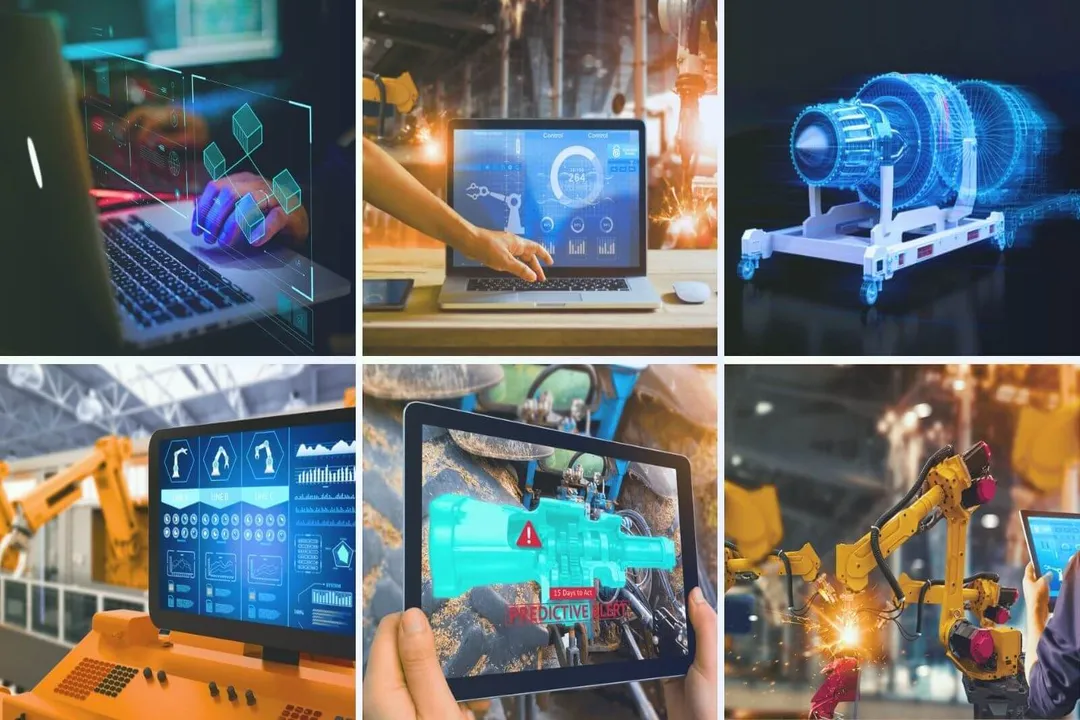
The foundational work of constructing the digital model itself often falls to specialized developers and modelers. This is where the actual twin comes to life from a software perspective. [1]
# Digital Developer
The Digital Twin Developer stands as a central figure in the technical creation process. [1] Their responsibility centers on building the software components that constitute the twin. This involves crafting the platform, developing the APIs that allow the twin to communicate with its physical counterpart, and ensuring the entire virtual environment functions correctly. [1] A developer must possess strong programming skills, often working with languages suitable for complex simulations and data processing, such as Python, C++, or Java, depending on the required performance and the specific simulation engine being employed. [1] They are also tasked with integrating the modeling components created by simulation specialists into a cohesive, executable application. [1]
# Simulation Engineers
While developers build the container and interface, Simulation Engineers focus on the physics and behavior within the digital environment. [10] These experts design the mathematical models that dictate how the physical asset behaves under various conditions—how a machine vibrates, how energy flows through a production line, or how materials react to stress. [5][7] Their primary goal is accuracy; if the simulation logic is flawed, the twin’s predictions become unreliable, regardless of how well the software is coded. [5] They often utilize specialized tools for discrete-event simulation or physics-based modeling to translate real-world engineering principles into functional algorithms. [3] A key differentiator here is that the simulation engineer is often focused on what the system does, whereas the developer focuses on how the system runs as software. [1]
# System Integrators
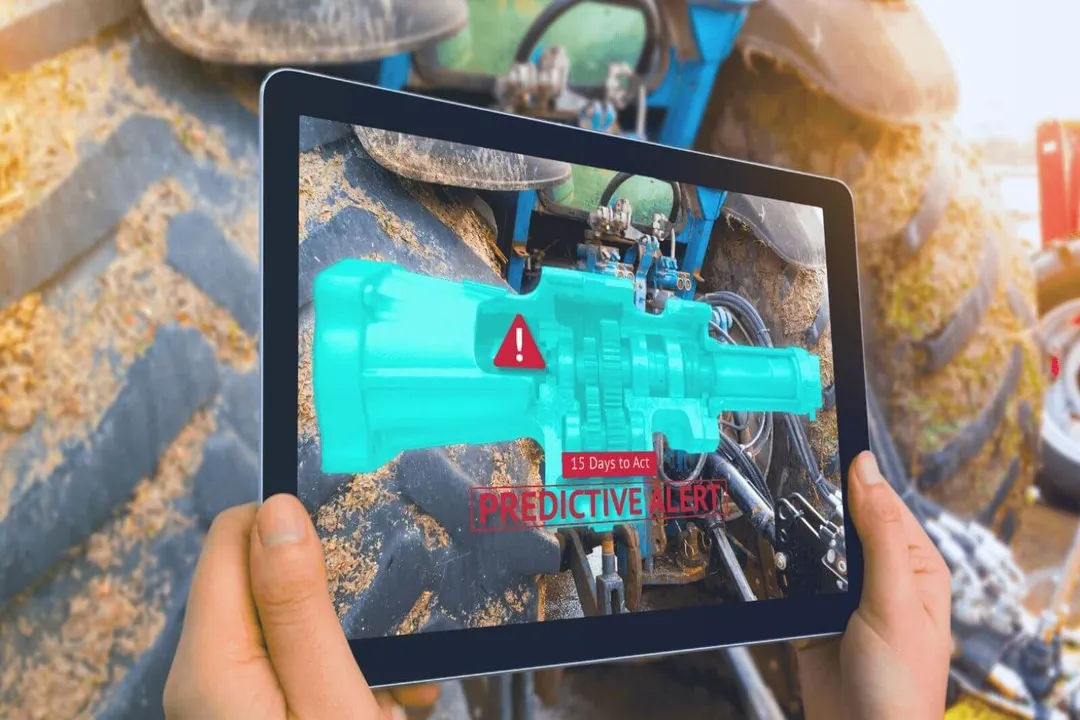
A beautiful, accurate digital model is useless if it cannot ingest real-time data from the physical world or push insights back to operational technology. This linkage is the domain of the implementation specialists.
# Implementation Specialist
The Digital Twin Implementation Specialist acts as the bridge between the theoretical model and the physical reality on the factory floor or in the field. [6] Their expertise is less about writing core algorithms and more about deployment, configuration, and connectivity. [6] This role requires practical knowledge of operational technology (OT) environments, including industrial protocols like MQTT, OPC UA, or other specialized industrial communication standards. [6] They ensure that sensors on the physical asset correctly feed data into the twin's data ingestion layer and that control signals originating from the twin (if bidirectional control is enabled) are securely transmitted back to the physical equipment. [6]
When setting up these connections, an interesting challenge arises: synchronization latency. A good implementation specialist must balance the need for high-frequency data updates to maintain fidelity against the practical constraints of network bandwidth and sensor sampling rates. For example, a twin modeling rapid chemical reactions might require sub-second updates, whereas a twin modeling long-term asset wear might tolerate updates every few minutes. The specialist must engineer the data pipeline to reflect this necessary trade-off, a task that often requires custom middleware development beyond standard out-of-the-box connectors. [4]
# Data Guardians

Digital twins are fundamentally data-driven constructs. Without high-quality, contextualized data, they regress to being static 3D models. Therefore, data-centric roles are critical for maintaining the twin’s value over time.
# Data Scientists and Analysts
Data Scientists play an increasingly prominent role, particularly as twins mature from simple mirrors to predictive and prescriptive tools. [10] Their work involves analyzing the massive streams of operational data fed into the twin to train machine learning models that enhance the twin’s predictive capabilities. [10] They might build algorithms to forecast equipment failure, optimize energy consumption, or predict material flow bottlenecks. [9]
This is distinct from the Simulation Engineer because the Data Scientist relies on observed historical behavior to refine predictions, whereas the Simulation Engineer relies on first-principles engineering to define the model's base behavior. [10] In an ideal scenario, these two roles collaborate: the engineer provides the initial physics-based model, and the data scientist uses real-world data to calibrate, correct, or augment that model where physics alone proves too complex or slow to compute. [10] The ability to merge these two paradigms—physics-informed machine learning—is becoming a highly sought-after skillset. [9]
# Architects & Strategists
For a digital twin initiative to succeed beyond a single pilot project, high-level vision and architectural planning are essential. These roles guide the overall structure and strategic alignment of the twin solution.
# Digital Twin Architect
The Digital Twin Architect is responsible for the entire system design. [9] This involves deciding which technologies to use—cloud vs. edge computing, which database structure best supports time-series data, and how to segment the twin into manageable components (e.g., separating the geometry model from the physics model and the data ingestion layer). [9] They must ensure that the architecture supports future scalability, security requirements, and interoperability with existing enterprise systems like ERP or MES. [2][9]
This role demands an extremely broad technical background, capable of assessing trade-offs between various modeling platforms and cloud services. [9] For instance, an architect must decide if storing all historical sensor data in a traditional relational database is feasible or if a specialized time-series database (like InfluxDB or TimescaleDB) is necessary to handle the query load from analytics tools. [2]
# Product Owners
Though not always listed in technical job boards, the Product Owner or Business Analyst fills a crucial strategic void. [10] This individual owns the why of the digital twin. They translate high-level business objectives—like reducing unplanned downtime by 15% or increasing throughput by 5%—into concrete functional requirements for the development team. [3][5] They define the Minimum Viable Twin (MVT) and prioritize features based on the expected return on investment. [5] If the development team builds a technically brilliant twin that solves a problem the business doesn't actually have, the project fails; the Product Owner prevents this misalignment. [3]

# Domain Expertise Validation
Perhaps the most overlooked set of roles involves the subject matter experts (SMEs) who validate the twin's real-world accuracy. Without them, the twin is merely a sophisticated simulation disconnected from operational reality.
# Manufacturing Engineers
In environments like manufacturing, Manufacturing Engineers or Process Engineers are indispensable validation resources. [3][7] They possess the inherent understanding of how the machine should operate under optimal conditions and what factors lead to known failure modes. [7] They review the results generated by the simulation engineers and data scientists, essentially acting as the "ground truth" validators. [7] For instance, a process engineer might observe that the twin’s predicted cycle time for a specific CNC operation is off by 10%. This insight forces the simulation engineer to re-examine the constraints built into the model—perhaps neglecting heat expansion or tool wear—leading to necessary model refinement. [3]
It is valuable to consider the difference between the model validation and the implementation validation. The manufacturing engineer validates the model's behavior against known physics and experience, while the implementation specialist validates the data flow against network performance and sensor readings. Both checks are non-negotiable for a trustworthy twin. [6]
# Assembling the Team Dynamics
The success of a digital twin project often hinges not just on having these roles, but on how well they interact. A key consideration for any organization starting this work is establishing clear communication channels between the IT-focused developers and the Operational Technology (OT)-focused engineers. [7] Historically, these groups operate in silos, using different terminology and prioritizing different objectives (e.g., IT prioritizing security/stability; OT prioritizing uptime/throughput). [7]
To foster better integration, an actionable approach involves embedding a rotating technical liaison from the manufacturing or process engineering team directly within the software development sprint cycles for short, defined periods—say, one two-week sprint at a time. This forces direct, contextualized feedback loops that prevent weeks of rework that would occur if model issues were only discovered during a final sign-off phase. [3][7]
The required skill sets, when mapped across these functions, reveal a broad spectrum of needs, demanding more than just standard IT hiring practices:
| Role Focus Area | Primary Skill Emphasis | Key Deliverable |
|---|---|---|
| Digital Twin Developer | Software Engineering, API Development | Functional twin application/platform [1] |
| Simulation Engineer | Applied Mathematics, Physics Modeling | Accurate behavioral algorithms [5] |
| Implementation Specialist | Industrial Protocols (OPC UA, MQTT), System Integration | Secure, low-latency data connectivity [6] |
| Data Scientist | Machine Learning, Statistical Analysis, Time-Series Processing | Predictive failure models, optimization recommendations [10] |
| Digital Twin Architect | System Design, Scalability, Cloud/Edge Strategy | High-level technical blueprint [9] |
| Domain Expert (e.g., Process Engineer) | Subject Matter Knowledge (Manufacturing, Asset Operation) | Validation of model accuracy against physical reality [3] |
This table highlights that the Digital Twin Developer builds the running application, but the Simulation Engineer defines what that application is simulating, and the Data Scientist teaches it how to improve its predictions based on experience. [1][5][10] If a company only hires developers without modeling experts, they build sophisticated dashboards that tell them what is happening, not what will happen. Conversely, hiring only modelers without strong developers results in brilliant theoretical models that cannot interact with live data. [1][2]
Furthermore, as twins evolve, the need for roles focused on governance and lifecycle management increases. A digital twin is not a static piece of software; it degrades in accuracy as the physical asset ages, is maintained, or is modified. A Digital Twin Manager—a role that sits somewhere between the Architect and the Product Owner—becomes necessary to track these changes, initiate model updates, and formally decommission or retire twin instances when the physical asset is decommissioned. [9] This governance aspect ensures the long-term integrity and trustworthiness of the digital assets being used for high-stakes decision-making, moving the entire operation toward an "as-maintained" digital state rather than just an "as-designed" one. [2] The development process, therefore, must account for continuous maintenance roles from day one, acknowledging that the initial deployment is only the beginning of the engineering effort. [6]
Related Questions
#Citations
Digital Twin Developer: Key Skills, Roles & Responsibilities in 2026
What is digital-twin technology? | McKinsey
A Practical Guide to Digital Twin Manufacturing
7 Digital-Twin Applications for Manufacturing - ASME
Digital Twin Manufacturing: Applications, Benefits, and Insights | Simio
Example Job Description for Digital Twin Implementation Specialist
Digital Twin in Manufacturing | Benefits and Use Cases - Veritis
Applications of Digital Twins in Manufacturing - Cyngn Inc.
What Is a Digital Twin? | IBM
Skills of the Future: Critical Shifts in Employment Driven by Digital ...