What jobs exist in lab robotics?
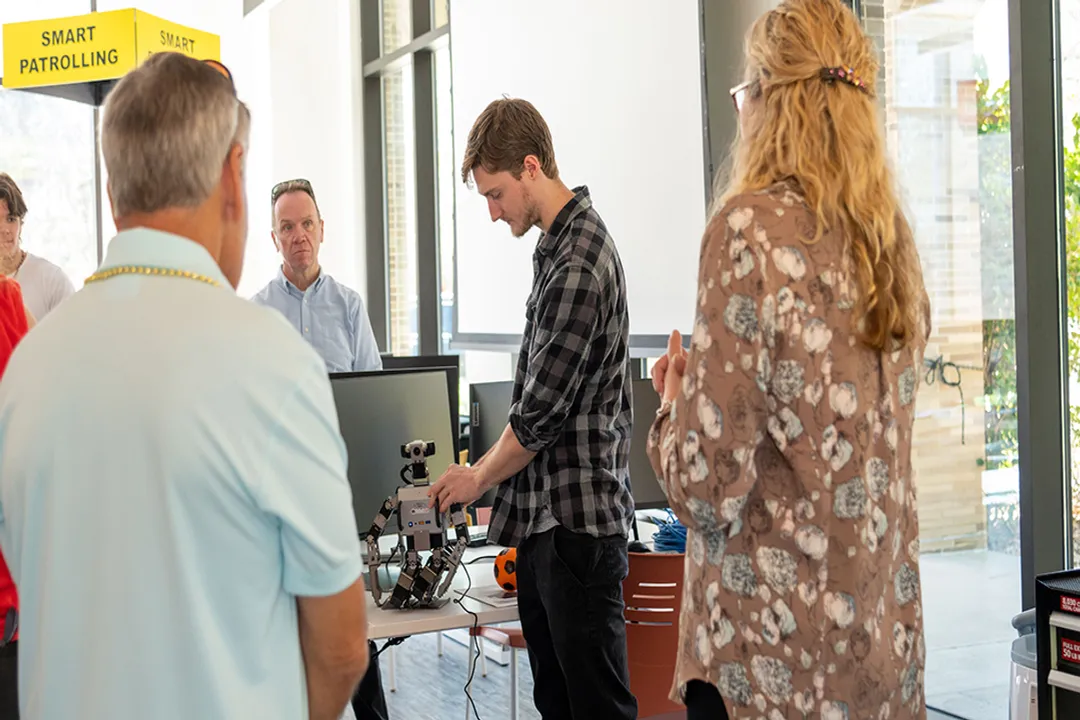
The world of laboratory automation and robotics is expanding far beyond the classic image of a mechanical arm on an assembly line. Today, this field demands a diverse workforce, spanning traditional engineering disciplines, specialized biological sciences, and crucial support roles that keep complex scientific experiments running with unparalleled precision. Understanding the landscape requires looking past a single job title; the ecosystem of lab robotics is a collection of highly specialized functions. [4]
# Engineering Architects

The engineering roles form the backbone of robotics development, responsible for both the physical creation and the functional intelligence of these systems. [3]
Robotics Engineers often serve as the central hub, conceiving, designing, fabricating, testing, and assembling robots or improving existing equipment. [4] They bridge mechanical hardware and the operating software. [3] While some define them as a specialized subset of mechanical engineers, their duties often encompass research into feasibility, system installation, debugging, and integrating peripheral equipment. [1] They need strong communication skills to translate technical complexities to non-technical stakeholders. [1]
A closely related, yet distinct, path is the Automation Engineer, particularly in the lab space, where they focus on designing, building, and programming comprehensive automation solutions deployed across a laboratory. [3] These solutions might cover individual devices or scale up to orchestrate entire workflows.
Controls Engineers zero in on how the robot moves. They are tasked with designing and developing the control systems and instrumentation necessary for high operational efficiency and precise execution. [3] In sensitive applications like robotic surgery, this expertise ensures delicate procedures are performed with accuracy, relying heavily on an understanding of feedback control and mathematics. [8][6]
To contrast these system-level roles, we have component specialists. Hardware Engineers concentrate on the physical materials, designing and testing the circuit boards and physical components that allow the system to run, ensuring they correctly execute software commands. [8][4] Conversely, Software Engineers or Robotics Software Developers create the brains, designing the algorithms and code that control robotic devices, including advanced aspects like navigation, path planning, and state estimation. [4][6][8]
# Wet Lab Niche
The life sciences sector has seen massive integration of robotics, creating specialized job families centered around automated liquid handling and high-throughput screening (HTS). [5] The key distinction here is between those who operate the established machinery and those who design the processes the machines execute.
Entry-level positions often fall under titles like Robotics Operator or Lab Technician. [4][5] These roles involve the critical, day-to-day running of the equipment—loading reagents, racking samples, monitoring cycles, and performing routine maintenance or cleaning. [5] While sometimes dismissed as "unsexy," this work builds essential foundational skills, such as proper pipetting technique, which is vital even for higher-level work. [5]
However, aspiring to move beyond routine operation is common. The path to higher-value roles often involves transitioning to an Automation Scientist or Applications Scientist. [5] These positions require a strong scientific background (e.g., Biochemistry or Molecular Biology) coupled with hands-on lab experience. The Applications Scientist acts as the translator, using their scientific understanding to design efficient automated solutions for specific lab needs, rather than just running the existing protocols. This shift demands more than dexterity; it requires an understanding of assay metrics, statistical analysis (like t-tests or ANOVA), and the ability to write decent code to automate data analysis pipelines where formal systems might be lacking. [5] This transition from operating the machine to architecting the scientific workflow around the machine is perhaps the most significant internal promotion pathway in lab automation. [5]
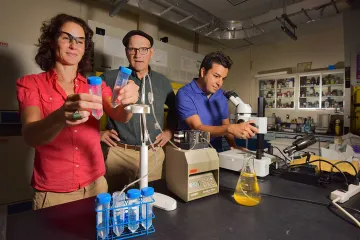
# Hardware Specialists
While software and controls are vital, the physical realization of lab automation depends on engineering the mechanics and structures.
Mechanical Engineers in this context focus on the physical embodiment—the joints, motors, and structural integrity needed for precise, repeatable actions. [8] They often work with Computer-Aided Design (CAD) software to sketch blueprints and run motion studies to simulate final product performance. [4]
Related to this is the Design Engineer, whose responsibilities often prioritize the visual appearance and functional form, working closely with mechanical teams to ensure designs are practically achievable. [4]
For complex, micro-scale applications, such as those found in nuclear or submerged environments, specialized roles like Micro-Robotics Engineer emerge. These professionals prototype, simulate, and perform failure analyses on millimeter-scale systems, often requiring deep knowledge of specific engineering environments like underwater systems. [7]
# Data Intelligence
As robots become more autonomous, the need for intelligence derived from collected data grows, establishing roles that blend computer science with machine learning.
Computer Scientists and Machine Learning (ML) Engineers are responsible for the decision-making capabilities of autonomous systems. [8][4] They develop the algorithms—including deep learning and neural networks—that allow robots to learn from their experiences, interpret sensor data (like computer vision feeds), and adapt to real-time changes. [8] A professional working as a Computer and Information Research Scientist might specifically focus on programming computers for automation and testing software to ensure effective, independent operation, sometimes commanding a high median pay in the field. [1]

# Operational Support and Business Links
The development pipeline is supported by roles focused on maintenance, quality assurance, sales, and management.
Robotics Technicians are the hands-on troubleshooters who install, test, maintain, and repair the diverse hardware, ranging from lab pipetting robots to autonomous machines. [4][1] They may also teach robots new tasks via computer code and maintain system documentation. [4] In a laboratory setting, a Robotics Lab Manager or Supervisor is often the linchpin, responsible for the facility's reliable operation, safety standards, and managing the prototyping environment itself. [7]
Bridging the gap between the technical product and the end-user often falls to Sales Engineers. These professionals require a strong technical foundation to effectively explain complex robotic systems to potential buyers, translating customer requirements back to the design and manufacturing teams. [4][8]
It is an interesting observation that the complexity of a company's structure often dictates the breadth of an engineer's role. In smaller companies or startups, a Robotics Engineer is often required to wear numerous hats, covering embedded software, hardware sourcing, and control systems simultaneously, which offers broad learning but can be demanding. [6] Conversely, in large organizations like major tech firms or specialized research institutes, roles tend to be deeply specialized—one person might focus entirely on path planning while another manages only the interface validation. [6] This trade-off between generalization and deep specialization is a primary career decision point for those entering the field. [6]
# Interface and Education Roles
Ensuring that scientists and general users can interact effectively with these complex machines requires specialized design and educational roles. UI/UX Designers focus on making the human-robot interface, whether a physical touchscreen or a software dashboard, intuitive and functional. [4][8] They ensure that the complexity of the underlying code translates into an easy-to-use experience for the operator. [4]
In educational and training settings, Robotics Coaches and Instructors manage the lab resources, organize equipment, and teach the fundamental skills of building and programming robotic systems to the next generation. [7]
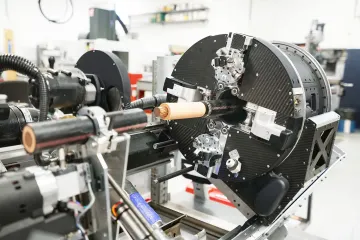
# Preparing for Robotics Work
Careers in this dynamic area generally require a blend of formal education and practical exposure. [3][4] While some technician or operator roles may be accessible with an associate's degree or specific training, [4][7] engineering and scientist roles usually demand at least a bachelor's degree, with many pushing for advanced degrees for research or specialized positions. [1][8] Core competencies frequently mentioned across the spectrum include programming (like C++ or Python), knowledge of sensors, feedback control theory, and experience with simulation tools like ROS. [6][7] A commitment to continual learning through certifications and on-the-job training is essential, as the technology evolves quickly. [3] Finding a role that allows exposure to various facets of system development early on can significantly guide future career preferences. [6]
Related Questions
#Citations
What Are The Top 10 Careers in Robotics in 2025? | NEIT
What are those wet lab robot operation jobs called and where can ...
10 Careers in Robotics | GCU Blog
13 High-Paying Jobs That Allow You To Work With Robots - Unmudl
$19-$139/hr Robotics Lab Jobs (NOW HIRING) Dec 2025
Everything you should know about career in lab automation - Biosero
7 of the Top Careers in Robotics with a Bachelor's Degree