What jobs exist in materials acceleration platforms?

The emergence of Materials Acceleration Platforms, or MAPs, is fundamentally reshaping how new materials are conceived, tested, and brought to market. These sophisticated systems integrate high-throughput experimentation, robotics, advanced characterization, and computational modeling to dramatically cut down the discovery timeline from years to months or even weeks. [4] Because MAPs sit at the nexus of chemistry, physics, engineering, and computer science, the jobs supporting them are inherently multidisciplinary, drawing talent from several distinct fields. [4]
# Core Informatics
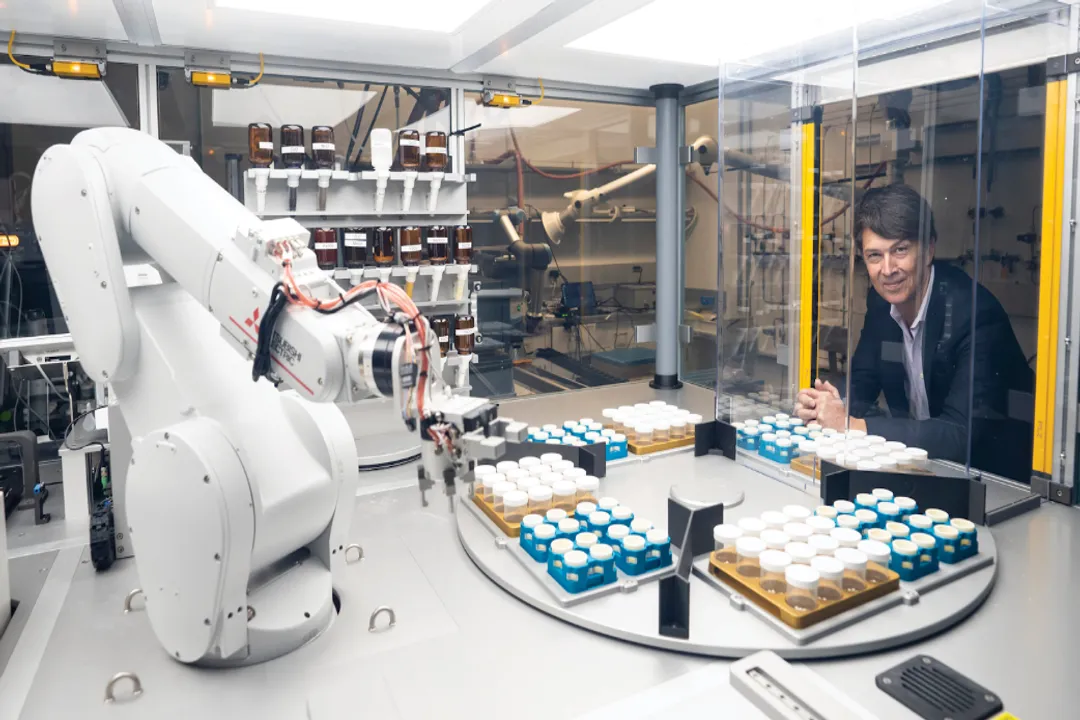
The engine room of any MAP is data handling and predictive modeling. Roles here focus on translating complex experimental results into actionable insights and designing the next set of experiments for the robotic systems to run.
A Computational Materials Scientist is a frequent listing within organizations aiming to drive materials discovery. [6] This role often requires a deep understanding of materials behavior, coupled with the ability to apply advanced simulation and data analysis techniques to predict material properties in silico before physical synthesis is attempted. [6] They bridge the theoretical models with real-world performance data generated by the platform.
Closely related, the Material Informatics Engineer focuses specifically on the data infrastructure and algorithms governing the discovery loop. [5] At companies involved in this space, these engineers are tasked with building the machine learning models that decide the next optimal experiment based on the results of the last one. [5] This requires expertise in areas like Bayesian optimization or active learning, ensuring the platform efficiently navigates the vast chemical design space.
It is striking how the emphasis has shifted away from purely experimental synthesis toward data-driven decision-making. While traditional materials roles might focus on mastering one synthetic technique, success within a MAP structure demands mastery of the decision-making algorithm that guides all the techniques on the platform. [4]
# Engineering Systems

If informatics defines what to build, the engineering roles ensure the physical and digital infrastructure to execute those decisions reliably and at speed. These positions are less about novel material composition and more about the mechanics, software, and integration required for autonomous operation.
One common grouping falls under Computational Material Engineer, a title that can sometimes overlap with the informatics role but often leans more heavily into process control, automation programming, and modeling the physical apparatus itself. [2] These engineers might be responsible for the interfaces between custom-built robotic arms, automated synthesis reactors, and spectroscopic measurement tools.
Furthermore, the drive for acceleration attracts specialists in Machine Learning Acceleration roles. [3] These individuals are less concerned with materials science fundamentals and more focused on optimizing the speed and efficiency of the AI/ML pipelines running the experiments. [3] This could involve refining the computational hardware, optimizing model training times, or ensuring low-latency communication between the central control unit and the physical hardware running 24/7.
A specific high-level position observed across the industry is the Senior Scientist Data I, Chemistry, Materials, Controls Acceleration. [7] This title clearly delineates the required multi-faceted expertise: deep scientific knowledge (Chemistry/Materials), programming/modeling (Data), and operational execution (Controls Acceleration). [7] These senior staff are critical for ensuring that the automated processes are scientifically valid, not just computationally efficient.

# Platform Leadership
When platforms move beyond initial proof-of-concept to become established research engines, leadership roles emerge focused on strategy, team management, and platform direction.
Positions like Lead Material Acceleration Platform exist within major research institutes. [1] The Lead often acts as the conductor, ensuring that the various specialized teams—the roboticists, the data scientists, and the domain-expert chemists or physicists—are all working toward common, measurable goals. [1] This requires strong project management skills alongside deep technical credibility to earn the trust of highly specialized direct reports. [1]
At large industrial technology providers, such as those supplying the tools used in MAPs, one sees roles at Applied Materials aimed at students and early career scientists. [9] While not always in the MAP, these roles build the components—like advanced deposition tools or metrology equipment—that MAPs rely on to achieve their high throughput. [9] Career progression here often involves moving from understanding a single piece of equipment to understanding how that equipment fits into an end-to-end accelerated workflow.
A key differentiation in these leadership tracks is whether the role belongs to an end-user organization (a battery company, for example) or a technology provider (a software or hardware vendor). A leader at an end-user site prioritizes discovery speed for a specific material target, whereas a leader at a vendor prioritizes scalability and reliability of the acceleration tool itself. [4]
# The Required Skill Spectrum
The jobs available in this area paint a picture of extreme cross-training. Traditional roles emphasized deep, narrow expertise, like being the world's best expert in synthesizing perovskite thin films. The MAP environment demands a broader skill distribution. [4]
Consider the breakdown of necessary expertise:
| Expertise Area | Primary Focus within MAP | Sample Job Titles |
|---|---|---|
| Materials Science | Defining target properties, interpreting complex characterization data, ensuring physical feasibility. | Computational Materials Scientist [6] |
| Data Science/ML | Developing active learning algorithms, optimizing model performance, handling large datasets. | Material Informatics Engineer, [5] Machine Learning Acceleration [3] |
| Automation/Software | Programming robotics, designing control software, maintaining hardware-software interfaces. | Computational Material Engineer [2] |
| Management/Strategy | Guiding platform direction, resource allocation, cross-functional team coordination. | Lead Material Acceleration Platform, [1] Senior Scientist [7] |
For someone looking to enter this expanding field, the analysis shows that standing out means being bilingual—fluent in both the language of physical science and the language of computation. Many listings, such as those found on general job boards, simply ask for an ML background combined with materials experience, highlighting the demand for individuals who can translate between these two worlds effectively. [2][3] While organizations like Amazon list science and technology roles that may interact with materials discovery, [10] the specialized MAP jobs require a proven track record of integration—showing how your code directly influenced a physical outcome, or how a physical measurement directly trained a predictive model. [4] The ability to demonstrate this coupling, perhaps through a portfolio showcasing iterative design loops managed by code, is often the differentiating factor between a standard scientist and a MAP-ready engineer.
Related Questions
#Citations
Lead, Material Accelaration Platform - Academic Positions
Computational Material Engineer Jobs, Employment | Indeed
Machine Learning Acceleration Jobs (NOW HIRING) - ZipRecruiter
MAPs Materials Acceleration Platforms - Fraunhofer ISC
Material Informatics Engineer @ Phaseshift Technologies
Computational Materials Scientist - ATI Inc.
Senior Scientist, Data I (Chemistry, Materials Controls - Acceleration)
Emerging Technologies Driving the Materials Discovery Revolution
Students and Early Career - Applied Materials
Senior GTM Acceleration Lead, Applied AI Solutions - Job ID: 3142095